
Hands-on review
One month with the Even G1
Hello. It has been exactly one month since my Even G1 AR glasses arrived at the end of July.
First published:note · This article and photos are reprinted from note.
AI-assisted English translation of the author’s Japanese article. Product screenshots and embedded source material are reproduced in their original language. Read the Japanese original.
Hello. It has been exactly one month since my Even G1 AR glasses arrived at the end of July.
Before purchasing, I had some concerns about whether I could really continue using them, but to concludeI use them every day, which is the best answerI think. However, whether I can recommend them to everyone is a different story. While I strongly recommend them to people who normally wear glasses, those with perfect vision might want to wait a bit. Here, I will share my real impressions after actually using them for a month.
When I wrote my first impression a month ago, I was excited and wrote that they were 'revolutionary', but looking back, I think 'quiet revolution' would be a more suitable expression.
Gaps seen from the review a month ago
The initial impact was certainly great, but as I used them in my daily life, I realized that their value lay not in their flashiness, but in their ability to 'reliably reduce the small stresses of everyday life'.
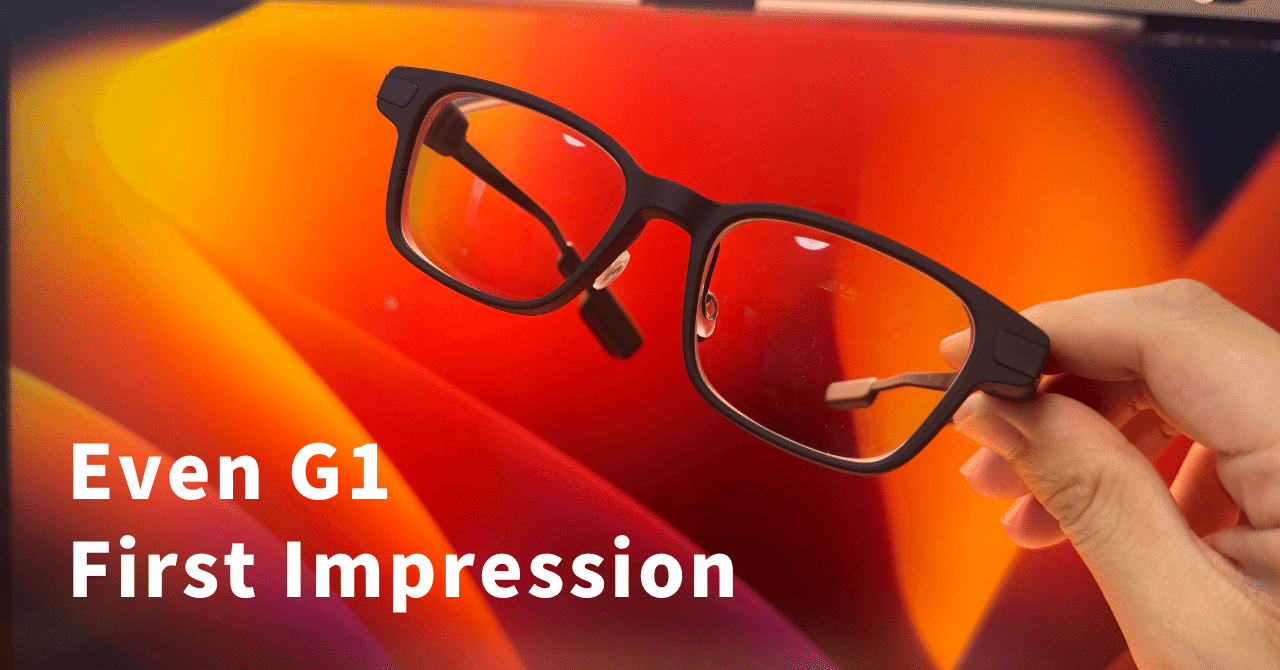
I still think the real-time translation function is 'amazing', but to be honest, I think you need to choose the right environment to use it.
This function is truly 'a godsend that eliminates language barriers', and it can display almost perfect subtitles for everything from specialized talks like TED to everyday conversations with friends.
Even when talking to my American friends, I was able to avoid the tension of trying not to miss anything, and the psychological safety of being able to see both the Japanese subtitles and the original text at the same time was greatly improved.
However, the accuracy is greatly affected by the environment. In quiet places, it can translate with an accuracy of over 90%, but in noisy places like train stations or cafes, the accuracy drops to around 30%. Also, there is a delay of a few seconds between when you hear something and when it is translated, so it's not completely real-time, but rather 'near real-time'.
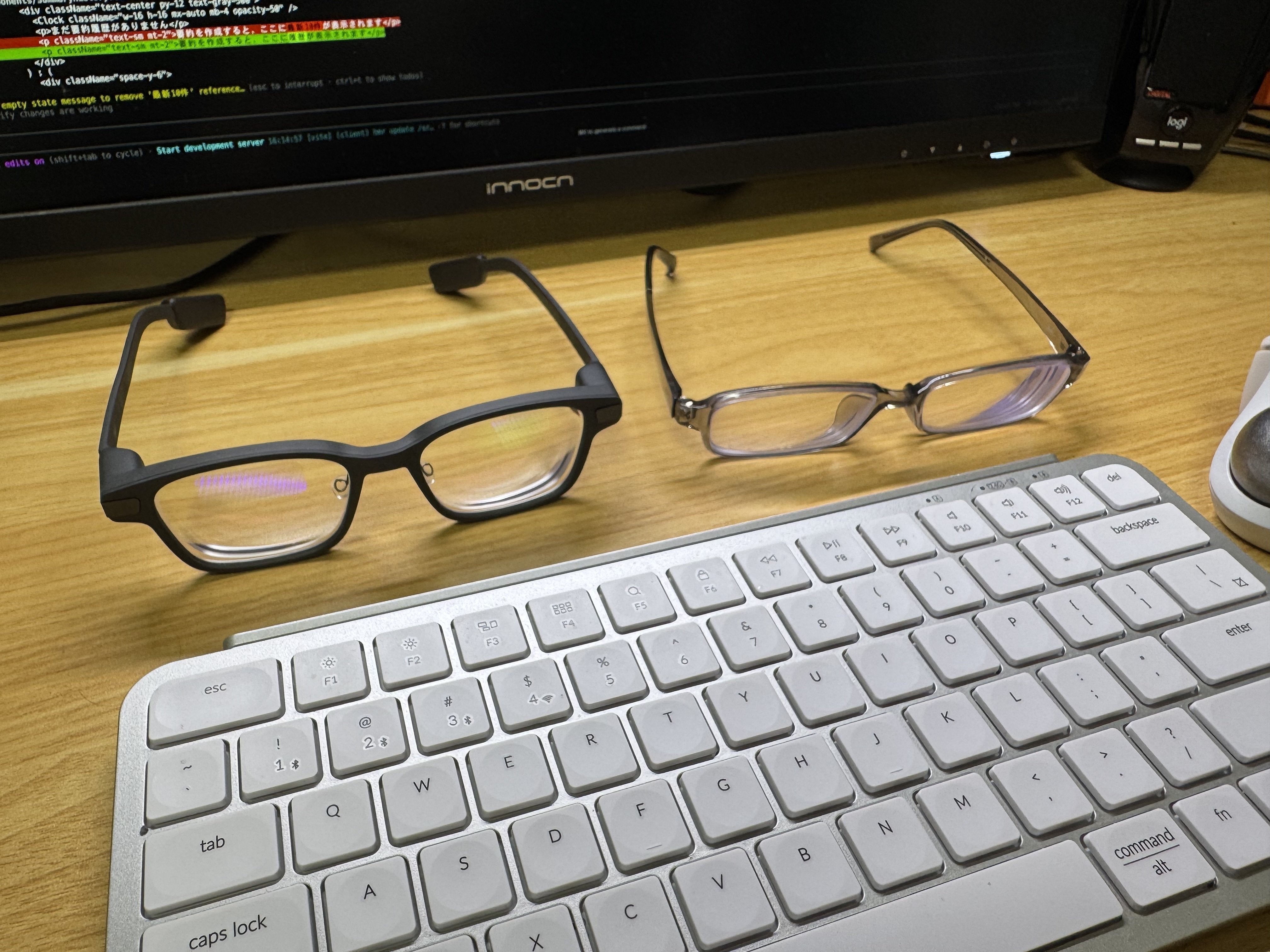
My impression that 'they don't feel any different from normal glasses' and 'I can see information without interrupting my work' has not changed. Other people also don't notice them.
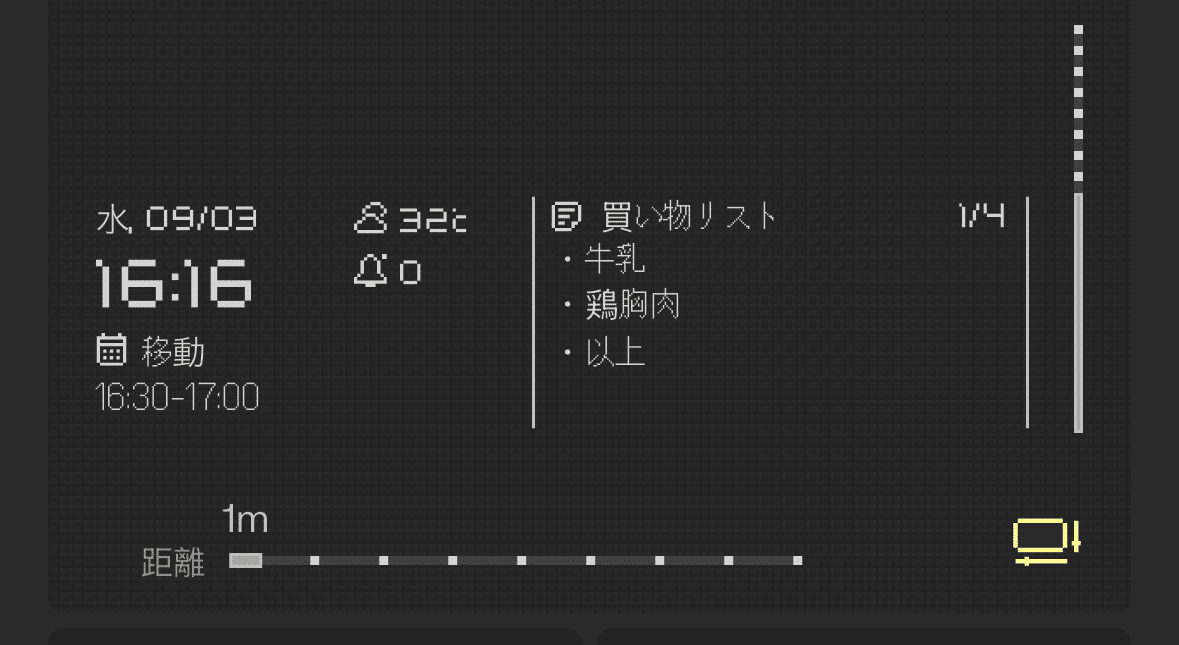
The constraint of the small screen area, which only allows tasks to be displayed up to 4 lines, has surprisingly led to an increase in concentration, which is an interesting discovery. The display you see when you look up is like this.
Also, I was expecting an effect of improving cat back, but it seemed to be around 70% likely to be effective. As I got used to it, it stopped bothering me.
At first, I was dissatisfied that the battery level was not displayed on the screen, but after using it for a month, I realized that 'the battery doesn't run out, so it's not necessary.' It's more convenient than I imagined that I don't have to worry about charging during the day like with the Apple Watch. However, it consumes a lot of smartphone battery, so I'm looking forward to that in the future. If your smartphone battery doesn't have much margin, it might be a bit of a hurdle.
The teleprompter function is a bit cumbersome to operate, which is a challenge. It's usable for short speeches, but it might not be suitable for long presentations.
Difference between specs and actual usage
Let's compare the catalog specs with the actual usage.
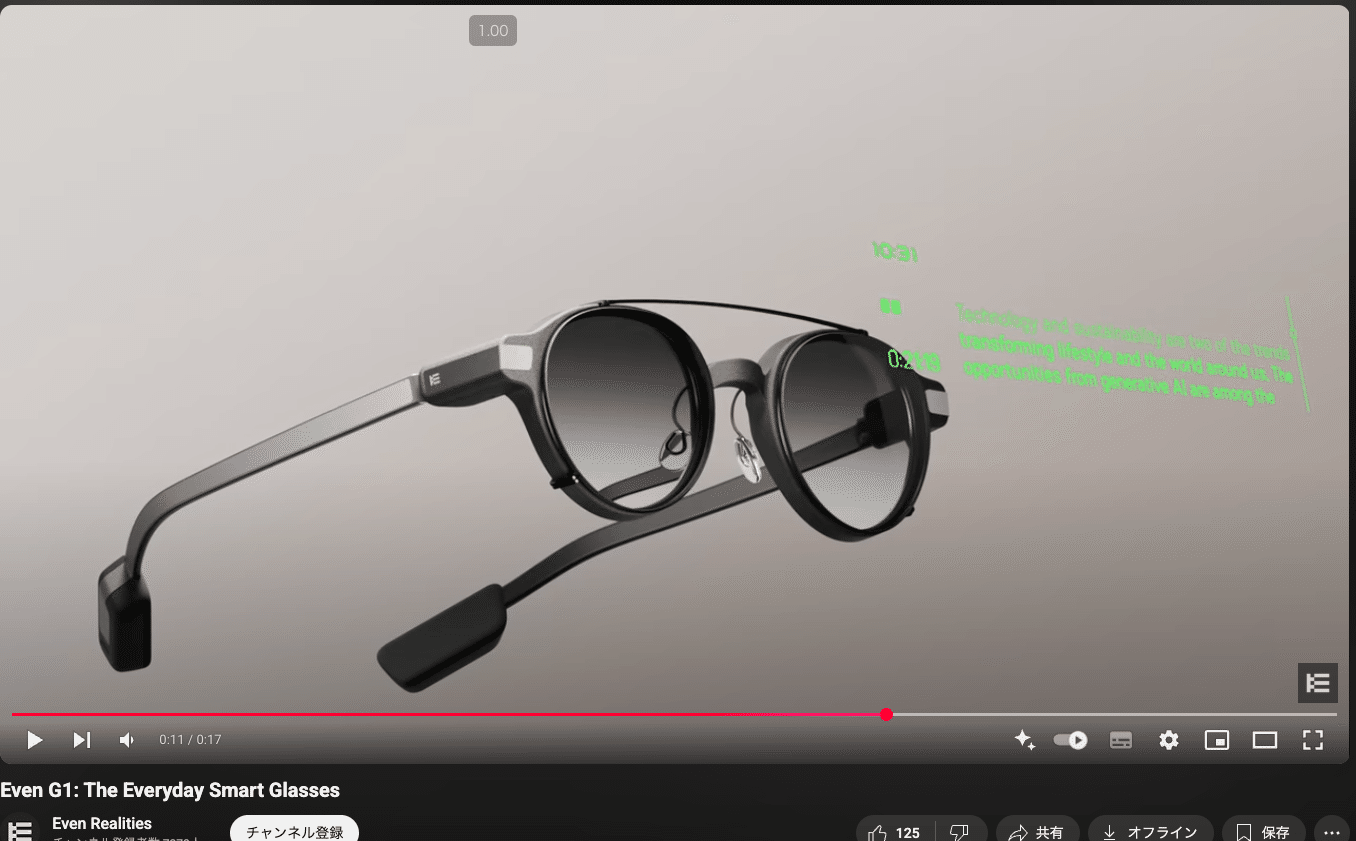
About the display
According to the specs, it's 'Dual Green Monochrome Micro-OLED 640×200 / 1000 nits / 20Hz'.
When I actually used it, the resolution was sufficient for reading information, and there was no flicker. However, when I went outside on a sunny day, I couldn't read the text without the sunglasses clip. It's not a problem at all indoors or after 5 pm, but the sunglasses clip is essential when going out during the day.
About the battery
According to the specs, it's 'up to 1.5 days / up to 6 days with the case'.
In reality, I didn't worry about the battery running out from morning to bedtime. Even after using it for 13 hours straight, I had around 35% left, so it performed as specified. Since I just put it in the case when I sleep, I can use it with the same feeling as regular glasses.
About the weight
It's lightweight due to the use of magnesium and aluminum alloy.
It feels about 20g heavier than regular glasses, and for the first 2-3 days, I thought it was a bit heavy, but I got used to it quickly. Now, I don't notice it at all. When I measure it with a kitchen scale, it's around 40g.
About the connection
It connects via Bluetooth 5.2.
I use an iPhone, but the connection drops about 1-2 times a day. I can reconnect in a few seconds by opening the app. This part is still a bit unstable and annoying.
About the functions
The installed functions include 'Even AI, notifications, translation, text transcription, teleprompter, and navigation'.
In reality, I often use 'notifications + information display + quick notes' - the three of these. Quick notes are excellent for task management. It's a good experience to have notifications appear right in front of me.
Overall
Looking at the overall picture, I can see that the specs prioritize 'compromise' over flashy numbers. I think it was the right decision to remove the camera and speaker to make the battery last longer. Thanks to that, I can focus on the functions that are really necessary. I think they've found a good balance that can be used practically in its current state.
What I found out after using it for 1 month
The usability of the display
The initial 'wow' factor has worn off, but on the other hand, I've come to realize that 'because it's a low-resolution, single-color green display, my eyes don't get tired even after using it for a long time'.
Although they have a retro PC monitor-like appearance, they don't cause any trouble when checking the time or tasks. If they were high-resolution and full-color, they would be attractive, but considering the balance of battery life and ensuring minimum practicality as a device used every day, this level of quality may be just right.Snap SpectactleA device with full-color and hand tracking capabilities like this is a dream, but the fact that it only operates for 40 minutes is not realistic.
They look perfect indoors, and on cloudy days, they're also comfortable to use outdoors. However, on sunny days with clear skies, they become quite difficult to see.
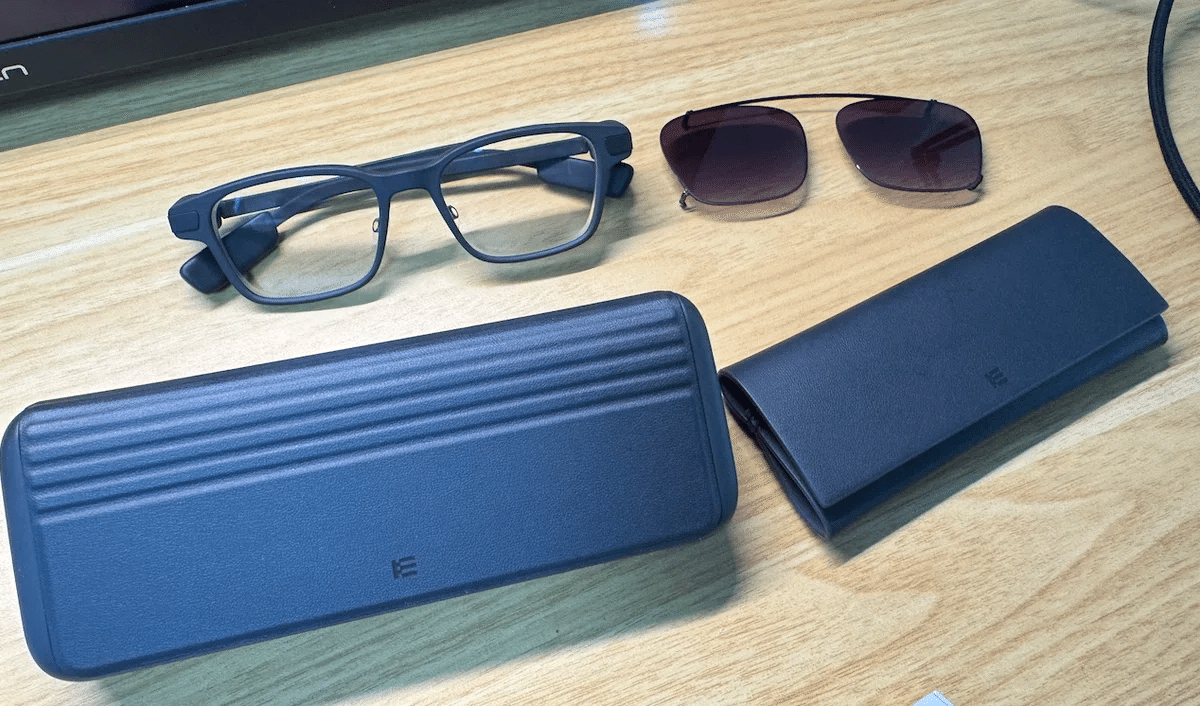
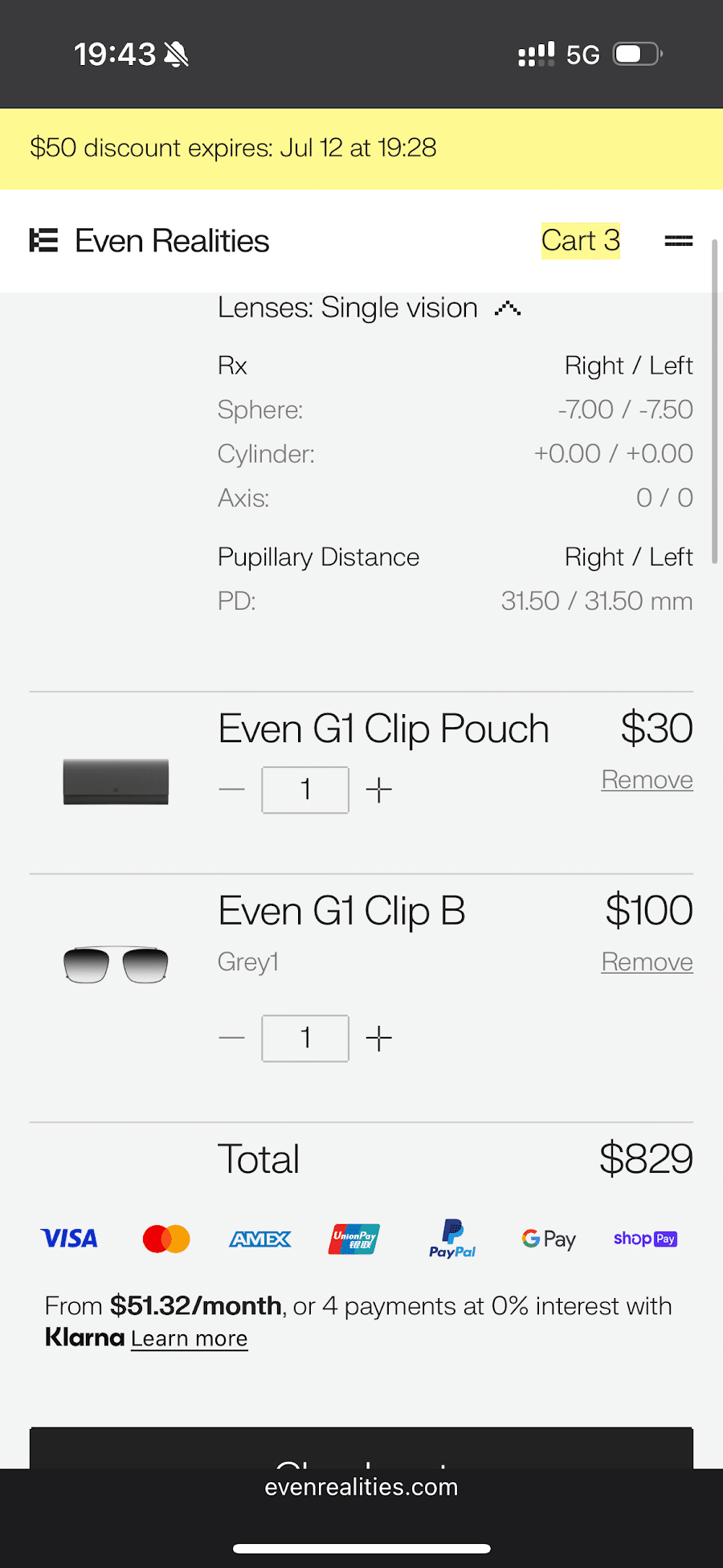
The sunglasses clip is absolutely necessary. Forgetting to bring it on a sunny day's outing was quite stressful. It costs an additional $100, but I strongly recommend purchasing it together with the main device.
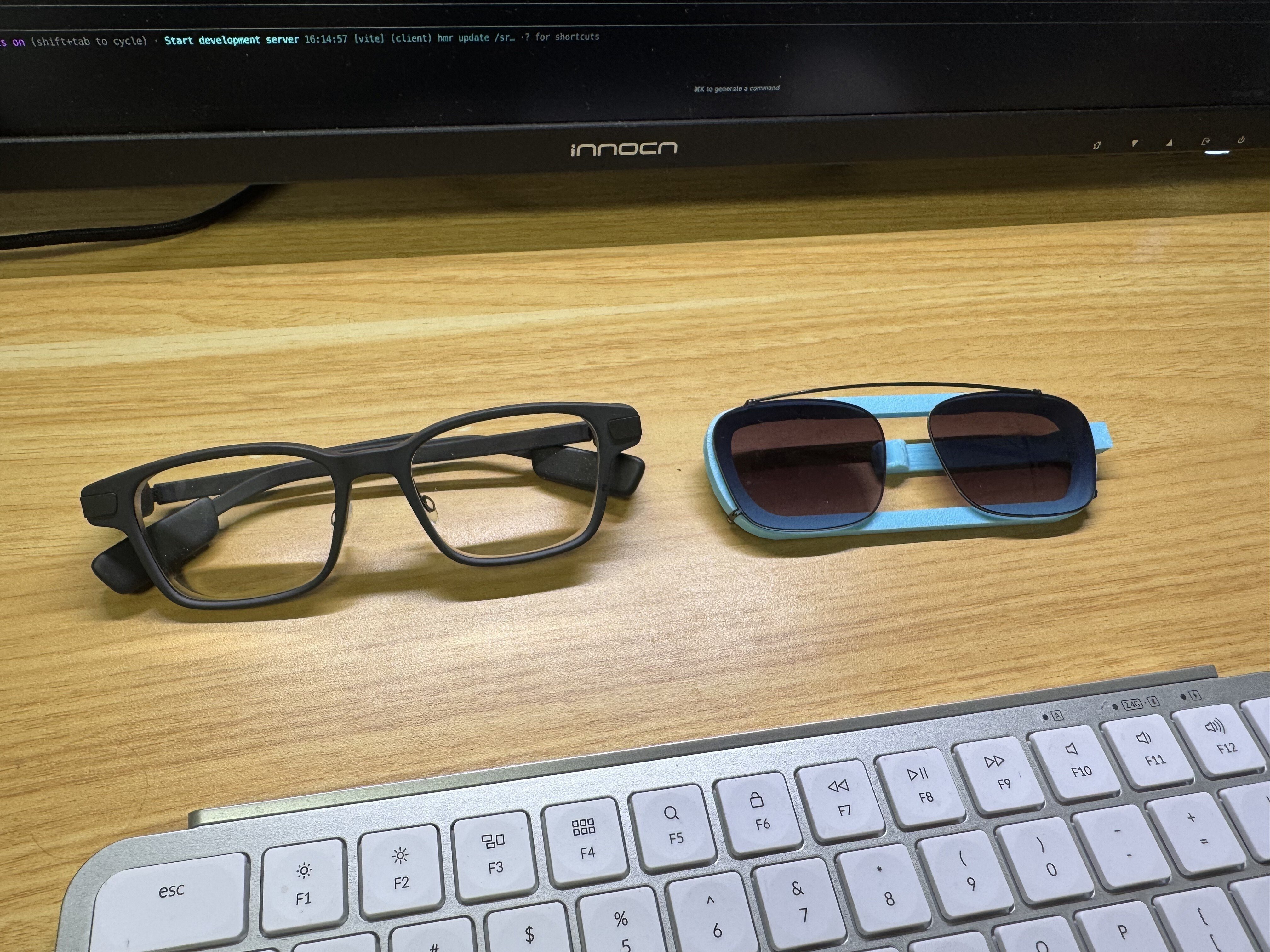
The sunglasses clip has a dedicated case, but since I wanted to attach the sunglasses to my clothes, I made a custom clip for the sunglasses.
I don't feel any eye strain. At first, it felt a bit uncomfortable, but that was the same kind of discomfort I felt when I replaced my prescription glasses. As time passed, I got used to it, and I even feel that the fatigue in my neck and shoulders has decreased because I don't have to look down at my smartphone as often.
How is the fit?
I used them as my main glasses for a month, and I didn't have any particular problems.
The fact that the nose pad is a separate cushion is also a good thing. Unlike the Ray-Ban Meta, which has a frame that is integrated with the nose pad, this design is more suitable for Japanese people with lower nose bridges.
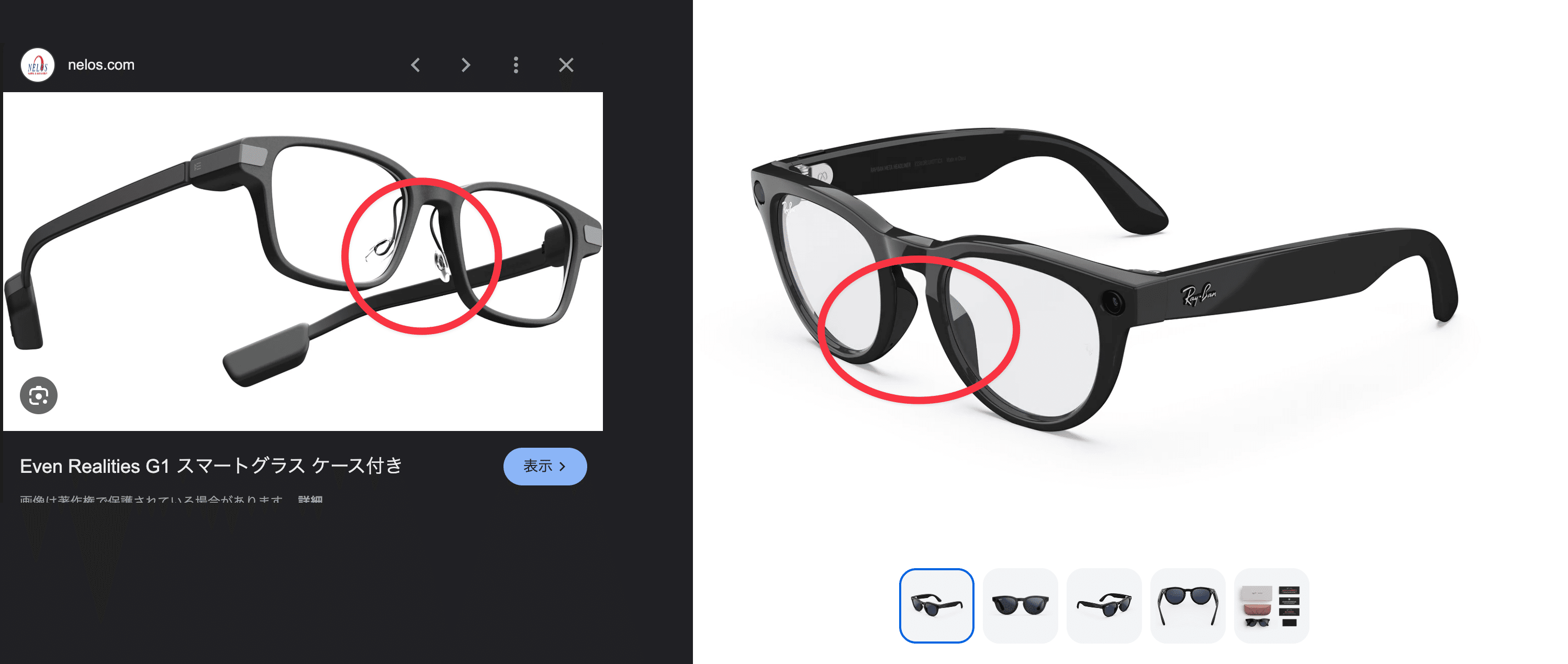
There are other problems as well. I didn't have any issues, but the frame's grip might be a bit too tight, and people with wider faces might feel that it's 'a bit tight.' In fact, when I had a friend with a larger face try them on, they said it felt 'a bit tight.'
On the other hand, they don't slip at all, so it's okay to exercise. I played soccer, basketball, tennis, and baseball, and they were all fine.
For those considering purchasing, it would be better to try them on in person if possible.
The frame color is currently only available in black and brown, but I hope more colors will be released in the future. The design is suitable for business scenes and doesn't feel out of place, and it goes well with suits. Also, almost no one can tell that these are AR glasses.
How is the battery life?
This is really excellent, and I don't have to worry about the battery running out. If I have the case with me, I can go on a 2-3 day trip without having to plug it in. I actually tried it on a weekend trip, and I was able to use it from Friday morning to Sunday evening without plugging it in.
I've never been concerned about the power button or startup. It feels like it starts automatically when I put on the glasses, and it's just like wearing 'normal glasses.'
Even G1 users who gathered together asked 'where's the power button?' and everyone replied 'power button...?' because its presence is so subtle. In fact, the power button is on the left temple, but I've never used it.
Charging the case once a week is sufficient. The case's battery has a large capacity, and it can fully charge the device several times. Being freed from the stress of forgetting to charge it was more comfortable than I imagined. The case is a bit bulky, but that's the same with the Ray-Ban Meta, and it's not a problem for daily outings.
How is the Japanese transcription function?
The translation and transcription functions' accuracy varies greatly depending on the environment. Basically, green text is displayed in front of my eyes, but it doesn't get in the way if I'm not focusing on it. It's like 'it's in my field of vision, but I'm not recognizing it,' and if I turn my attention to it, the correct answer is written there.
The Japanese transcription accuracy is fairly good, but it struggles with noisy environments. As long as it's a one-on-one conversation in a quiet environment, it's not a problem. I've even heard from people with hearing impairments that it's a 'life-changing function' that allows them to 'have a conversation while looking at the other person's face for the first time in 10 years.' In a quiet environment like a movie theater, it can be used as subtitles. However, it only transcribes and doesn't summarize.
The environment and accuracy I used it in were as follows:
Quiet indoor environment: it can capture the main points of a normal conversation. However, it struggles with specialized terminology and proper nouns, and it's at a level where I can roughly understand the context.
Café-level noise: it misses a lot of the conversation. Especially when multiple people are talking, it's hard to tell whose voice it's picking up.
Time lag: there's a delay of about 0.5-1 seconds. Once I got used to it, it didn't bother me.
I've also tried using them in meetings. In a conference room with about 10 people, I can generally pick up the voices of 3-4 people sitting nearby, but it's difficult to hear people who are far away. While they can be used as a supplement to meeting minutes, they're still not enough to be the main recording method.
What's the impact on work efficiency?
At first, I thought it was a bit limited that only 4 lines of QuickNote are displayed on the dashboard, but I realized that this is actually just right for maintaining concentration.
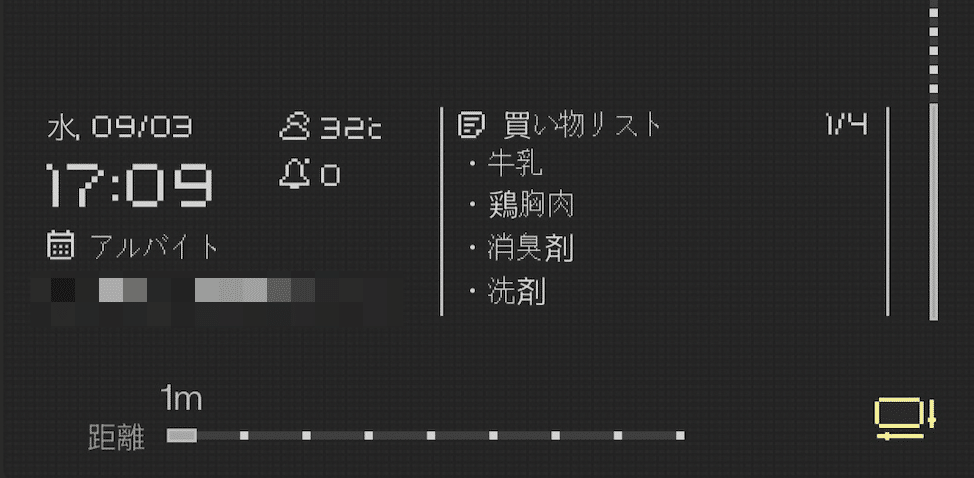
In fact, I don't need any more than that. It's said that humans can only be aware of 3-4 tasks at the same time, and this is in line with that cognitive science constraint.
As a practical example, I set 4 morning routine tasks and established a cycle of setting the next 4 tasks after completing them. As a result, my task completion rate has improved, at least in my own perception. Also, when an urgent task comes in, I've developed the habit of immediately judging the priority of the existing 4 tasks.
Notification management has also become more efficient. Since they appear right in front of me, I can check them without motion. Even if I'm talking to someone in front of me and a notification comes in, I can check it without the other person noticing.
I was eating at a counter with a friend and got a long notification, and when I was reading it, they said I looked like a 'cat staring into space,' but that's about the only unnatural thing about it.
Stability and malfunctions
There was a problem with the touch recognition accuracy when my hair got in the way of the sensor at the tip of the temple, but I solved this by cutting my hair short. It's very comfortable, and there are no malfunctions like restarting or overheating. I can really use them comfortably like regular glasses.
In the month I've been using them, the only malfunction I've experienced is Bluetooth disconnection.
There have been two firmware updates, and the updates themselves take about 10 minutes to complete. I've seen new features added and existing features improved, but I don't feel like much has changed.
Answers to frequently asked questions
Q: Can Japanese audio be displayed in real-time with Japanese subtitles?
A: There's a transcription function that can display conversation content in a subtitle-like format in real-time, and in quiet environments, it's sufficient for grasping the gist of things. However, for important meetings, I'd still like to avoid using it as the sole recording source (I recommend using backup recording and memoing in conjunction). In a quiet environment like a movie theater, I think people with hearing problems can comfortably watch dialogue. At least when I watched a movie at home in a quiet state, it recognized almost everything except proper nouns.
Q: Where do you gather information about AR glasses like this?
A: Twitter (now X) and manufacturer communities on Discord. Since the Discord community is mostly in English, I'm making an effort to read it. The Even Realities official Discord is particularly active, and I can even get direct answers from developers. The r/ARglasses community on Reddit is also a useful source of information.
Q: How do you order prescription lenses?
A: You can enter your prescription data when you purchase them. The supported range is from -6.0 to +3.0, and they also support astigmatism. I have nearsightedness of -3.5, and I can use them without any problems. It took about 3 weeks from ordering to arrival.
Q: Is it possible to use them while exercising?
A: It's not a problem if you're just jogging, but intense exercise is not recommended. However, even when I played basketball, which is a pretty intense exercise, I didn't have any problems with wearing them, although it was difficult to read text because the glasses move up and down. Also, when I sweat, the touch operation on the temple can be a bit unresponsive at times.
If you have any other questions, feel free to ask

Comparison with other devices
Even G1 vs XREAL
One of the things I'm often asked is a comparison between Even G1 and XREALbut in reality, a comparison can't be made.
First of all, the concept is different. Even G1 is, as I've said many times, smart glasses in the style of an Apple Watch. XREAL is an evolution of monitors, and the fact that it's in the shape of smart glasses is just a case of convergent evolution.
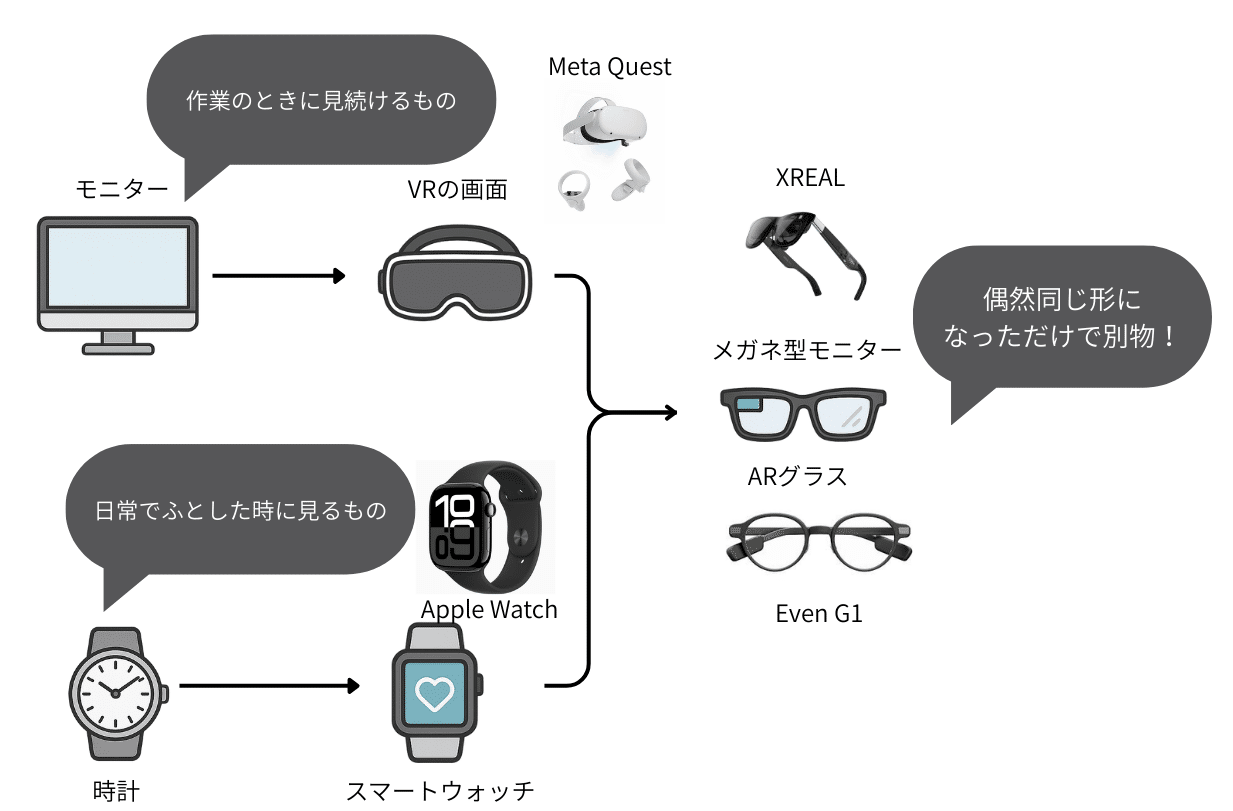
Convergent evolution refers to the phenomenon where two completely different origins result in similar forms. Just like how both birds and bats have wings, Even G1 and XREAL may seem similar in that they're both in the shape of smart glasses, but their directions and purposes are completely different. It's not a question of which one is better, but rather which one you choose depends on what you're looking for.
In the first place, I don't think anyone would be torn between buying an Apple Watch or a monitor. So, a comparison is not possible.
Because the flow of how they're used is different, there aren't many people who wear XREAL all the time in their daily lives. Not only do they look different, but they're also a bit of a hindrance in daily life, and you can't see outside clearly like you can with pass-through smart glasses. However, that's not a weakness. XREAL is meant to be used for tasks, and it's enough to just wear it when you need to. On the other hand, Even G1 is meant to be worn all the time in daily life, and that's what makes it meaningful.
Even G1 vs Ray-Ban Meta
I'm also often asked to compare it to Ray-Ban Meta. Ray-Ban Meta is specialized for shooting and music playback, while Even G1 is specialized for displaying information. So, this is also a bit of a different direction, and it's like choosing between a camera and an Apple Watch, so it's hard to compare.
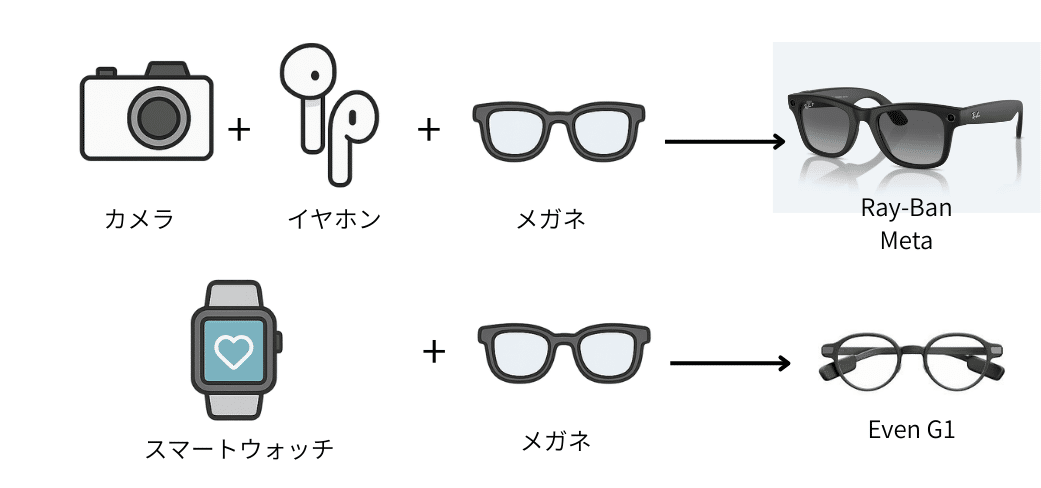
The camera function of Ray-Ban Meta is attractive, but personally, I'm not very interested in cameras. I think Ray-Ban Meta would sell well if it were placed in the camera corner of Yodobashi Camera. I think Even G1 would sell well if it were placed in the smartwatch corner.
What's the next evolution needed for Even G1?
Currently, the reason I don't recommend Even G1 to people who don't wear smart glasses is that it only offers functionality equivalent to an Apple Watch. The unique value it provides that Apple Watch can't is still limited.
But what if it had a speaker?
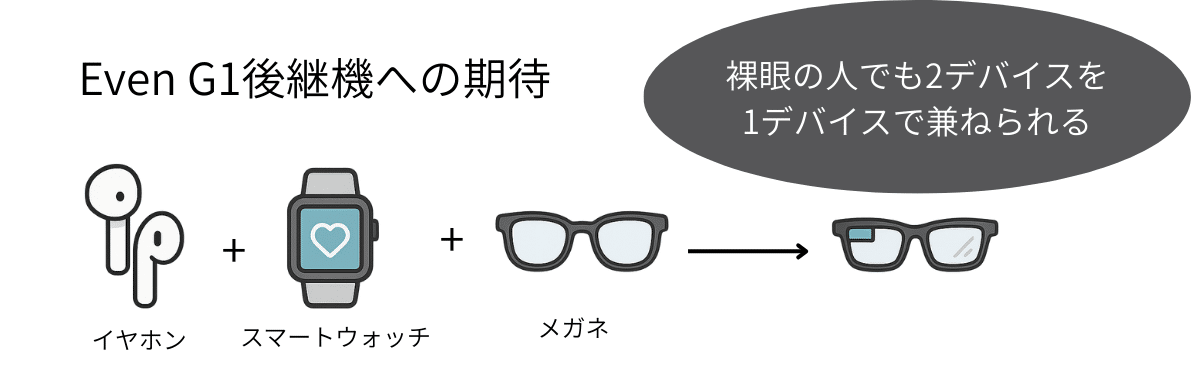
Ray-Ban Meta has a speaker and microphone, so you can participate in meetings with it. If Even G1 had a speaker, then:
Even G1 = Apple Watch + AirPods
This means that 1 device can do the work of 2 devices, which is great.
In this case, having one pair of smart glasses is better than having two devices like AirPods and Apple Watch, and it's also recommendable for people who don't wear glasses.
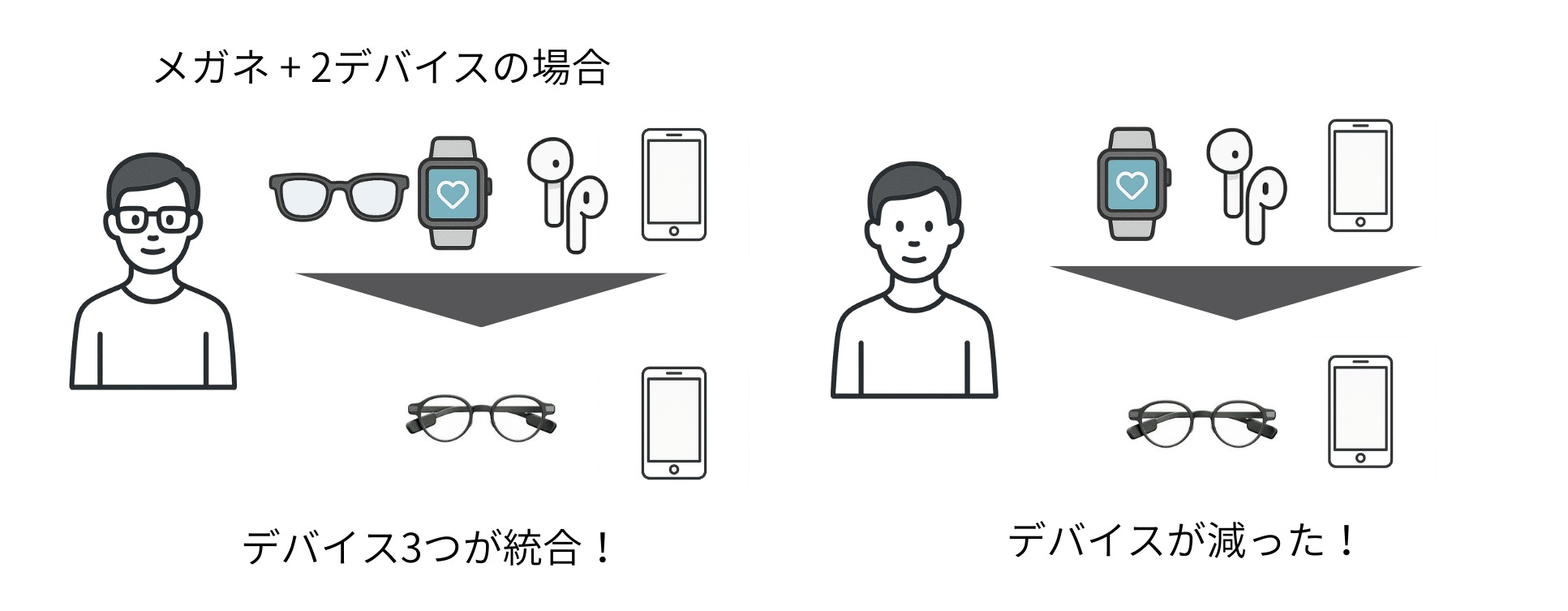
For this reason, I recommend smart glasses to current glasses users, but if you don't wear glasses, you might want to wait until the technology advances a bit more and you can have two devices in one.
Smart glasses and fashion
Even G1 has also learned from the failure of Google Glass, which had a design that was too futuristic and lacked social acceptance. In contrast, Even G1 has a design that resembles ordinary glasses and can blend into daily life without any discomfort.
I think this is also the case with Ray-Ban Meta, and the design of smart glasses is closely related to their penetration into society. In my prediction, next year, thick-framed glasses will become a fashion trend. This is because smart glasses with thick frames will be released due to circuit and battery constraints, and major companies will invest in making them a fashion trend. In fact, Meta has announced a collaboration with PRADA, which I think is part of this trend. And since fashion trends usually come from top brands, I predict that next year, society will form a value that contact lenses are less cool.
Good points
Reducing burdens
By integrating Apple Watch into my glasses, I've reduced the number of devices I carry from two to one. The number of devices is equal to the number of burdens.
Furthermore, this device reduces the cost of information retrieval by minimizing the need to move my line of sight. In particular, I've significantly reduced the frequency of checking Slack, and I can now efficiently obtain only the necessary information.
There are also benefits in social situations. When I want to check the time while talking to someone, looking at my watch can be considered rude, but with Even G1, I can do so without the other person noticing. I can also discreetly check information about someone I've forgotten the name of (if I've taken notes in advance). Checking your watch during a business meeting can be a bit rude, too.
Regarding the price
If I think of it as an Apple Watch, the price of around 100,000 yen is too high. But if I think of it as a high-end pair of glasses plus an Apple Watch, it's not that unreasonable. So, I recommend it for glasses users. If you don't wear glasses, I think a regular Apple Watch is cheaper and better.
When you think about the change in the things you carry, this difference becomes clear.
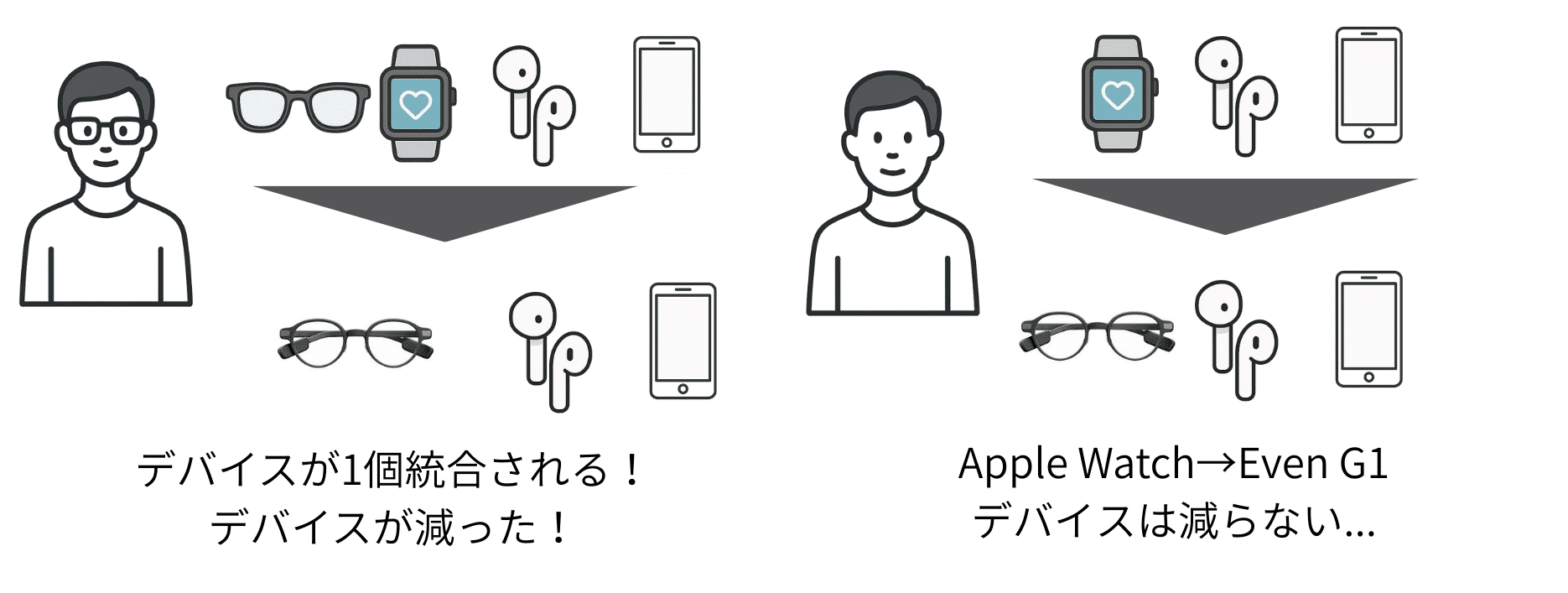
The idea that adding a device is like adding a shackle, and removing a device is like removing a shackle, is why I recommend smart glasses to people who normally wear glasses. One reason why Ray-Ban Meta became popular overseas is that foreigners tend to wear sunglasses, so they can enjoy the benefit of integrating two devices (sunglasses and smartwatch) into one, just like glasses users.
I attended an AR glasses offline meeting the other day, and Even G1 users said they had stopped using their Apple Watches. I'm the same.
I calculated the actual cost-effectiveness, and in my case, my previous glasses (30,000 yen) + Apple Watch (50,000 yen) = 80,000 yen, so the 90,000 yen for Even G1 is an additional investment of 10,000 yen. Considering the integrated experience and convenience I get for this 10,000 yen, I think it's well worth the pay.
Also, considering that glasses are usually replaced every 2-3 years, the annual cost is around 30,000-40,000 yen. This is reasonable compared to general subscription services.
Concerns and expected improvements
The low degree of freedom in apps is a challenge. Currently, since Bluetooth communication is open, I can create my own apps, but it's very troublesome. MentraOS is also questionable, and if I switch to MentraOS, the original Even G1 apps won't work, which is exclusive and troublesome to switch back.
I expect the development of a more comprehensive SDK for developers. Currently, only limited collaboration via Bluetooth is possible, but in the future, I hope that third-party apps can be run directly and deeper system integration can be achieved.
Strengthening Japanese support is also necessary. Currently, only English support is available, which makes me anxious about responding to troubles. If there is a response to Japan's unique needs (such as transfer guidance), the practicality will increase further.
In terms of hardware, I expect a wider field of view display, color display, and higher resolution, but these improvements should not sacrifice battery life.
Future update plans and expectations
According to the official announcement, the following functions are expected to be added in the next few months:
-
Multi-language simultaneous translation (up to 3 languages can be displayed simultaneously)
-
Customizable gesture control
-
Expansion of voice commands
-
Enhanced support for third-party apps
Highly requested features from the community:
-
Integration with music services like Spotify
-
Enhanced calendar synchronization
-
Health management features (step count, heart rate display)
-
Improved navigation functionality
For now, there's no integration with music services, so in that regard, I'd say Apple Watch wins. Calendar synchronization is also only available with Apple's default calendar app, which is inconvenient. I hope they improve these aspects soon.
Who it's suitable for and who it's not suitable for
In conclusion, to put it simply, I recommend these smart glasses to the following people:
Recommended for:
People who normally wear glasses and use an Apple Watch. This combines two devices into one.
Those who are tolerant of technology and enjoy learning new devices
People troubled by information overload and wanting to partially achieve digital detox
Those with hearing concerns and needing conversation assistance
Frequent presenters or lecturers
Not suitable for:
People with perfect vision. You can just use an Apple Watch.
Those seeking perfect products. There are still areas under development
People with budget constraints who prioritize cost performance. The cost performance is not good at all.
Summary
The excitement from a month ago, saying 'This is a revolution!', has now turned into a feeling of 'a quiet revolution that blends into daily life'.
Even the G1 is a device that reliably reduces daily minor stress, rather than having a flashy impact. The number of times I check my smartphone has decreased, my concentration has improved, and access to information has become smoother. It's not flashy, but it's definitely improving the quality of my life.
It's not a perfect product. There's still a lot of room for improvement in terms of transcription accuracy, app limitations, and operability. However, for glasses users, there's a clear benefit of 'two devices becoming one'.
What I've come to realize in the past month is that the value of smart glasses lies not in 'a futuristic experience' but in 'making daily life a little more convenient'. Just like how the Apple Watch has become 'indispensable' from 'convenient to have', I feel like the Even G1 is following the same path.
Technological advancements are rapid, and current challenges may be resolved within 1-2 years. However, there's definitely value in experiencing it early. For those who want to experience the future a little sooner and for people who usually wear glasses, this device is definitely recommended.
There is no additional content, but if you find it interesting, I'd be happy if you could give me a tip.
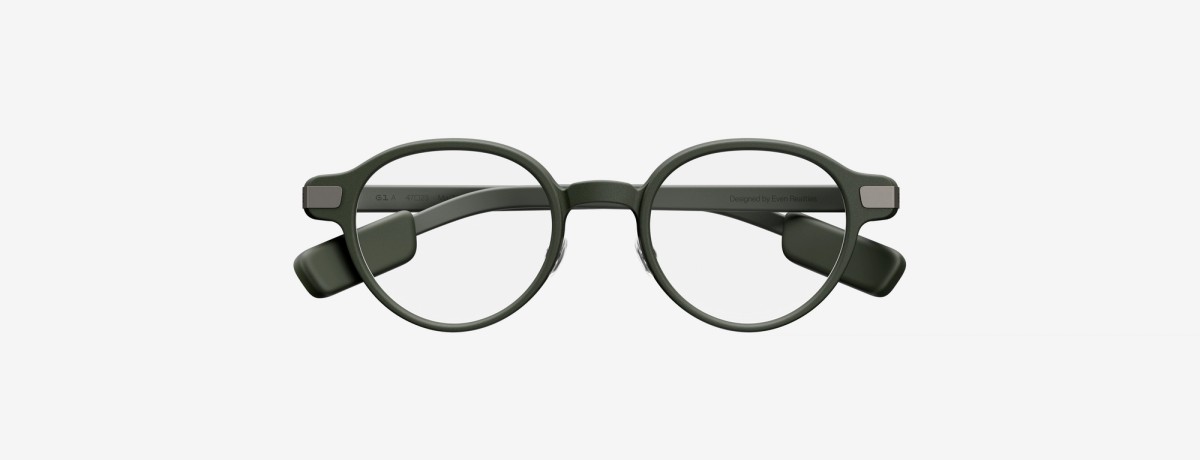 Even G1 A
 Even G1 B