Opinion
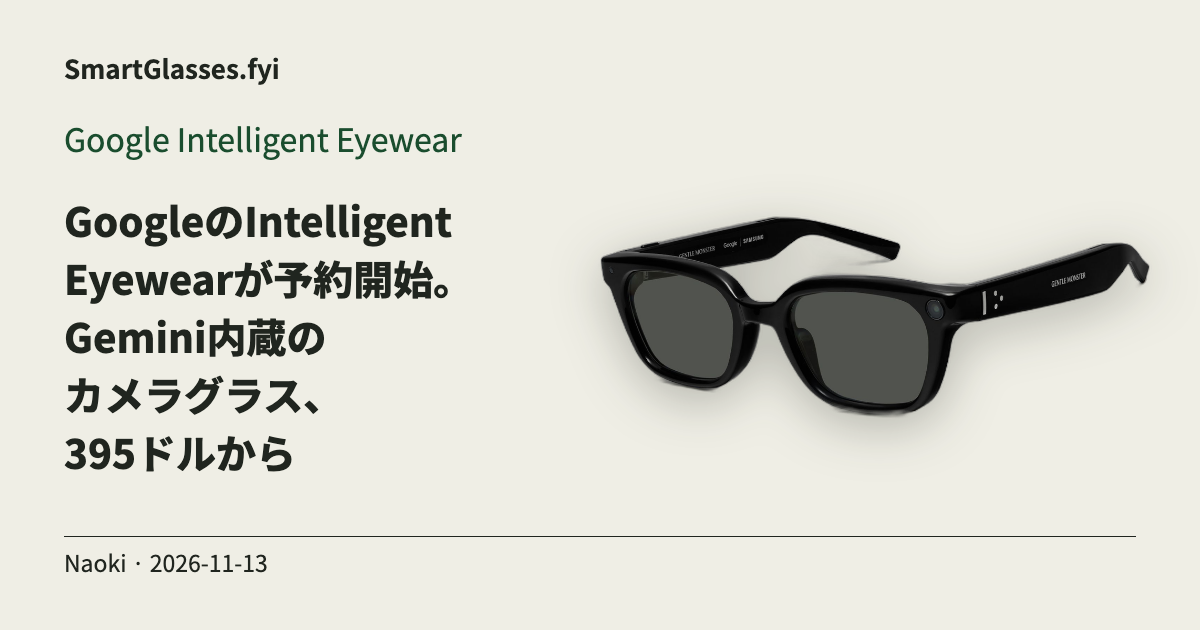
Google's Intelligent Eyewear is open for pre-orders. Camera glasses with Gemini built in, from $395
Camera-equipped AI glasses Google began taking pre-orders for on November 12, 2026, built with Samsung, Gentle Monster, and Warby Parker. There is no display; you use them through Gemini, Maps, and translation. They go on sale December 10 in the United States and South Korea. Japan is not included.
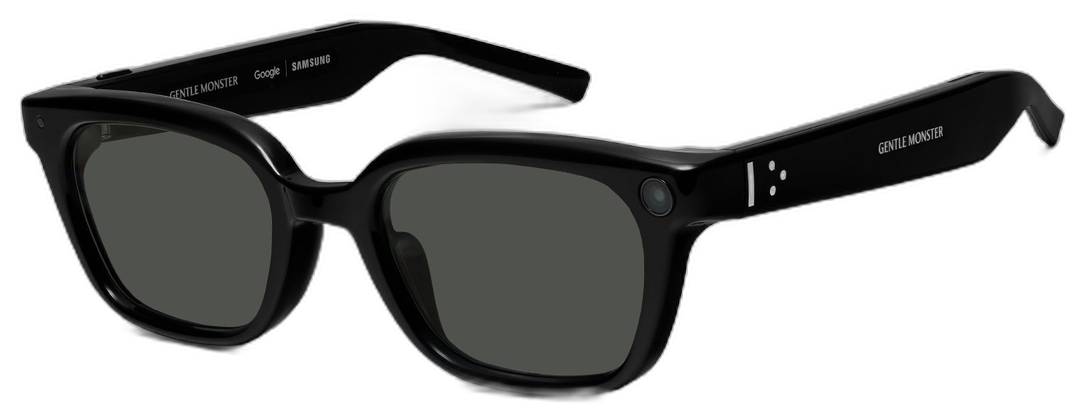
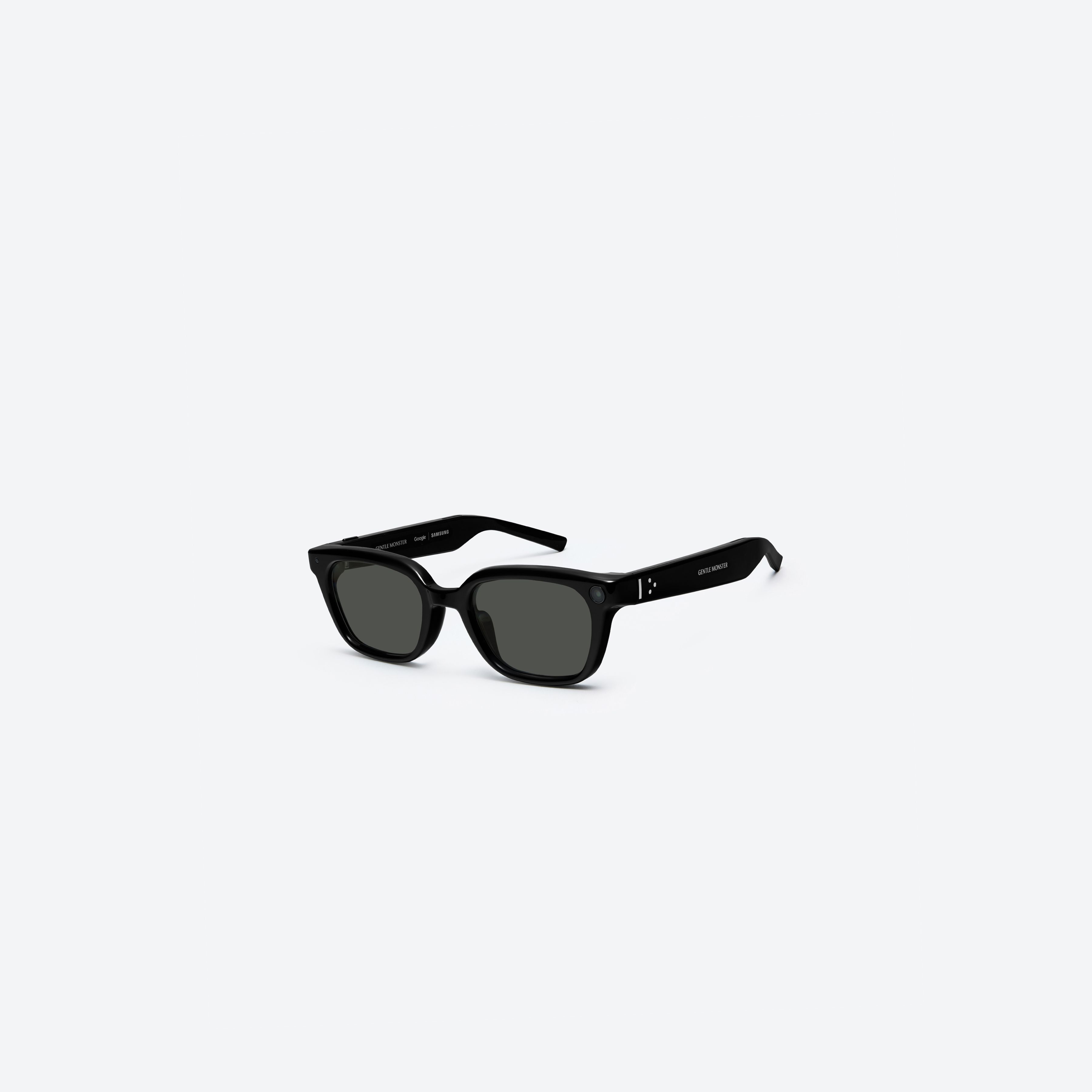
Google opened pre-orders for Intelligent Eyewear on November 12, 2026. These are camera glasses with Gemini built in, made in collaboration with Samsung. There is no display; narrowed down to shooting, listening, and talking to the assistant, they are the same kind of product as Ray-Ban Meta. They go on sale December 10. Pre-orders are open in the United States and South Korea, and you can reserve a pair through the official site. A Japanese launch is not part of this announcement.
Nine designs from two frame brands, from $395
The Gentle Monster collection has six designs: bold frames in dark red, pink, gray, and yellow, paired with tinted or clear lenses. Most frames support prescription lenses. Prices start at $449, sold in the United States and South Korea.
Warby Parker offers three styles — Alden, Reid, and Wren, based on the brand's classic silhouettes — in both optical and sunglass versions. Prices start at $395. More than 360 stores across the United States take bookings for hands-on demos, so the launch includes trying them on at an eyewear store before buying.

The difference is Gemini and Google's services
You wake it with “Hey Gemini” or a tap on the frame. Ask about the story behind a mural you are passing, get a recommendation from a shelf of new books, or look at an event poster and check your calendar for a free slot on the spot. Adding items to a shopping list and setting reminders are also done by voice.
When you move, Google Maps reads turn-by-turn directions into your ear. Translation covers voice translation in more than 70 languages, with automatic language detection. The camera is a 12-megapixel ultra-wide, and video goes up to 3K. Open-ear speakers handle music, calls, and message readouts.
The frames weigh about 41 grams and are splash-resistant to IPX4. Battery life is up to nine hours, and the case can recharge them up to seven times. Thirty minutes in the case brings them to 60%. They pair with Pixel and Galaxy phones, and with iPhones.
There is also guidance for people with low vision. Guided Vision describes what the glasses see in conversational audio, helping with small print and finding everyday items. Say “Hey Gemini, open Aira Explorer” and the camera feed connects to a professionally trained human visual interpreter.
Consideration for the people being filmed, brought to the front of the spec sheet
Visuals the camera sends to Gemini are not saved in your Gemini history, and are not used to train AI models or target ads. Faces of bystanders caught in frame are automatically blurred before Gemini processes the image.
Capture is signaled by lamps inside and outside the frame, plus a sound. Cover the outer lamp and recording stops automatically. A physical toggle switches the camera, microphone, and Gemini off together, so the frames can be worn as ordinary glasses.
With camera glasses, the problem is always on the side of the people being filmed, not the people filming. With this product, Google has brought that side of the design to the front of its announcement.
The gap with Ray-Ban Meta shows in the AI and the sales channels, not the hardware
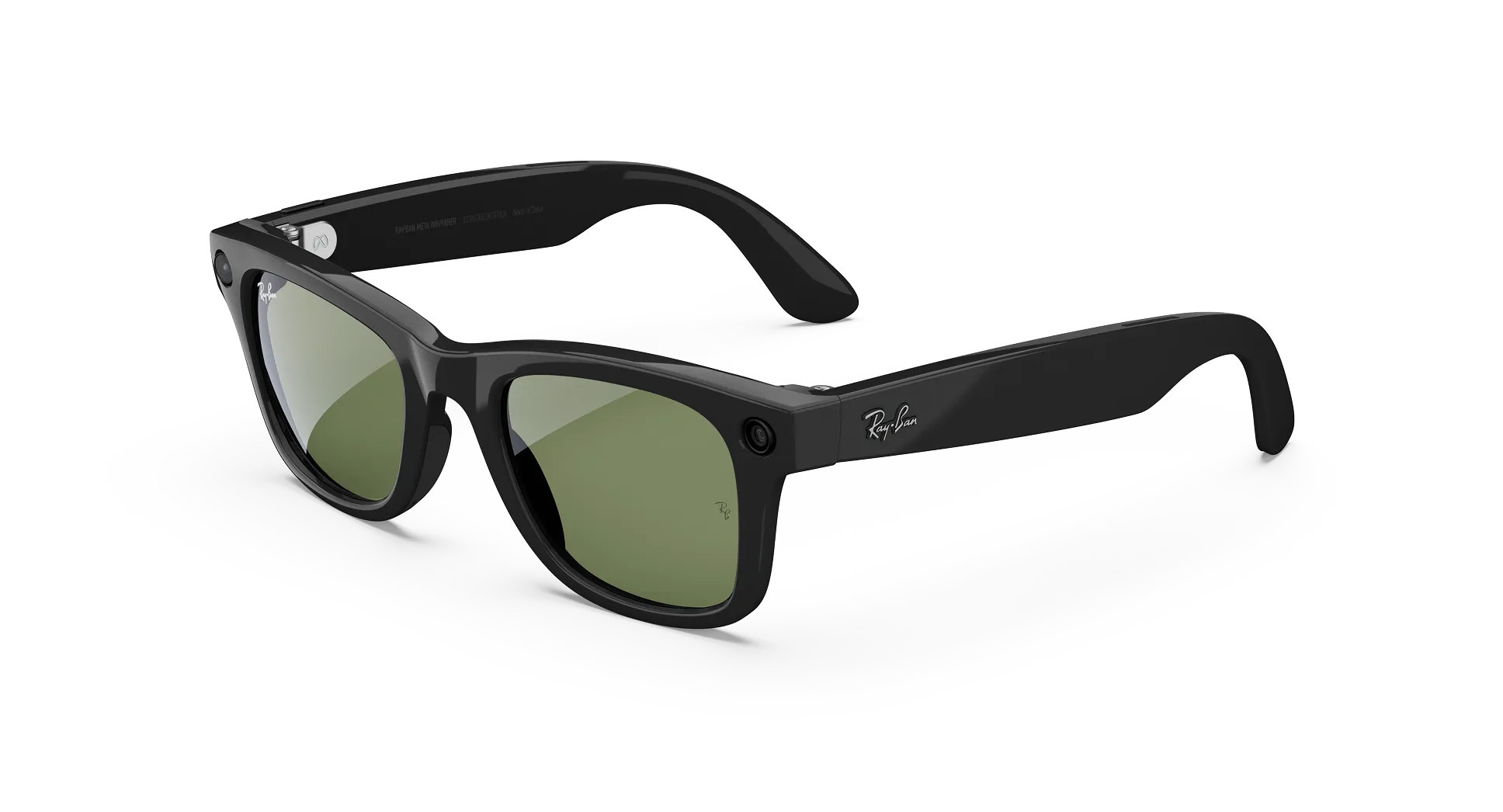
The comparison is the Ray-Ban Meta (Gen 2), the current leader in the same everyday category of no display and a camera. Its US price starts at $379, almost level with Intelligent Eyewear's $395. Both cameras are 12-megapixel ultra-wide and record video up to 3K. On battery, Intelligent Eyewear's up-to-nine hours beats Ray-Ban Meta's up-to-eight by an hour.
The AI gap shows in the depth of connected services. Meta AI centers on shooting, sharing, and calls, with two-way translation in six languages. Gemini adds translation in more than 70 languages, Google Maps turn-by-turn directions, and calendar availability checks — the Google services you already use, carried onto the glasses as they are.
On consideration for bystanders, both go as far as signaling capture with an LED. Beyond that, the automatic blurring of bystanders' faces and the physical switch that turns the frames back into ordinary glasses are what Google brought to the front in this announcement.
The decisive difference is where you can buy them. Ray-Ban Meta went on sale in Japan on May 21, 2026, and can be bought officially from ¥73,700 today. Intelligent Eyewear has no Japanese release date; for now it can only be bought by pre-ordering in the United States or South Korea. Even so, for anyone who runs their maps, translation, and schedule through Google's services, Intelligent Eyewear is the leading candidate among camera glasses, because the Google services you use every day carry over to the glasses unchanged. If you need a pair you can buy in Japan right now, Ray-Ban Meta will do. If your day runs on Google, the one to buy is Intelligent Eyewear.
On the Android XR side with a display,XREAL AURAhas already set its schedule. Intelligent Eyewear is the everyday kind without a display, so Google's glasses now cover both directions. A rival carrying Google's full set of services joins a camera-glasses market where Meta stood alone.
Some points still need checking. Whether it will be sold in Japan, and what the Japanese-language arrangements will be, are things to confirm in Google's follow-up announcements. Even allowing for that, if you are buying camera glasses and your day runs on Google's services, Intelligent Eyewear is the leading candidate. Pre-orders are already open in the United States and South Korea. If a Japanese launch is confirmed, this becomes the first pair to reach for.
 Google Intelligent Eyewear
 Ray-Ban Meta Wayfarer