Opinion
Argentina's residency selection exam: 141 candidates retake the exam over suspected smart glasses cheating. All 117 who sat it failed to reproduce their original scores, and the national unified exam was abolished
At Argentina's Ministry of Health residency selection exam, footage said to show exam questions being filmed with camera smart glasses spread, and 141 candidates whose scores were inconsistent sat a retest. All 117 who sat it failed to reproduce their original scores, and the national unified exam was then abolished in favour of province level exams.
In Argentina, suspected smart glasses cheating led not to an accumulation of detections and sanctions but to the abolition of the exam system itself. In July 2025, score inconsistencies were found among high scorers at the Ministry of Health residency selection exam, and 141 candidates sat a retest. All 117 who sat it failed to reproduce their original scores, and the national unified selection exam was abolished, moving to exams run by each province.
It began with footage said to show the questions being filmed
On July 1, 2025, the residency selection exam run nationwide by the Ministry of Health was held. After the exam, footage spread that was said to show exam questions being filmed with camera smart glasses and sent outside. The government criminally referred the Ecuadorian candidate said to have done the filming, on suspicion of fraud against public funds. That candidate had scored 92 in the first exam.
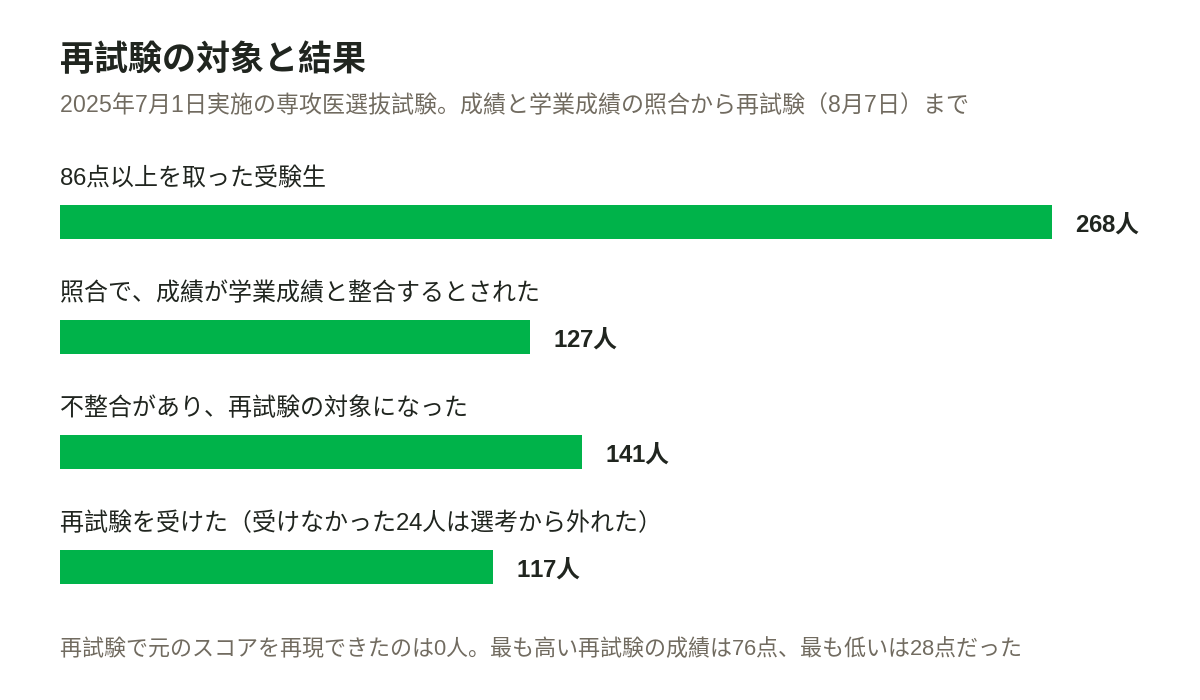
At the same time, the Ministry of Health compared high scorers' results against their academic records. Of the 268 candidates who scored 86 or above, 127 were judged consistent with their academic records. The other 141 were not consistent, and became subject to the retest.
The referral was directed at the individual candidate in the footage, and no conviction has been established. For the 141, use of glasses was not proven person by person either; the basis for the retest was the inconsistency between exam scores and academic records.
The retest was held with all electronic devices banned
The retest was held in person on August 7 at Palacio Libertad in Buenos Aires, as a new written exam of 100 questions. All electronic devices, including mobile phones, smartwatches and smart glasses, were banned, and identity checks were strengthened. Candidates who needed to leave the room were accompanied by staff.
Of the 141 candidates, 117 sat the retest. Of those 117, 109 had studied at medical schools abroad. Twenty four did not sit it and were excluded from that year's selection.
All 117 failed to reproduce their original scores
In the retest, all 117 failed to reproduce their original scores. The highest score was 76 and the lowest 28. The candidate in the footage went from 92 to 63. Where the gap between the original and retest scores exceeded 10 percent, the retest score became the official score.
Failing to reproduce a score does not prove how each person cheated. But the result, that the same scores could not be achieved under conditions with no devices brought in and with identity checks, moved the system's decision.
The national unified exam was abolished, moving to province level exams
Afterwards, the Federal Health Council decided to abolish the national unified exam. From 2026, each province runs its own selection exam. A review was also announced limiting recognition of medical qualifications obtained abroad to universities meeting World Federation for Medical Education standards.
Where South Korea added capacity, with dedicated identification officers, detectors and heavier sanctions, Argentina changed the framework of the exam itself. Instead of building identification capacity, it chose to end the single nationwide exam.
Related articles
Exam countermeasures against smart glasses cheating differ by country. Japan treats possession itself as cheating on the Common Test, while South Korea posts dedicated officers and revokes passes
Japan's Common Test guidance for the Reiwa 9 academic year now treats a connected device left outside the bag as cheating in itself. South Korea relies on dedicated identification officers at venues and sanctions that include revoking passes and a five year ban. In Argentina, a retest ended with the national unified exam abolished. This column compares how each country writes the ban, what happens after a detection, and how supervision is organized.
Naoki →
Smart-glasses cheating in South Korean exams: a roundup. National qualifications, universities, school exams, and a top scorer's confession
A chronological roundup of confirmed smart glasses cheating cases in South Korean exams in 2026. Busts in national technical qualification exams, a swap to smart glasses after entry checks in university essay exams, four cases in school exams, the tax accountant exam that ended with the top scorer turning himself in, the final CSAT tally, and the countermeasures that have since moved to detectors and budgets.
Naoki →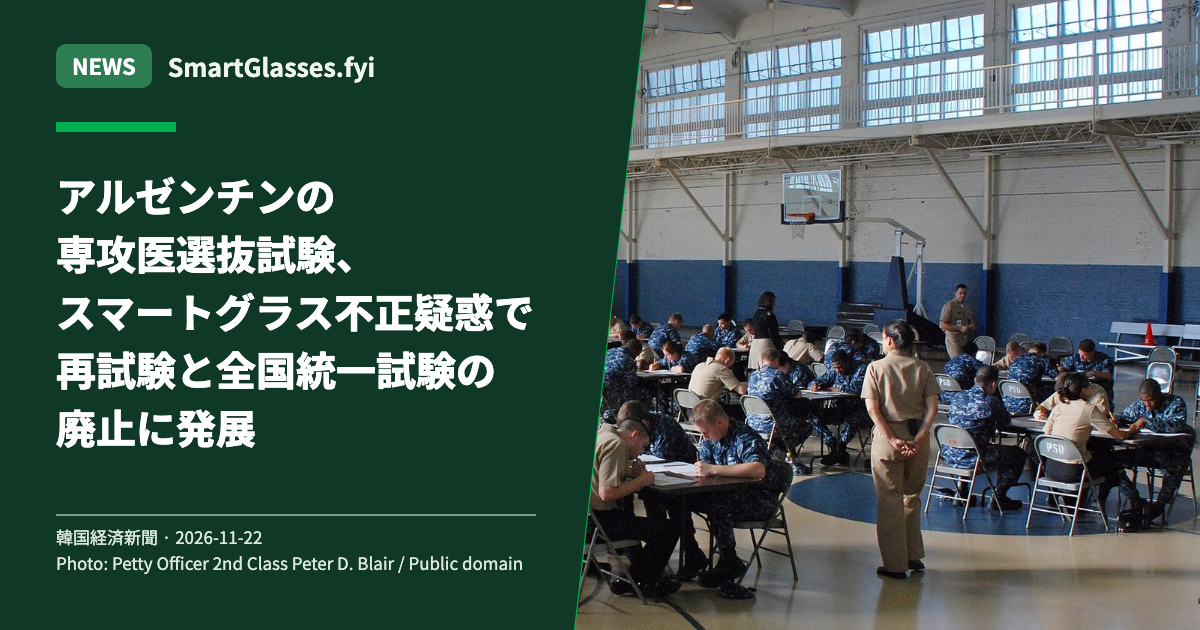
Argentina's residency exam: suspected smart glasses cheating leads to a retest and the abolition of the national unified exam
At Argentina's Ministry of Health residency selection exam, footage said to show questions being filmed with camera smart glasses spread, and the government criminally referred those involved. The 141 candidates whose scores were inconsistent were ordered to retake the exam, and all 117 who sat it failed to reproduce their original scores.
Hankyung →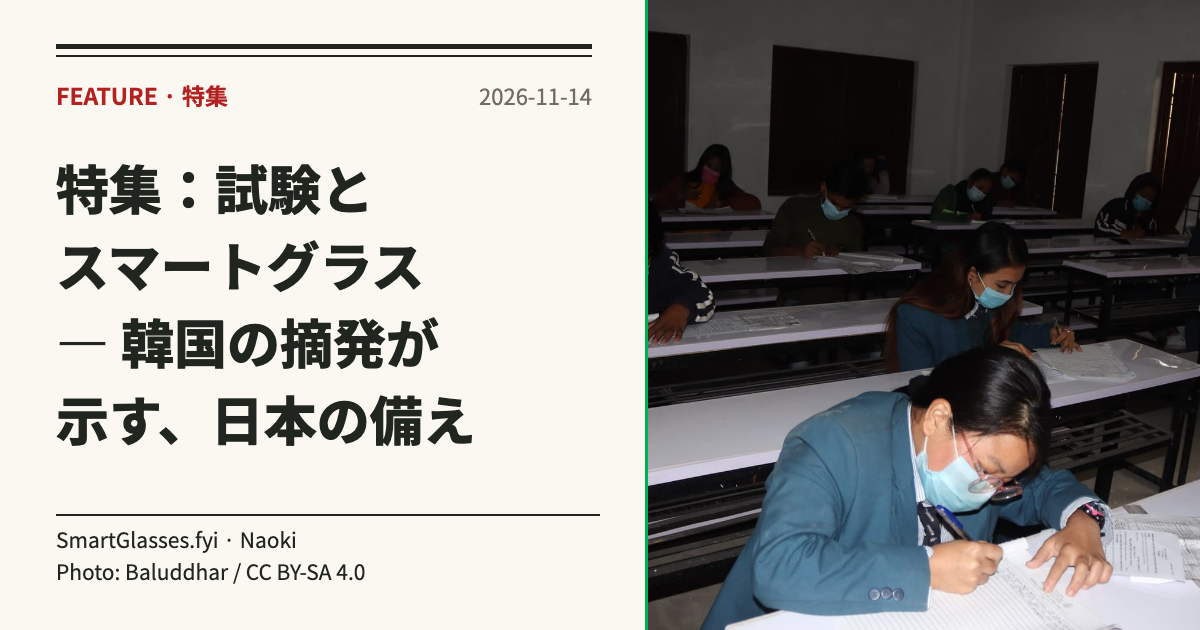
Feature: Exams and smart glasses — what South Korea's cases show Japan must prepare for
A feature that lines up, in chronological order, the smart glasses exam-cheating cases that actually happened in South Korea, and organizes the clues for telling the devices apart, the appraisal standards, and the preparation Japanese organizers can make.
Naoki →
Feature: Global smart glasses countermeasures — where the side that stops them stands
Alongside South Korea's and Japan's exam countermeasures, this feature covers Argentina's abolition of its exam, the Dutch authority's advice against buying, wearing bans at schools and venues, and sales halts, organized in four chapters: exams, regulation and sales, places, and the makers' responses.
Naoki →