
Opinion
INMO Future is out. The company claims standalone 1080P and spatial tracking
On November 4, 2026, Yingmu announced its fourth-generation standalone INMO Future in Chengdu. Binocular 1080P, 36° FOV, and SLAM/6DoF are company-stated figures. This piece sorts reported China pricing and how to read the reservations.
On November 4 in Chengdu, Yingmu Technology (INMO) announced its fourth-generation standalone AR glasses, INMO Future. The company describes them as a self-contained pair that does spatial positioning on-device without a phone or external host. The launch was at its own product event, and the same day's World Display Industry Conference also treated it as a Chengdu-born product.
Specs the company is stating
Every published figure so far is a company claim. Independent hands-on measurements are not out yet.
The display is binocular full-color 1080P via array waveguides that route the image through the lenses to the eyes. Field of view is 36°, peak eye luminance about 800 nits, and 33% brighter than the previous generation, the company says. The processor is a Qualcomm Snapdragon-class spatial chip; the exact model number is not public.
Tracking uses SLAM and 6DoF. In bright indoor spaces the company claims centimeter-class position and degree-class orientation, multi-plane detection within a few seconds, and persistent maps with spatial anchors so content can return to the same place after you take the glasses off. There is a dedicated controller, and audio comes from open-ear stereo speakers. The system is a spatial AIOS based on Android 14, with Android app installs and an OpenXR-compatible SDK planned.
Active cooling is also emphasized: under heavy load the frames stay under 42°C and the fan is about 40 dB, the company says. The previous AIR3 drew a North America recall notice over overheating, so this needs real-device heat and noise checks, not just the numbers.
Battery capacity, continuous runtime, and the final weight are not clear in this launch material. Some wording mentions about 100 g, but that is not treated as a confirmed spec.
Reported prices and how to read the reservations
Beijing Business Today reports China price tiers as: standard ¥6,999, launch ¥5,999, on-site ¥5,499, and ¥4,999 for existing users. The same event also introduced Magic AI Glasses, linked to Jackson Wang, at about ¥1,199 — a separate product from Future itself.
For the U.S., English coverage describes a refundable $30 reservation deposit and an unannounced Kickstarter VIP at about $799. A campaign start date is not out yet. Treat the deposit as a hold before a real order, not a purchase.
No official Japan store page or Japanese shipping notice has been confirmed at this point.
Where the AIR line differs from the GO line
Yingmu's lineup splits into two. The AIR line is standalone full-color AR from AIR1 through AIR3, and Future is the next, fourth generation. The GO line leans toward information display for translation and meeting notes; GO3 also shows up on Japanese retail. Future is not a GO3 successor — it extends the AIR side.
Against wider display glasses — for example host-tethered big-screen models — Future's 36° is narrow. What the company sells instead is standalone 6DoF placement of content in space. Which fits your use depends on whether screen size or untethered spatial control comes first.
What this means for readers in Japan
Among Chinese standalone launches that put binocular 1080P and spatial tracking in the same announcement, Future is a large one. The figures are company-stated, so heat, battery, and tracking stability remain unverified. If you buy, separate the China price tiers from the U.S. reservation that still stops at a deposit. When a Japan channel appears, follow price and warranty then.
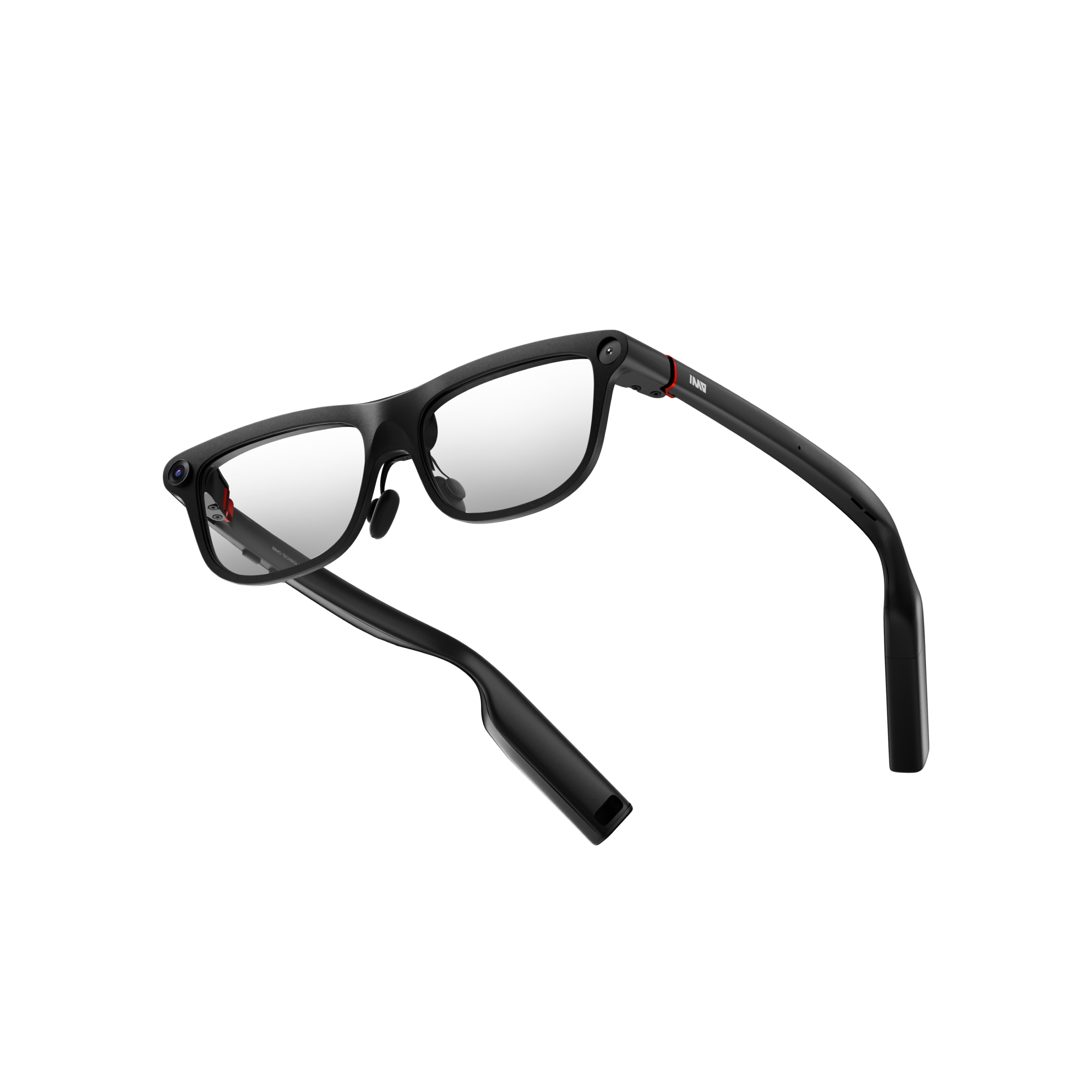 INMO GO3
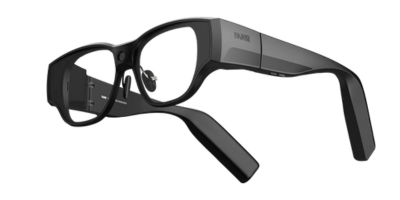 INMO Air3