
Comparison
An Even G2 fan tries Rokid Glasses
Having owned and compared two pairs of ¥100,000 smart glasses at the same time, I can say this confidently: right now, the Even G2 is the most practical and comfortable.
First published:note · This article and photos are reprinted from note.
AI-assisted English translation of the author’s Japanese article. Product screenshots and embedded source material are reproduced in their original language. Read the Japanese original.
As a person who has compared two 1 million yen smart glasses at the same time, I can assert.At this point, the most practical and comfortable smart glasses are Even G2.
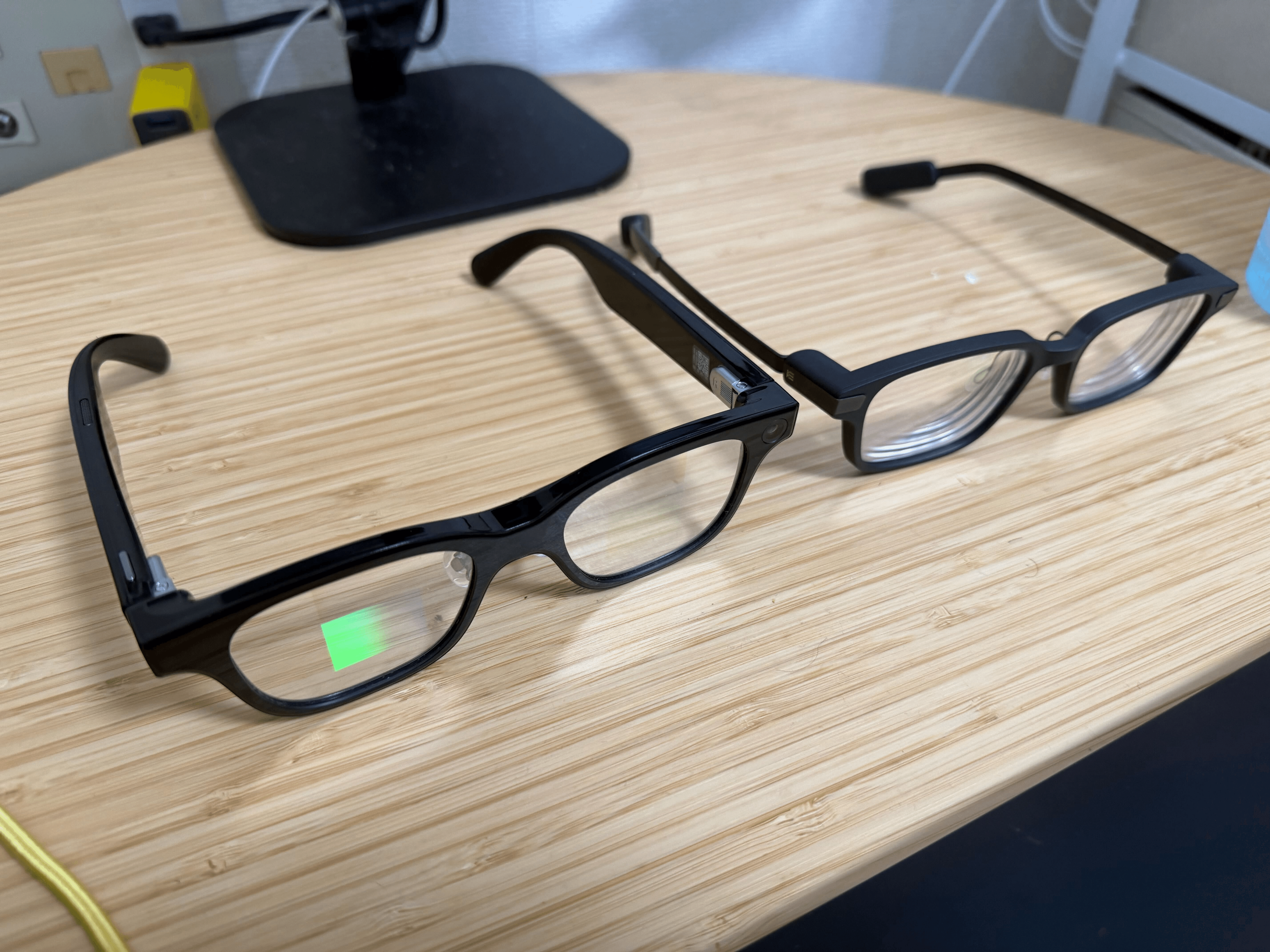
This is a reconfirmation of what I wrote in the previous review article of Even G2. After actually buying and using Rokid Glasses for several days, I can say it again.
Introduction: My stance
Before getting to the main topic, there is one thing I want to clarify: the usage of the term "smart glasses".
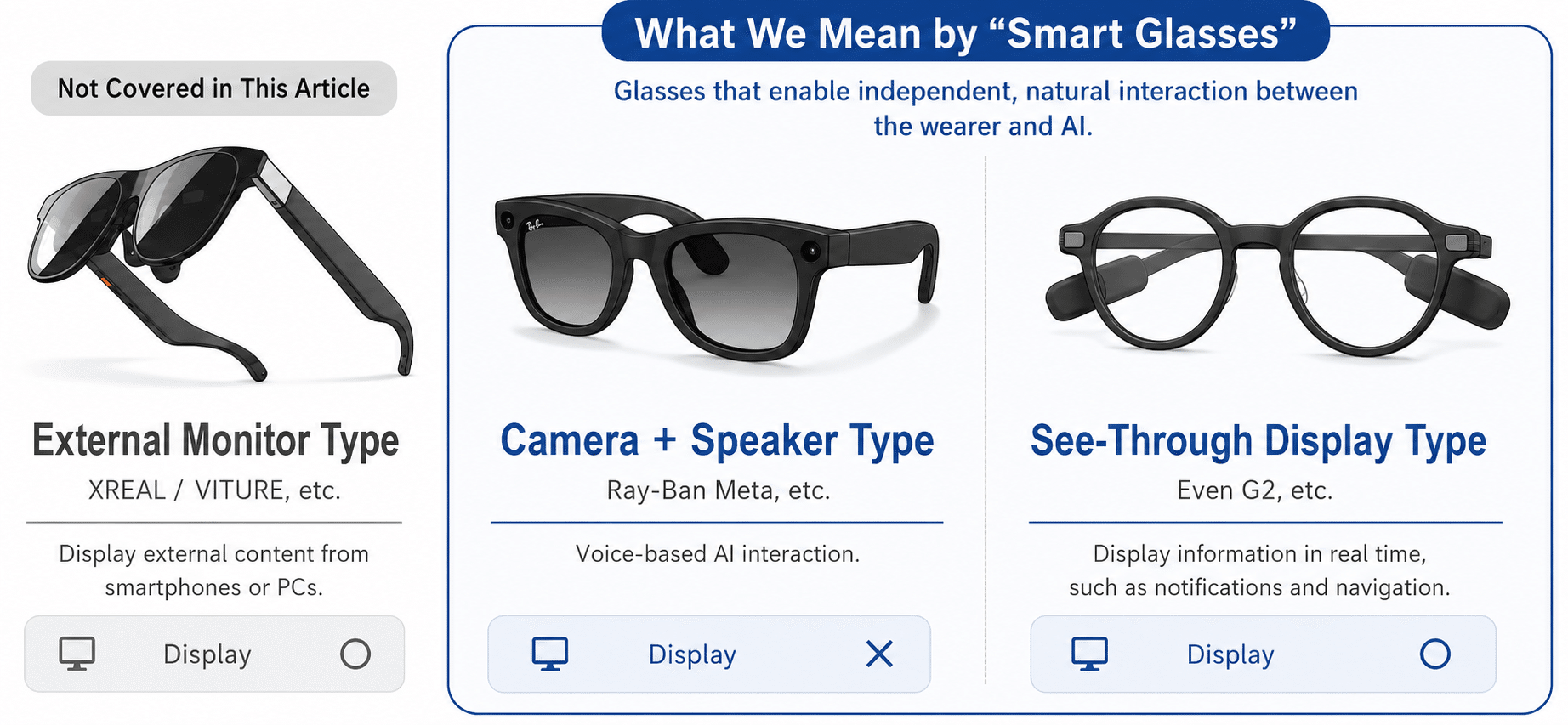
In the world, devices called "smart glasses" are actually three or so different genres of products that are categorized under the same label.
-
Portable external monitor type like glasses: such as Xreal, Viture. Those used as external displays for smartphones or PCs
-
Camera-equipped AI earphone type: such as Ray-Ban Meta, Rokid AI Glasses Style, Xiaomi AI Glasses, etc. No display, but can interact with AI through camera and speaker
-
Glasses-type Apple Watch series:Even G2 etc. Floating information in your field of vision to create an Apple Watch-like experience with notifications, navigation, translation, etc. using glasses
Although the shapes are similar, the ideas are different. I've seen many times that people use the same words to describe completely different products and their stories don't fit together. So, I would like you to follow my interpretation while reading this article.
What I call "smart glasses" refers to a device in which the glasses themselves can independently establish interactions with humans.
Input and output can be achieved with just the glasses, such as by returning sound through speakers or outputting information through a display. This is the condition.
In other words, out of the three categories above, my "smart glasses" include 2 and 3. External monitor systems like Xreal and Viture have no independent intelligence or input/output. Although they are similar in shape, they are essentially devices in a different category, so they will not be included in the discussion in this article.
Camera and speaker glasses without a display like the Ray-Ban Meta are, in my opinion, an extension of audio glasses. However, since they meet the minimum requirements for smart glasses in that ``you can talk to the AI and receive voice feedback with just the glasses,'' they will be used for comparison here.
I want you to read this article with that mindset.
About this article
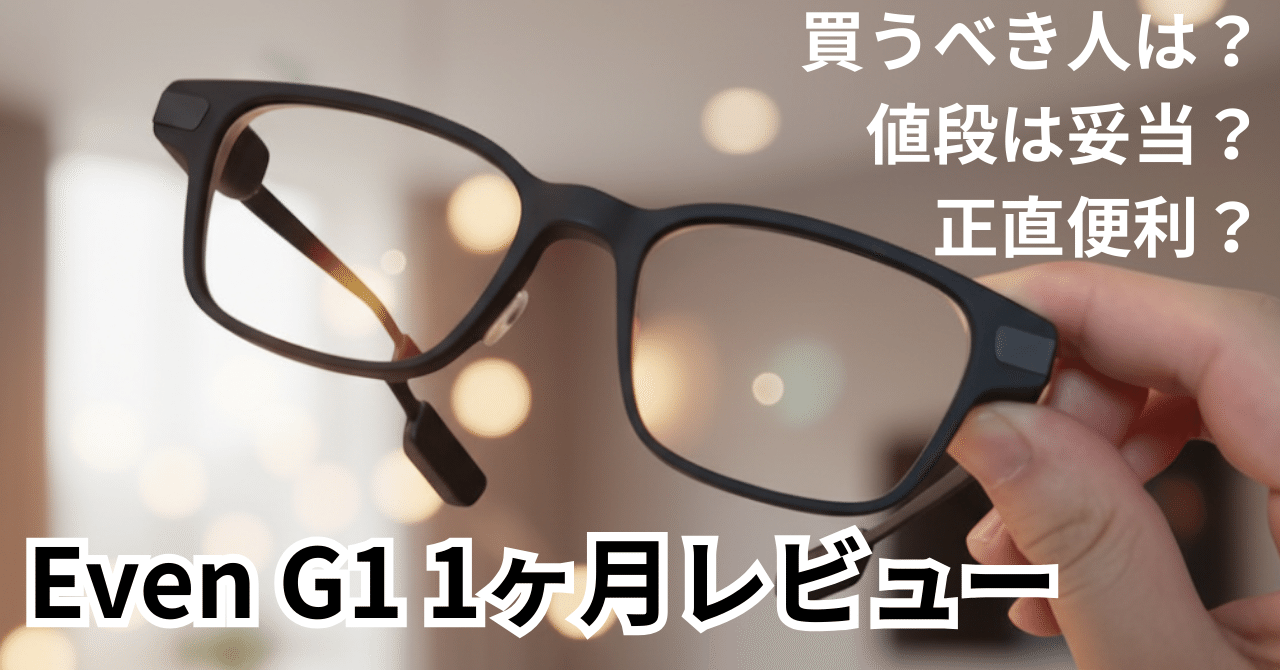
I am the person who started with the Even G1, wrote an article declaring that you should buy the G2 before its release, and gave it a score of 120 on the actual device.
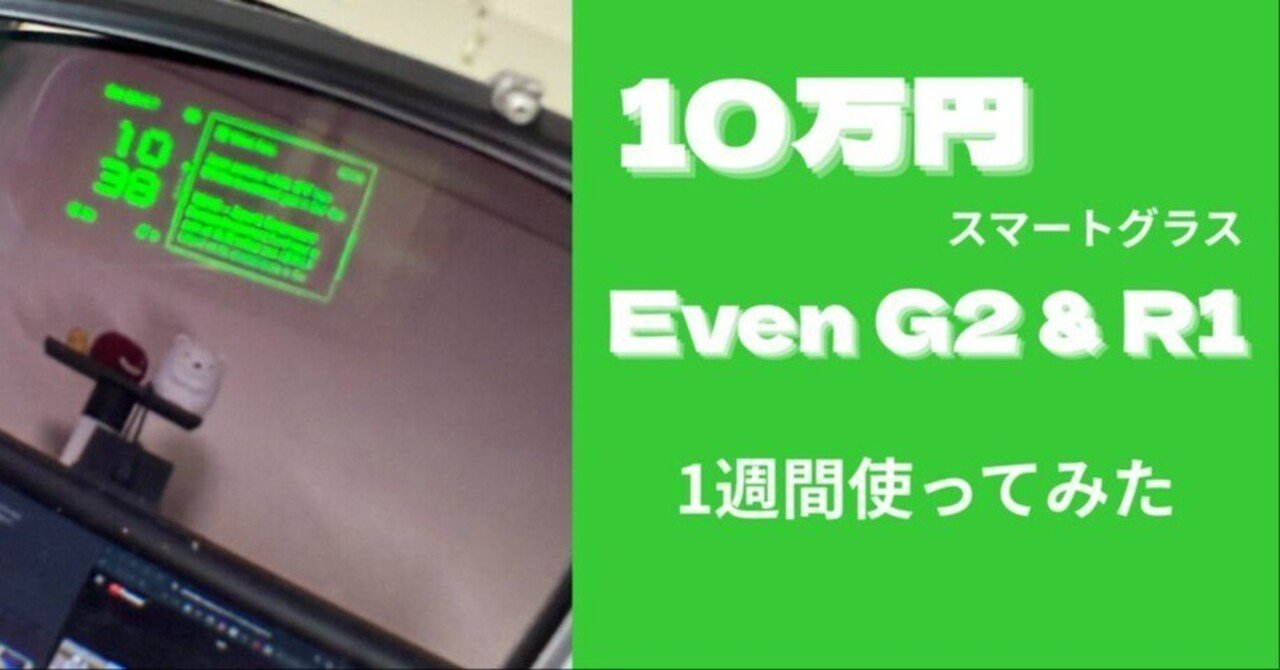
I'm looking to buy at least 5 smart glasses this year alone. I'm so hooked that I've seriously calculated that even when compared to ICLs (intraocular contact lenses, which cost about 500,000 yen), smart glasses would pay for themselves over a lifetime. Well, this is just rationalization, and it doesn't matter whether you can pay or not. It's a pain to buy a prescription every time.
Such a person bought Rokid Glasses at Makuake. It's the same "smart glasses with display" as the Even G2, but the concept is almost the exact opposite.

It's one thing to read the spec sheet and feel like you understand it, but spending the day wearing it on your face is a completely different story. This is also the most important attitude in the previous Even G2 review.
This article is meant to be a comparative article, but please do not expect an unbiased perspective. If you want to see a comparison based only on fair specs, just ask AI. This is a self-righteous article based on my personal opinion and experience, so I generally don't mention irrelevant information that doesn't affect the experience. I don't care how many mAh the battery is or how much it costs. Actual hours and experience are what matter.
I used it for a few days. Now it's clear why I think Even G2 is good. At the same time, I'd like to write about a story that seemed to overlap with the feeling I had when I tried Ray-Ban Meta a while ago.
What are Rokid Glasses
If you know, please skip it. AI will tell you this much.
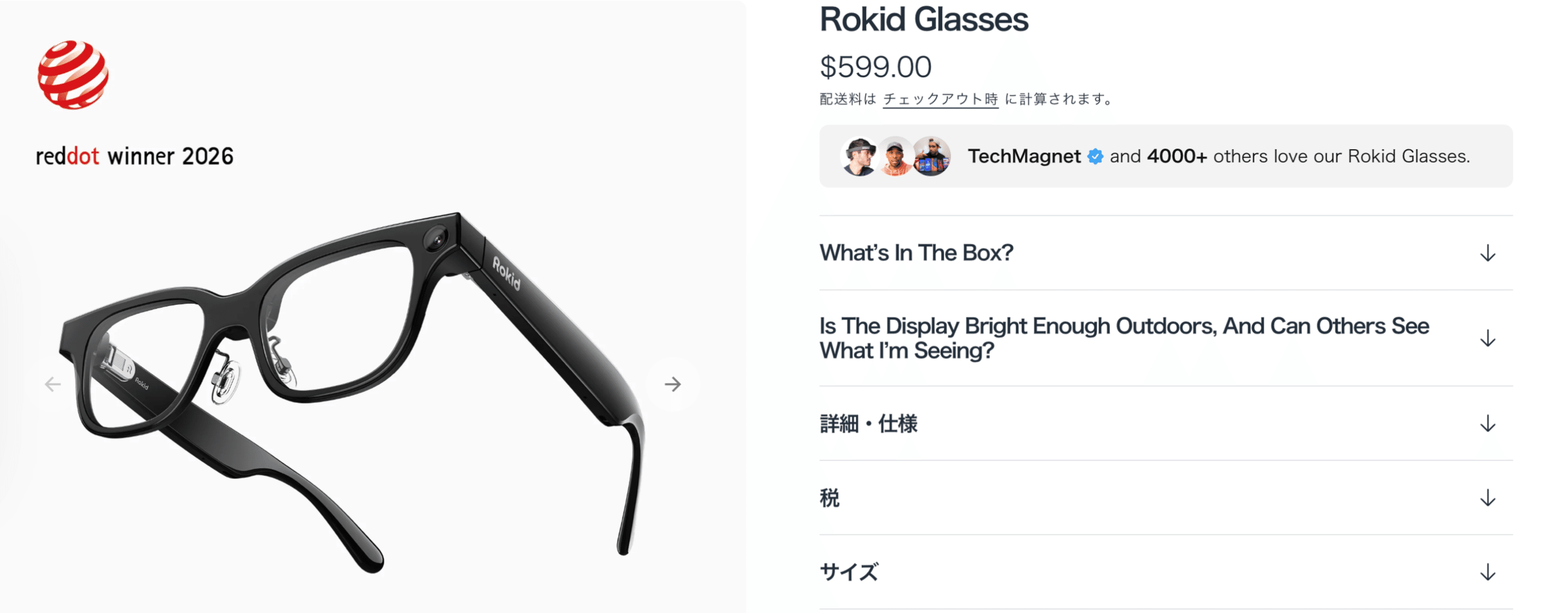
Rokid Glasses are display-equipped smart glasses developed by China's Rokid. Micro-LED + diffractive optical waveguide displays monochromatic green information in the field of view. The mechanism is in the same category as Even G2.
The difference is "what is posted" (Official specifications)。
-
12MP Sony IMX681 camera (109 degrees diagonal, 1680p video = official designation "3K video")
-
Open ear speakers (AAC 0920 x 2)
-
4 microphone array
-
Real-time translation of 89 online languages + 6 offline languages
If you just look at the spec sheet, it looks like it's upwardly compatible with the Even G2, which doesn't have a camera or speakers. The price is Makuake Pre-order starts from 79,990 yen, general sale 109,890 yen。Even G2 is 99,800 yenSo they're almost in the same price range. If you include R1, EvenG2 is about 50,000 yen more expensive.
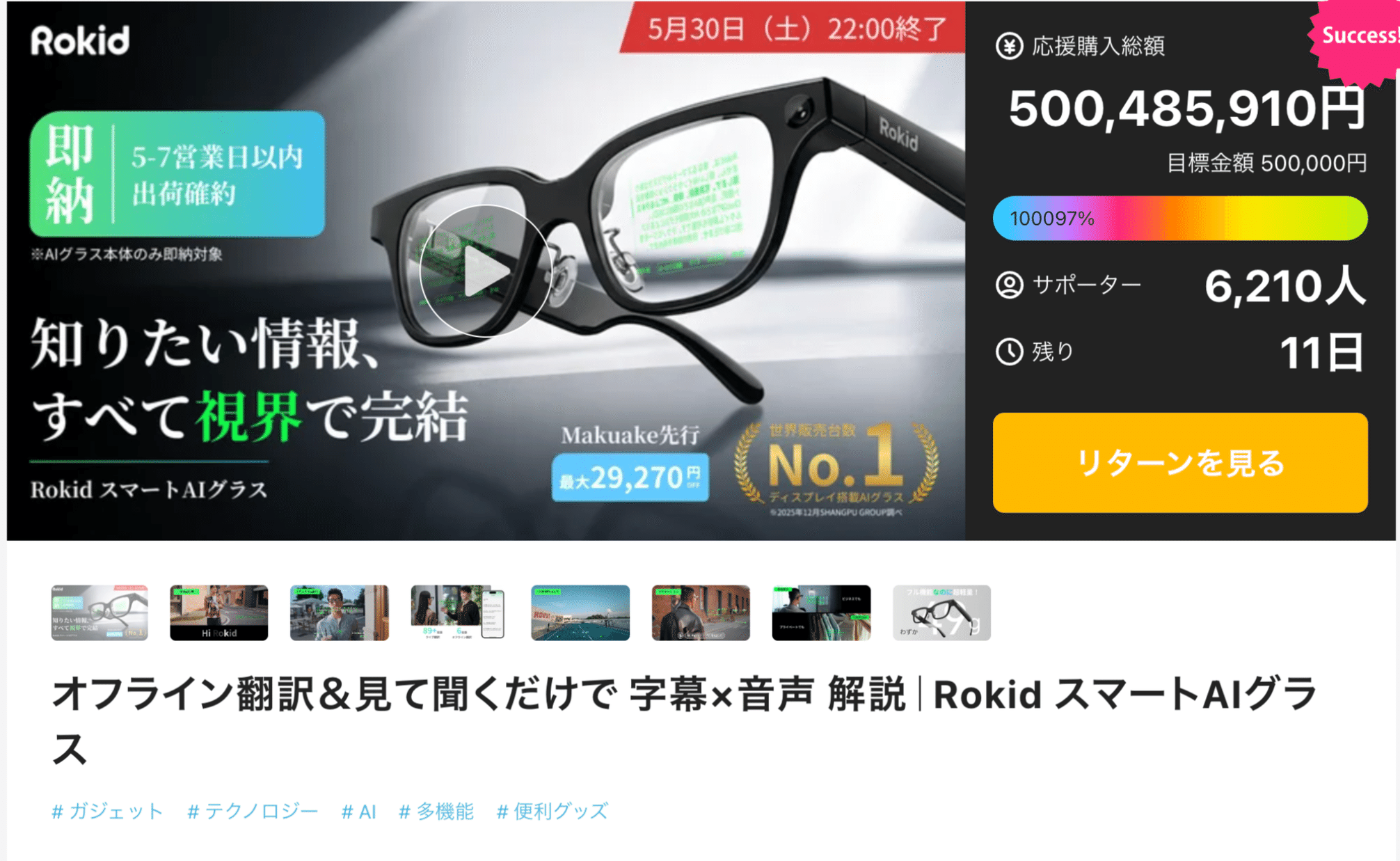
If you think about it normally, you should buy the one with more features for the same price.
No.This is the subject of this article.
Positioning map of the smart glasses market
Before proceeding further, I would like to draw a map of the entire market.
Among smart glasses, the presence or absence of a display is seen as the biggest dividing line. Smart glasses without a display (such as Ray-Ban Meta) have only audio feedback to their vision, and even if a camera is added, the output path is the same as earphones. On the other hand, vehicles with displays offer a fundamentally new experience of having information floating in your field of vision. This is the true nature of smart glasses, and we believe this is where the real competition begins.
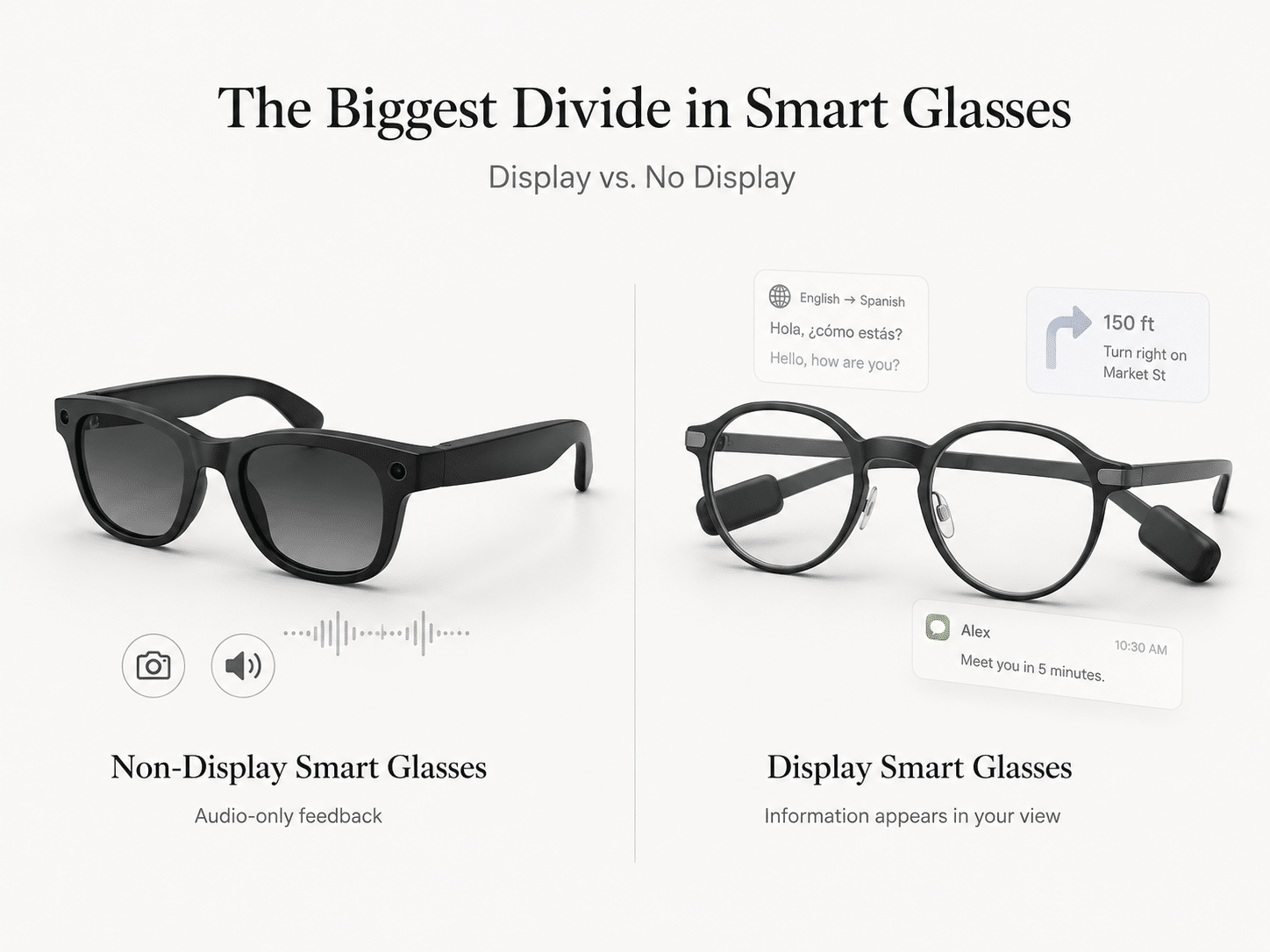
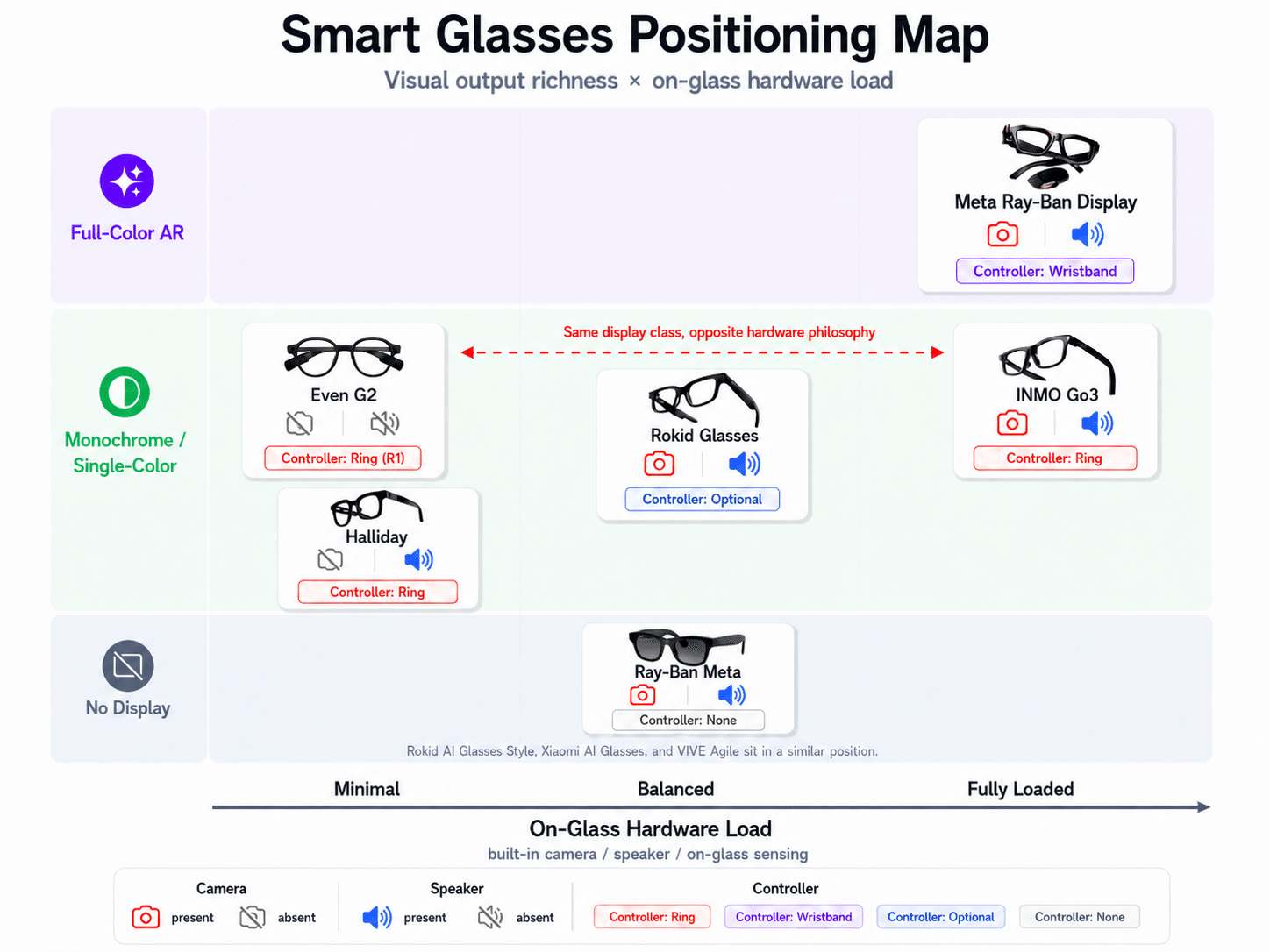
There are two axes. The vertical axis is visual output richness, and the horizontal axis is on-glass hardware load.
Vertical is ``What can I put out in my field of vision?'' Full color AR (Meta Ray-Ban Display), below that is a system of monochrome single color display, and at the bottom is no display = extension of audio glasses.
Next to it is ``How many cameras, speakers, and dedicated controllers were placed on the glasses themselves?'' Line up in the direction of Minimal to Fully Loaded. Even G2 is extremely minimal with no camera or speakers. The Meta Ray-Ban Display and INMO Go3 are fully equipped with cameras, speakers, and dedicated controllers.
Organize the composition of each product in a table. ``Dedicated operating devices'' are those sold through the manufacturer's official channels (including AliExpress, etc.). Halliday's Trackpad Ring is included with the purchase, and Rokid Glasses' ring-shaped mouse is available on AliExpress.
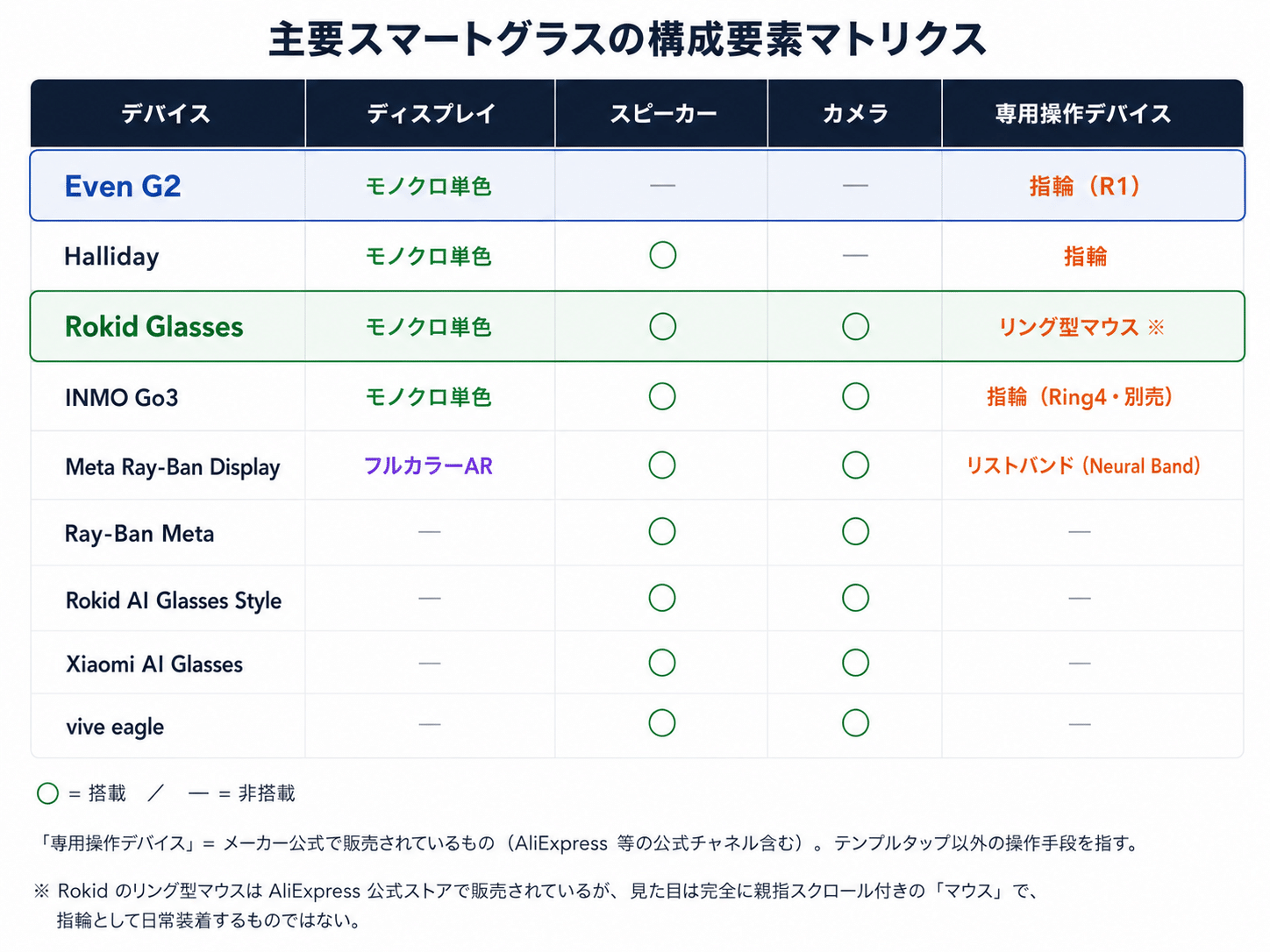
When lined up side by side, only the Even G2 is in an isolated position with no camera or speaker, only the control device (R1 ring). On the other hand, the Ray-Ban Meta series (four products in the No Display band) do not have a display and are only equipped with a camera and speaker. The INMO Go3 and Meta Ray-Ban Display have almost everything that can be mounted on them.
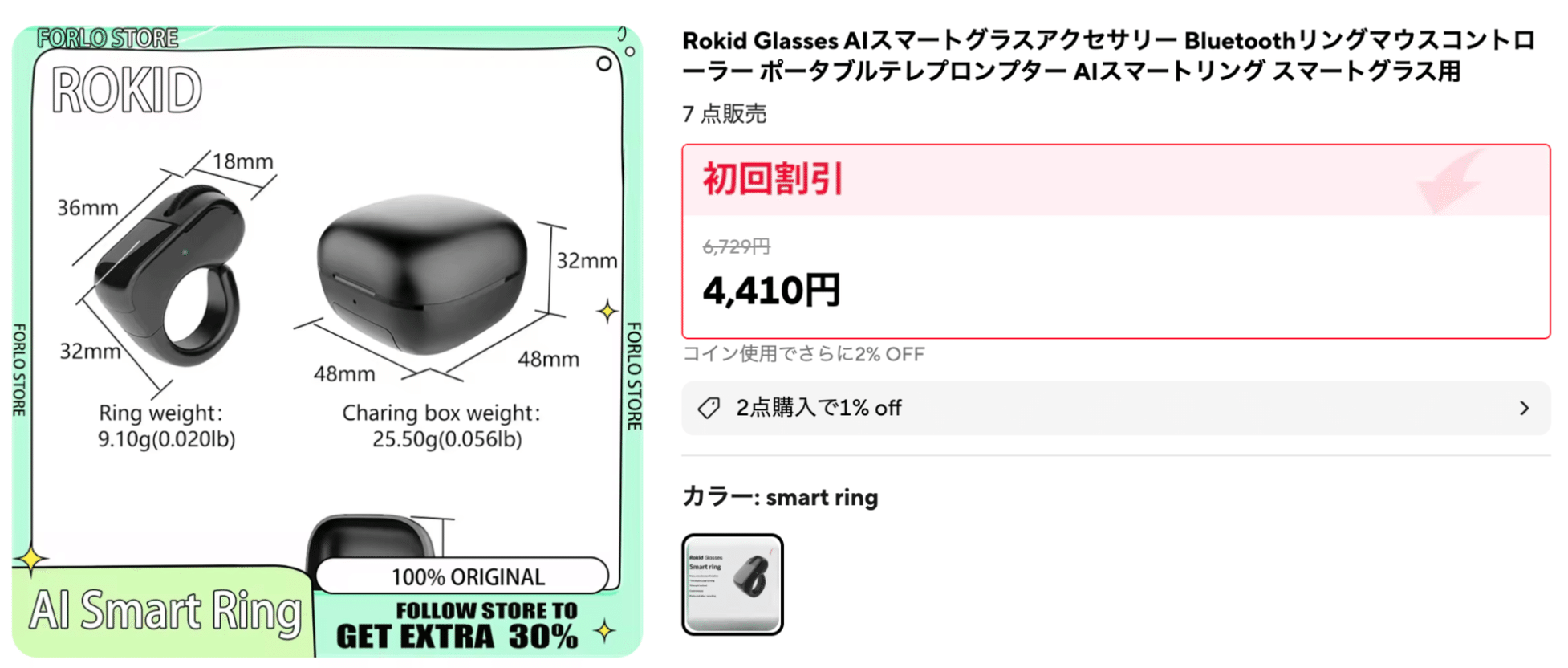
There is something equivalent to the control ring for Rokid Glasses on the market, but this is clearly a "ring-shaped mouse" rather than a "ring" (see below). Same ○ But the contents are quite different. Also, since there is no lead from the official website, Rokid's controller is clearly distinguished from "Optional" and Halliday, Even G2, and INMO Go3's "Ring".
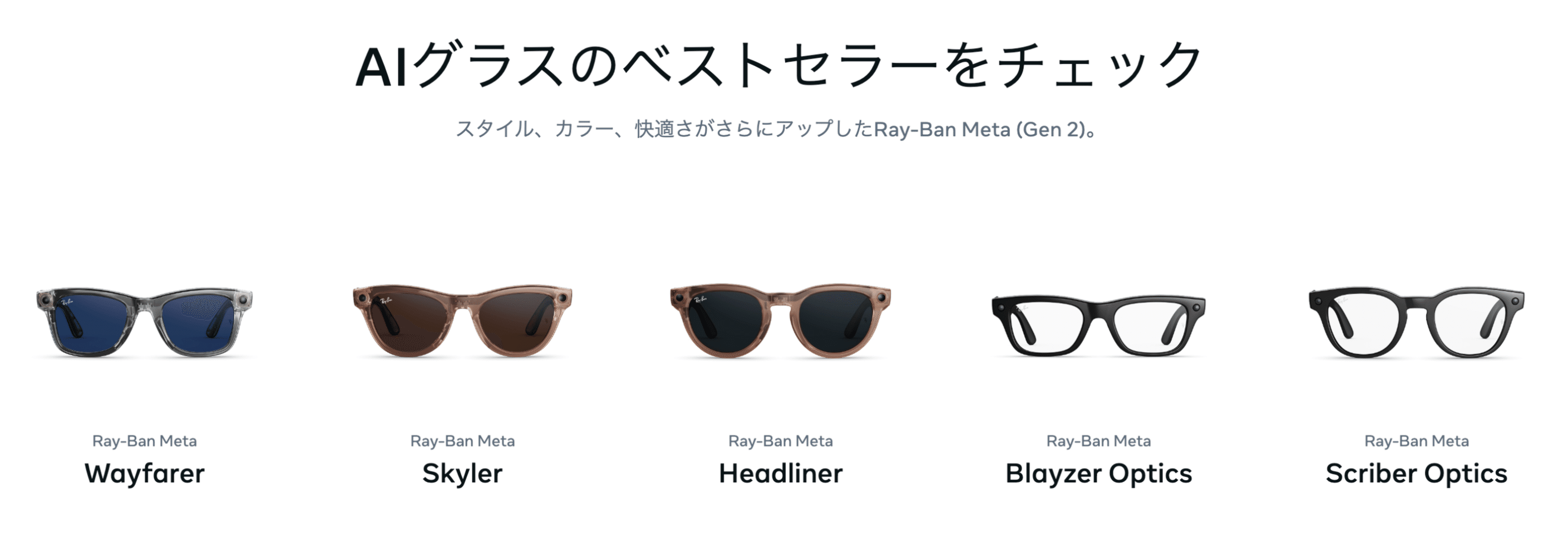
Most smart glasses tend to have the camera on the right side. Ray-Ban Meta isMore than 7 million units will be sold in 2025 alone.(EssilorLuxottica financial results), this can be said to be the center of the market.Rokid AI Glasses Style、Xiaomi AI Glasses、VIVE Eagle This is also the route.
There are surprisingly few products that focus on the "monochrome and minimalist" realm, that is, the display and the minimum necessary operations.Halliday Glasses The Even G2 is similar in that it is a subtractive system that just has a speaker, but when considering price and availability, the Even G2 is the de facto representative.Brilliant Labs Halo is also in the vicinity, but its configuration is intermediate as it has an optical sensor for AI inference and a bone conduction speaker, and the display is announced to be a 0.2-inch full-color micro-OLED HUD, and the display hierarchy is different from the monochrome monochrome band of Even G2 / Rokid Glasses, so it is not shown on the map.
Of the ``3 categories'' mentioned at the beginning, two are on this map: AI earphones with cameras (no display band) and glasses-type Apple Watch types (monochrome single color band/full color band). Even though they are both called "smart glasses," the experiences of the two are completely different.
My experience with Ray-Ban Meta
Before I get into my review of Rokid Glasses, I'd like to talk about my impressions when I tried the Ray-Ban Meta. This is directly related to this story.
Ray-Ban Meta is a displayless AI glass with a camera, speaker, and microphone. Meta's Ray-Ban collaboration sunglasses look great and are an overwhelming success on the market. It is extremely rare for smart glasses to come in so many designs.
Honestly, I didn't think this type of device would add much value to the experience.
When I tried it, it wasn't that bad. The look-and-ask feature, where you can ask the question ``What is this?'' through the camera, certainly has its funny moments. There are clear benefits to having a camera in situations where both hands are occupied, such as while cooking or cycling.
But there was nothing more.
The experience is like ``camera glasses that can use Siri.'' Since there is no visual feedback, all confirmations rely on audio. Half of the functionality is lost in situations where you can't make sound, such as on a train or in a meeting.

And I kept thinking about it while using it. Isn't this a big difference in what you can do in your daily life than saying "Hey Siri" with AirPods? and. It's a little richer because of the look-and-ask feature. I admit that. However, ``the experience is only possible if you wear glasses'' is lacking.
And this feeling was similar to the feeling I had when using Rokid Glasses.
Rokid Glasses can be considered a Ray-Ban Meta with a display attached. It's certainly a step above the Ray-Ban Meta because of the display. As long as it can give visual feedback, it is close to the essence of smart glasses.
However, what is lost by installing a camera and speaker. It's the battery, weight, and fit details that cause the same problems as the Ray-Ban Meta. This is not a coincidence, but a structural issue. The cost of installing cameras and speakers is not commensurate with the current return. After touching both of them, I was convinced.
Camera evaluation: Only a casual camera

Write from a defensible point. The Rokid Glasses camera is better than I expected.
Sony IMX681, angle of view 109 degrees. To be honest, when I looked at the first photo I took, I thought, ``The angle is wider than I expected.'' The image quality isn't bad either. HDR works too. Since the stance is more natural than when taking pictures with your smartphone, it is suitable for capturing moments in your life.
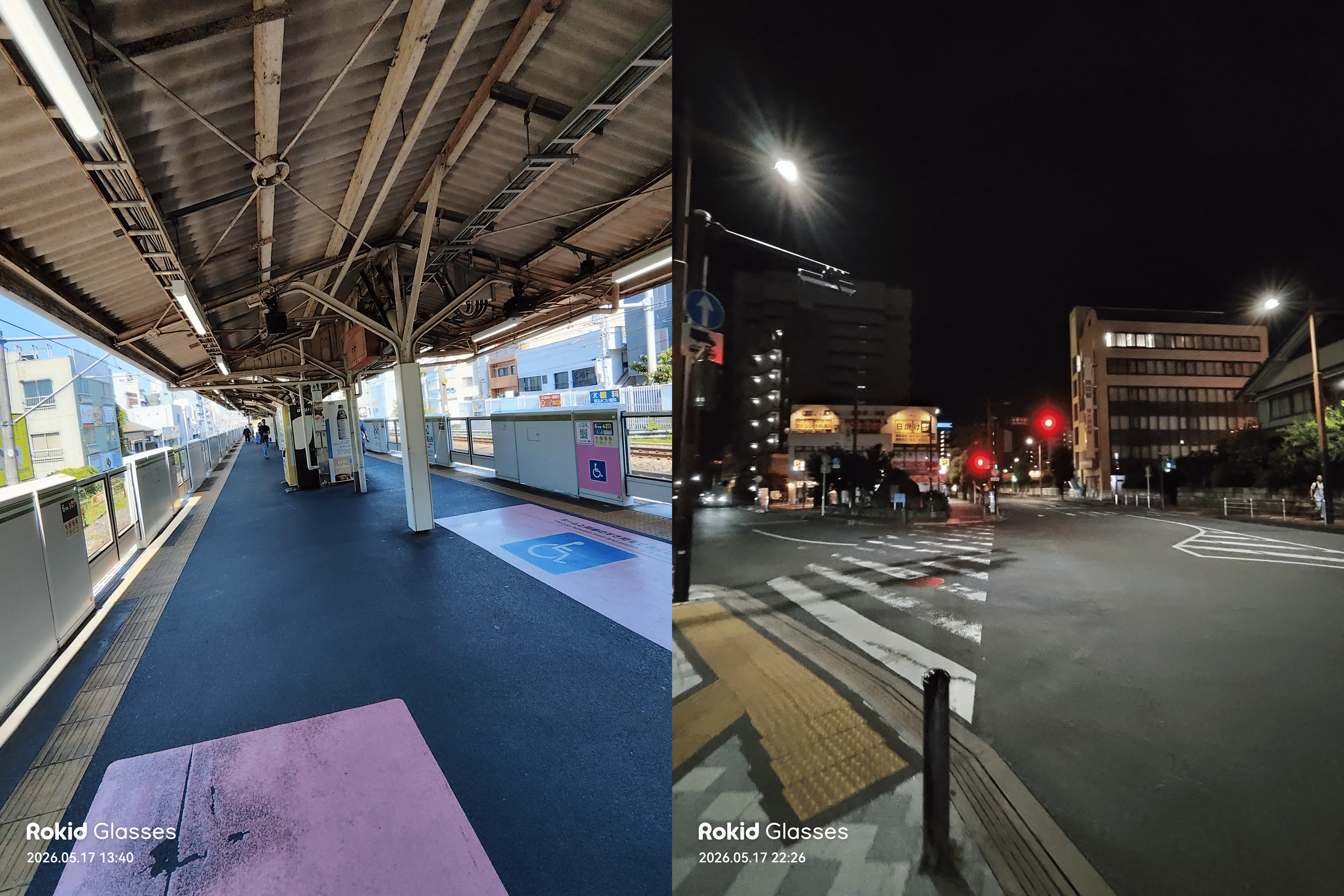
However, there is little that can only be done in this way.
Camera glasses can be used for only three purposes.
-
Take photos and videos hands-free
-
Ask AI what’s in front of you
-
Translation camera (signboards and menus)
1 is convenient, but it can also be done with Ray-Ban Meta, and is not unique to Rokid Glasses. Ray-Ban Meta has better camera image quality and ecosystem.
2 is interesting. It's also nice that you can choose between GPT-5 and Gemini. However, after trying it out for a few days, I realized that the moments in my life when I want to ask a question using the camera and AI don't come as often as I expected. There are many situations where it's faster to Google something on your smartphone, and the experience of seeing the answer in green in your field of vision has a futuristic feel, but it doesn't become a habit.
Moreover, you have to reach for the temple every time you ask a question. It doesn't bother me at first. But please think about it. Every time I think, ``I want to ask something,'' I lift my arm to my temple, feel the touchpad with my fingertips, and tap. Repeat many times a day. When you're carrying a strap on a train, carrying shopping bags, or talking to someone, you need to free your luggage and hands before raising your arms. Each movement takes a few seconds, but you have to repeat this ritual every time you feel like listening to something right now. By the third day, you'll start to give up and think, ``I guess I'll just use my smartphone after all,'' before I even get to grips with it. The hurdle of "I just want to ask something" is higher than expected.
3's translation camera is a godsend when traveling abroad. I accept this. However, I am currently reading Japanese in Tokyo. It doesn't come into play in everyday life.
In other words, Rokid Glasses cameras currently do not offer value beyond being a camera that can easily take snapshots. It's not better than the Ray-Ban Meta, nor is it significantly more convenient than a smartphone.
For a serious review of the camera functions, including the translation camera, I would like to try out the actual device at WWDC in June. The true value of this function will be tested in an environment where English signs and signs must be translated continuously overseas. However, there are concerns. Regulations and social reactions to camera-equipped smart glasses are changing daily in the United States, and if the situation is questionable, I'm seriously considering the option of not bringing the Rokid Glasses and only using the Even G2. I will answer that in a separate article.
Risks of mounting cameras: Ethical hurdles outweigh benefits

Before we talk about features, we need to go one step further. Smart glasses with cameras are not yet socially accepted.
This isn't just a problem with Rokid Glasses, but with camera-equipped glasses in general, including Ray-Ban Meta. The fact that it is impossible to tell from the outside whether someone is filming or not is creating a fundamental sense of distrust.
When you take a photo with your smartphone, you obviously hold your smartphone. The other person can see that you are taking a picture. This has become a tacit social agreement. It's easy to see that they're taking pictures, so it's easy to stop them if you don't like them, and you can also avoid them from the frame.
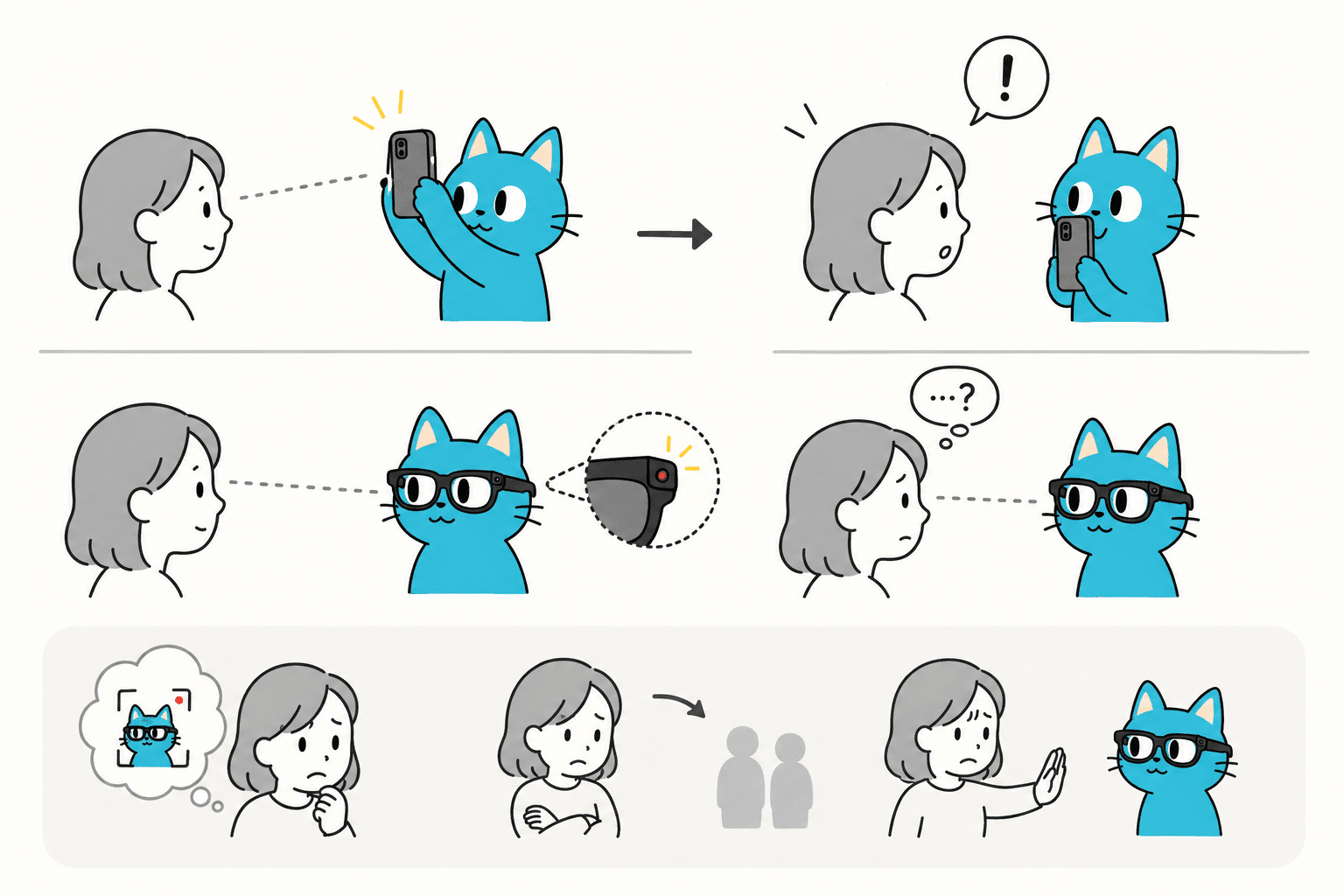
Camera glasses destroy this agreement. There's a small indicator LED near the lens, but people often don't notice it, and the device is always facing your face. From the other person's point of view, if they were looking at me, wouldn't they be filming me? It makes me think.
An actual incident occurred with Ray-Ban Meta. In 2024, Harvard students AnhPhu Nguyen and Caine Ardayfio combined Ray-Ban Meta with the facial recognition service PimEyes to create a tool that can identify the identity, address, and workplace of strangers you pass on the street.I-XRAY project) was demonstrated. They kept the code private andDemo video and explanation``This is a demonstration to make society aware of what is possible with current technology.'' Camera-equipped glasses can become social surveillance devices if used maliciously, and this is an example of how technology has already reached this point.
Not only this, but the problem of secretly filming has also become the subject of great debate.
My point here isn't that Rokid Glasses or Ray-Ban Meta are bad. Currently, the benefits of installing cameras are not commensurate with the current social and ethical risks.
Try putting it on the scale.
-
Advantages: You can take pictures hands-free, you can ask AI “What is this?”, and you can translate signs.
-
Risk side: giving a sense of distrust to people around you, being suspected of being photographed without permission, being rejected by stores and facilities, being used for surveillance when combined with facial recognition
Is this benefit worth the cost of people thinking on the street, ``I don't like that person wearing camera glasses?'' I don't have one at the moment.
To be honest, I don't really care if the person sitting across from me is playing Ray-Ban Meta. If the indicator isn't flashing, I haven't taken a picture, and if I'm concerned about that, I'd feel more sorry for being in the frame of some high school girls taking TikToks. This is my true opinion.
However, I do admit that there are people in the world who don't think that way. There is definitely a group of people who feel that the very existence of camera-equipped glasses is stressful and that they don't trust indicators. The reaction to the Ray-Ban Meta when it came out, and the fact that there have been cases of people refusing to wear it in stores, testify to its existence. We cannot ignore the obvious fact that just because we don't care, it doesn't mean that society as a whole doesn't care.
This problem may be solved in the future. A large indicator that clearly shows when recording is in progress, a function similar to a PC camera cover, social consensus building, and regulatory development. Or the emergence of definitive benefits that outweigh the risks, such as the aforementioned ``displaying the name of the person in front of you using facial recognition''. There will come a moment when the balance will be reversed.
But we're not at that stage right now. What you get by installing a camera is nothing more than a camera that can easily take pictures, but the social cost you pay in exchange is definitely heavier.
I think Even G2 is the correct answer from this point of view as well. Choosing not to mount a camera not only subtracts functionality, but also subtracts social friction. As a glasses user, the value of having a device that you wear every day that is designed so as not to give off a sense of distrust to those around you does not appear on the spec sheet, but it is certainly significant.
What you lose the moment you put the camera on: battery

When evaluating smart glasses, the battery is not just a feature, but a prerequisite. If you can't wear a device every day, no matter how many functions it has, it will end up in your drawer.
Arrange the numbers.
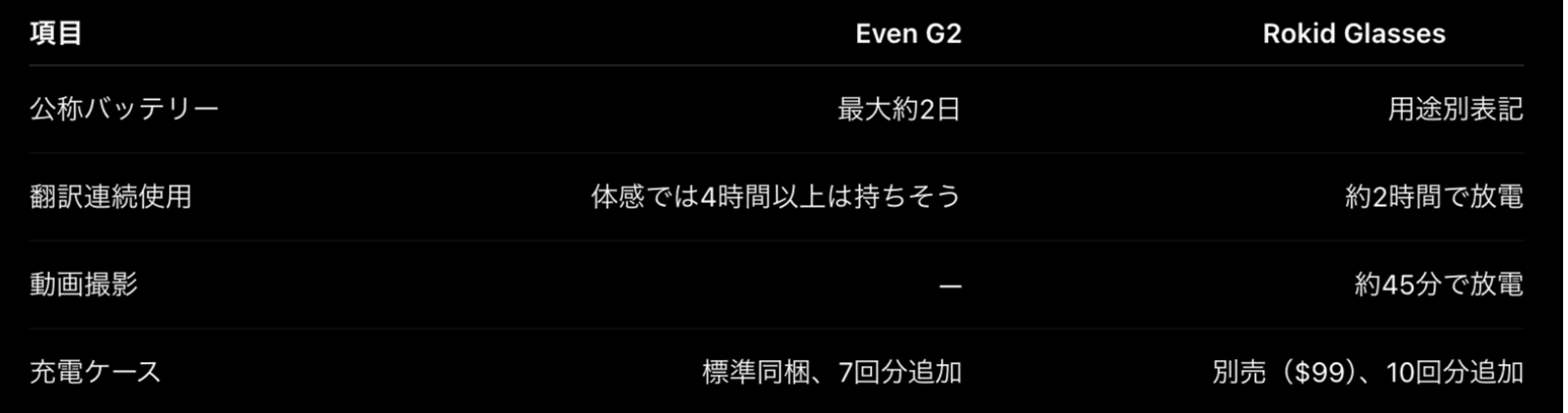
Rokid Glasses lasts approximately 5 to 7 hours under normal use.Tom's Guide ReviewIt also says that ``if used hard, it will dry up in less than two hours.''
Then there's the matter of operation. Even G2 can be fully charged in the morning by simply putting it in its special case and sleeping. There is almost no need to worry about running out of battery while on the go.
Rokid Glasses are sold separately with an official charging case for $99. Not included as standard. Charging is done through the magnetic pogo pin terminal at the end of the right temple. What's included is a short dedicated cable that converts USB-C to pogo pins, so it's more like just plugging it in when you get home. The magnet of the pogo pin sticks more firmly than I expected, so even if I used it with the USB plugged in and wearing glasses, it didn't seem like it would fall off (although this is not something I would use regularly). I think one of the benefits of the Even G2 is the sense of security that ``I can just put it in the case and go to bed and it will come back to life in the morning.'' However, when it comes to charging on the go, the Even G2 has a large case that gets in the way, so it's hard to say which one is better.
In fact, if you use Rokid Glasses for a day, with the default settings, you will start to notice charging in the evening. I thought, "I can't bring this to WWDC naked." I'm trying to write an article covering WWDC this year using smart glasses. I haven't decided whether to bring it yet, but I plan to bring it if the separately sold battery clip arrives by WWDC. However, in the United States, there are ongoing discussions on regulations regarding smart glasses with cameras, and if the situation is questionable, there is a good chance that they will stick with the Even G2 and leave the Rokid Glasses alone.
By the way, if you turn off Hi Rokid's constant listening functions such as wake word standby, live translation, and camera AI, it will last three times as long. It can't be helped since it says so on the settings screen, but honestly I don't use HeySiri much, so I think it's better to leave it off by default.
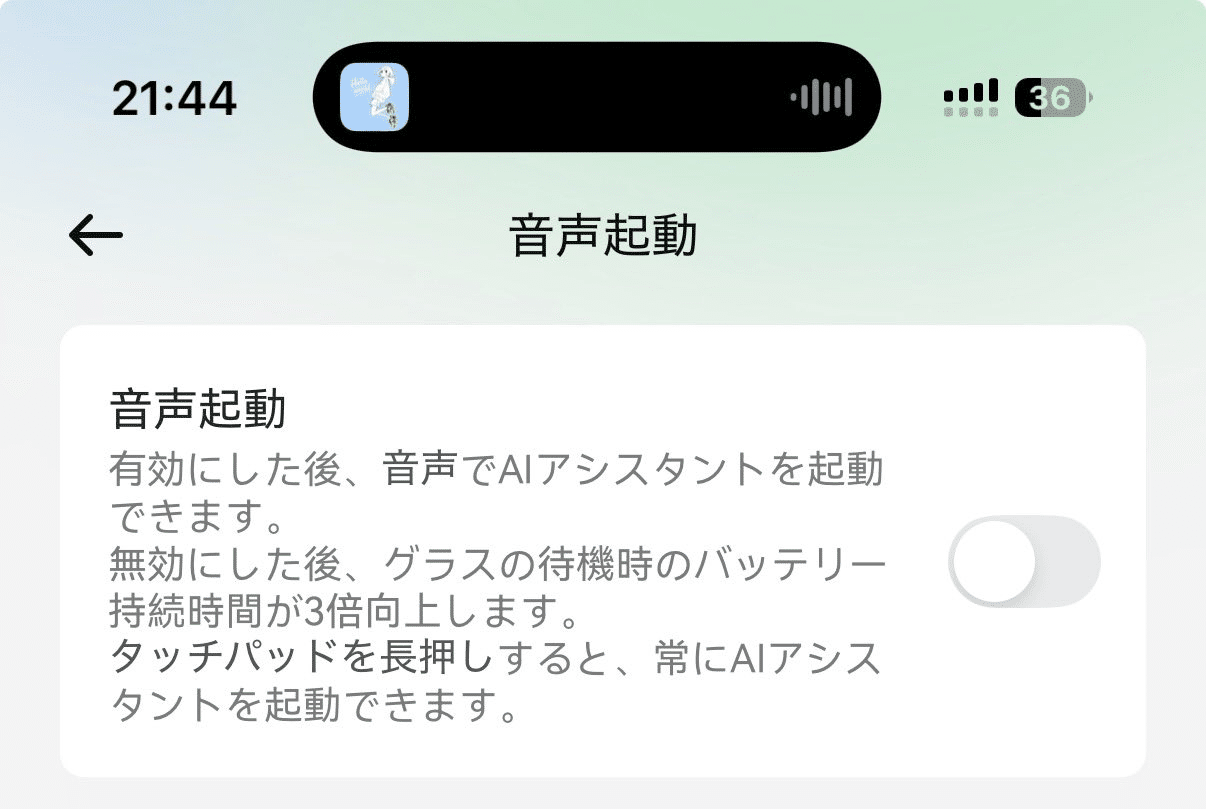
The cost of installing cameras and speakers gradually pays off in this way. It's a cost that you can't figure out just by looking at the spec sheet, but only when you use it every day.
Speaker evaluation: Do I need earphones?
Rokid Glasses' speakers seem to be designed with directionality to suppress sound leakage.
Let's actually listen to it. Sound comes out. Hear the AI's answers in your ears. At first I think, "Oh, it's the future."
I get bored in 3 days. In the first place, if it's an AI answer, a display is better. Because it's faster to read.
-
In a quiet room, there is some sound leakage. Cannot be used on trains
-
Listening to music is difficult in terms of sound quality and privacy.
-
Can be used for calls, but AirPods Pro is overwhelmingly more comfortable
-
In the first place, I usually spend a lot of time wearing earphones, so I end up listening with earphones.
Having a speaker allows you to play and stop music using the temple controls, which is a subtle difference that the Even G2 cannot. However, you don't have to use smart glasses to control audio playback. Since you can do the same thing by simply pinching AirPods, there's little inherent value here. It's great for karaoke because it has a lyrics display function...?
The Even G2, on the other hand, does not have an audio output device in the first place. Notifications are basically visual displays only. At first you think, ``What, there's no sound?'' but after using it every day, you realize that visual notifications are enough.
Information appears in the corner of your vision. Open it upwards or spread it out with the R1 gesture. This allows you to choose between notifications. No sound needed. Even if there is, a beep sound is enough. There's little need for smart glasses to play music, and there aren't many situations where you want the AI to read out answers. Even G2 hits this point perfectly. I ended up cutting back on both cameras and speakers after thinking about whether they were really necessary. The technique of subtraction is very precise, and the more you use it every day, the more accurate your judgment becomes.
Design and materials: Details of wearability
From here on out, it's all about the details, but when it comes to things you use every day, details are everything.
Rokid Glasses have a glossy black finish throughout the frame that picks up fingerprints. After using it for a day, you can see all the places you touch. No matter how much I wipe it, it still leaves fingerprints. Don't use glossy finishes on the touch surfaces of touch-enabled devices. Seriously, please.
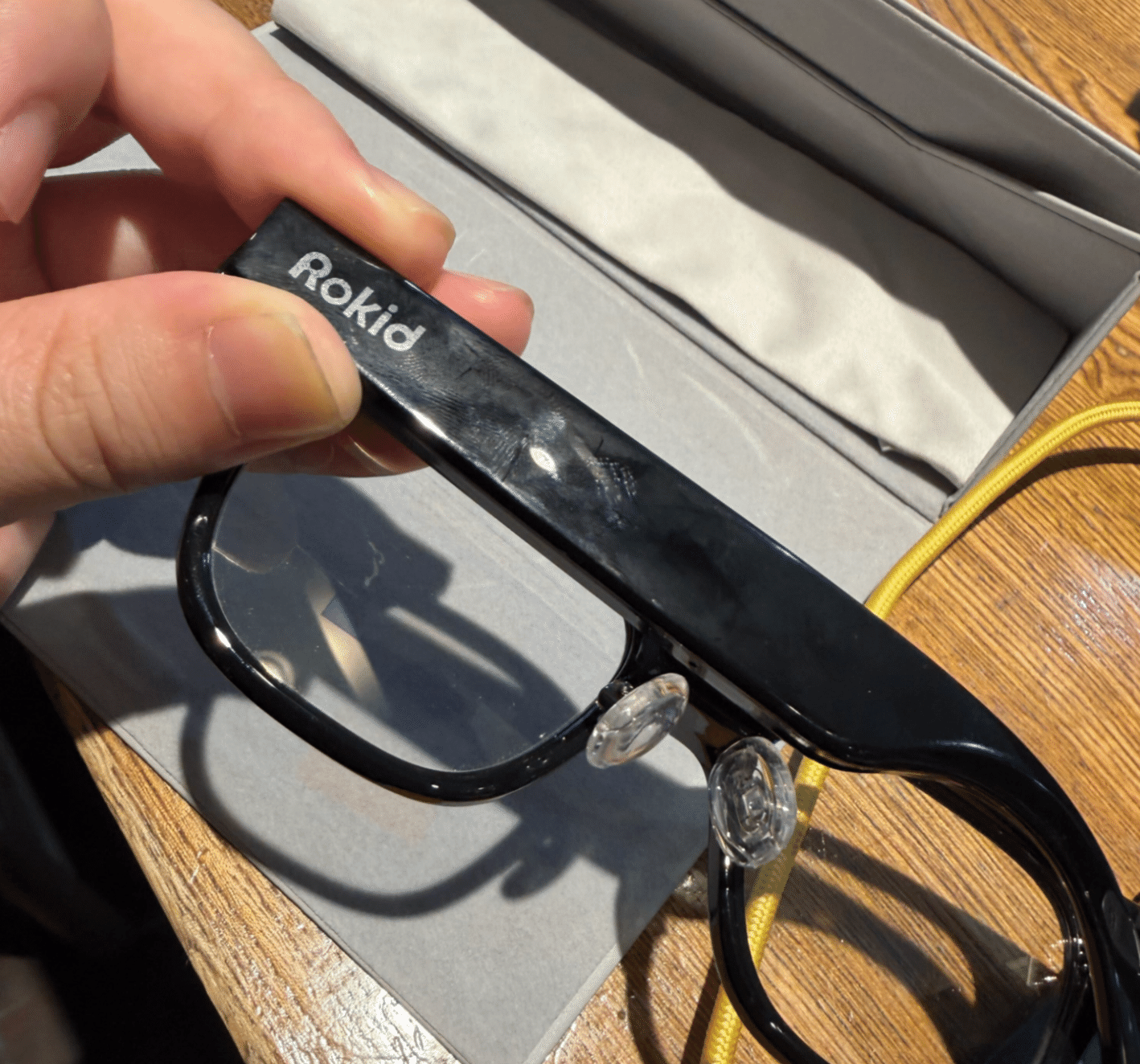
The Even G2's temples are made of full titanium and have a matte finish, making fingerprints virtually invisible.Temple thickness is 53% thinner compared to G1, they are visually indistinguishable from regular glasses. This difference comes into play every time I look in the mirror every day.
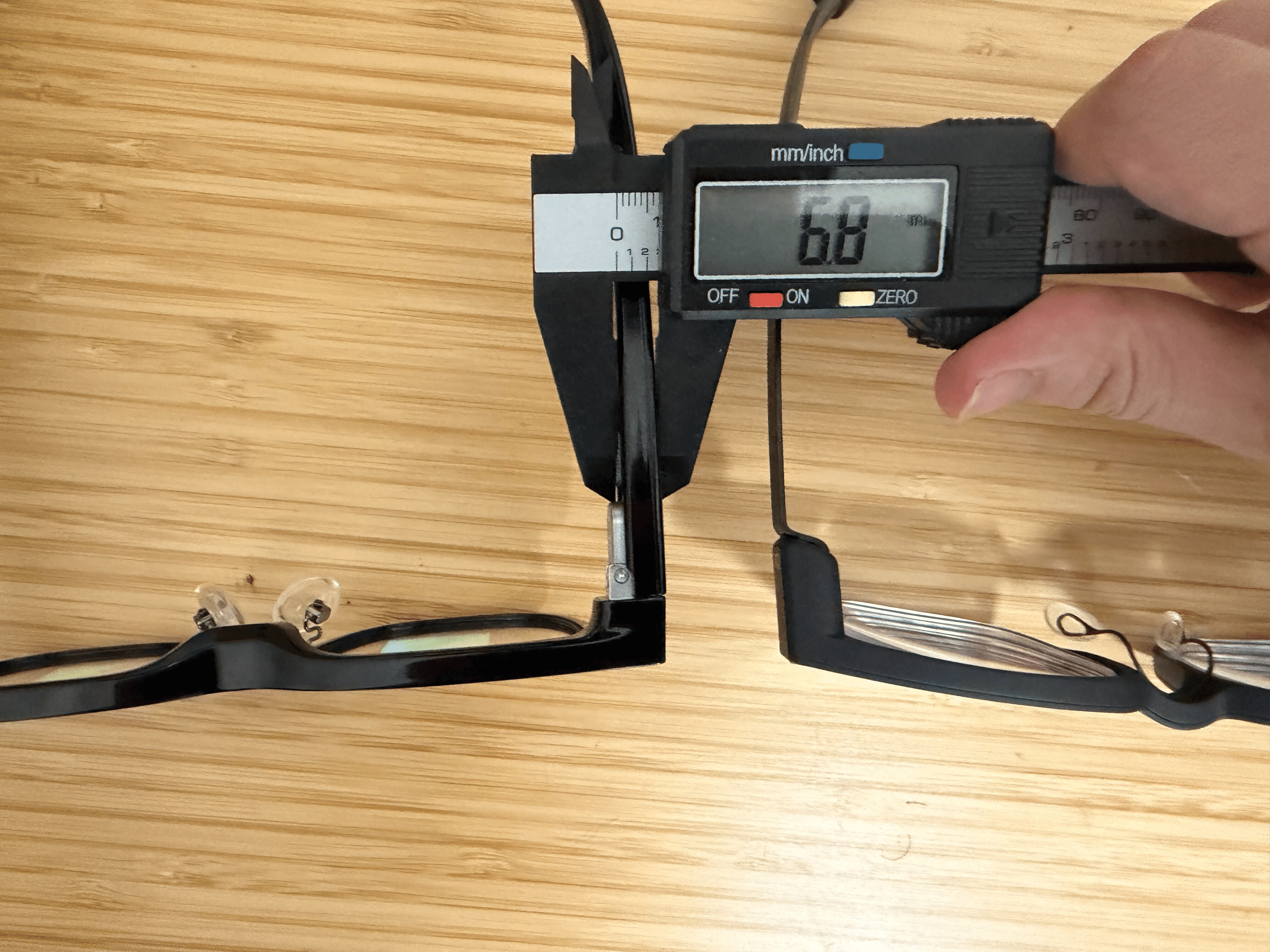
The nose pads on Rokid Glasses are huge, like a gag. By default, the size is unbelievable for a glasses nose pad, so when I first picked it up, I couldn't help but laugh. There is a mechanism to adjust the fit, and smaller pads are included for replacement. However, the screw that holds it in place was extremely small, so I replaced it with tweezers while my hands were shaking. Even after the exchange, there is a difference in actual measurements.
| Width | Thickness |
| Even G2(default) | 6.8mm | 1.4mm |
| Rokid Glasses(Small) | 10.4mm | 4.0mm |
Approximately 1.5 times the width and approximately 2.9 times the thickness. This is still a story about the "smaller one." I want this size to be the standard from the beginning, and I also want a regular size option.
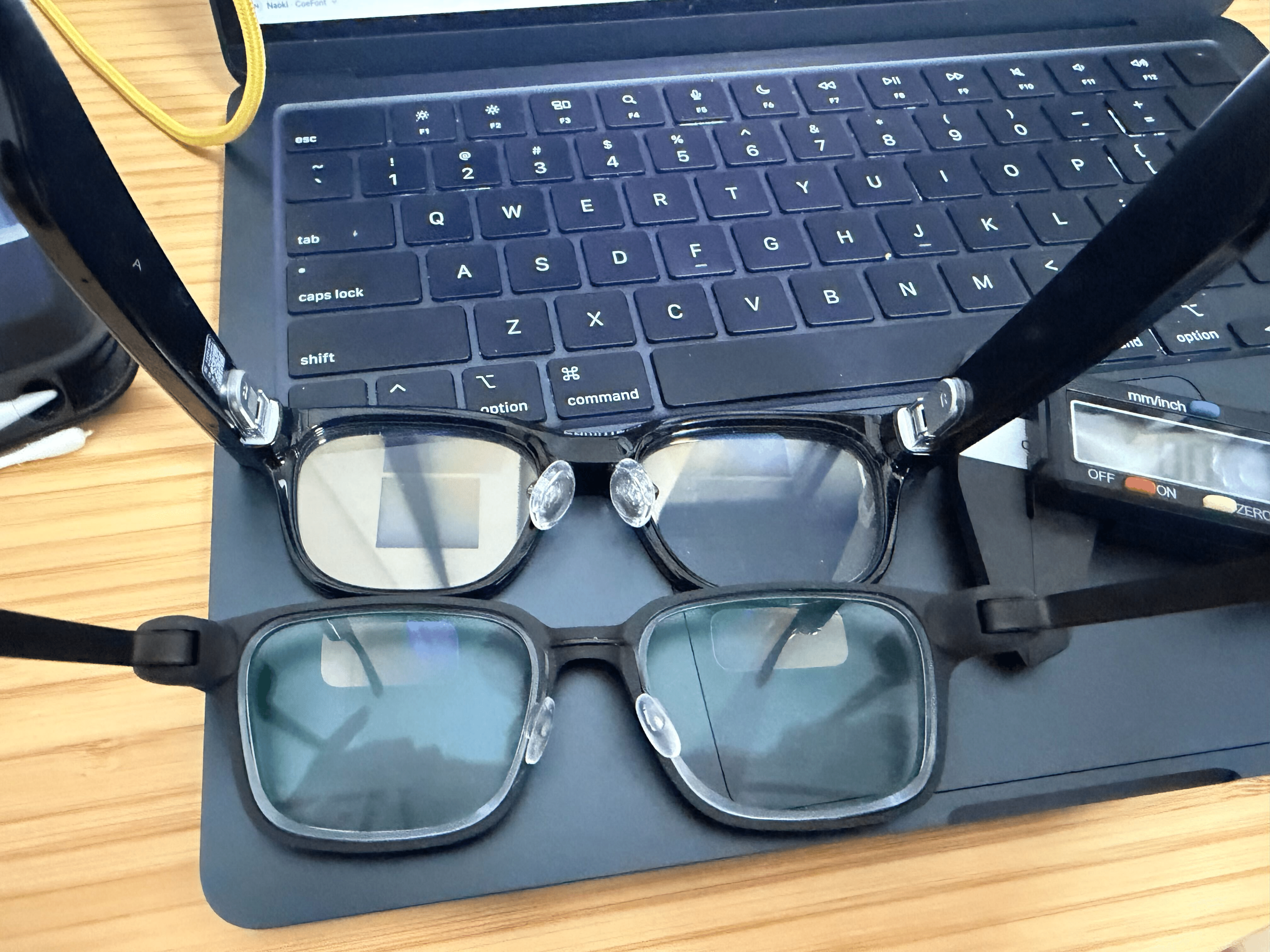
However, I'll be fair here. The weight is Rokid Glasses 49g、Even G2 nominal 36g(Actually measured at 45g with my nearsighted prescription). There is a difference of around 10g, but it's not a huge difference for my skin. What influences the fit is the design of the nose pads and temples rather than the weight.
The Even G2 has a small nose pad, so it can leave marks on your nose if you wear it for a long time. However, I personally didn't find it unpleasant. In the first place, my original glasses were strong and heavy. On the other hand, the Rokid Glasses have a larger nose pad that distributes the load more widely, and in terms of pure wearing comfort, I often feel that they are better than the Even G2. Furthermore, that big pad has a good cushioning property, so it won't hurt your nose considering its size. If you just look at the numbers, you might think it's going to put pressure on your nose, but when you actually put it on, it doesn't feel as uncomfortable as it looks. "Too big" is just a matter of appearance, and has nothing to do with the comfort of wearing it.
Let's also talk about hinges and lateral pressure. Rokid Glasses have spring-type temples that open more than specified, allowing lateral pressure to escape. It's quite flexible. On the other hand, the Even G2 has a slightly stronger lateral pressure, which may leave marks on some people's temples. Furthermore, the Even G2 has made the temples extremely thin, which means that the pressure may be concentrated on the top of the ear. This is the price of "looking indistinguishable from regular glasses." There are official soothing ear covers available, which will soften the area. I didn't really care so I used it without the cover, but this is something I would like you to try on and experience.
In other words, the Rokid Glasses have their positive aspects when it comes to wearing comfort, and the Even G2 also has its weaknesses. Both have trade-offs. Still, the reason I choose the Even G2 is not based on whether I can tolerate the size of the nose pads, but rather on the total aspects of the battery, operation, and subtraction philosophy that I have written about.
Even Realities isWill Wang, formerly of Apple (allegedly working in the Apple Watch division), is CEO. The company claims that it was designed with the wearing experience as its top priority. The idea is good, but in the current implementation, Rokid Glasses can also be used as a reference.
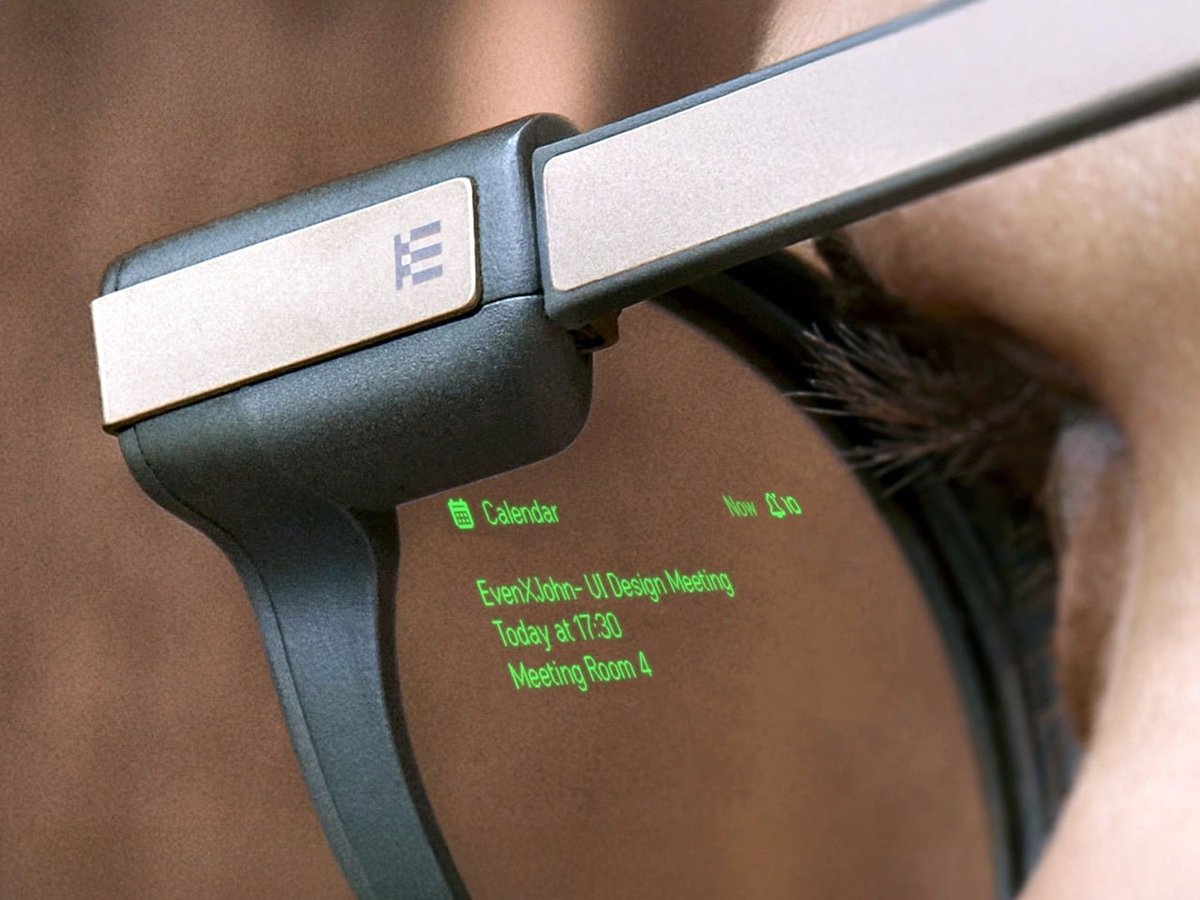
Three divine features that support my Even G2 experience
Using the Rokid Glasses, I was reminded of how valuable some of the Even G2's features are. You won't know until you compare them.
HeadUp: Display just by looking
If you turn your head up a little, you'll see the dashboard. That's all the functionality.
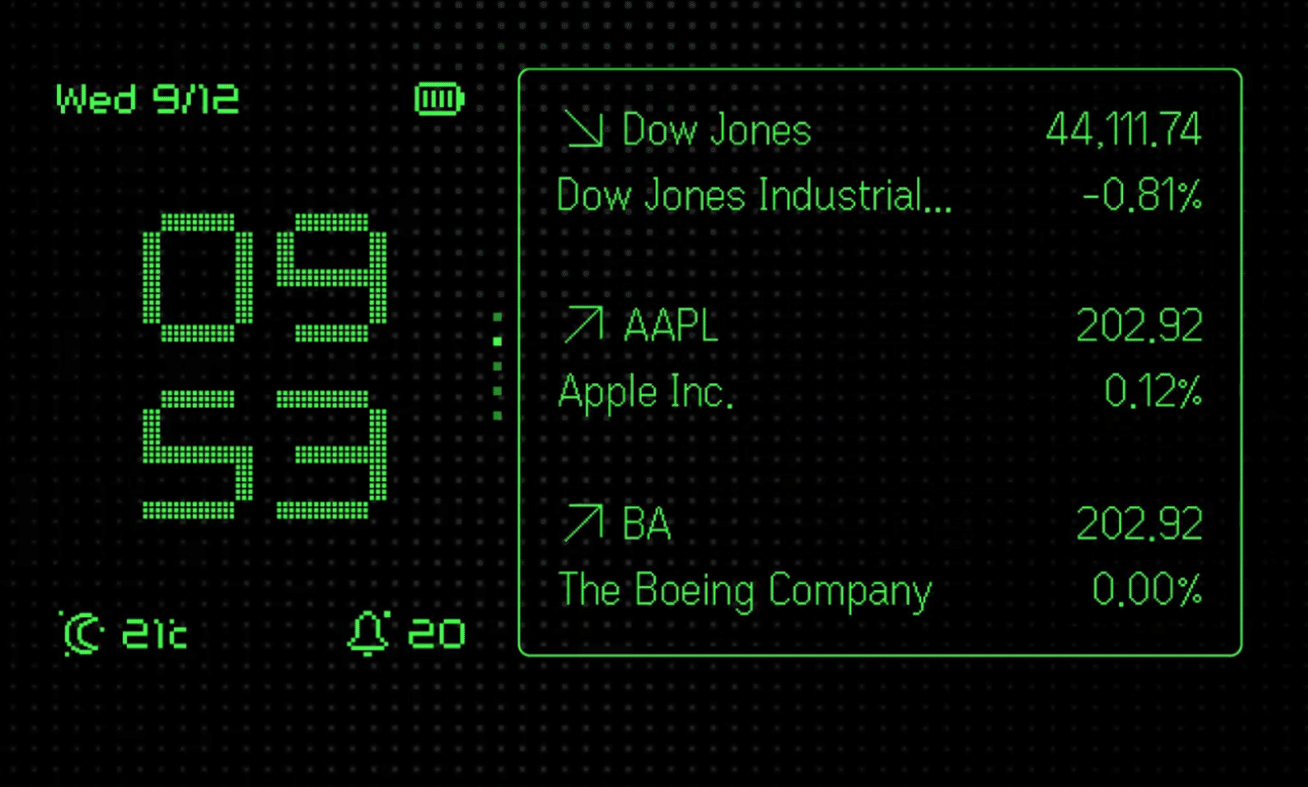
It's a simple thing, but the experience is different in a world with this and a world without it. Rokid Glasses require you to tap the temple every time you want to see the screen, except when you receive a notification. Every time I think, ``I just want to check the clock,'' or ``I wonder what my next plan is,'' I reach for my temple. It's an action that is repeated a dozen to several dozen times a day, and some people repeat it up to a hundred times. Even if it is a small effort that only takes a few seconds each time, it adds up with each daily operation. After three days, you'll get so tired that you'll realize, ``Oh, it's so hard to do this every time.'' I want the movement to be easier and more natural than looking at the clock.
Strictly speaking, Even G2's HeadUp detects the angle of the head, not the line of sight. However, there are people all over the world who look up a little when thinking about something. If you look at it from the side, it doesn't seem like anything suspicious at all, just ``looking up a little.'' On the other hand, when you tap the temple, you can clearly see that you are "operating glasses," and each time you do so, you raise your arm to ear level. The naturalness with which information is brought in and taken out makes an overwhelming difference here.
Even R1: The divine experience of not touching your glasses

R1 (Even smart ring, 41,800 yen. Significant discount for set)I think it can only be understood by those who have experienced it. I still write.
All that R1 brings is the ability to operate at all times without touching the glasses. Just tap and swipe the ring to check notifications, switch screens, activate AI, and more.
The train is so crowded that I can't reach my temple. Touching your glasses in front of the other person during a conversation is nothing but suspicious behavior. Raising your arms while walking is also a pain. Everyday life is filled with moments like this when you don't touch your glasses. R1 solves all that.

``Can be operated at all times'' is a divine function. The value of smart glasses is that they provide information in your field of vision, but if you can't control that information, it's only half of its value. R1 fills in the other half. Nowadays, it's so convenient that some people use this device to operate Claude Code.
While using Rokid Glasses, I kept thinking, ``Oh, I wish I had R1 here.''
In fact, Rokid Glasses also has a ring-shaped product that is equivalent to an operation device. AliExpressRokid OfficialstoreAlthough it is distributed in various places including Rokid, it is not confirmed whether it is clearly positioned as an "official accessory" by Rokid (the distributor and brand description are unstable). Still, it can be placed on the same level as Even G2's R1 in terms of "compatible peripherals".
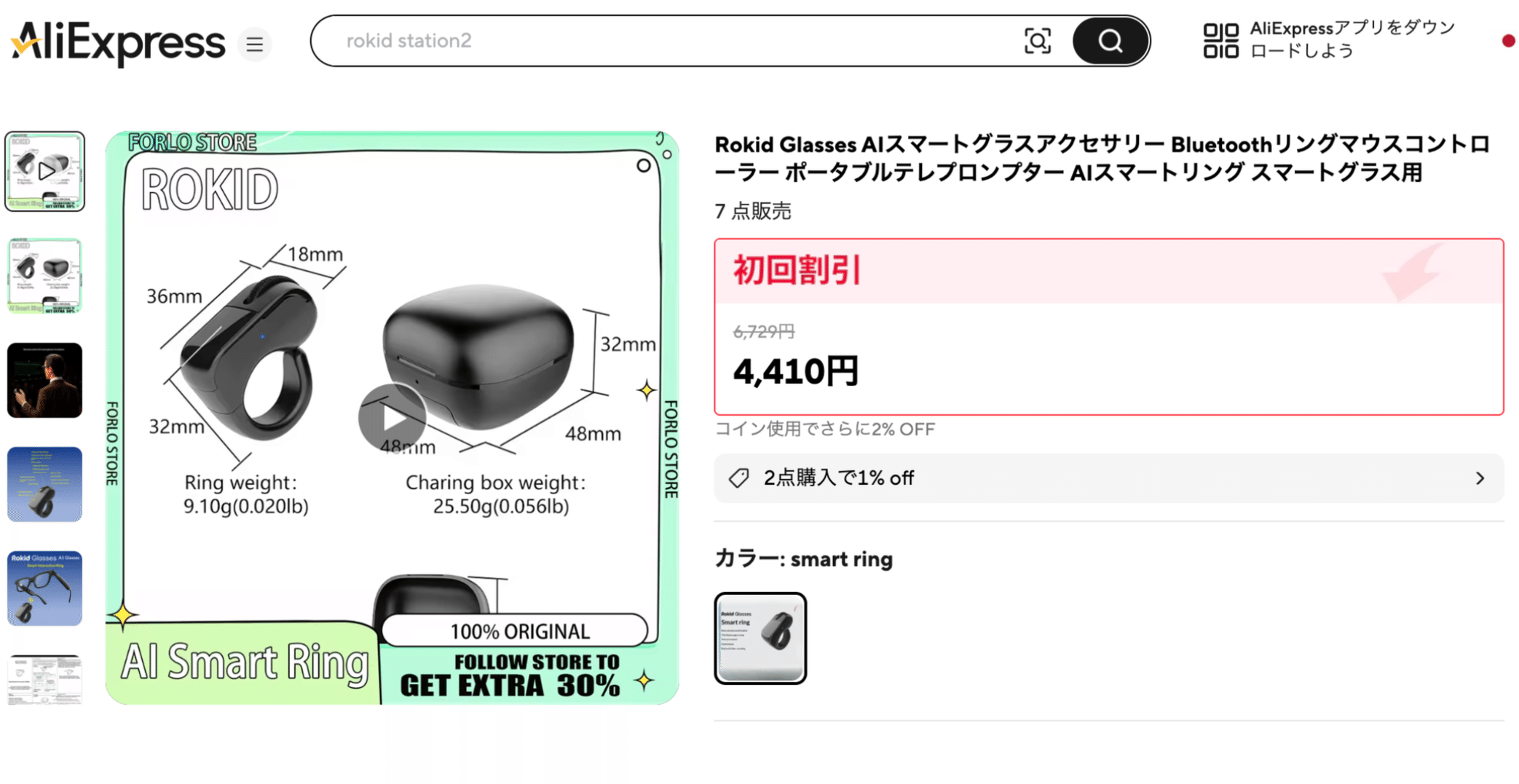
I just want you to see this.
This is not a "ring". It's just a mouse with a thumb scroll that fits on your finger. Although the ring is just a name, structurally it is a completely ring-shaped mouse.
Are you going to wear this and go out on the town? Are you using the scroll wheel on your finger during a conversation? I honestly don't know how to use that assumption. Officially saying that this exists means that there is no intention to integrate it into daily life. It doesn't come close to the naturalness of Even R1. I can understand this design philosophy if it's for short-term use like a presentation, but I get the feeling that this ring isn't really intended for everyday use.
What I feel here is that the concept of Rokid Glasses is fundamentally different from Even G2. I feel like Rokid is building the glasses with the idea of ``put all the necessary functions on the glasses, and if you want to use them, buy a separate mouse.We've made it possible to register any device, so use whatever you like.'' Even G2 sells the R1 as a set with the premise that the glasses will be used on a daily basis without touching them. Even though they are the same smart glasses, the level of awareness towards wearing them is different.
R1 is rugged. But I don't think it's "uncool" when I wear it. Even when other people see it, they just think, ``That ring is a bit rugged,'' and it fits into the category of fashion and personality. It feels strange, but it's not unnatural.
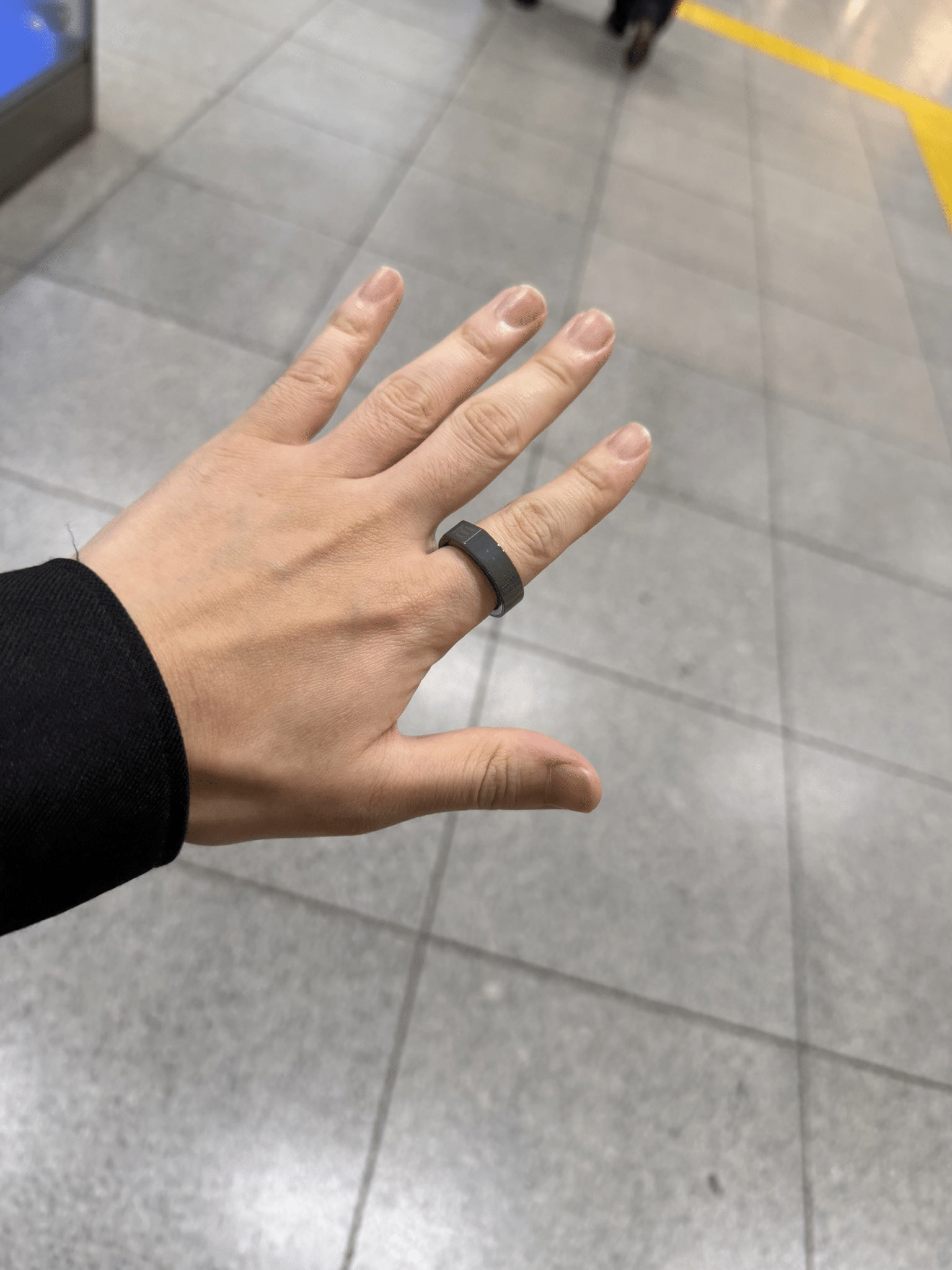
On the other hand, what happens when you wear a Rokid ring-shaped mouse on your finger and use your thumb to spin the wheel around town? It definitely makes you wonder, "What kind of manipulation is this person doing?" Rather than the level of ruggedness, it feels like a foreign body as a wearable item. R1 is a ring, and Rokid's ring-shaped mouse is a mouse. Even when wearing items on the same finger, there is a clear line as to whether or not they are socially acceptable.
Conversate (conversation support): Expanding your intelligence
This is the Even G2's feature that I most strongly wish Rokid had as well. Even Realities Conversate It refers to a group of conversation support functions that are being launched under the name .
Conversate is made up of three elements.
-
Live Captions: Transcribe the conversation in front of you in real time
-
Real-time Suggestions: AI automatically searches and explains technical terms and proper nouns that appear in conversations.
-
Prep Notes: Only relevant parts of previously uploaded materials are displayed in view during conversation.
When the other person says, ``Connect external tools with MCP,'' a supplementary message like ``MCP: Model Context Protocol, Anthropic's standard for connecting external tools to AI'' will silently appear in your field of vision. When the conversation is over, a summary will be automatically saved.
This is revolutionary.
It casually assists you in moments like, ``I've been talking about DDD and SQL a while ago, but to be honest, I forgot,'' which often happens in meetings. If you put materials in Prep Notes, the answers will be visible the moment a question comes up during a business meeting. You can also check the transcription and summary later.
I think this is what "expansion of intelligence" is all about. This function is only possible with smart glasses and cannot be reproduced with a smartphone. It's unrealistic to pull out your phone and launch a transcription app during a conversation, but it would be natural if your glasses could silently assist you at the edge of your vision.
Rokid Glasses also has live captions. However, there is no layer that "explains terminology". Since the microphone and AI materials are available, I would like Rokid to implement functionality in this direction as well. Seriously, please.
Why subtraction is the correct answer: Looking back at iPhone history
So far I have praised Even G2's subtraction philosophy, but I would like to explain why it is correct. This becomes clear when you look back at the history of smartphones.
The first generation iPhone had only one camera, no stereo speakers, and didn't even support 3G at first. Still, it was a revolution.
It wasn't until Apple perfected the basic smartphone experience that it added triple cameras, LiDAR, and stereo speakers. Monocular camera up to iPhone 8. From there, the number of cameras increased with the iPhone X. With the iPhone 8, the battery lasts a full day, the weight is within an acceptable range, the screen is clear, communication is stable, and waterproof performance has improved. Once the foundation was established, the differential functions were added.
More cameras are a bonus to progress. It's not the essence.
Smart glasses are now finally at the same level as the iPhone 3G. The battle between battery and weight is still unresolved. At this stage, the order of mounting the camera and speakers is different.
Even G2 understands that order. Do the subtraction,First of all, "I can wear it every day" and "I can see information in my field of vision."is about to be completed. That's why it weighs 36g, has a maximum battery life of about 2 days, and is comfortable to wear every day.
Rokid Glasses did the opposite. I focused on adding what I could and put off the idea of using it every day. The order is different. This is a difference in beliefs. Rokid Glasses is betting on the future. Both the battery and the weight are designed with the future in mind. Yes, I feel that way.
But for a moment, I felt the future in the camera: face recognition
Up until now, I've been critical of the camera functionality of smart glasses, but of course there's something futuristic about them.
plan to buy next INMO Go3 uses a camera and AI to recognize the face of the person in front of you and display that person's name in your field of vision (AR Social Business Card) has been published in China. It seems to have a privacy design in which data is stored locally with offline processing (not listed on the official English version page yet).
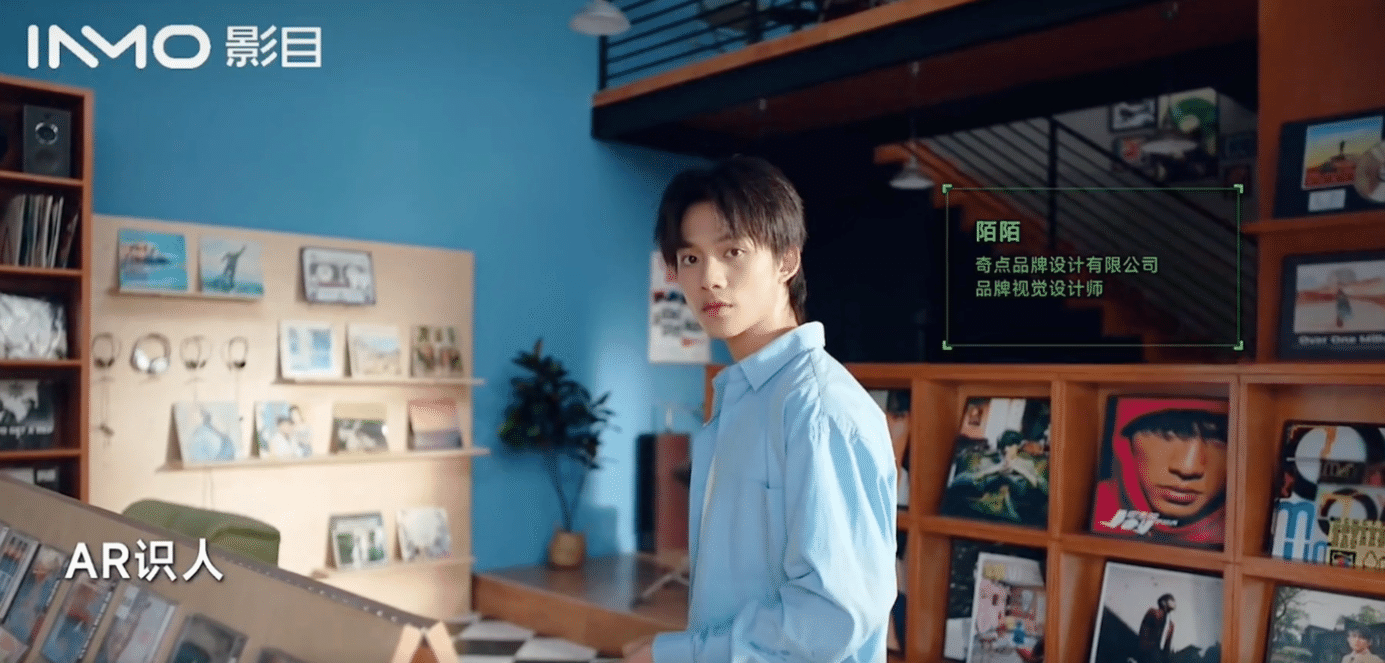
This could really be a divine function.
I don't have prosopagnosia, but I have trouble remembering other people's faces. If you meet them two or three times, you'll remember them, but to be honest, it's difficult until then. I can't tell if the hairdresser is the same person as the last time, so I end up trying to figure it out every time. Every time, I calculate in my head whether it's okay to say, "Thank you for last time," or whether I should go with the excitement of meeting someone for the first time.
Fortunately, many of the people around me have strong personalities, and even from a distance, you can instantly tell who someone is by their clothes and belongings. So I don't have any major problems in my life at the moment. However, as someone who has a hard time remembering faces, there are definitely situations where smart glasses can help. Depending on whether you say, ``Ah, ○○-san, it's been a while,'' or ``Oh, it's been a long time...'' will change the relationship that follows. If smart glasses can support this, the significance of cameras will instantly increase in my mind.
「Things you can't do without a cameraIf this is properly presented, the evaluation of smart glasses with cameras will change. Today's Rokid Glasses don't have that. Actually, there are currently no smart glasses that can present this. Even if you have a camera, there are many things you can do with your smartphone.
I don't have high expectations for INMO Go3 either. We won't know until the actual product is released, and there's a good chance that the functionality will be cut due to privacy regulations. However, I will definitely check the facial recognition. I think this makes sense as a direction for smart glasses with cameras.
Who should buy it
I've written a lot so far, but ultimately what you want to know is, "So, which one should I buy?" Write my stance.
People who usually wear glasses → Choose Even G2 + R1
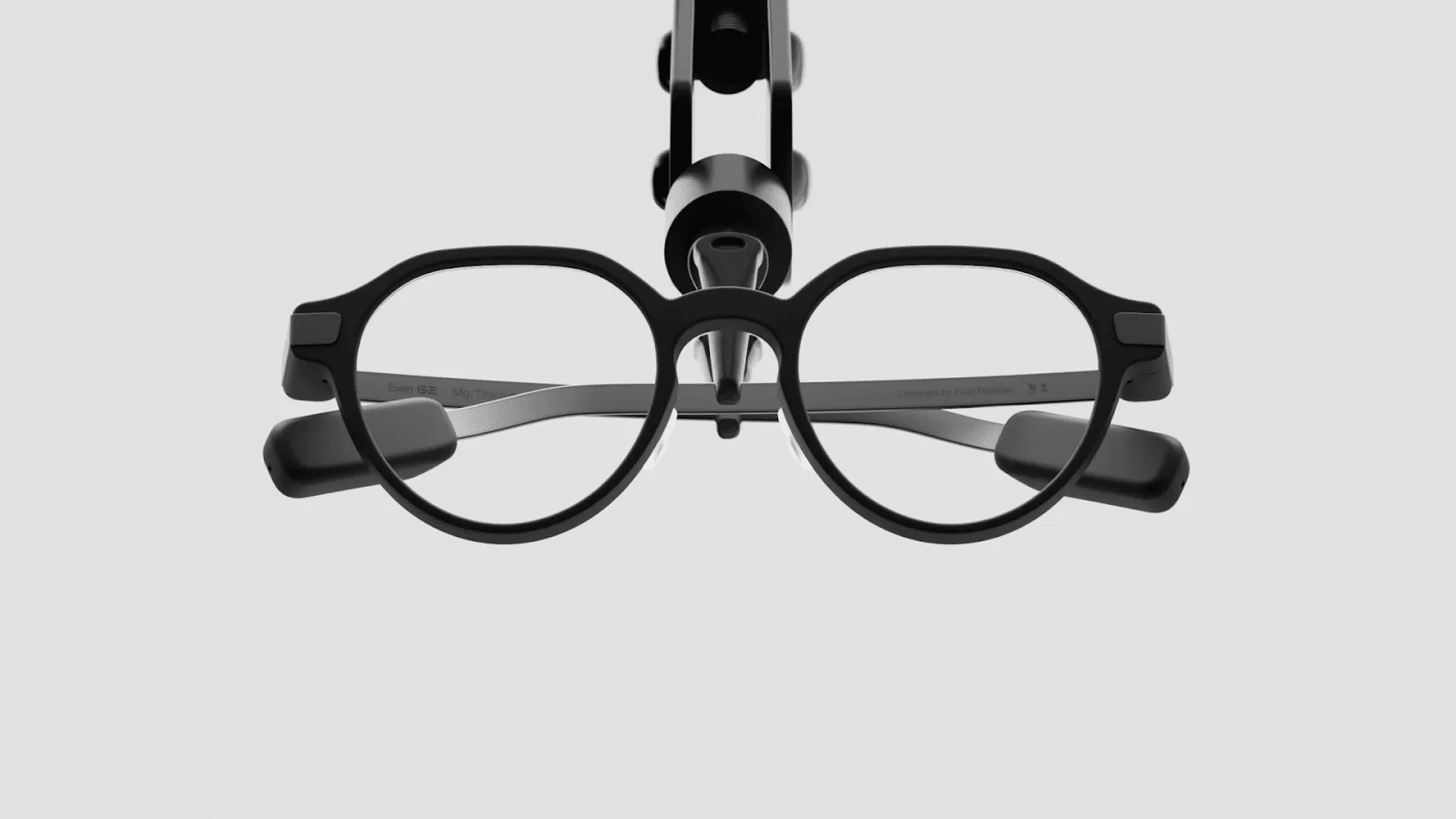
Don't get lost. Buy Even G2 in R1 set. Apple Watch is no longer needed.
The value of Even G2 for glasses users is that the glasses they wear every day become a smart device. Notifications, Navigation, Translation, Conversate, Health Tracking. All of this is completed within sight. The number of times you take out your smartphone will definitely decrease.
The corresponding range of degrees is also wide.Single focus covers from −12.00 to +12.00Most glasses users, regardless of whether they have nearsightedness, farsightedness, or astigmatism, can order them on a prescription basis. I ordered it at a very nearsighted level, but it came out just fine.
And by attaching R1, you can always operate the glasses without touching them. The R1 allows you to check notifications and perform all control operations that you could do on the Apple Watch. I can take off my watch. My wrist feels lighter.
It also makes sense to put it in a special case when you go to bed and have it fully charged in the morning. There will be almost no moments when you are conscious of charging your smart device. ``Removing glasses = putting them back in the case = charging automatically'' becomes a natural sequence of actions. This is because the hassle of taking the Apple Watch off and putting it on the charger before going to bed has become a habit in the lives of glasses users.
When I was a glasses user, I completely replaced my Apple Watch with the Even G2 + R1. I have no regrets.
People with naked eyes → If you are forced to buy, Rokid Glasses are relatively recommended.
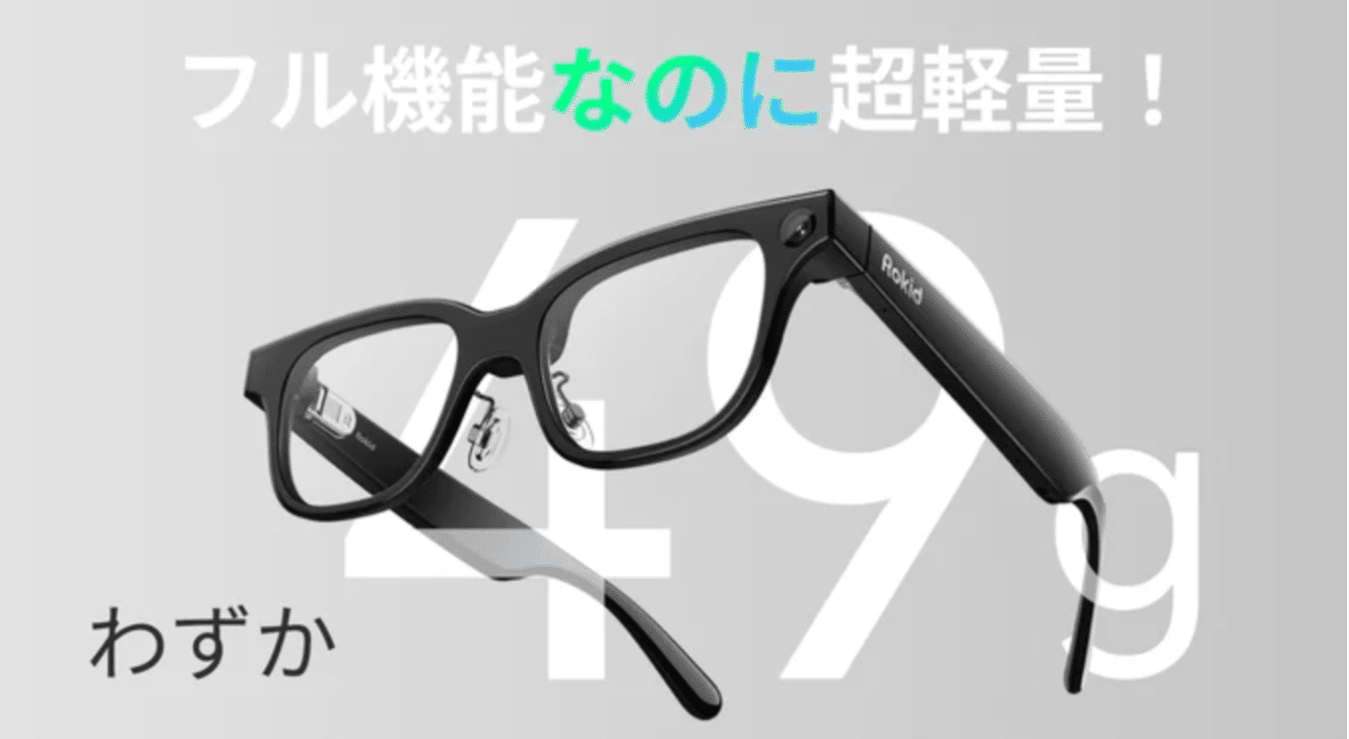
I have no intention of strongly recommending the current smart glasses to people with the naked eye. This is the main premise.
Wearing glasses that you don't normally wear ``for smart devices'' is not worth the cost and return. There is value in providing information through vision, but forcing people to wear glasses every day in return is too much of a burden for people who are not glasses users. Now that most things can be solved with AirPods + a smartphone, there is no positive reason to go to the trouble of adding a glasses-type device.
In terms of local optimization, I think one use is for situations such as presentations and overseas presentations. That is, if you can spend close to 100,000 yen for that purpose. As a side note, a friend of mine purchased the Even G2 because he was worried about presenting at an international conference, so I think there is a demand for it.
On top of that, Rokid Glasses are relatively recommended for people with naked eyes who really want to try out or buy smart glasses. Since it has a camera and a speaker, you can use it in ways that don't require you to use it all the time. It's not bad for intermittent usage, such as only when you want to take a picture or only when you want to ask the AI. The Even G2 is a device that only shows its value if you use it all the time, so Rokid Glasses are better for people who don't see it with the naked eye and want to use it occasionally as a gadget.
But again, I don't strongly recommend it. All I'm saying is that it's more suitable for the naked eye than the Even G2 in comparison.
If the moment comes when people without the naked eye should buy smart glasses, it will be when the ``things that can only be done with a camera'' (unique experiences such as facial recognition mentioned above) reach a decisive level. Not now.
After all, what are the advantages of Rokid Glasses
I'll keep it organized just in case. The only real advantages Rokid Glasses have over the Even G2 are cameras and speakers. In almost every other way, the Even G2 experience suited me better.
-
Battery life: Less than half of Even G2
-
Weight: 13g heavy
-
Temple operation experience: fingerprint with gloss, tap to activate every time
-
Fitting details: Nose pad size, fit options
-
Operation device: No equivalent to R1
-
Conversation support: No equivalent to Conversate
If you don't need a camera and speakers, there's no reason to choose Rokid Glasses. On the other hand, it may be a better choice than the Even G2 for people who "really want a camera and speakers" or "naked-eye users who want to use it intermittently." The key to choosing is whether you need a camera and speakers or not.
In terms of ease of use on a daily basis, the Even G2's high level is clearly seen when looking at the questionnaires conducted at XR/AR events. The only smart glasses I use every day are Even (XREAL are not smart glasses in this interpretation, so I'm excluding them).
Summary
This isn't to say that Rokid Glasses are a bad product. In the current smart glasses category, the cost of mounting a camera and speaker is not worth it.
-
Even G2: Display only → 36g, up to about 2 days, perfect installation details, constant operation with R1. sophisticated experience
-
Rokid Glasses: Display + camera + speaker → 49g, practical use for 5-7 hours, rough experience such as easy to get fingerprints
-
Ray-Ban Meta: Camera + speaker, no display → weak leap from AirPods + Siri
You can mount a camera and speakers only after you have finished the basic battle of battery and weight. Even G2 is in line with order 2.
A final aside.
I've always been a glasses user and have been wearing the Even G1 and G2 every day. However, last month, I received an ICL (intraocular contact lens, approximately 500,000 yen). It's naked eye now. The reason is simple: to buy more smart glasses. I seriously calculated that if I spent 500,000 yen on ICL, I would be able to pay for the smart glasses in lifetime cost.
As a result of the ICL, my vision changed and the Even G2 I had ordered with my prescription no longer fit. Currently, I'm mainly using Rokid Glasses that I just received. That's ironic. The person who writes the ``Even G2 recommendation'' is currently spending his time with Rokid Glasses while writing articles that talk about the Even G2.
However, the conclusion remains the same. I will buy the non-prescription model of Even G2 again. So I go back to G2 completely. My credit card has stopped this month due to ICL payment, so it will be next month. As soon as it arrived, I put the R1 on my finger and went back to my daily life of letting notifications flow without even touching the temple.
Next time I'll buy INMO Go3. Just to confirm facial recognition.
Smart glasses are definitely coming. I'm sure of this. However, the answer is not to "list everything."Now is the time when subtraction is the correct answer.
 Even G2
 Rokid Glasses