
Buying guide
Buying smart glasses as a camera
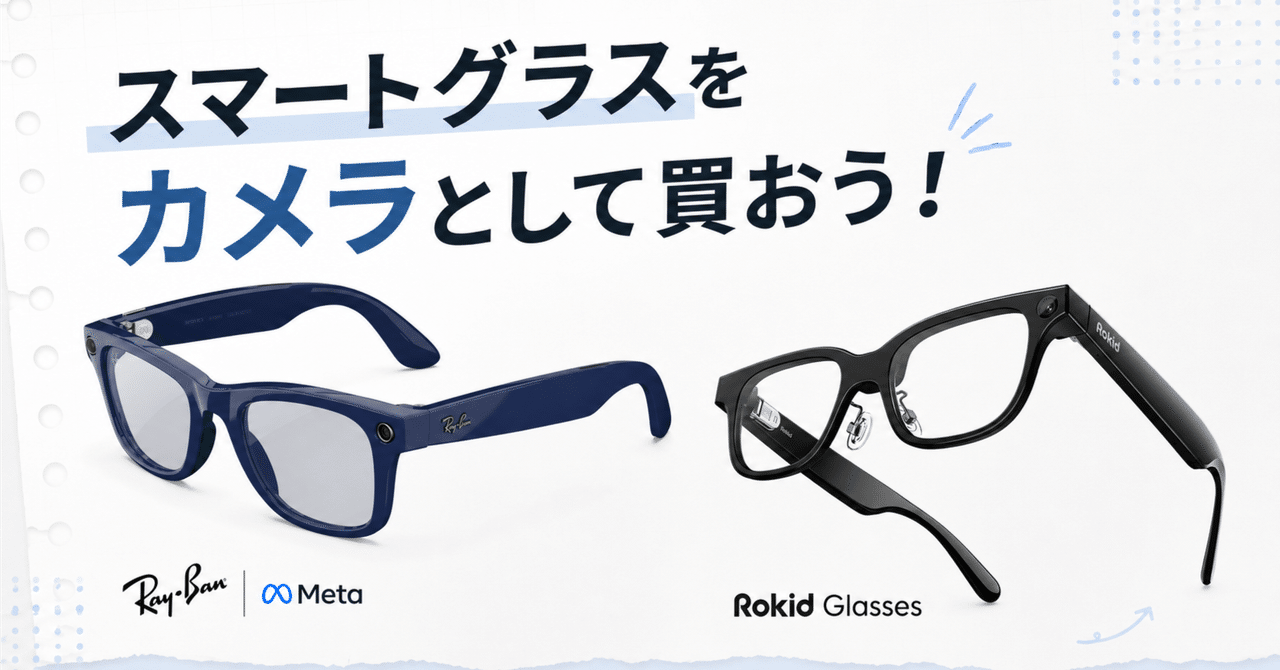
Ray-Ban Meta has launched in Japan. If you buy a pair, buy it as a camera!
First published:note · This article and photos are reprinted from note.
AI-assisted English translation of the author’s Japanese article. Product screenshots and embedded source material are reproduced in their original language. Read the Japanese original.
Ray-Ban Meta has launched in Japan. If you buy a pair, buy it as a camera!
This is not "futuristic smart glasses that display information floating in your field of vision." The reality is Glasses-type camera (bonus earphones and AI voice assistant) indeed.
Nothing appears on the lens. No information appears in my field of vision. When you talk to the AI, it responds with a voice. Although it meets the minimum requirements for smart glasses, it is more like an extension of so-called audio glasses. If you buy it expecting a futuristic feeling like ``Notifications will appear in your field of vision and navigation will appear...'' you will definitely be disappointed. Even though I was drawn to the brand Ray-Ban, I regret buying it.
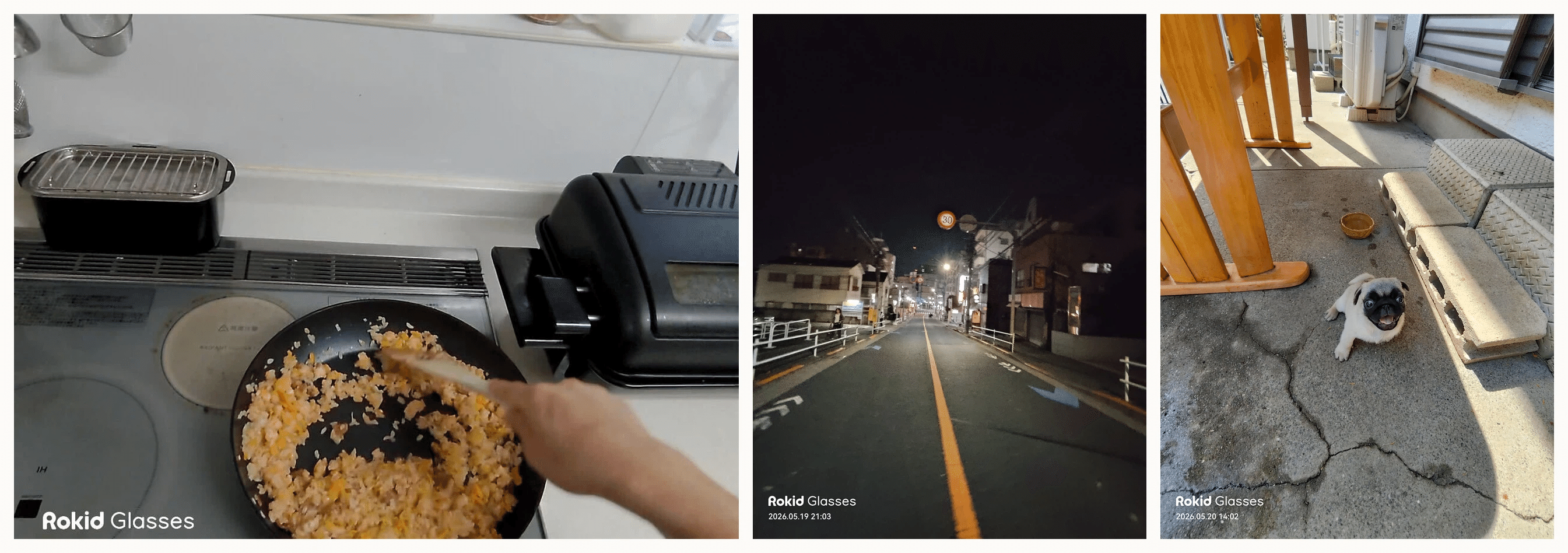
However, if you change your perspective to ``I want a handy camera,'' this becomes a genius product. You can take first-person videos and snapshots with both hands free. You can take pictures while petting your pet, holding your child, or cooking. This is an area that smartphones can never reach. The best for collecting Vlog materials.
For now, before you decide on the oracle, watch this video to see what you can get.
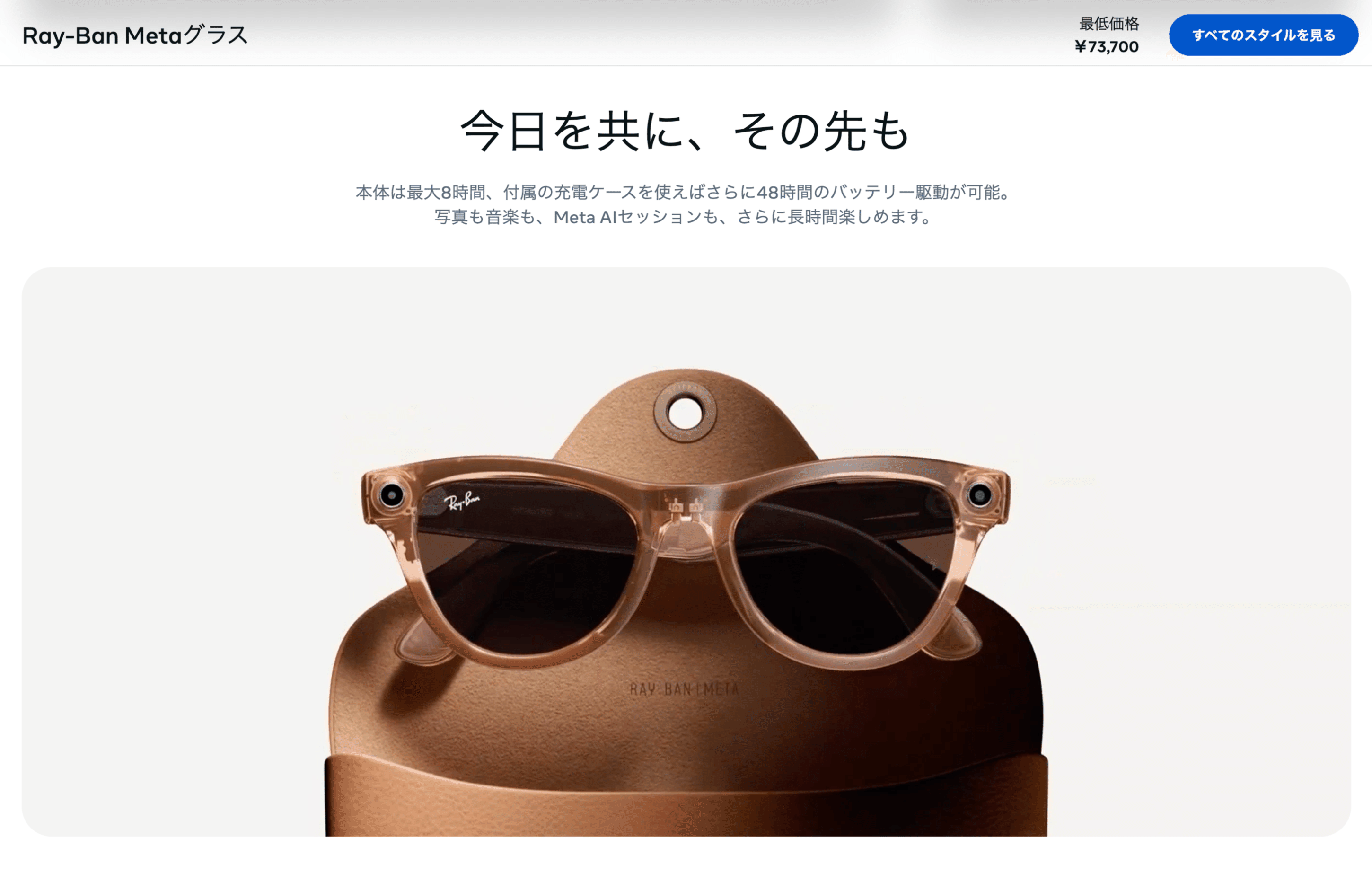
Ray-Ban Meta will be released in Japan on May 21, 2026 (today). One month ago, on April 24th, VIVE Eagle also landed. In the past month, a situation has suddenly become established in which people can normally buy eyeglass-type cameras in Japan.
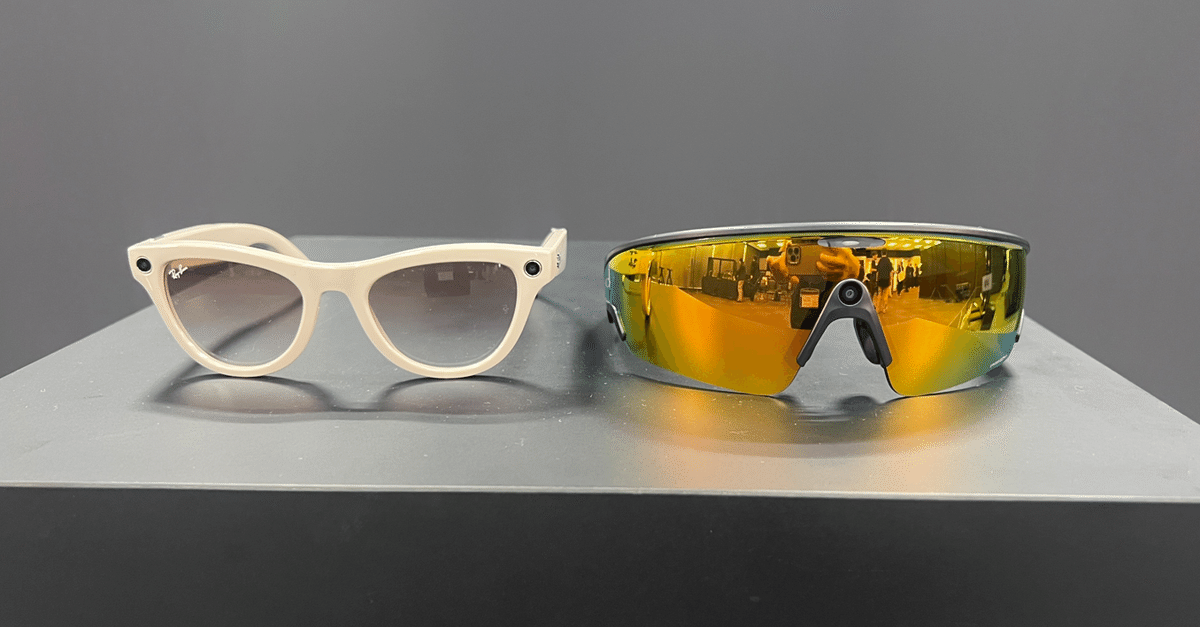
In fact, there are quite a few types of eyeglass-type cameras.
Ray-Ban Meta (Gen 2) / Optics、Oakley Meta HSTN / Vanguard、Meta Ray-Ban Display、VIVE Eagle、Rokid Glasses、Rokid AI Glasses Style、Xiaomi AI Glasses。
``This guide is not for people who are considering visibility display type smart glasses (Even G2, etc.), but for people who are considering eyeglass-type cameras (smart glasses that specialize in camera + AI voice).'' Please check this first before continuing to read.
Basic shape of glasses-type camera and “with screen” option
The basic shape of a glasses-type camera is simple. Press the shutter button to take a photo. Long press to record a video. You can check what you have taken later on the app. Nothing appears in my field of vision. Instead of having a GoPro strapped to your head, you've got a camera built into a pair of fancy glasses. That's it.

Ray-Ban Meta / Oakley Meta / VIVE Eagle / Xiaomi AI Glasses / Rokid AI Glasses Style. Six of the eight products covered in this article are this "basic model without a screen." It is simple, has a long battery life, and maintains a natural appearance as glasses. This is the default.
Secondary benefits include being able to ask questions to the AI (look-and-ask) and listen to music. However, this is a "peripheral function of the camera" and not the center of the experience.
Some models have a “screen included” option.
<!-- 📷 Image: View through Rokid Glasses display or Meta Ray-Ban Display viewfinder image → images/display_preview.png etc. -->
Only two of the eight products have a small screen floating in the field of view. Rokid Glasses and Meta Ray-Ban Displays. Rather than a separate category, this is more likely to be seen as a "derivative" in which a screen is added to the basic form.
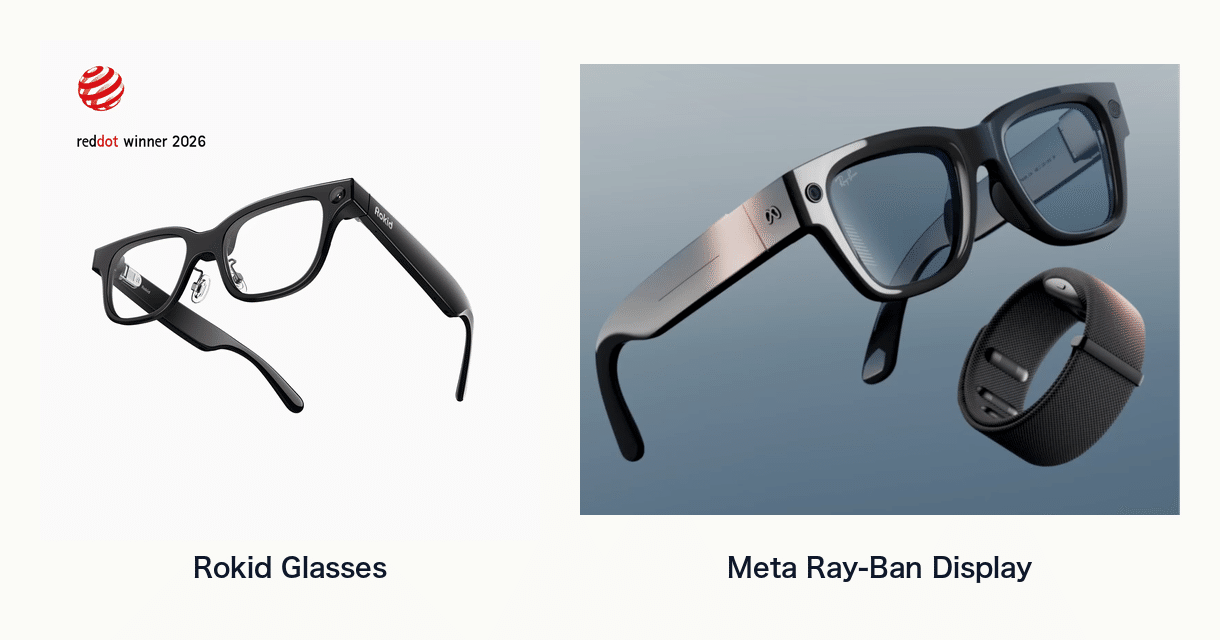
Having a screen makes the shooting experience a little easier. Specifically:
-
You can preview the photos you took on the spot.
If the composition is bad, you can retake the shot. -
An indicator appears when video recording is in progress.
You can always know the shooting status. I can see how many minutes I can record now. -
You can also put framing aids in your field of vision before taking a picture (I'm not sure if it's reliable)
While the basic form is a "blind shoot," the one with a screen is more like a "camera with a viewfinder." There are definitely moments when it's useful to be able to check the image immediately after taking it. I myself used Rokid Glasses for a few days, and the experience of knowing whether the image was blurred or the image being taken was much easier than I expected the moment I took a picture.
However, there is a trade-off. Driving the screen consumes battery power. Rokid Glasses will need to be charged in the evening if they are in their default state (“Hi Rokid” always on standby, live translation, etc. on). It doesn't come close to the Ray-Ban Meta's 8-hour battery. It also adds a little weight.
In other words, having a screen is a ``useful additional feature,'' but it is not a separate category of product.The basic camera is a glasses-type camera without a screen, but those who want to check the image immediately after taking a picture choose a variant with a screen.. This understanding is sufficient.
Priority when choosing a camera
Choosing a glasses-type camera means that only the camera-related items on the glasses' spec sheet will be central to your decision-making. Weight, fit, and battery are all functions of whether you can carry a good camera around every day. Only one point of view changes.
8 glasses-type cameras to choose from
List all the candidates that you can buy as a camera. I'll give you a bird's eye view of the price and technical suitability with a few comments. Detailed spec comparison will be provided in images later.
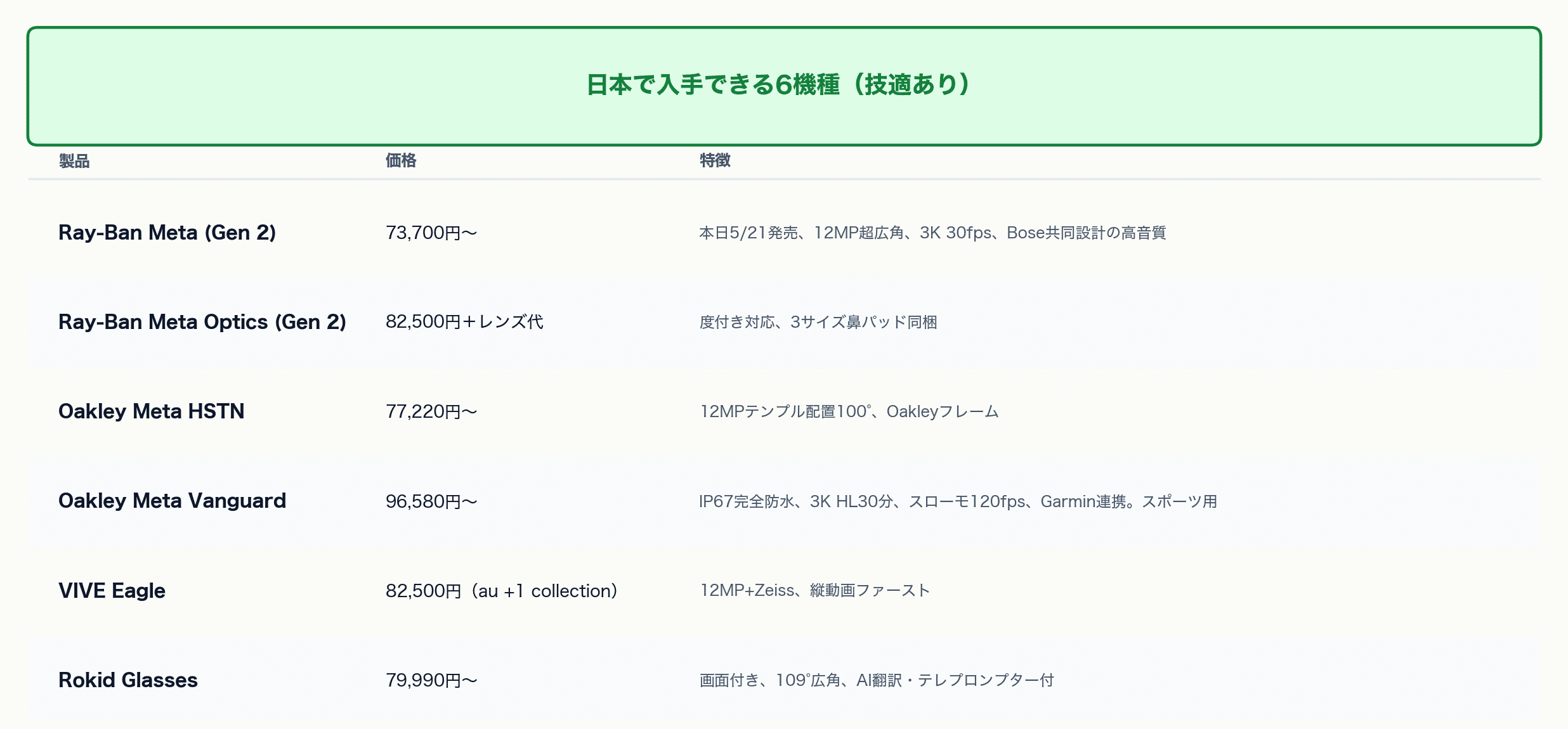
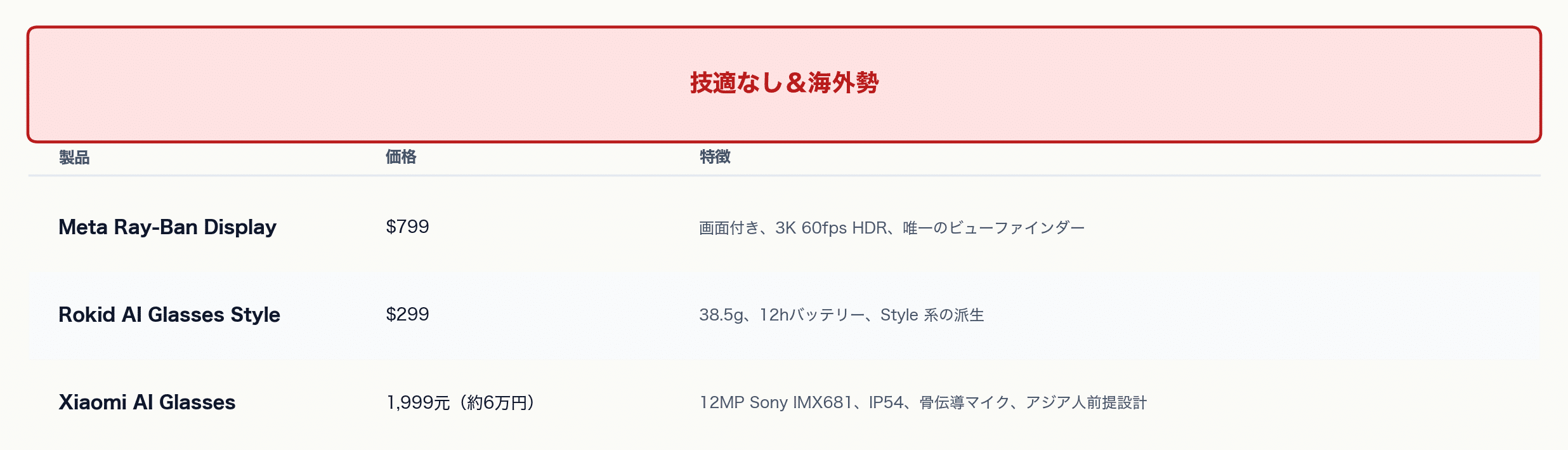
In addition, on AliExpress and Chinese sites. Glasses-type camera under 10,000 yen It is also distributed in large quantities. There are a variety of items, from things like spy cams to cheap AI glasses. Many of them don't suit your technical skills, and the quality is poor, but if you just want to try out the shooting experience, it's a great place to start.
Candidate glasses-type cameras can be roughly divided into Meta and others.
- Meta genuine system: Ray-Ban Meta, Oakley Meta (HSTN/Vanguard), Meta Ray-Ban Display
The shooting experience is at the core of the product. Both hands free Vlog culture in the middle
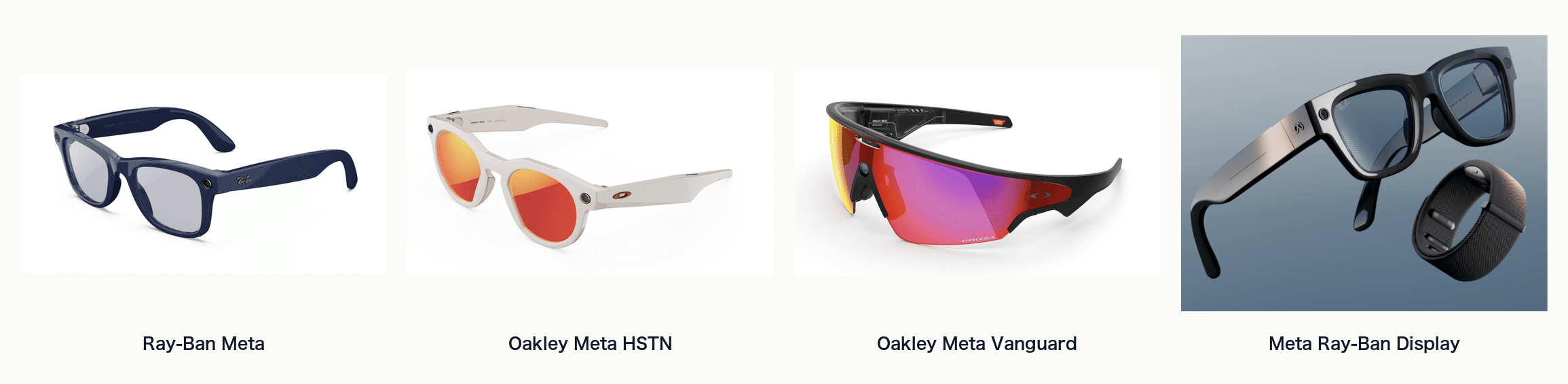
- Other than Meta: VIVE Eagle, Xiaomi AI Glasses, Rokid AI Glasses Style, Rokid Glasses
Offering the same format with a different approach
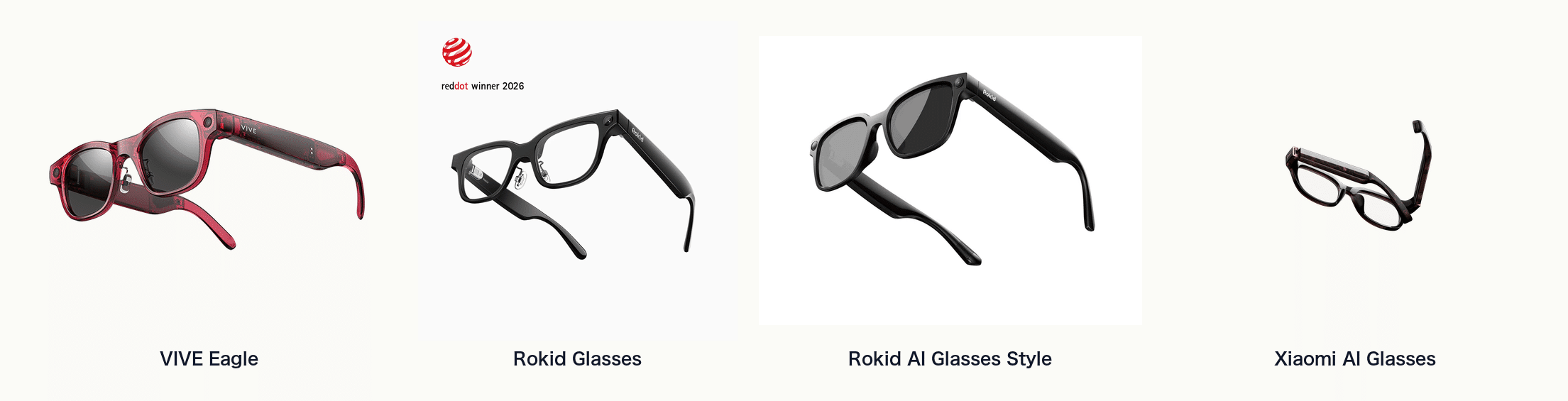
Of these, only two models, the Rokid Glasses and the Meta Ray-Ban Display, are derivatives with screens, so you can check what you're shooting on the spot. From the perspective of "buying it as a camera", the three genuine Meta products are the most complete. Others just ``mount'' a camera, and are not tuned around the shooting experience. The shooting experience of the two models with screens is slightly different, but this is more likely to be understood as a ``useful additional feature'' rather than a separate category.
A little about technical aptitude
All glasses-type cameras have built-in Wi-Fi/Bluetooth, so you will need to have technical qualifications to use them in Japan. Just check this out before you buy. The basic method is to temporarily save photos and videos in the storage on the glasses and transfer them to your smartphone via Wi-Fi.
-
Technical compliance (Japanese official version): Ray-Ban Meta, Ray-Ban Meta Optics, Oakley Meta HSTN, Oakley Meta Vanguard, VIVE Eagle (au+1 collection version), Rokid Glasses (via Future Model)
-
No technical suitability: Meta Ray-Ban Display, Rokid AI Glasses Style, Xiaomi AI Glasses (parallel import only)
Products without technical compliance can be used for 180 days if notified under the Ministry of Internal Affairs and Communications' special system, but it is difficult to use them on a daily basis. Glasses-type cameras sold on AliExpress that cost less than 10,000 yen are basically non-technical. If you're interested, you can get your hands on it, but it's enough to know that it's not suitable for everyday use.
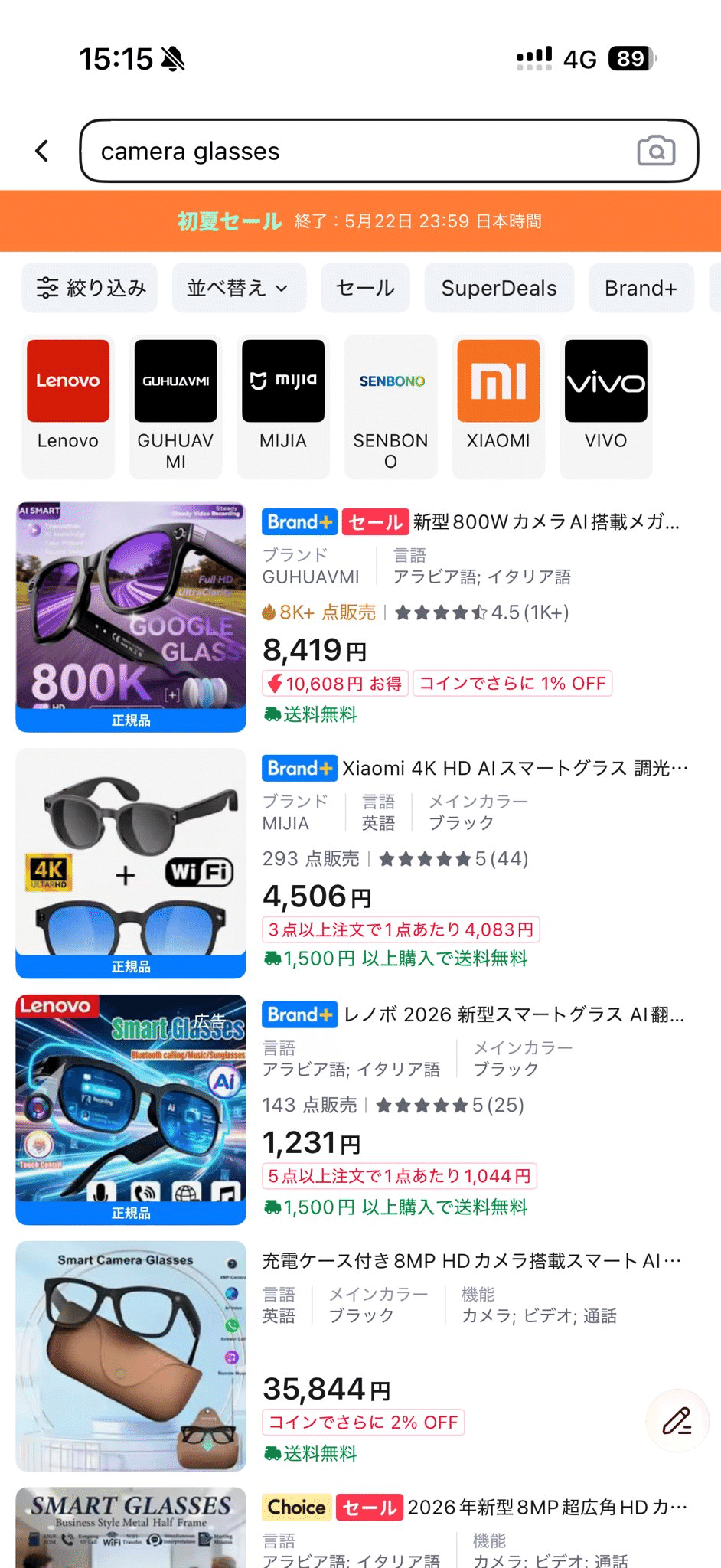
Please note that only the au+1 collection version of VIVE Eagle is eligible for technical eligibility. Please note that parallel imported Taiwanese and Hong Kong versions cannot be used in Japan. For Rokid Glasses, choose the Japanese official version via Future Model.

Nine axes for evaluating eyeglass cameras
Let's organize the key points to consider when choosing a glasses-type camera. Weight, fit, and battery are secondary considerations when viewed as smart glasses, and are unified from a camera perspective. Specifically, the nine axes are sensor, angle of view, video resolution, image stabilization, shooting preview, shutter operation, social acceptance, and wearing stability (fit).
1. Angle of view
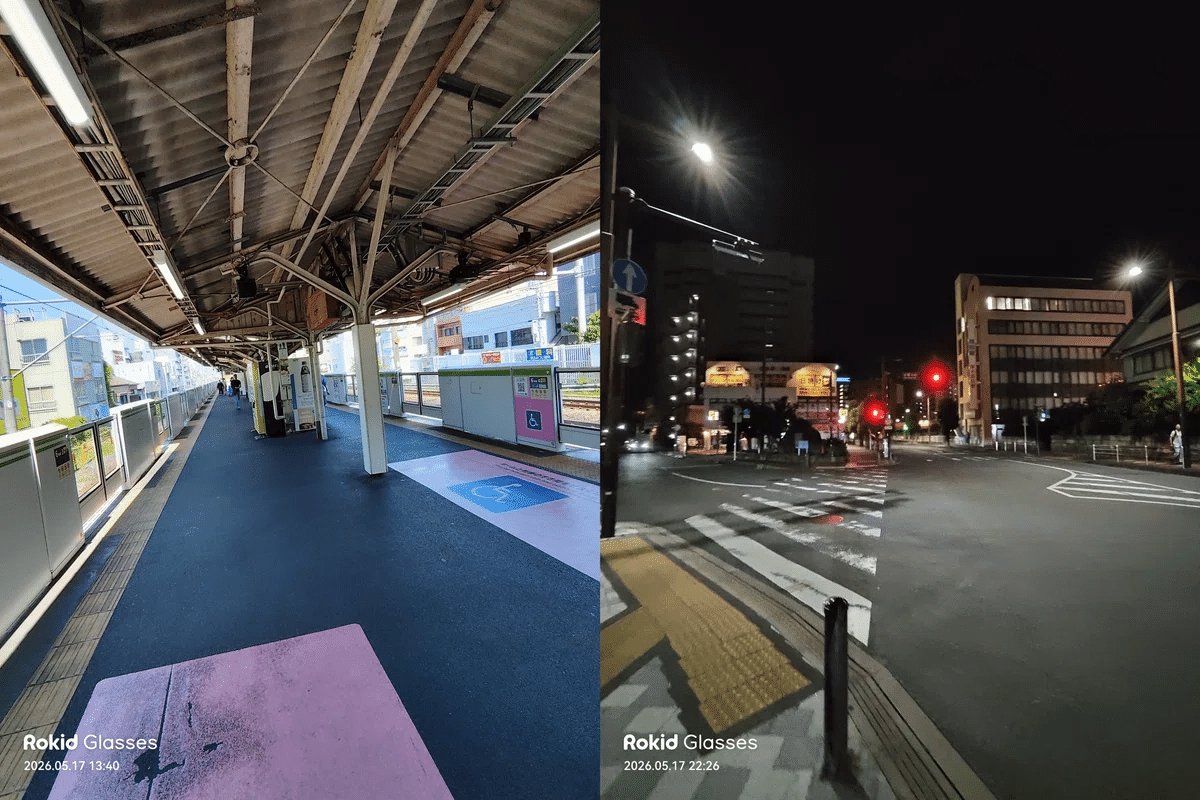
Shooting hands-free means almost abandoning framing. Therefore, a wider angle of view is overwhelmingly advantageous. Just crop it later. Oakley Meta Vanguard's 122° is probably the widest angle currently available. The HSTN of the same series is 100° (a different specification from the centrally placed Vanguard), followed by Rokid's 109°, and Xiaomi's 105°. Ray-Ban Meta (MUJI/Display) does not officially state the degree of use, but it claims to be an "ultra wide angle" lens.
What you need to be careful about here is the fate of ``wide-angle = distortion.'' The wide angle of smart glasses bends at the edges. This is especially effective for Vlog purposes.
2. Sensor and low light performance
Many models include Sony IMX681 (Rokid series, Xiaomi).
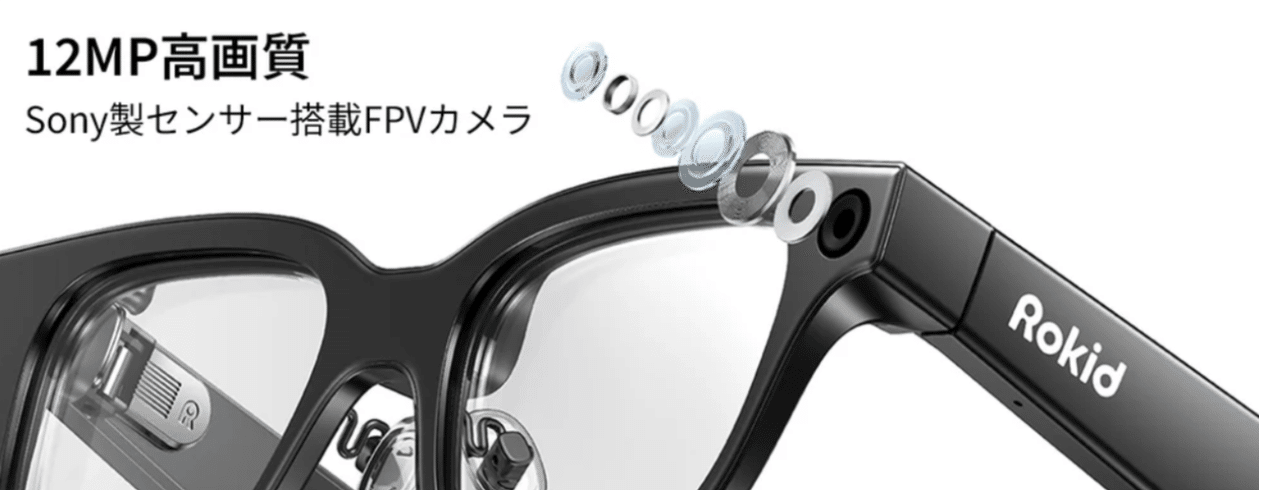
It's a mediocre sensor for smartphones, and a common weakness is that it breaks down in low light. Tom's Guide talks about Rokid GlassesIt hurts in the dark"This is what I wrote.

Ray-Ban Meta Gen 2Upgraded sensor for reduced low-light noise and smoother HDRThat's what Meta himself has stated. Although the specific sensor name has not been disclosed, it is likely to be a generation higher than the Sony IMX681. It is said that there is a difference in actual dark performance between Gen 1 and Gen 2.
3. Video format: 3K 30fps is the current de facto standard
All Meta genuine systems (Ray-Ban Meta Gen 2, Oakley Meta HSTN/Vanguard, Meta Ray-Ban Display) are based on 3K 30fps. Rokid Glasses are also 3K. VIVE Eagle is1512×2016 (portrait 30fps)This is a unique design that puts vertical video first.
"3K 30fps" is the current Meta standard, but it is important to note that this is not an overspec compared to the standard resolution for SNS posts (1080p to 2160p). Videos shot with smart glasses are subject to camera shake and distortion, so use up the extra resolution by cropping and stabilizing when editing. You can think of it as a premise of shooting 3K and exporting to 2K.
60fps support arrangement:
-
Meta Ray-Ban Display:3K 60fps(HDR)
-
Oakley Meta Vanguard: 1080p 60fps, plus 720p 120fps slow motion and 3K 15fps hyperlapse (up to 30 minutes)
-
Oakley Meta HSTN / Ray-Ban Meta Gen 2: 1080p 60fps (30fps at 3K)
-
Rokid Glasses: Up to 60fps at 1680p (mentioned on Rokid official blog, 30fps mentioned in media reviews)
-
Others: 30fps stop
For slow motion sports applications, Display and Vanguard's high frame rate support is a clear advantage.
4. HDR and image stabilization
Image stabilization is literally a lifeline for hands-free shooting. While walking, running, or riding a bicycle, your mind is constantly moving. If this cannot be corrected, it will be of no use.
Ray-Ban Meta Gen 2Image stabilization has been greatly improvedThis is because I am aware of this. I swing it in the direction that absorbs the slight vibrations caused by brisk walking, running, or cycling. As the Oakley Meta Vanguard claims to be for sports use, it even has an adjustable range for the stabilizer.
HDR is necessary to avoid crushing highlights and shadows in backlight or shade. Ray-Ban Meta Gen 2, VIVE Eagle, and Rokid all claim to support HDR. It seems that Ray-Ban Meta Gen 2 is currently lacking in comparison reviews using actual devices.
5. Practical continuous shooting time: Triple constraints of 1 clip limit x battery x heat
When I record videos with my smartphone, I don't think about how many minutes I can record. This is not the case with glasses-type cameras. Moreover, the ``maximum time per video'' and the ``practical continuous recording time'' do not match, so misunderstandings can easily occur here.
Practical continuous shooting time is determined by the following three factors:
-
Upper limit per clip (fixed by specifications, 3 minutes, 10 minutes, 45 minutes, etc.)
-
Battery operating time during shooting (consumed by sensor + encoder + display, etc.)
-
Forced shutdown due to heat (high-resolution sensors placed in a small casing quickly accumulate heat)
For example, if you want to record half (20 minutes) of your child's soccer game, the maximum limit for one clip will need to be at least 20 minutes, and the battery will need to last for 20 minutes. It's physically impossible with a ``3-minute limit Meta system'' (you have to restart it manually 7 times, and you always miss the decisive moment).
Maximum limit of 1 clip for major models that can be purchased in Japan:
-
3 minutes: Ray-Ban Meta (Gen 2), Oakley Meta HSTN, Oakley Meta Vanguard (5 minutes at 1080p 30fps), Meta Ray-Ban Display
-
10 minutes: VIVE Eagle, Rokid Glasses
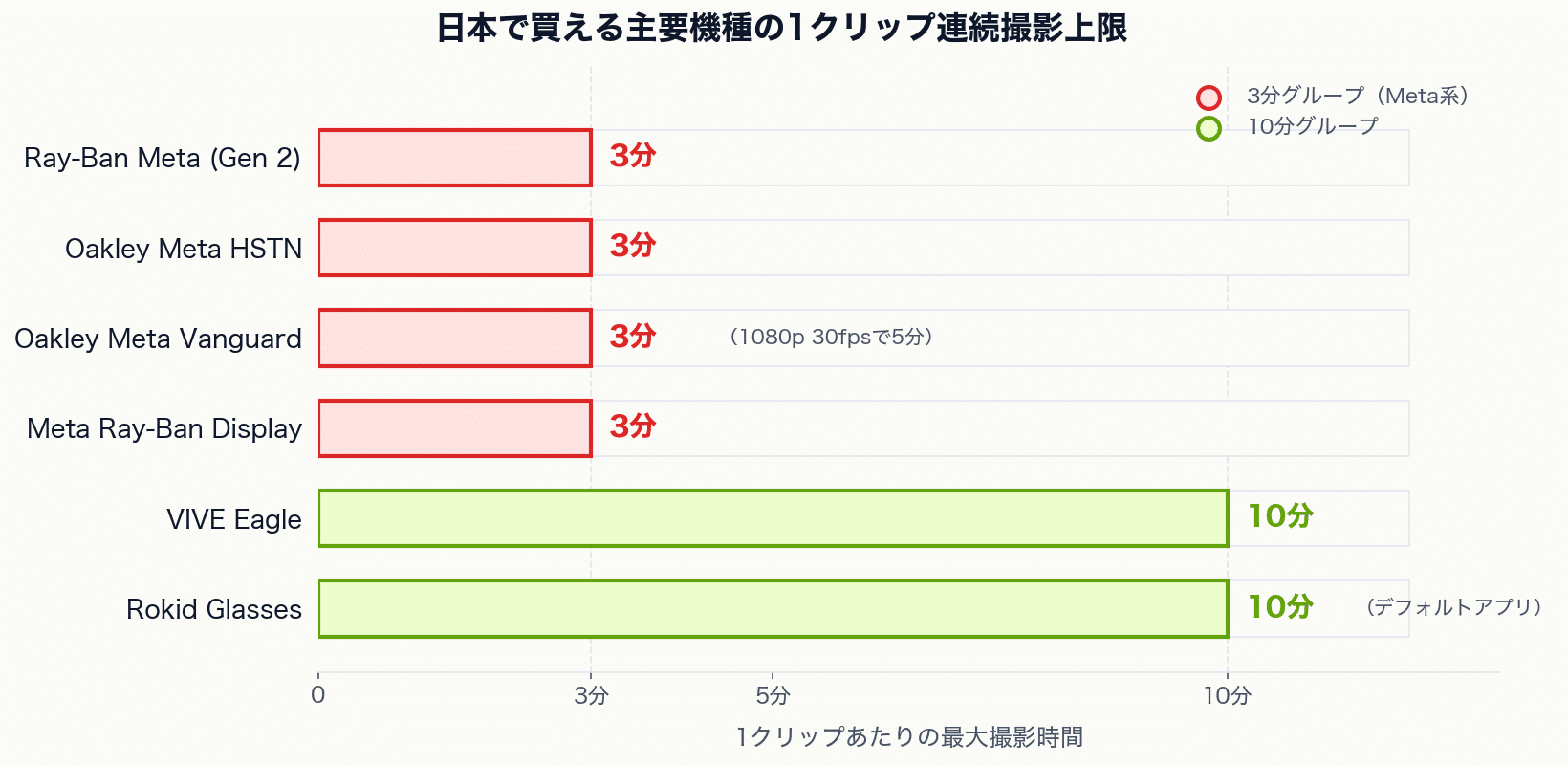
However, be aware that if the upper limit for one clip is short, the total recording time will also be short. The 3-minute limit on the Meta series feels short, but the 8-hour battery life allows you to shoot dozens of 3-minute clips throughout the day. It is actually strong for short continuous shots. Vanguard's secret trick is hyperlapse (3K 15fps 30 minutes continuous), which allows you to turn an entire 30-minute drive into one file.
Basically, streaming is not possible. In the first place, the reason for the short time limit is the bottleneck of heat generation, which is the fate of the form factor of glasses that cannot accommodate a cooling fan. If you want to take long shots, it would be wise to prepare a separate dedicated device such as a GoPro.
6. Dustproof and waterproof: Effective for sports applications
This is an axis that is surprisingly easy to forget. It doesn't matter for everyday use, but it's clearly effective for shooting purposes.
Waterproof grade of main models available in Japan:
-
IP67 (submersible): Oakley Meta Vanguard
-
IP54 (dustproof 5, splashproof 4): VIVE Eagle
-
IPX4 (Rain/Sweat OK): Ray-Ban Meta Gen 2, Oakley Meta HSTN, Meta Ray-Ban Display, Rokid Glasses
IP67 has a different meaning. It is completely waterproof, meaning it can stay underwater for 30 minutes at a depth of 1 meter. Oakley Meta Vanguard has clearly targeted this. The target areas are the ocean, rivers, ski resorts, and runners in the rain. If you're going outdoors for photography purposes, this is where the Vanguard stands out.
7. Naturalness of the shutter
Operating the glasses at the moment you want to take a picture is more difficult than you might imagine. Ray-Ban Meta is Temple'sJust press the capture buttonAnd this is well thought out. Press once to take a photo, long press to take a video. Easy to remember.
Meta Ray-Ban Display allows you to see a shooting preview on the display. This isThe industry's first full-fledged viewfinderThis is the only product that made the design choice of not giving up on framing. Rokid Glasses also has a default feature such as a preview function after taking a photo.
Rokid Glasses operate basically the same way.
Most smart glasses have an AI assistant, so you have the option to take pictures with your voice, but in reality it's difficult to say "Hey Meta, take a picture" in a public space. Also, if you do that, you will miss the photo opportunity. It's socially awkward to voice your intentions to take pictures on a train or in a restaurant. In the end, you have to use physical buttons.
8. Shutter sound and indicator
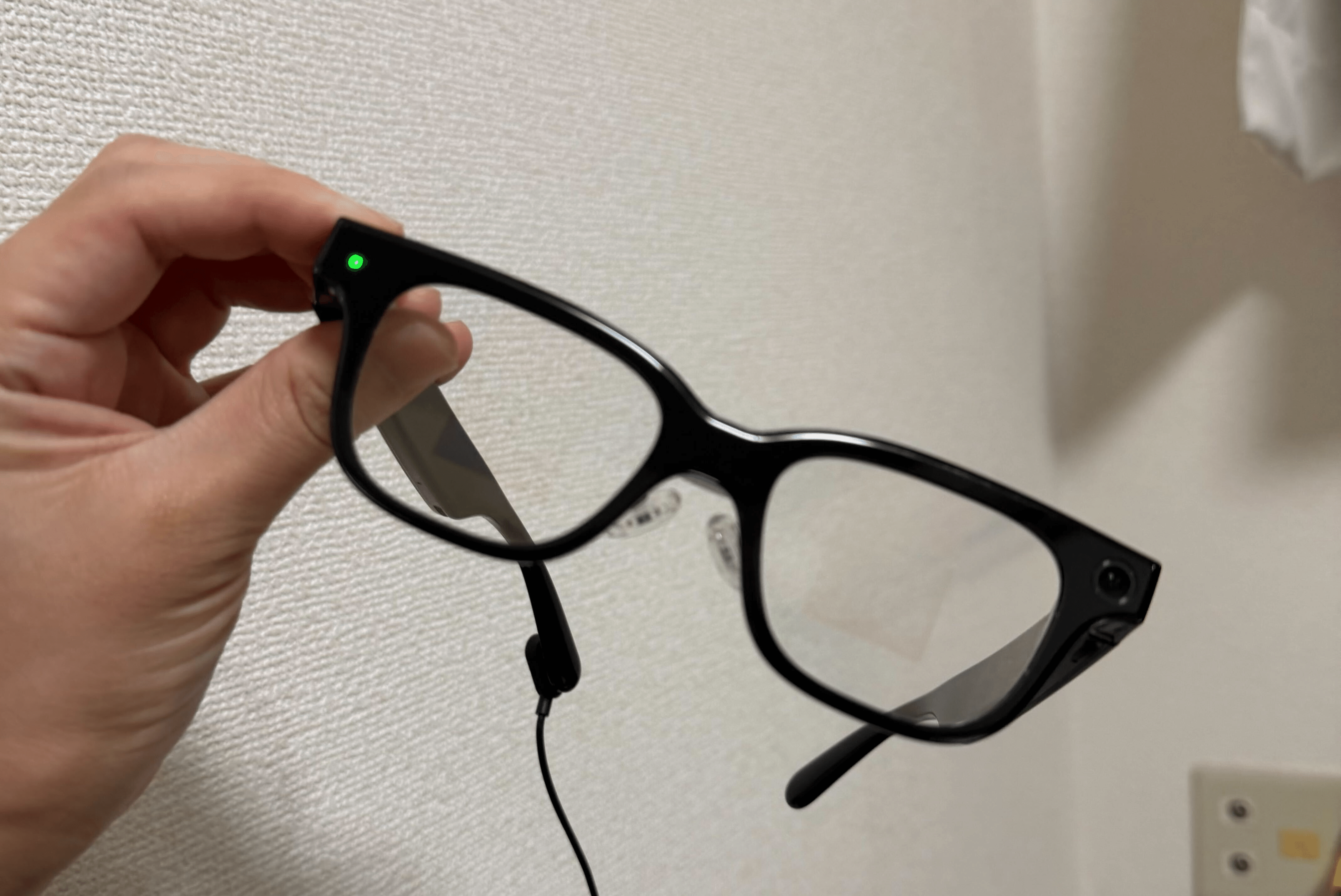
When taking a photo, Meta makes a small shutter sound and the front LED flashes to indicate ``You are currently taking a photo.''. The LED stays on while recording video.
It provides minimal protection for those around you. Physically blocking the LED is a violation of the terms of use, and both Meta and Rokid take the ``right not to be photographed without permission'' very seriously in their hardware design. Similarly, Rokid Glasses will fail to shoot if the indicator is hidden.
9. Nose pad: Does it fit Japanese noses (often overlooked, but deadly)
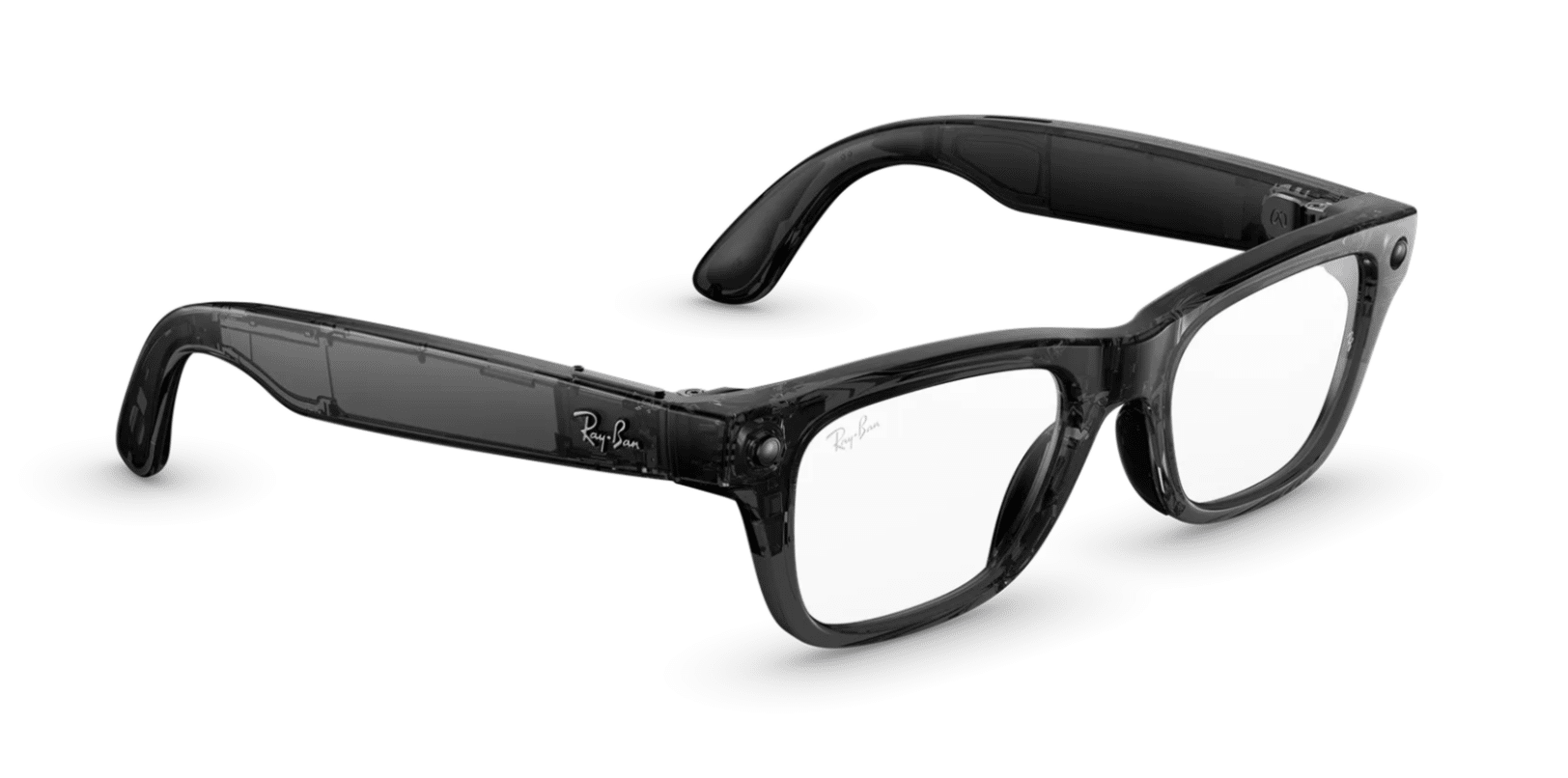
This is something you should definitely check before purchasing. As of 2025-2026, almost all smart glasses are being designed ahead of time in the European and American markets. Ray-Ban, Oakley, and Meta all originated in America and Italy, and are standard designs for Westerners with high nose bridges. If Japanese or Asian people apply this product as is, they will suffer from a triple problem: it will drip down their nose, hurt their ears, and leave marks.
The shooting experience is determined by the stability of the device. Videos taken with glasses that fall off the nose will be skewed, regardless of the performance of the camera itself. For eyeglass-type cameras, the design of the nose pad is actually as important as image stabilization.
Organize the nose pad details of each product in order of fit.
■ Designed for Asians (most secure for Japanese people)
- Rokid Glasses (Japanese version):
Removable and replaceable (standard + small spare),Rokid official explicitly claims Asian design
■ Asian fit pad available (can be replaced by pad)
-
Ray-Ban Meta Optics(Blayzer/Scriber):
3 sizes included (High/Universal/Low Bridge)+ Opticians can adjust. Most suitable for Japanese among the Meta series -
Oakley Meta Vanguard:
3 sizes included, sports wrap shape with strong holding power -
Oakley Meta HSTN:
Includes 2 pairs of Regular + Asian Fit
■ In-store adjustment premise (nose pad independent type)
- VIVE Eagle:
Adjustable hinge type + M/L frame 2 sizes,Can be adjusted at stores such as Sunkus Optical.
■ Fixed nose pad (disadvantageous for Japanese people)
-
Ray-Ban Meta Wayfarer (Gen 2):
Plastic integrated fixed. The Headliner shape has a Low Bridge Fit version (RW4013F) but Wayfarer does not. -
Meta Ray-Ban Display:
Fixed plastic integrally, only 2 sizes Standard/Large, no Asian Fit version.MoguLive actual device review: ``Easy to slip off''clearly stated
Wayfarer Gen 2 and Meta Ray-Ban Display have a fixed nose pad, which puts Japanese at a disadvantage
These two models have a one-piece plastic nose pad that cannot be replaced or adjusted. It was designed to maintain Wayfarer's traditional silhouette, but it doesn't suit the Japanese low nose bridge. Ray-Ban MetaLifehacker 6 month reviewHowever, there have been reports that ``it slips off'' and ``a silicone adhesive pad is used.''
For Display, MoguLive"It's suitable for Westerners with tall noses and tends to fall off easily.Large falls even further, so I removed it from my options."It is written clearly. Coupled with the increased weight of 69g (Gen 2 is about 52g), it is virtually no longer an option for users with low noses. I empathize with this very much, based on my own experience.
Ray-Ban Meta Optics (Blayzer/Scriber) is a Meta type favorite for Japanese people.
If you are choosing based on ``Can Japanese people play?'' rather than shooting performance, choose Wayfarer's Gen 2. Optics(Blayzer/Scriber) I strongly recommend.
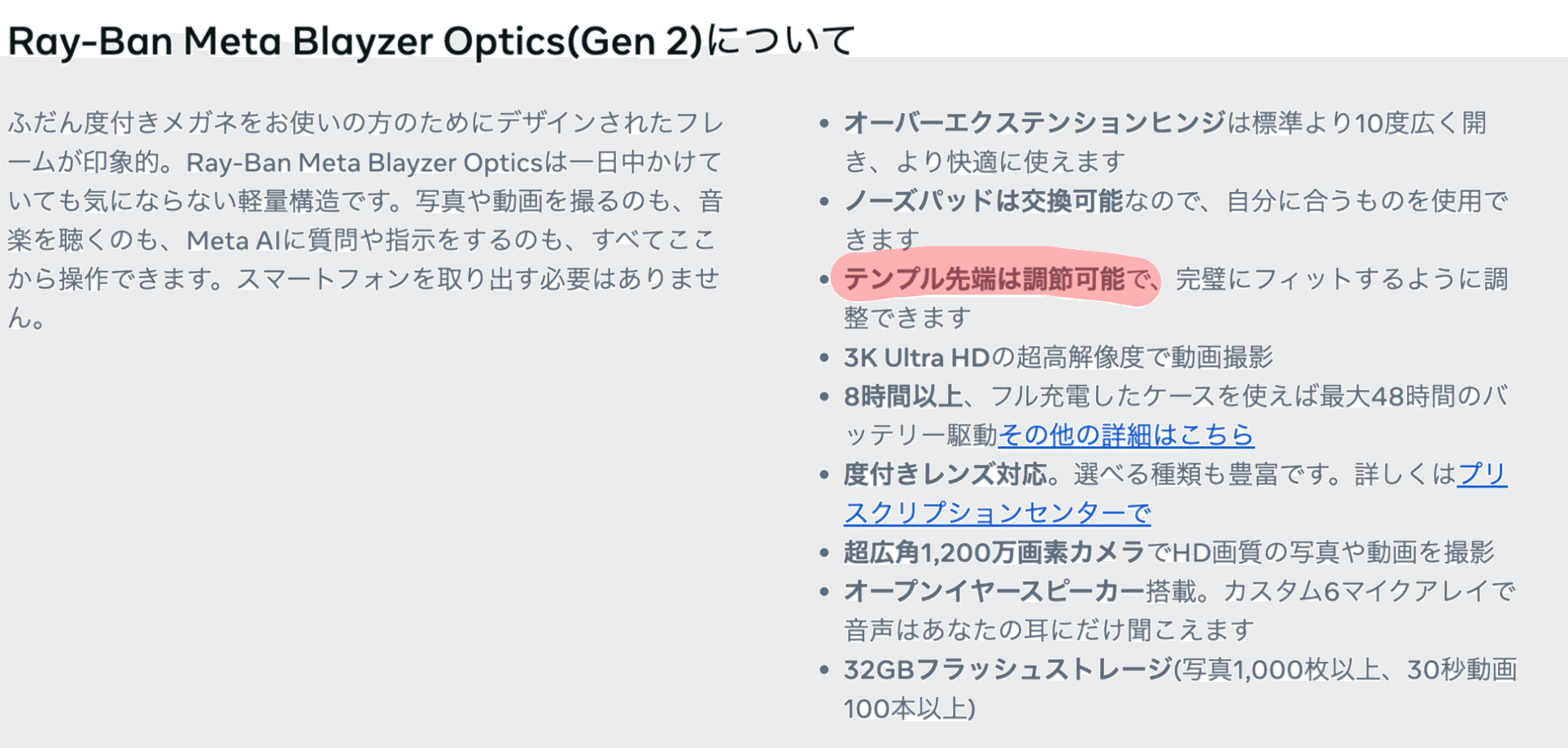
There are 3 reasons.
-
Three sizes of nose pads (High Bridge / Universal / Low Bridge) are included as standard and can be replaced by yourself.
-
Officially claims that the temple tip is optician adjustable (fitting can be done at an optician)
-
Designed with a hinge that opens 10 degrees wider
Since it is a prescription compatible model, all adjustments can be completed through an optician. It will cost 82,500 yen + lens fee.
Chinese (Rokid/Xiaomi) are designed with Asians in mind.
Conversely, Rokid Glasses (Japanese version) are explicitly designed with Asians in mind. Rokid is"Compared to other companies' products that are mainly designed for Westerners, Rokid prioritizes fit for Asians," says Makuake.. Of course, since it's a Chinese manufacturer.
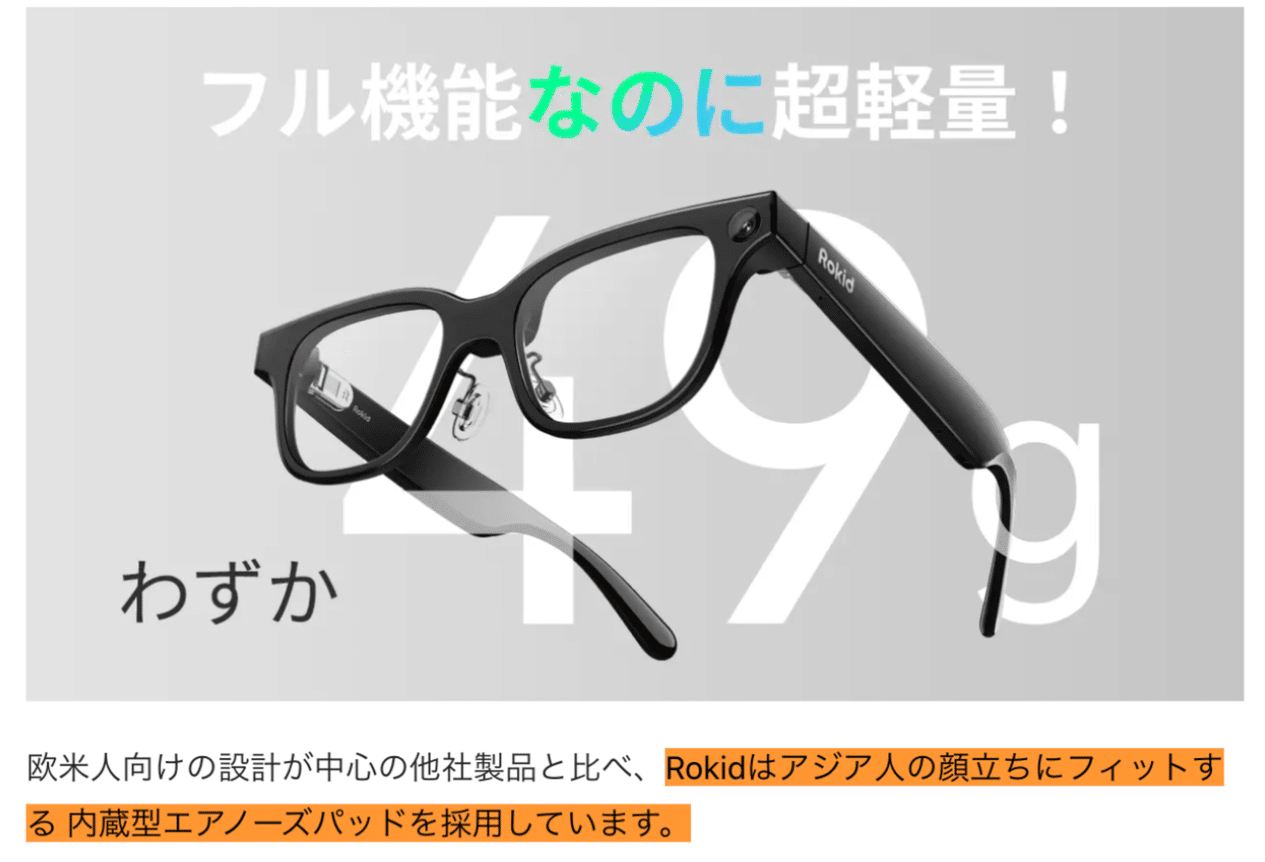
If we were to narrow down our search solely to the criteria of ``a glasses-type camera that Japanese people can comfortably wear,'' the two strongest products among those that meet technical requirements would be Ray-Ban Meta Optics (Blayzer/Scriber) and Rokid Glasses (Japanese version).
``Can it be adjusted at an eyeglass store?'' is also important.
Glasses-type cameras have electronic components and batteries inside, so they cannot be bent with heat to adjust the fit like regular glasses. Generally not recommended.
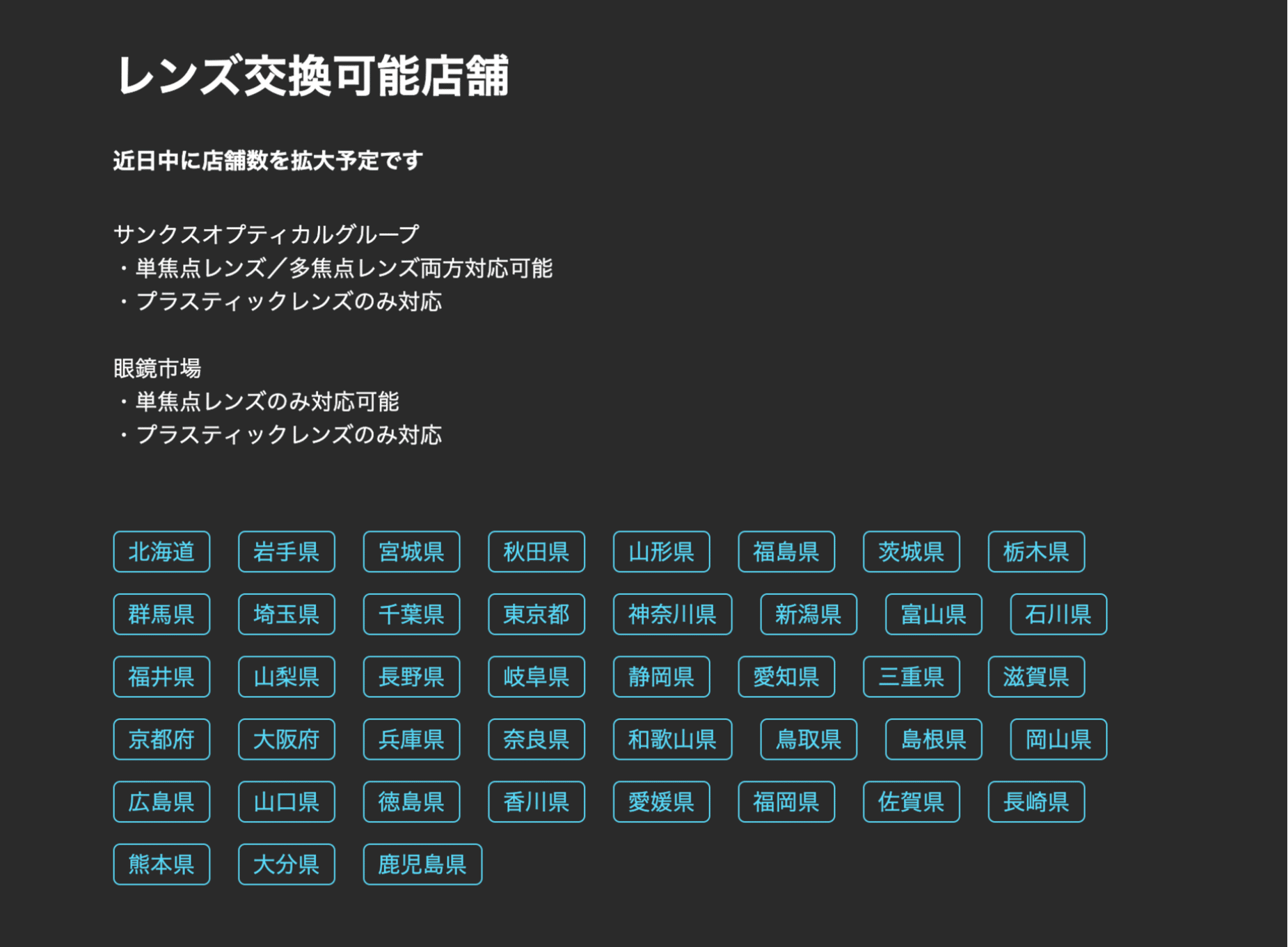
Among them, Ray-Ban Meta Optics (Blayzer/Scriber) and VIVE Eagle are exceptional in that they are clearly ``designed to be adjustable in the store.'' VIVE Eagle isThanks optical/eyeglasses marketRay-Ban Meta Optics is officially labeled as optician-adjustable. The hidden strength of these two models is that they can be adjusted in-store at an optician.
Evaluation of each product: Looking at it for the purpose of photography
From here, we will look at individual products from the perspective of ``glasses for taking photos.''
Write honestly. Of the items reviewed in this article, Rokid Glasses are the only ones that I have used for extended periods of time for my own photography. I only briefly touched Ray-Ban Meta at a store, and other evaluations are based on media reviews and official specifications. We will introduce actual machines one after another, but please note that this decision is based on the information we have at this point.
Ray-Ban Meta (Gen 2) ★
If you buy it as a "camera" it's genius, but if you buy it as "smart glasses" you'll regret it.
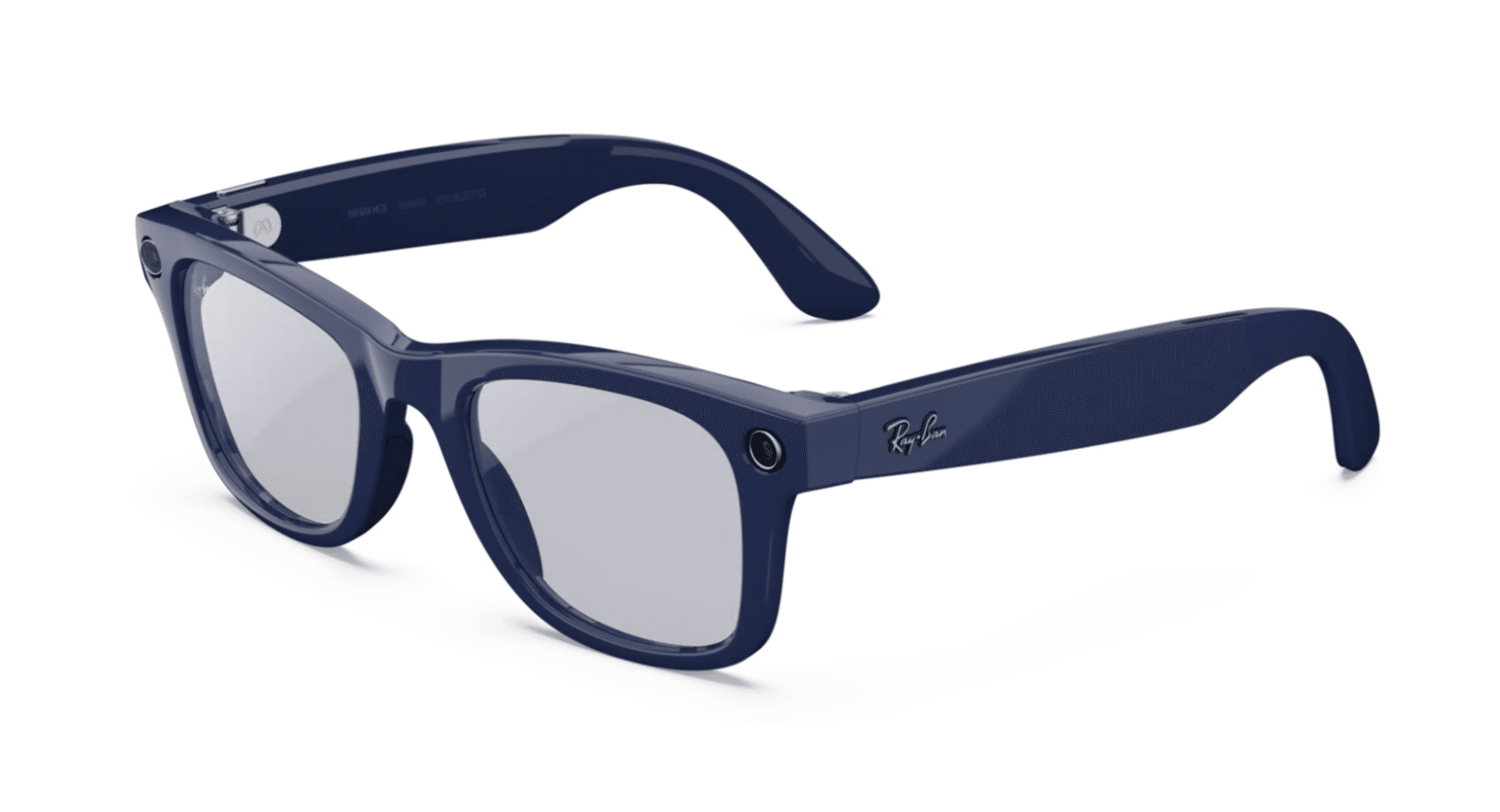
On sale today, May 21, 2026, starting from 73,700 yen
As I wrote at the beginning, this is a glasses-type camera (plus earphones). Nothing appears on the lens. You won't even see the AI's answers in your field of vision. The most important thing is to be satisfied with this product before you buy it.
Don't be fooled by the term "smart glasses." If you're attracted to the Ray-Ban brand and are thinking of buying them as a fashionable pair of glasses, don't do it. If you're expecting visual richness, you'll definitely be disappointed. It's a return matter.
On the other hand, if you're thinking of buying a camera because you want an easy-to-use camera, few purchases in the 70,000 yen range feel as worthwhile. You can take first-person videos and snapshots with both hands free. You can take photos while petting a pet, holding a child, cooking, or riding a bicycle. This is an area that smartphones can never reach. It is also an excellent material for Vlogs.
It also has excellent shooting performance. 3K 30fps, HDR, enhanced EIS (significantly improved in Gen 2), improved low-light performance, twice the battery. All items listed in the spec table have been optimized for "taking better videos."
And, crucially, Meta will be available worldwide from 2024.Over 7 million units soldThat's what it means. Videos labeled as "taken with Ray-Ban Meta" on Reels and TikTok are already commonplace. Viewers are accustomed to first-person video. The shooting format itself has acquired citizenship.
The Japanese price starts from 73,700 yen, which is a low cost for a photography experience. GoPro HERO13 BlackLower 70,000 yen rangeConsidering this, it is reasonable for a two-hands-free camera to be in the same price range for photo and video purposes.
And a strength that is often overlookedsound quality. Ray-Ban Meta's speakers were co-designed with Bose and are highly complete as audio glasses. If you want to listen to music and make calls instead of AirPods, this is a distinct advantage over other eyeglass cameras. In the context of "stylish sunglasses that can be used for taking photos and listening to music," Ray-Ban Meta is unique.
If you want prescription lenses, Ray-Ban Meta Optics (Gen 2) costs 82,500 yen + lens fee. As a glasses user, this is what I end up with.
Talking about the nose pad. The Wayfarer version (73,700 yen) has a fixed plastic nose pad, which tends to slip off for Japanese people with short noses. The Headliner shape has a Low Bridge Fit version (RW4013F), but Wayfarer does not. If you are aware of your nose being low, the correct choice is Headliner Low Bridge Fit or Optics (Blayzer/Scriber, 3 size pads included).
The only decisive difference from display products: You cannot check the photos you take on the spot. I can't tell if it's blurry or out of focus until I transfer the app and look at it. If this is of critical concern to you, please consider Rokid Glasses (see below).
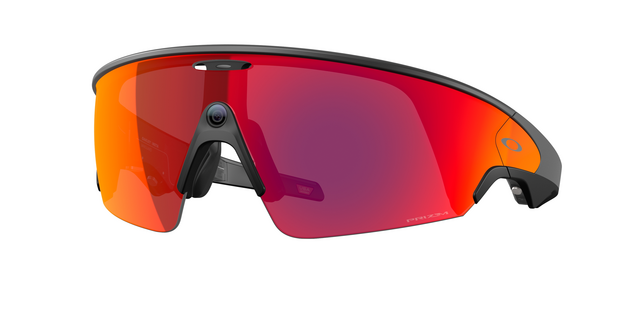
Oakley Meta Vanguard
★ Dedicated machine for active use
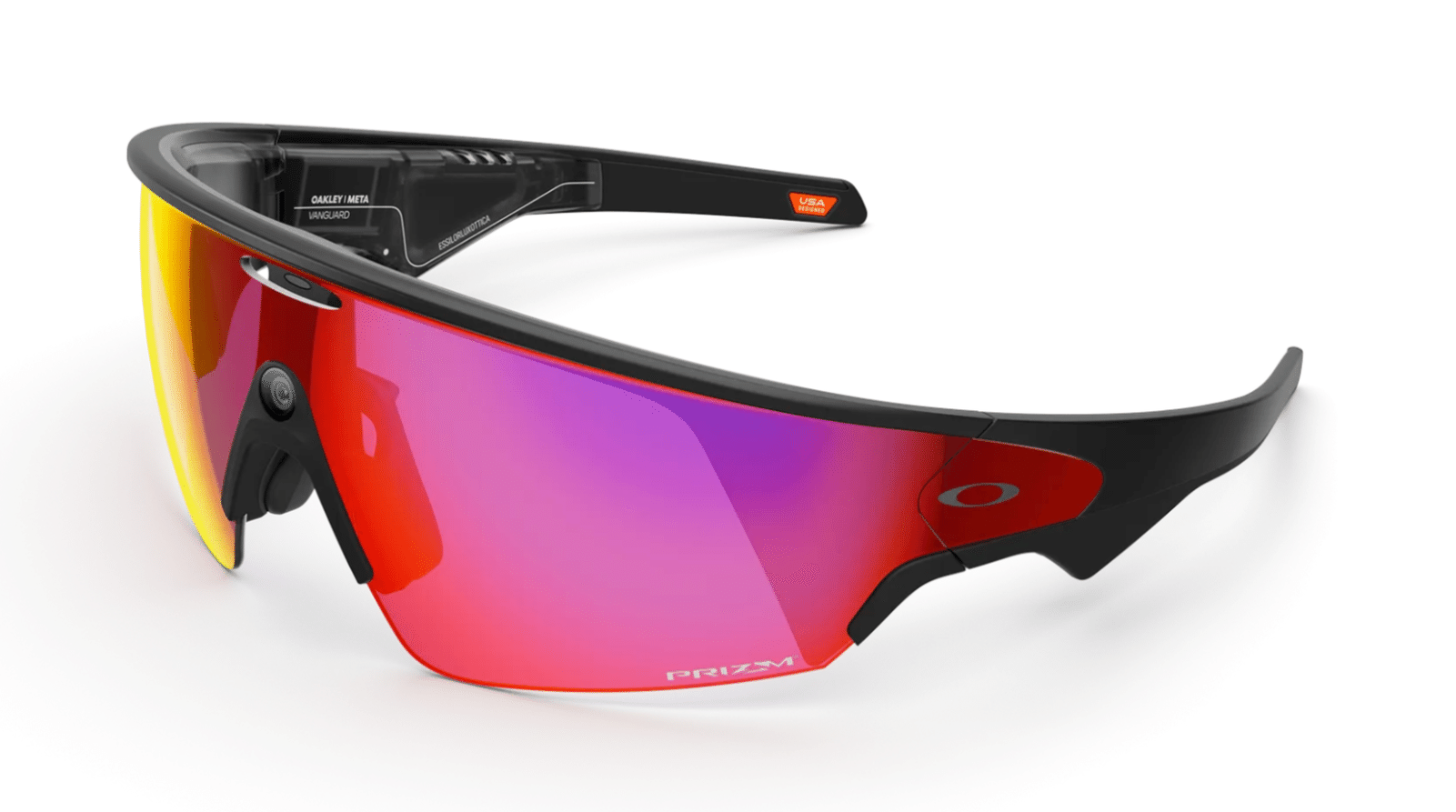
Released on 5/21, starting from 96,580 yen
For sports purposes, especially when taking intense shots outdoors, this is your choice.
There are four reasons.
-
IP67 waterproof:Can be submerged in water. Will not die completely from sea, rain, sweat
-
122° ultra-wide angle, central nose bridge placement (Vanguard exclusive feature): Symmetrical and distortion is more natural than Ray-Ban Meta / HSTN temple placement
-
720p 120fps slow motion/3K 15fps hyperlapse (30 minutes continuous): Common-sense shooting mode for sports use
-
EIS 3-level adjustment (Low/Med/High) and Garmin cooperation: Heart rate, speed, distance, and power zones can be imprinted on videos
This is more of a hybrid of an action cam and glasses than a glasses-type camera. It's an option to get rid of that clunky GoPro strap that wraps around your head.
Runners, cyclists, surfers, skiers, snowboarders. For people whose hobbies involve active photography, it's probably well worth the 100,000 yen price tag.
On the other hand, they are definitely over-spec for everyday use, and the look is more like sports glasses and not casual. I don't recommend it to anyone other than people who usually wear sports-oriented glasses.
The nose pad3 size exchangeable (High/Universal/Low Bridge)+Unobtainium material absorbs sweat. It has a sports wraparound shape and is held at the temples, so it won't slip off even with a low nose. Practical enough for Asian fit.
Oakley Meta HSTN
★ Relatives of Ray-Ban Meta
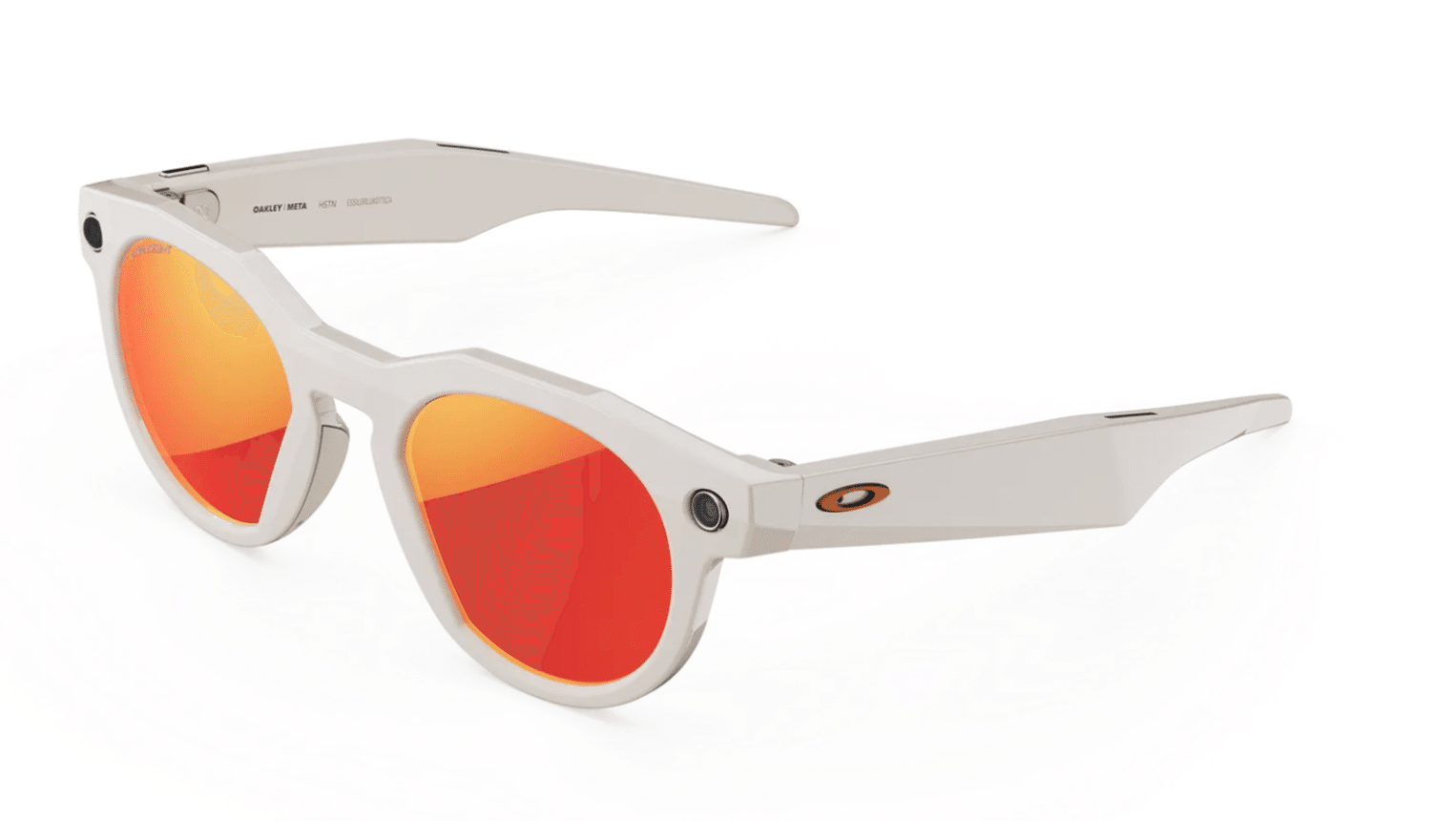
Released on 5/21, starting from 77,220 yen
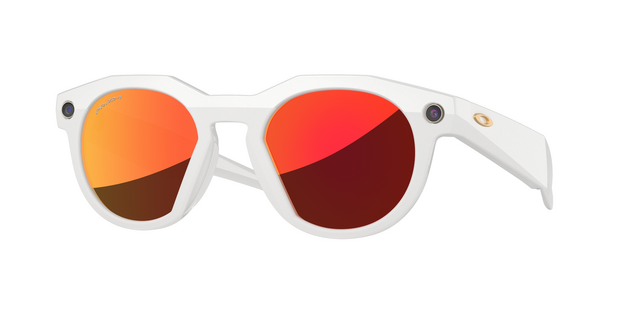
Located between Ray-Ban Meta and Vanguard. In terms of specs, this model has sports features removed from the Vanguard and has a more casual appearance. 3K 30fps, 1080p 60fps, IPX4, 100° temple placement. The shooting experience is essentially Ray-Ban Meta, with only its sister model, the Vanguard, having a 122° camera and a centrally placed camera on the nose bridge. It is an intermediate model that meets the demand for ``Oakley looks that don't stand up to Vanguard.''
Many people probably find Ray-Ban's classic Wayfarers easier to wear on a daily basis, so the reasons for choosing HSTN are narrowed down to preferences such as ``I like the Oakley brand'' and ``Ray-Ban's silhouette doesn't suit my face.''
Two pairs of nose pads (Regular + Asian Fit) are included and are interchangeable. HoweverGizmodo Japanese version reviewIt has been pointed out that ``both the temple and nose pad are tight and constrictive'', which is tighter than Ray-Ban Meta. If you have a small face, we recommend trying it on.
Meta Ray-Ban Display
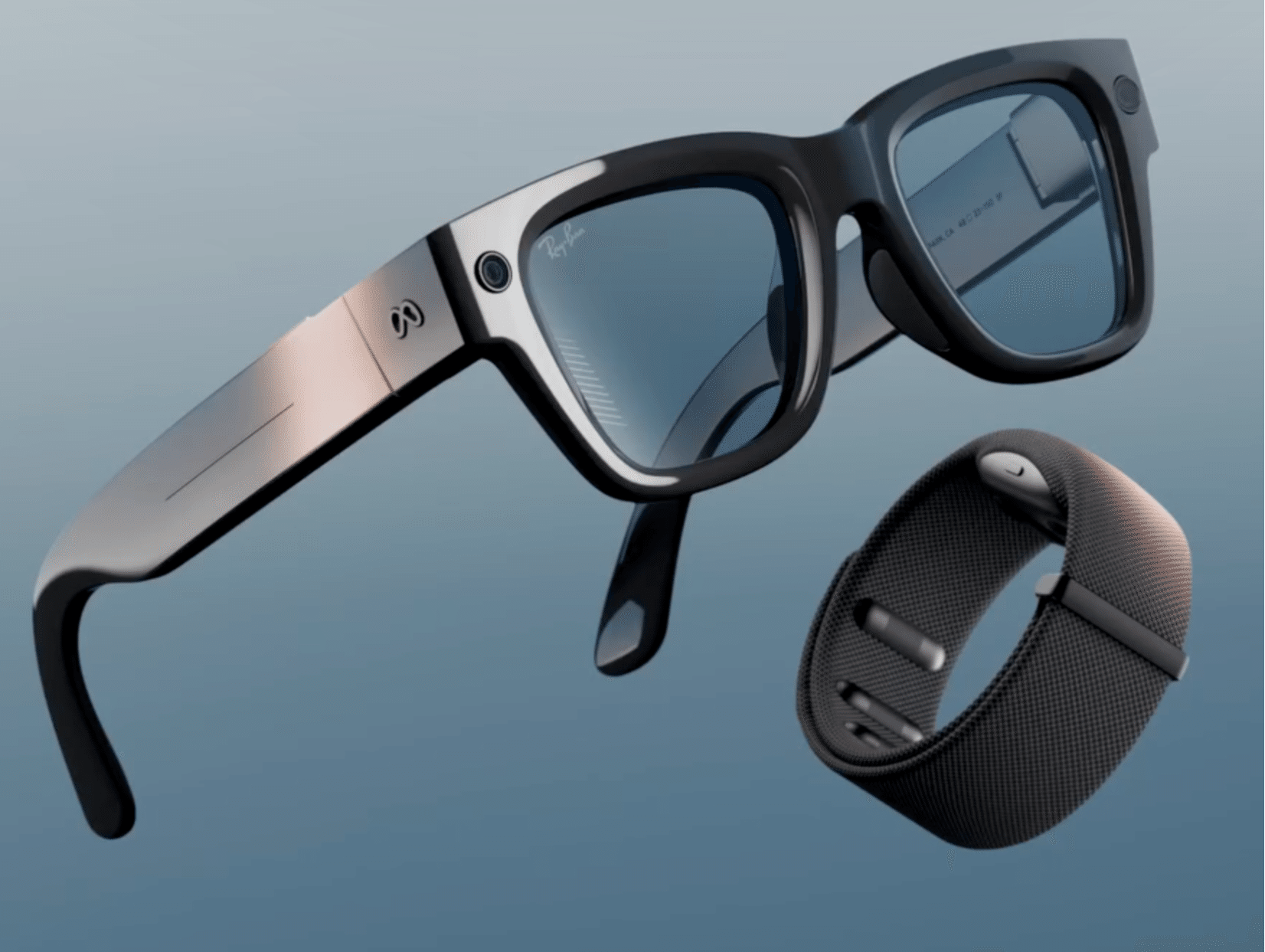
$799 (approximately 120,000 yen), no Japanese radio certification
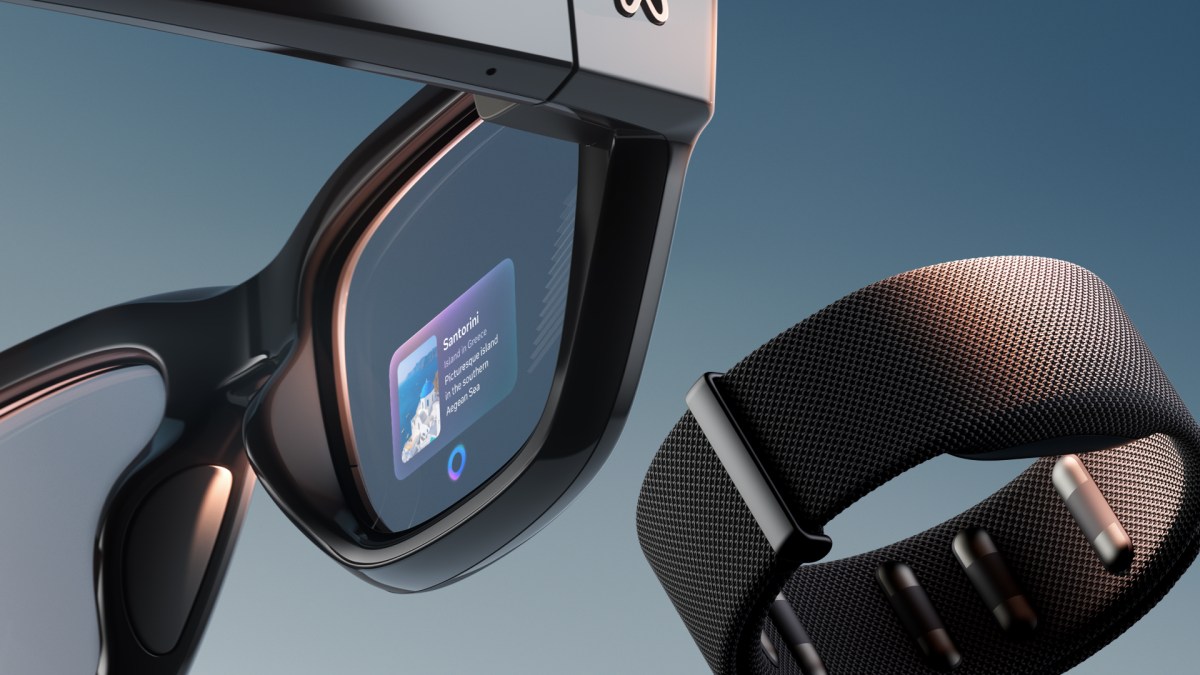
This is a machine that Meta has taken seriously with its "display + camera". The camera function of Ray-Ban Meta is unique.smart glasses with viewfinderA high-end model that integrates functions and Neural Band gesture operations.
3K 60fps HDR, 3x digital zoom, 6 microphones (including contact microphone). It's one of the best smart glasses cameras out there (the zoom is digital, not optical). It has the highest quality of photography, but with a weight of 69g and a 6 hour battery, it is inferior to the Vanguard in terms of operation. The nose pad is also integrated and fixed.Japanese people tend to get bored easily. Not yet sold in Japan.
VIVE Eagle
★ Vertical video first, already launched in Japan
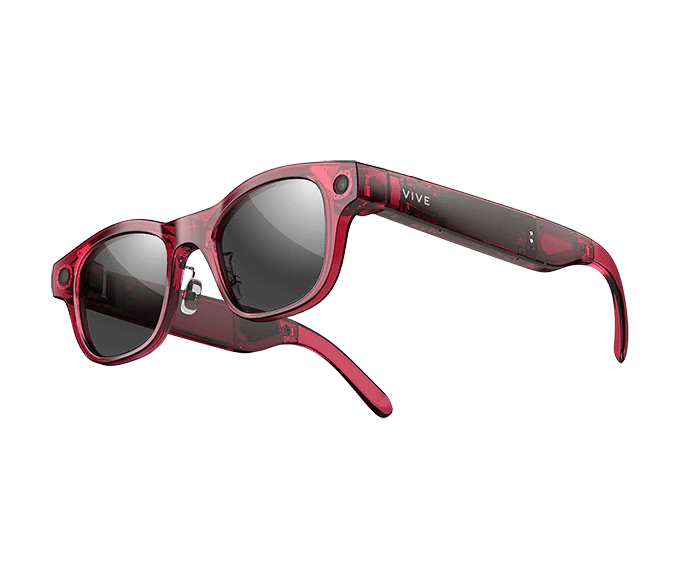
Released on April 24, 2026, 82,500 yen (KDDI au+1 collection)
Meta competitor released by HTC. A pair of photography glasses that arrived in Japan a month earlier than the Ray-Ban Meta.
The characteristics are Zeiss lensesand that it is designed to shoot vertical videos first. video resolution1512×2016 (vertical) 30fps. This is a design that can be said to be a dedicated machine for TikTok, Reels, and Stories.
The target is clear. For people who post vertical videos on their smartphones (mainstream users of SNS), these are the only smart glasses whose shooting format matches the shape of SNS. No need to crop Meta's 3K landscape videos later.
However, there are also weaknesses.
-
Video resolution lower than Meta: equivalent to 1512×2016 in the 3K standard era
-
Not suitable when you want to take horizontal videos
-
Continuous shooting is up to 10 minutes (confirmed by VIVE official support, default is 3 minutes)
-
Water resistance is IP54, not as good as Meta Vanguard's IP67.
-
There are still few international reviews, and there is a lack of material for comparing actual machine performance.
-
There are 4 microphones (1 directional + 3 omnidirectional), one step less than the 5 microphones of the Meta system.
This is a product that will appeal to people who only shoot vertical videos, people who value Zeiss lenses, and people who politically dislike Meta. It would have been great if you could buy it in the upper 50,000 yen range in Japan, but the price of 82,500 yen is on the same level as the Ray-Ban Meta Optics, and if you look at it just for shooting purposes, there are more reasons to choose the Ray-Ban Meta.
The nose pad is an adjustable hinge type with an independent metal pad, and the frame itself is available in two sizes, M/L. The standard is more Western, butOfficial stores such as Thanks OpticalOur strength is that we have a system in place that allows us to make in-store adjustments. There is no problem if the premise is that it can be adapted to the Japanese face at the store.
Rokid AI Glasses Style / Xiaomi AI Glasses
Both are not officially distributed in Japan, so they are for reference only. Rokid AI Glasses Style is $299, 38.5g, 12h battery. Xiaomi AI Glasses costs 1,999 yuan in China, has a 12MP Sony IMX681, IP54, bone conduction microphone, and is explicitly designed for Asians. There are some points in terms of specs, but since I can't buy it in Japan, I'll remove it from the list and move forward.
Google Intelligent Eyewear
(Reference/Scheduled to be released in fall 2026)
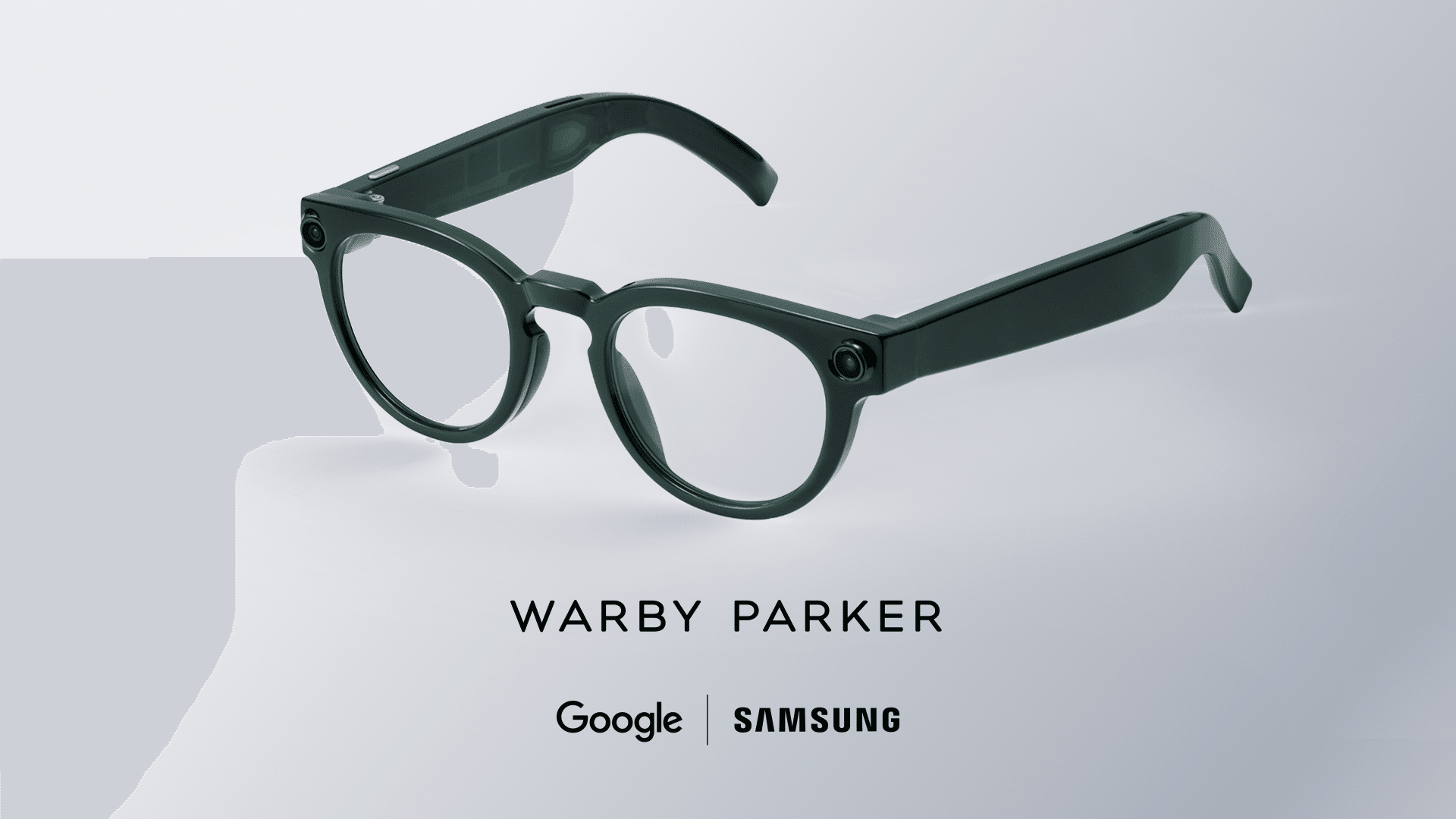
Although it cannot be included in the composite score ranking, it cannot be ignored as a future option. Intelligent eyewear launched by Google in collaboration with Samsung It is. Smart glasses equipped with Android XR and compatible with Gemini, details of which were unveiled at Google I/O 2026.Audio glasses will be introduced in the fall of 2026, followed by display glasses.It becomes.
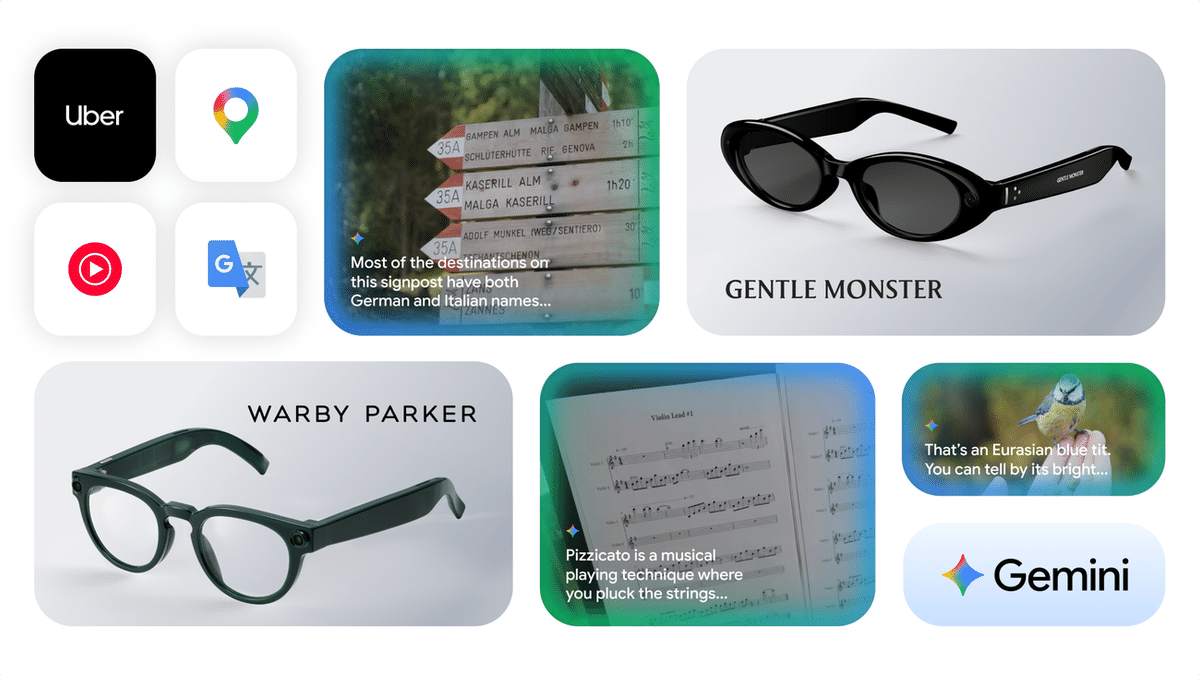
A format similar to the Ray-Ban Meta type equipped with a camera, speaker, and microphone. "Hey Google" or a tap on the temple launches Gemini, which allows you to ask questions about what you're watching, perform real-time translation (including signs and menus), turn-by-turn navigation, summaries of unread messages, and voice control of apps like Uber. It is confirmed that it will be compatible with both Android and iOS, and will be equipped with Qualcomm's Snapdragon (detailed specifications have not been released).
Frames will be announced in advance by Gentle Monster and Warby Parker brands.. Like Ray-Ban Meta's Ray-Ban x Meta and Oakley Meta's Oakley x Meta, this will follow the collaborative path of "fashion brand x tech company."
Camera performance specifications and whether it will be released in Japan are still unknown. However, the fact that Google is making a full-fledged entry into the ``glasses-type camera'' market, which was dominated by Meta, is information that cannot be ignored by those who are planning to buy a glasses-type camera.If you don't need to buy in a hurry, you can wait until you see Google's announcements in the fall before making a decision.. Also, I have higher expectations for the AI function than Meta.
Rokid Glasses
★ Actually, it is more practical than Ray-Ban Meta as a "glasses-type camera"
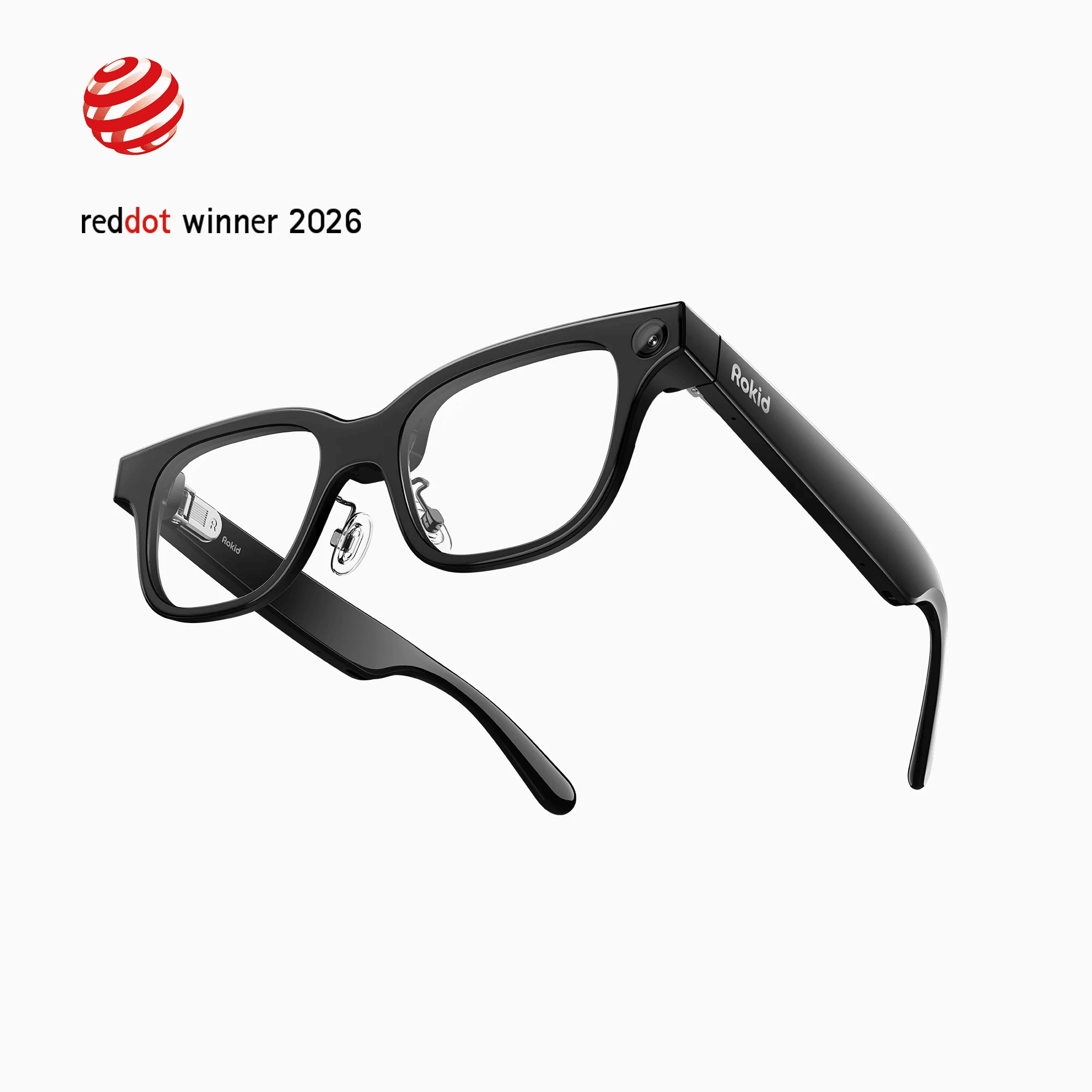
In the previous article, I wrote about Rokid Glasses as "incomplete smart glasses compared to Even G2." However, when you re-evaluate it as a "glasses-type camera," your impression changes 180 degrees. This is what I noticed after using it for a few days.
You can preview the shooting on the display, this is huge
The biggest advantage of Rokid Glasses is that the photos you take appear on the display instantly.
Ray-Ban Meta is blind even when shot. You won't know if you took the picture, if it's in focus, or what the composition is until you transfer it to the smartphone app later. This can be quite stressful when shooting casual photos. Things like "Oh, my pet looked nice, I took a picture of it!" → "When I got home and looked at the app, it was all blurry" often happens.
With Rokid Glasses, you can see the photo in your field of vision the moment you take it. If it's blurry, you can retake it. I can remember framing. There is a difference between a camera that allows you to take pictures while checking the viewfinder and a blind shoot. This takes the shooting experience to the next level.
Specs aren't that bad either
Sony IMX681 f/2.25, 109° wide angle, 1680p up to 60fps, LLHDR(Official blog notation, and media reviews also mention 30fps). The wide angle is 109°, which is close to the super wide angle of the Meta, and I feel that I can shoot wider than I expected.
The camera quality itself isn't bad either. Outdoor shots can be taken on a level comparable to Ray-Ban Meta. The AI function (ChatGPT/Gemini switching) also has some interesting moments.
The shutter is a physical button on the right temple, and it also supports voice activation of "Hi Rokid".
Be honest about your flaws
However, there are problems. Disadvantages when used on actual equipment:
-
The battery is a pain: With the default settings (“Hi Rokid” always on standby, live translation, etc. on), I start to feel like I need to charge it in the evening. If you turn off the always-on system, it will last about three times as long, but it still won't reach the 8 hours of Ray-Ban Meta.
-
The display won't appear unless you tap anything other than notifications: You need to do the ritual of touching your temple every time you want to check the screen. If this happens many times a day, it gets worse.
-
Initial nose pads are ``big like a gag'': The pads that come as standard look strange. It can be replaced with the small spare pad that comes with the package, but the screws are so small that I had to use tweezers to pull them around while replacing them. You can also get support from Future Model.
-
Low-light performance is inferior to Ray-Ban Meta Gen 2:Tom's Guide ReviewHowever, as has been pointed out, it loses ground to Meta's refurbished sensor in dark restaurants and outdoors at night.
However, this is not an evaluation as a camera, but as a smart glass, so there are almost no drawbacks in that respect.
Conclusion: If you don't care about design or brand, this is it.
If you don't care about Ray-Ban's brand and design, Rokid Glasses may be a more capable eyeglass camera. This is my honest impression after using it for a few days.
Especially effective scenes:
-
People who want to save photos (you can select from the preview)
-
People who want to learn framing (check immediately after shooting)
-
People who want to use a translation camera when traveling abroad
-
People who also want to utilize the AI question function
Scenes that are not suitable:
-
People who want to avoid running out of battery at all costs
-
People who often take pictures in dark places
-
If you don't like the "Ray-Ban silhouette", this unit is better, if you like it, try Ray-Ban Meta
The price isMakuake advance price 79,990 yen~, general sale 109,890 yen. The price difference with Ray-Ban Meta Wayfarer 73,700 yen is about 6,000 yen. Considering that you can get a screen + translation camera + teleprompter + AR navigation for just 6,000 yen difference, it makes sense even for people who can't get their money's worth purely from camera use. Even if you're someone like me who feels that 80,000 yen is too expensive just for the camera, the price is still manageable if all the other features are included.
Excellent nose pad (suitable for Japanese people)
The Japanese version isRokid official explicitly claims Asian design, Replaceable nose pads with air cushion structure (standard + small spare) are included. The standard pad that is initially installed looks large, like a gag, but it does not hurt the nose despite its size, and is designed to put less pressure on users with short noses. In terms of ``camera smart glasses that fit the noses of Japanese people'', they are as strong as Ray-Ban Meta Optics among products that are technically suitable.
Camera performance spec comparison table
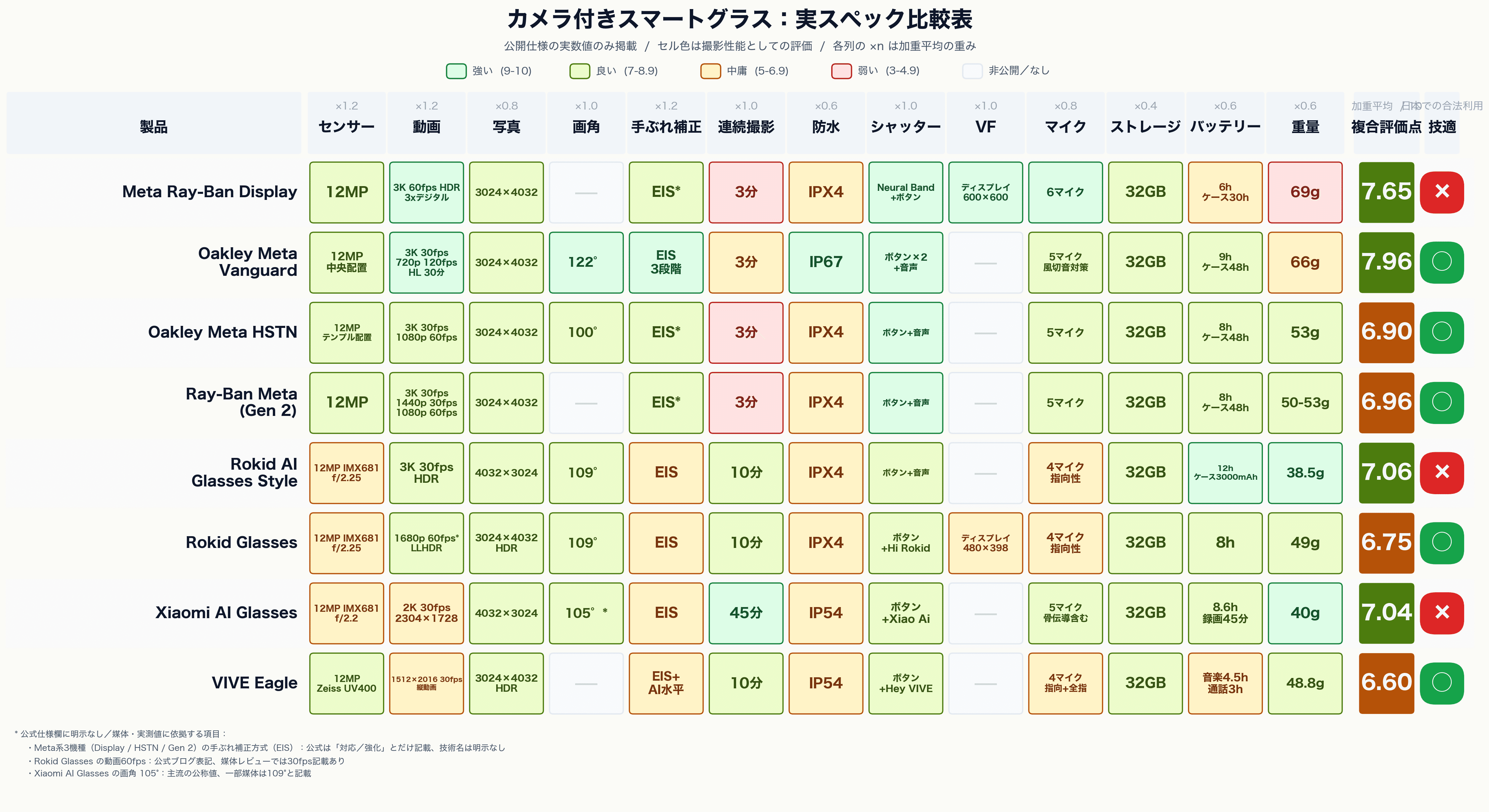
Only publicly available numbers and model numbers are listed, and undisclosed or not applicable items are grayed out. The color of the cell is linked to its strength as a photographic performance.
Note: Specifications that are easy to confuse in the table
-
Oakley Meta HSTN (100° temple placement) and Vanguard (122° center placement) have different camera specifications and placement. There are many articles that refer to it as "Oakley Meta," but the shooting experience is different.
-
Meta Ray-Ban Display's zoom is not optical but digital 3x. 6 microphones including contact microphones
-
Oakley Meta Vanguard's image stabilization can be switched to 3 levels: Low/Med/High.
-
The video of Rokid Glasses is 60fps as stated on the official blog, and the shutter is a physical button (not a temple tap)
-
Ray-Ban Meta Gen 2 abolishes live streaming function (retreat from Gen 1)
How to place and read weights
The composite score is calculated by taking a weighted average of 13 items. The weight was determined based on the contribution to the shooting experience:
-
Heavy (×1.2): Sensor / Video resolution / Image stabilization (core of the shooting experience)
-
Standard (×1.0): Angle of view / continuous shooting / shutter / preview
-
Light (×0.8): Number of photo pixels / Microphone
-
Physical attributes (×0.4 to 0.6): Dustproof and waterproof / Storage / Battery / Weight (not camera performance itself, but affects shooting operation)
Non-disclosed items are excluded by weight and averaged. If we set "undisclosed = 0 points", products for which no information is available would be unreasonably low, so we decided to fairly evaluate them based only on the information that is available. Conversely, the fact that there is simply not enough material to compare camera performance with for products with many gray-outs remains as an uncertainty in the evaluation.
The boundaries between cell colors are determined based on the evaluation of shooting performance. For example, in the case of continuous shooting: 3 minutes is red (insufficient), 5 minutes is yellow (medium), 10 minutes is yellow-green (practical), and 45 minutes is green (overwhelming). Even if the spec numbers are the same, the evaluation changes depending on the context, so rather than a pure spec comparison, we color the products based on ``strength that works when used for shooting purposes''.
Camera composite evaluation score × price
I made a scatter plot of these scores and prices.
The strongest among the six models with technical suitability is Oakley Meta Vanguard (7.96). It is the overall top that even suppresses the Meta Ray-Ban Display (7.65), making it the strongest choice for shooting purposes. Ray-Ban Meta Gen 2 (6.96) and HSTN (6.90) are in the middle, Rokid Glasses (6.75) and VIVE Eagle (6.60) are in the bottom.
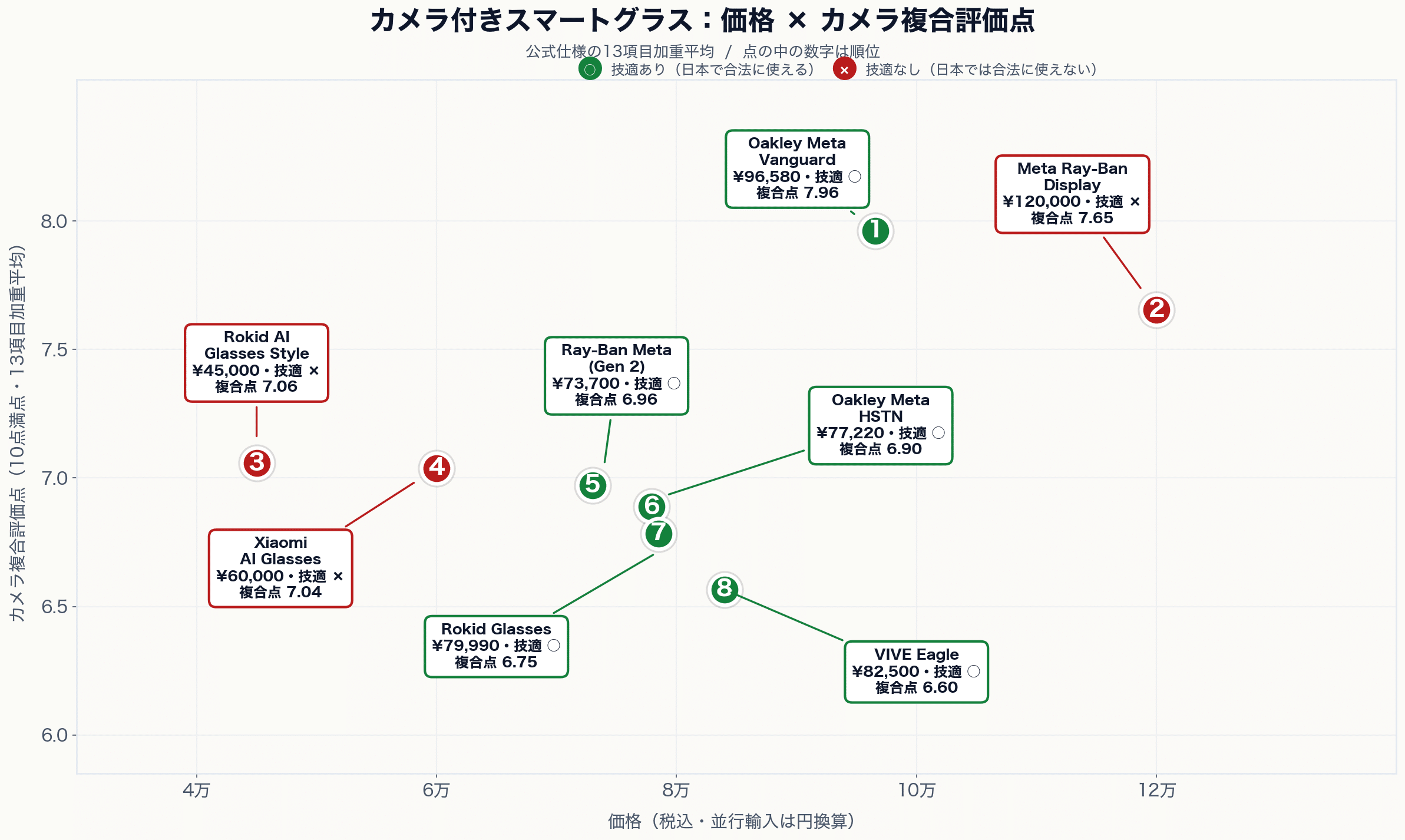
Three models without technical qualification (Rokid AI Glasses Style 7.06, Xiaomi 7.04, Display 7.65) have high scores, but cannot be used regularly in Japan. If you separate out ``technical aptitude'', it would be overwhelmingly advantageous in terms of price vs. score, but these are set aside as options.
Note that Rokid Glasses' camera performance alone seems low at 6.75, but this is because the price of the screen and other functions (translation, teleprompter, AR navigation) cannot be compensated for in terms of camera evaluation. Personally, I recommend this, as I will explain later.
If I would buy Rokid Glasses
I have listed the specs so far, but in the end, if I were to buy it as a camera, Rokid Glasses Choose.
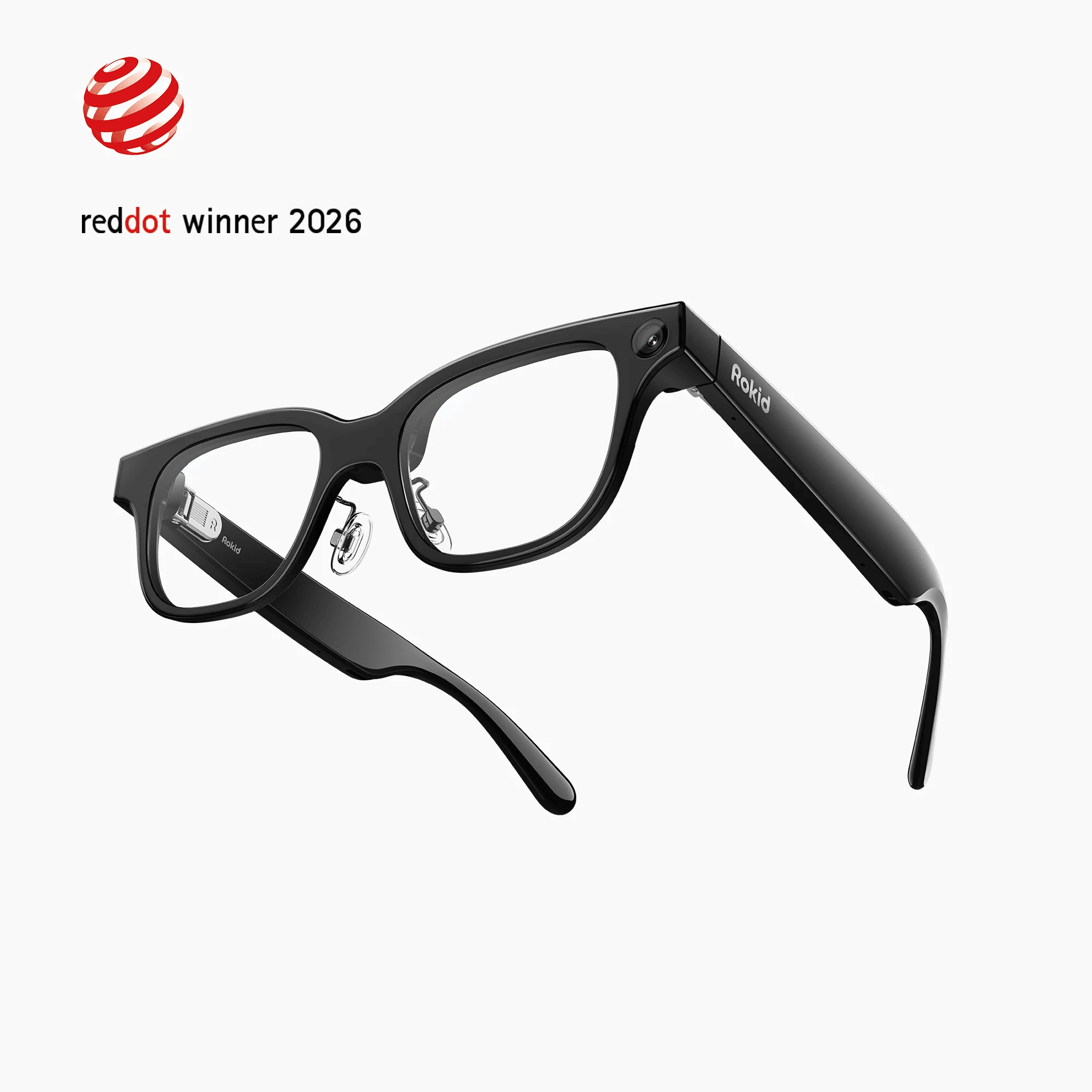
The reason is simple: the price difference between Ray-Ban Meta Wayfarer 73,700 yen and Rokid Glasses 79,990 yen is only 6,290 yen. Ray-Ban Meta is superior in terms of camera performance alone, but there is a big difference in the experience of being able to see it on the screen the moment it is taken. If you take a picture and it's blurry, you can retake it, or if the composition is bad, you can adjust it. It approaches the feeling of a camera with a viewfinder.
In addition, Rokid Glasses have many functions other than photography. AI questions, translation camera, teleprompter, AR navigation. As someone who is not a camera geek, I feel that ``just under 80,000 yen just for the camera'' is a bit high, but if you consider all the other features included, the price is reasonable.
The fit is also great for Japanese people (the nose pad is designed for Asian people). More stable than the Ray-Ban Wayfarer's fixed nose pad.
However, this does not mean that Ray-Ban Meta without a screen is inferior.
I would like to emphasize this point. If you are just using it to take snapshots of what you see in your daily life, there is no need to consider the angle of view strictly. For everyday cutting purposes, there is no problem without a screen. The reality is that having a screen is just something that is convenient to have.
And there are some advantages to Ray-Ban Meta over Rokid Glasses.It's the sound quality. Ray-Ban Meta's speakers were co-designed with Bose and are highly complete as audio glasses. If you want to listen to music and make calls instead of AirPods, you'll be better off with Ray-Ban Meta. Furthermore, Ray-Ban's rich design variations (Wayfarer/Headliner/Skyler) and prescription-compatible optics (Blayzer/Scriber) are overwhelmingly strong in terms of fashion.
In other words, the usage is divided into:
-
Focus on the shooting experience and also want other functions (translation, AR navigation) → Rokid Glasses
-
I also want sound quality. I like the Ray-Ban silhouette. Prescription compatible → Ray-Ban Meta (preferably Optics)
Optimal solution for each application (other scenarios)
I recommend Rokid Glasses, but depending on the application, other models may be suitable.
Taking pictures of sports and outdoors
→ Oakley Meta Vanguard 96,580 yen
Ranked 1st overall in composite evaluation (7.96 points). IP67, 9-hour battery, 122° center placement, 720p 120fps slow motion, 3K 15fps hyperlapse (30 minutes), Garmin integration. It is a perfect alternative to action cameras.
If you are a runner, cyclist, skier, or surfer, buy it. I decided against it because it looked too flashy for everyday use.
For everyday use/prescription required
→ Ray-Ban Meta Optics (Blayzer/Scriber) 82,500 yen + lens fee
If you're a person who wears glasses all day long, this is for you. 3 size pads included, prescription + fitting adjustable at an optician, classic Ray-Ban silhouette. The best balance for Japanese people.
Many people are disappointed with the Wayfarer version's 73,700 yen fixed nose pad, so it would be better to choose the Optics or Headliner Low Bridge version from the beginning.
I like Oakley's sporty look.
→ HSTN 77,220 yen
The specs are practically the same as Ray-Ban Meta Gen 2 (100° temple arrangement, 3K 30fps, IPX4, 8-hour battery). For those who don't like the overly sporty look of the Vanguard but prefer Oakley frames.
Vertical video SNS only
→ VIVE Eagle 82,500 yen
If you only create TikTok, Reels, and Stories, VIVE Eagle, which is vertical video first, may be your only option. Adopts Zeiss UV400 lens, continuous shooting up to 10 minutes.
However, the composite score of 6.60 is tied for the lowest among the 8 models. Only for those who are confident that they only shoot vertical videos and want the peace of mind that comes with au+1 collection.
Waiting for the completion of the shooting
→ Meta Ray-Ban Display waiting for release in Japan
With viewfinder, 3K 60fps HDR, 3x digital zoom, 6 microphones, Neural Band gestures. Although it has a perfect score for shooting performance, it is inferior to the Vanguard in terms of operation due to its weight of 69g and 6-hour battery.
Since it has not been released in Japan and there is no technical qualification, it is currently a "waiting play". I'll probably buy more if this comes out in Japan.
Three things to check before buying a glasses-type camera
For those who have read this far and are thinking, ``I should buy it,'' let me confirm just three things. These checks assume that you are purchasing a camera rather than smart glasses.
1. How many moments can't be captured with a smartphone?
Glasses-type cameras are valuable because they allow you to capture moments that you would otherwise miss if you were holding your smartphone. Conversely, if you don't have many such moments in your daily life, a smartphone will suffice and there is almost no point in buying a glasses-type camera.
In my experience, my hands are full when I'm cooking, doing DIY, petting a pet, holding a child, pedaling a bicycle, and making every little move. These can certainly not be taken with a smartphone. I want you to seriously count how many times a month you have such moments. If you do it a few times a year, 80,000 yen is expensive. Cheap if you have it multiple times a week.
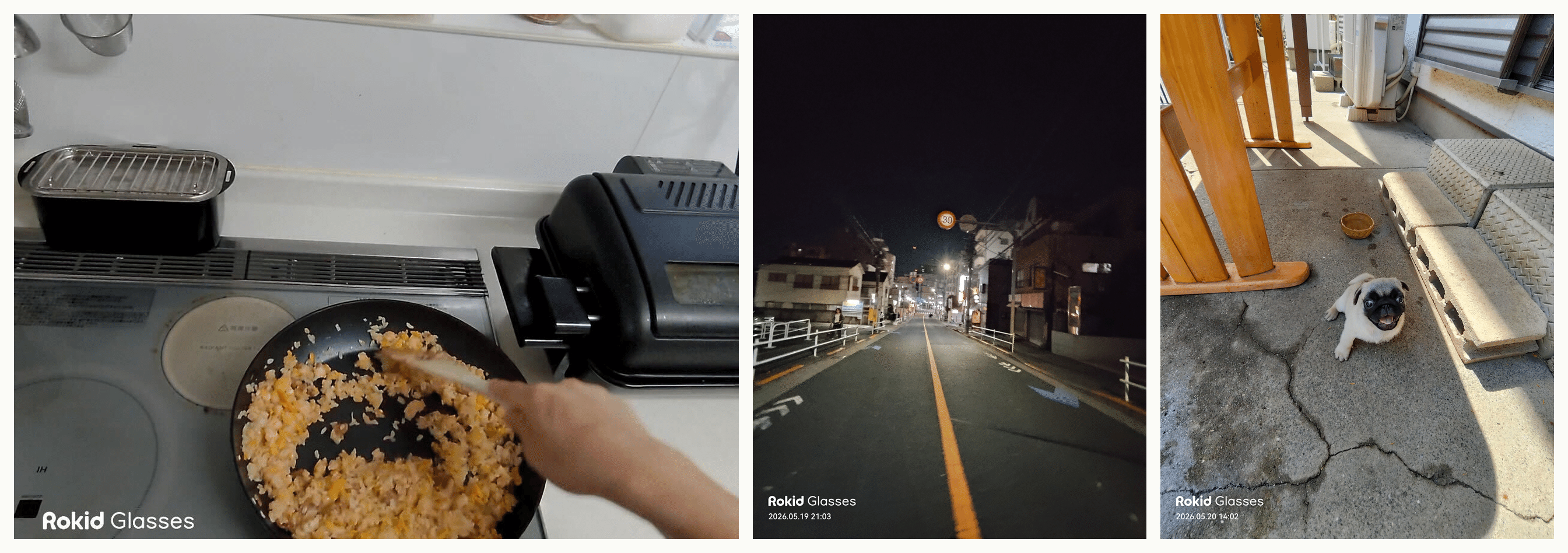
If you have a pet at home, spend a lot of time playing with your children, or take videos for your Vlog every day, then your decision to buy is almost certain.
2. Can you apply the “camera look” every day?
Even if you buy a glasses-type camera as a camera, it ends up being an accessory that you wear on your face every day. You can't ignore whether the look of the item matches your style.
The Ray-Ban Meta has a regular Ray-Ban silhouette, making it easy to wear as either glasses or sunglasses. The Oakley Vanguard has a sports glass silhouette and has a strong gadget feel around town. Rokid Glasses have a slightly more tech-oriented design.
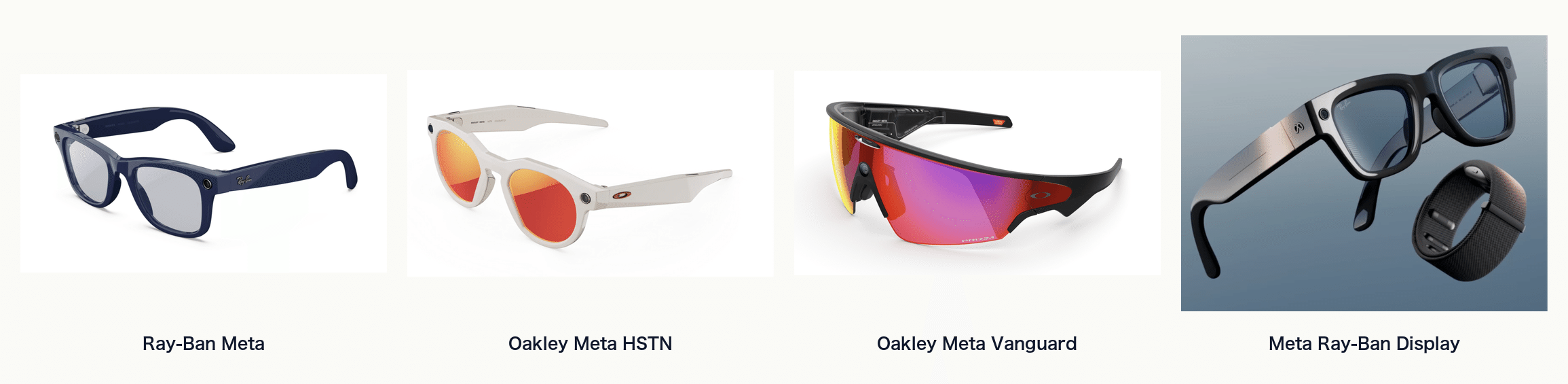
This will determine whether you can accept the reality of having a camera on your face every day. The product you should choose is different depending on whether you only use it at home or for shooting scenes or if you keep using it while commuting.
3. Are you prepared to compromise with those around you?
Again, although glasses-type cameras are excellent cameras, they are not yet socially accepted. Photographers may unknowingly cause discomfort to those around them. This is a structural problem, not a technical one. Even if the LED is on, to someone who doesn't know it, they are just a stranger wearing glasses who might be photographing themselves. There are still hurdles to use on a daily basis. (Details explained here)
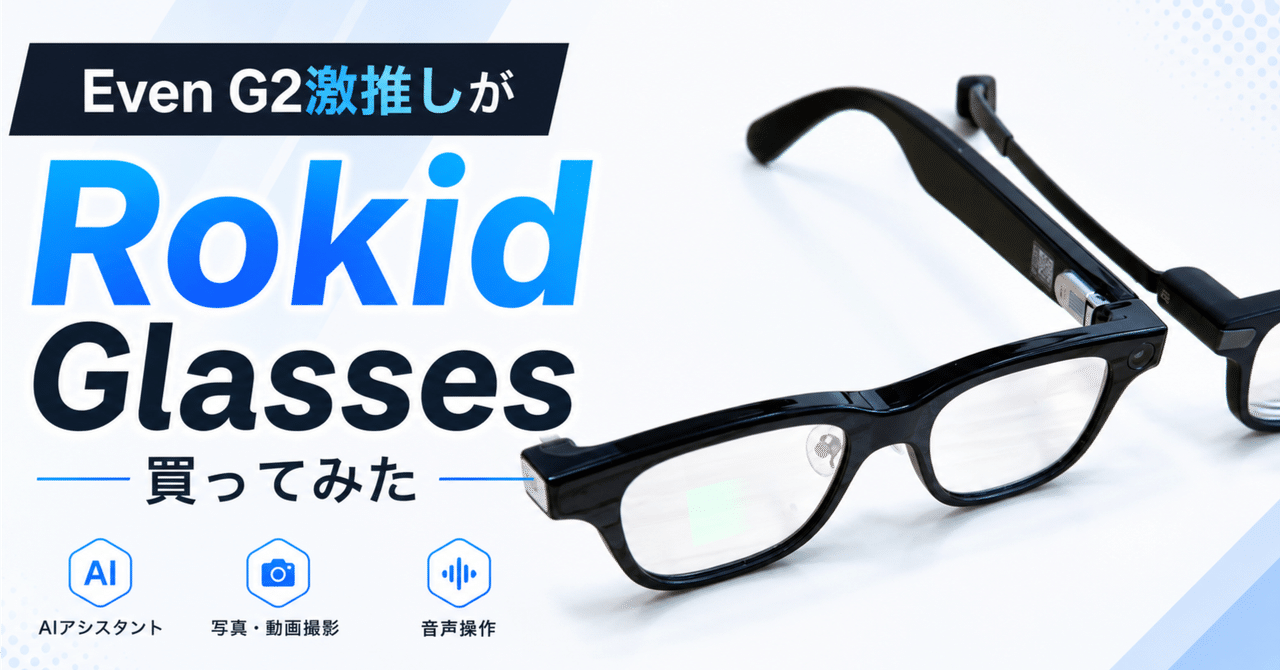
In America, you may be turned away at a cafe. It may even be prohibited in the workplace. Some of your friends may feel that wearing camera glasses is physiologically objectionable.
The only reason to buy a glasses-type camera is that there are still moments you want to capture. I'm not in a position to deny that. However, you should be aware that in exchange for your own convenience, you are making a choice that will bring about considerable friction in your relationships with those around you.
Summary
It's long, but the conclusion is simple. If you are buying it as a camera, you should decide based on your purpose and fit.
Organize the ranking of the composite evaluation score (out of 10 points, weighted average of 13 items) and recommendations.
-
Oakley Meta Vanguard 96,580 yen (7.96):
1st place in composite score. Action cam replacement with IP67, Slomo, Hyperlapse, and Garmin collaboration. For sports and outdoor people -
Meta Ray-Ban Display approximately 120,000 yen (7.65):
The quality of the photography is top-notch, but it is heavy due to the VF and is not yet released in Japan. Candidate to buy when released -
Rokid AI Glasses Style / Xiaomi AI Glasses:
Technically unsuitable and not distributed in Japan. High score but excluded from options -
Ray-Ban Meta (Gen 2) 73,700 yen (6.96):
Standard for everyone. Its unique advantages include sound quality (co-designed with Bose) and rich design. Prescription: Optics 82,500 yen -
Oakley Meta HSTN 77,220 yen (6.90):
If you like Oakley frames. Specs are the same as Ray-Ban Meta -
Rokid Glasses 79,990 yen (6.75):
This is what I would buy. Price difference is 6,290 yen with screen + translation/teleprompter/AR navigation. Asian premise design -
VIVE Eagle 82,500 yen (6.60):
Vertical video SNS only, for those who feel romantic about Zeiss UV400
In addition, Google x Samsung's Intelligent Eyewear (Gentle Monster / Warby Parker frame) is scheduled to be released in the fall of 2026. If you are not in a hurry, waiting until then and then making a decision is an option.
Design is also important
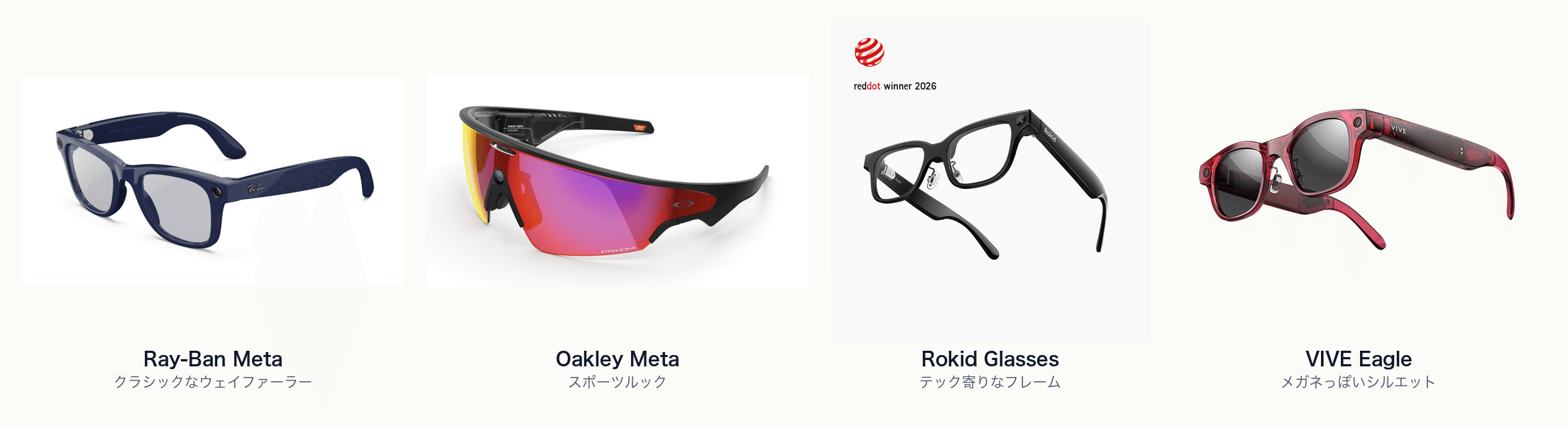
Since there are many similar models in terms of specs, design is often the deciding factor. Ray-Ban's classic wayfarer, Oakley's sporty look, Rokid Glasses' tech-forward frames, and VIVE Eagle's eyeglass silhouette. It's something you wear every day, so there's little point in buying it if you don't like the way it looks. Buy with that in mind.
Finally: If you want a smart glasses experience
Rokid Glasses
If your motivation for purchasing is "I want to experience the futuristic experience of smart glasses," I do not recommend Ray-Ban Meta. It's only as "smart" as Siri, which speaks to an AI and responds with voice. If you are expecting an experience where information appears in your field of vision, you will definitely be disappointed.
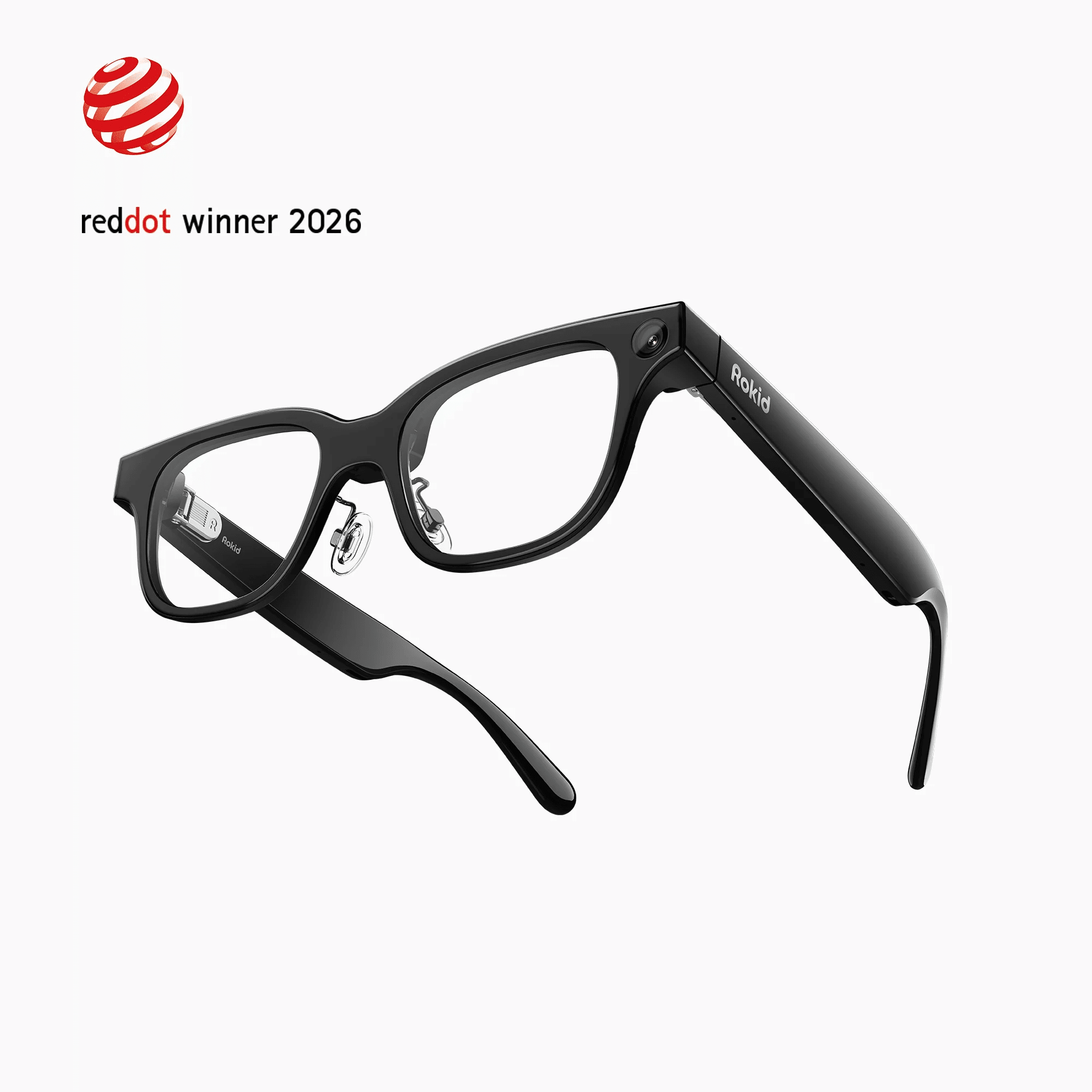
If you really want the smart glasses experience, get one with a screen. Rokid Glasses I recommend. You can experience the most futuristic feeling among the smart glasses with a screen currently available in Japan. Photography, AI questions, translations, and notifications are completed within your field of vision.
As I wrote at the beginning, my basic stance remains unchanged. As for glasses for everyday use, the choice without a camera (Even G2) is currently the correct choice. This guide is strictly for people who want a glasses-type camera. If you are looking for visibility display smart glasses (Even G2, etc.), please see the article in another category.
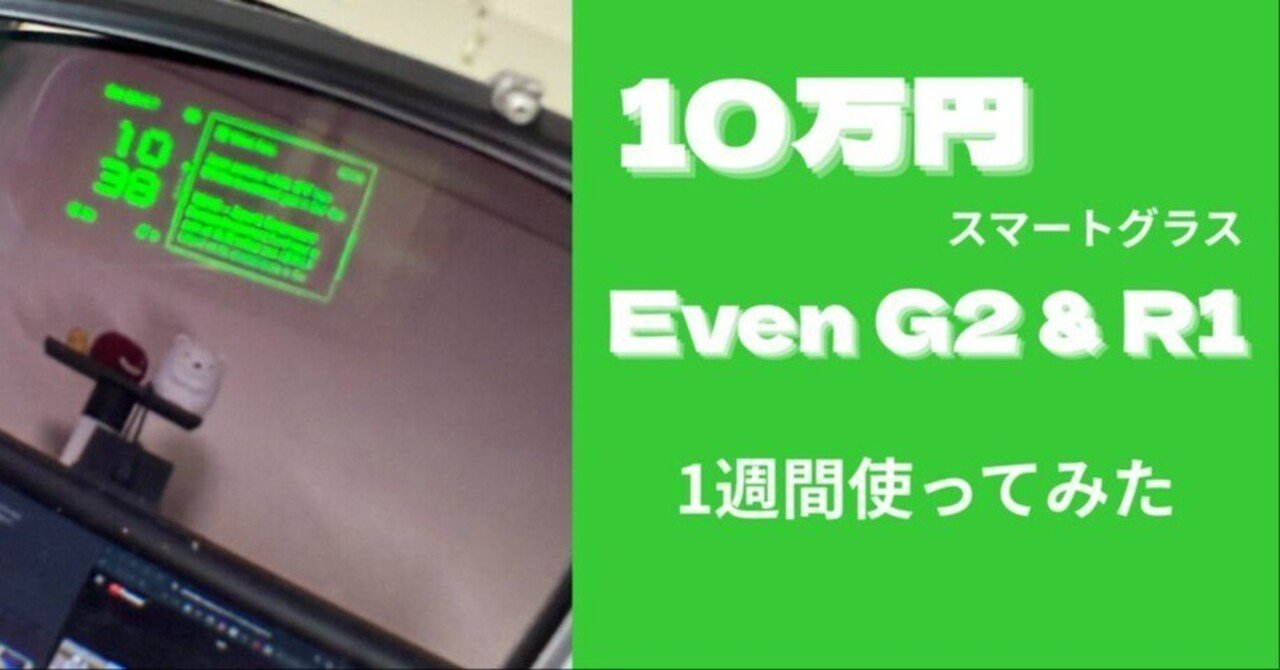
Glasses-type cameras certainly capture moments that cannot be captured with a smartphone. Its value cannot be denied. However, the decision to walk around with a camera on your face every day for the sake of that moment comes with the cost of having to deal with your surroundings and having your glasses recognized as ``a stranger holding a camera''. Whether it's worth drinking or not ultimately depends on each individual's usage and lifestyle.
For the time being, I'll be using the Even G2 non-prescription model and Rokid Glasses as a camera with a screen. I will consider whether or not to purchase the Ray-Ban Meta for photography and music use, and wait for the Display to be released in Japan.
There is a possibility that Ray-Ban Meta will be introduced in the WWDC coverage next month. I will write about my experiences in a separate article, including the social reactions to using eyeglass cameras in America.
#Smart glasses #RayBanMeta #OakleyMeta #VIVEEagle #Photography #Camera
Products featured in this article
Compare products in this article → Rokid GlassesSpecifications, prices, and related articles →
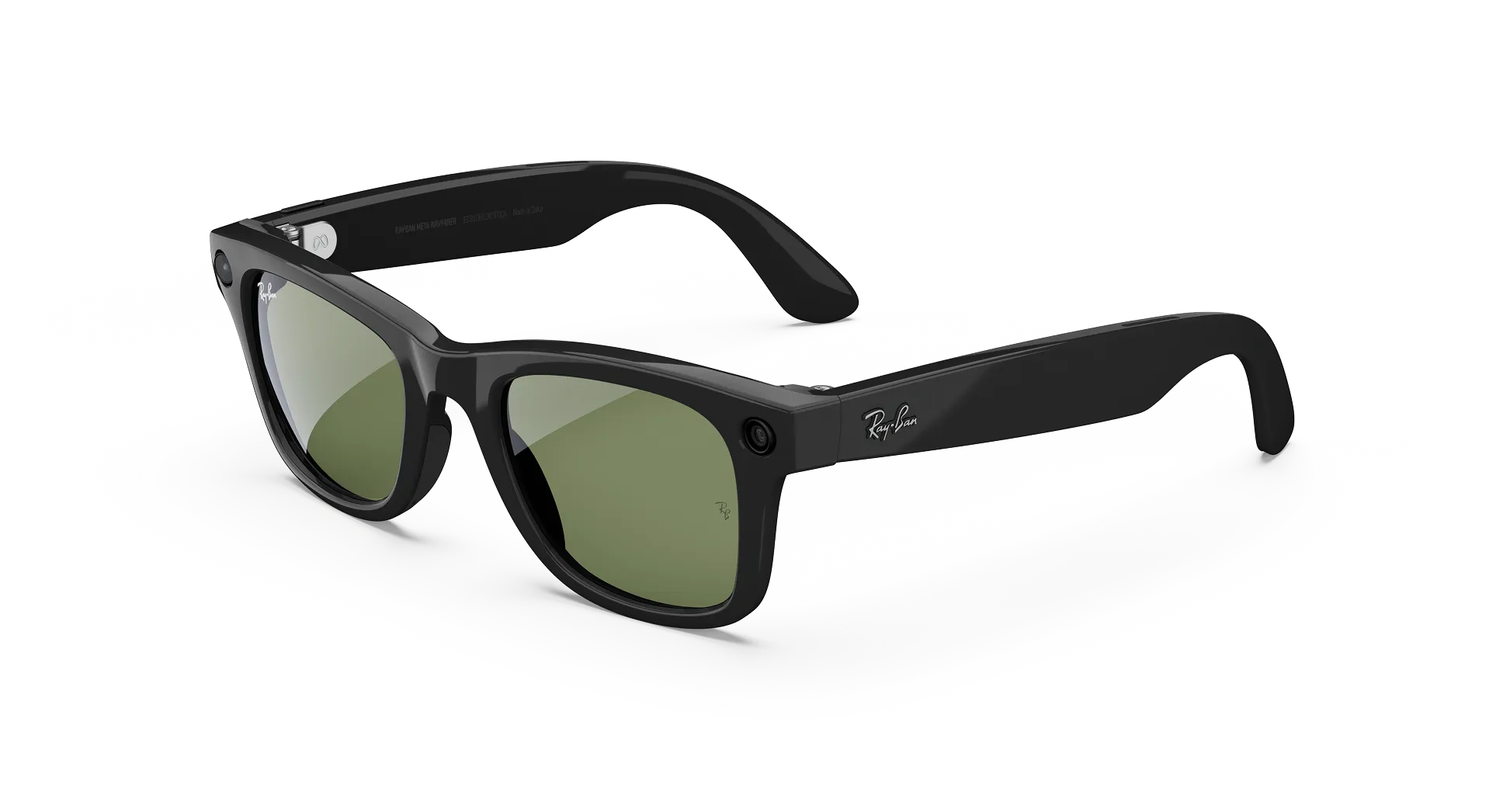 Ray-Ban Meta WayfarerSpecifications, prices, and related articles →
 Ray-Ban Meta HeadlinerSpecifications, prices, and related articles →
 Ray-Ban Meta SkylerSpecifications, prices, and related articles →
 VIVE EagleSpecifications, prices, and related articles →
 Oakley Meta HSTNSpecifications, prices, and related articles →
 Oakley Meta VanguardSpecifications, prices, and related articles →
 Meta Ray-Ban DisplaySpecifications, prices, and related articles →
 Rokid Ai Glasses StyleSpecifications, prices, and related articles →
 Xiaomi AI GlassesSpecifications, prices, and related articles →