
Opinion
Smart glasses display optics illustrated: waveguides, small displays, and retinal projection
How do waveguides, small display modules, and laser retinal projection differ? An illustrated explanation of viewing experience, prescription lenses, costs, and optical engine placement in real devices.
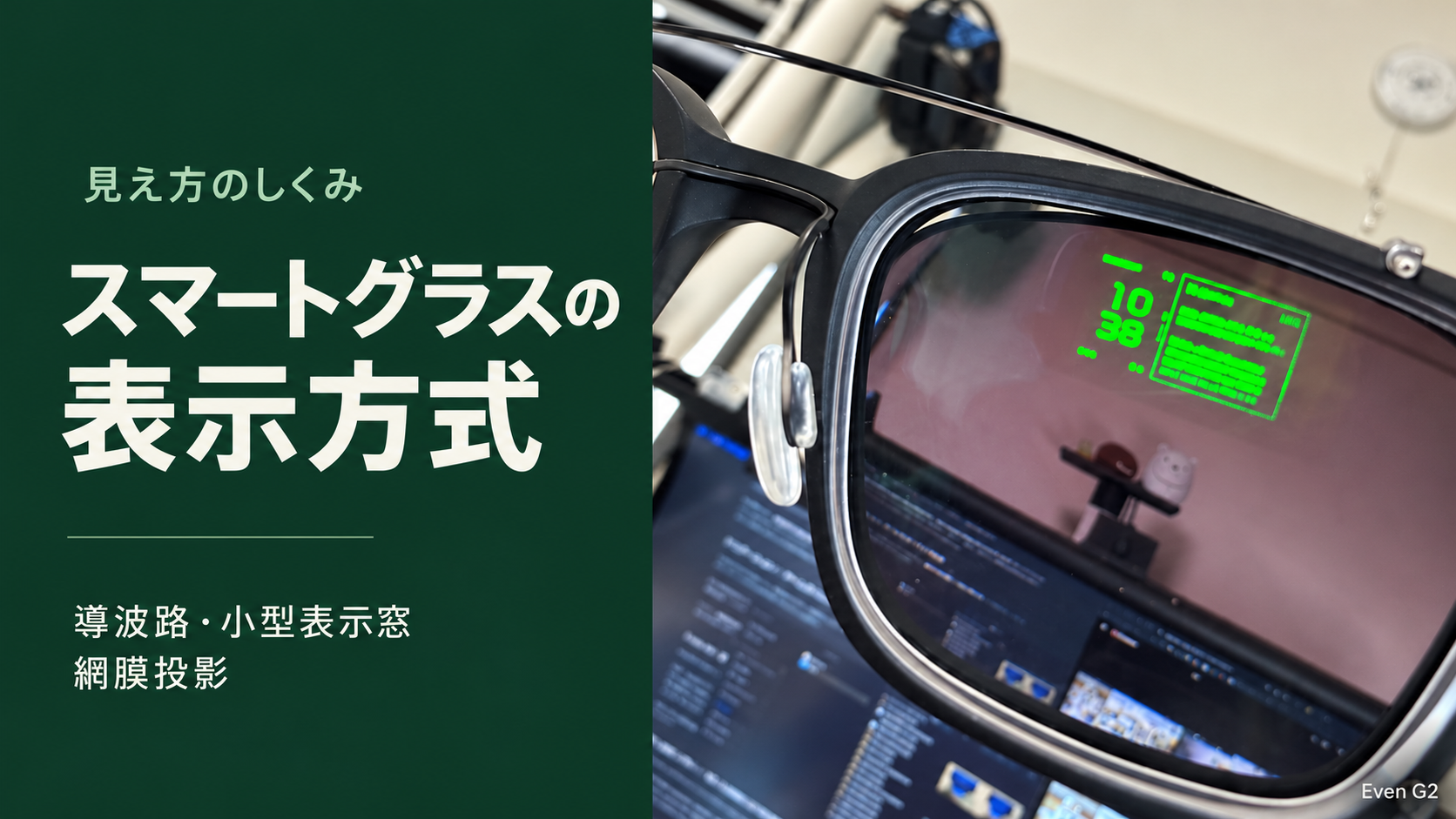
Smart glasses use several different ways to display text and images.
Some carry light through a transparent waveguide. Others use a small display window or scan laser light onto the retina. These differences affect the view, eye fatigue, and prescription lens options.
This article explains how each approach works and what those differences mean in use.
Creating an image and carrying its light are different jobs
Micro LED and Micro OLED components create the image. A waveguide carries that image's light toward the eye.
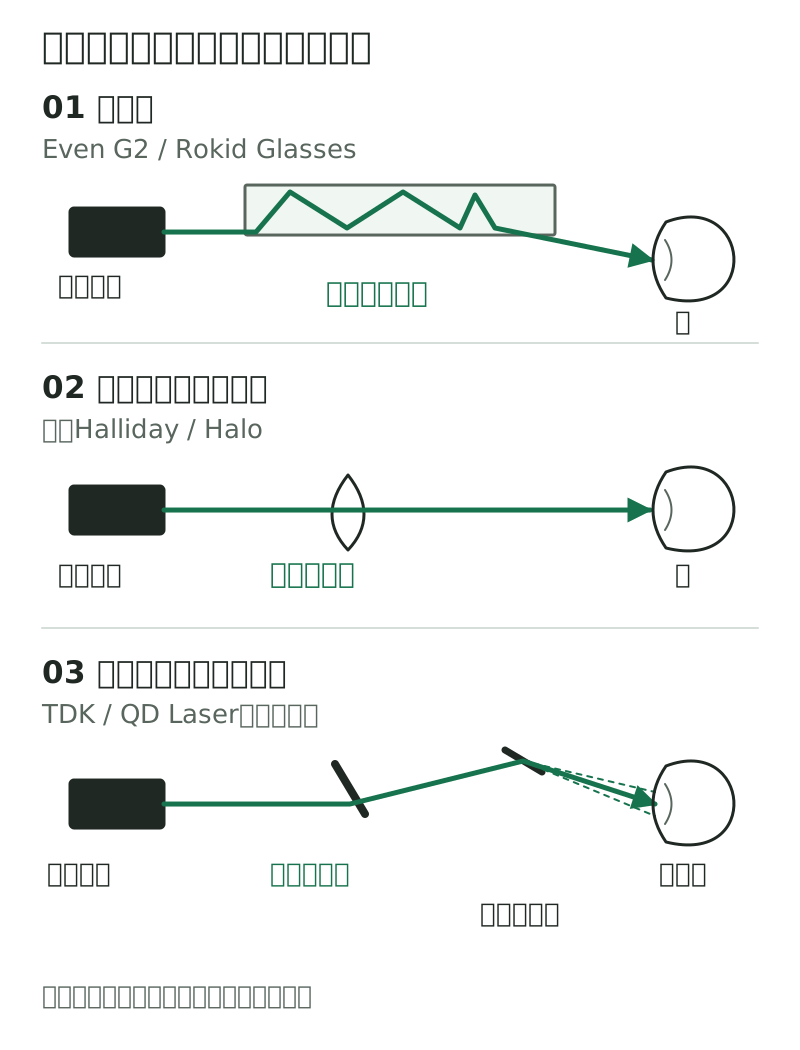
The two can work together. Even G2 and Rokid Glasses both combine a small display with a transparent waveguide.
The original Halliday and Halo use a small display window. That also differs from drawing an image on the retina with a laser.
Light ultimately reaches the retina in every approach. Saying that a device “projects onto the retina” is not enough to distinguish them.
Waveguides carry light through a thin plate
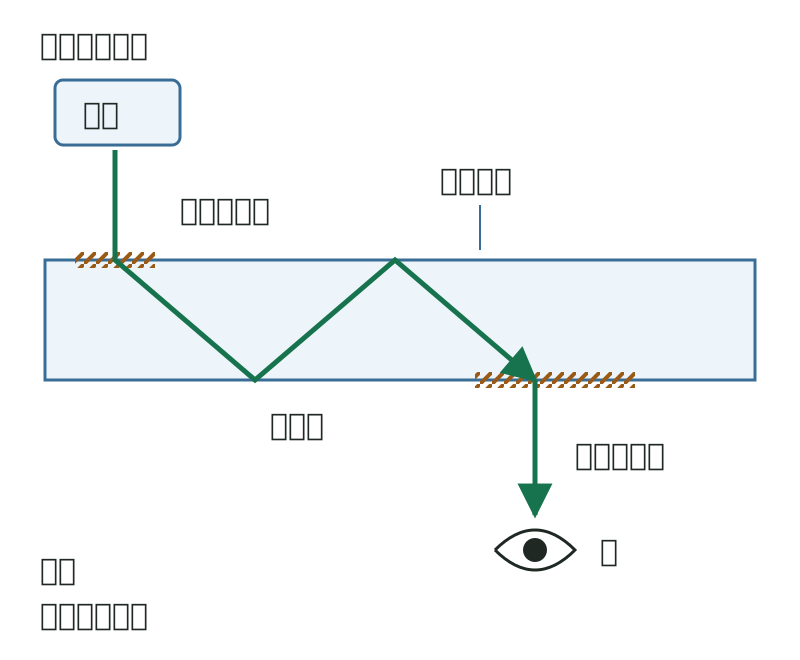
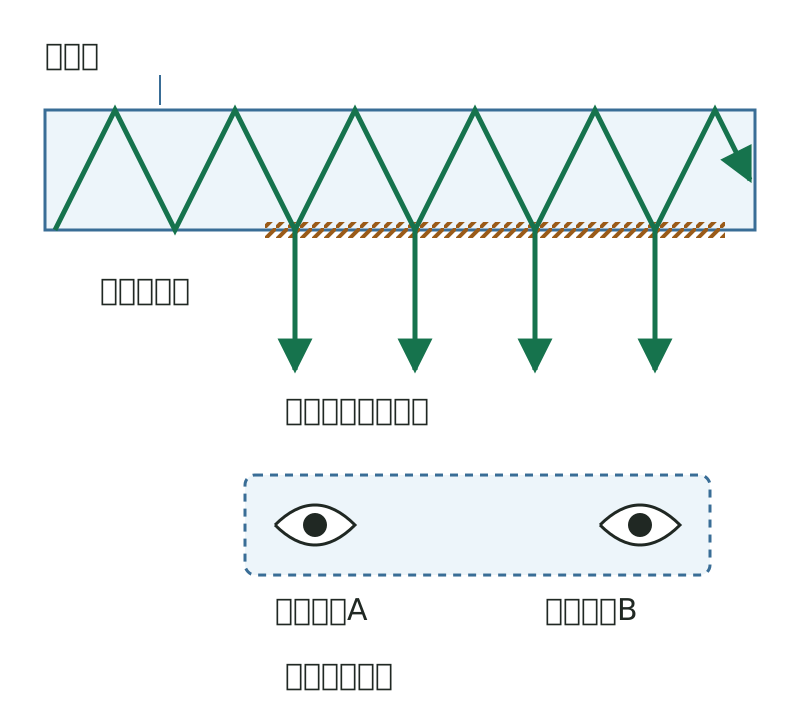
A waveguide carries image light through a thin transparent plate. Light enters, reflects inside, and exits in front of the eye: three basic stages.
An optical engine containing a small display and lenses sends image light into the waveguide. In a diffractive waveguide, an input grating redirects it to an angle at which it can travel inside the plate.
Inside the plate, the light undergoes total internal reflection. Light traveling from glass or a similar material toward air reflects back inside when it meets the boundary at a suitable angle.Repeated reflections carry the light along the thin plate。
That alone does not deliver light to the eye. An output grating redirects some light out of the plate. Placing this exit in front of the eye delivers the image from the edge of the frame to the pupil.
Text is not being projected onto the lens surface. The light reaching the pupil makes the image appear at a distance set by the optics. You do not need to focus immediately in front of the lens.
The grating is a microscopic structure that changes the direction of light. It is not an array of image pixels on the lens. The display in the frame creates the image.
Even G2's official technical material shows the grating structure in the illustration below. Even says G2 uses a graded grating, with gradually varied properties, to distribute light more evenly.
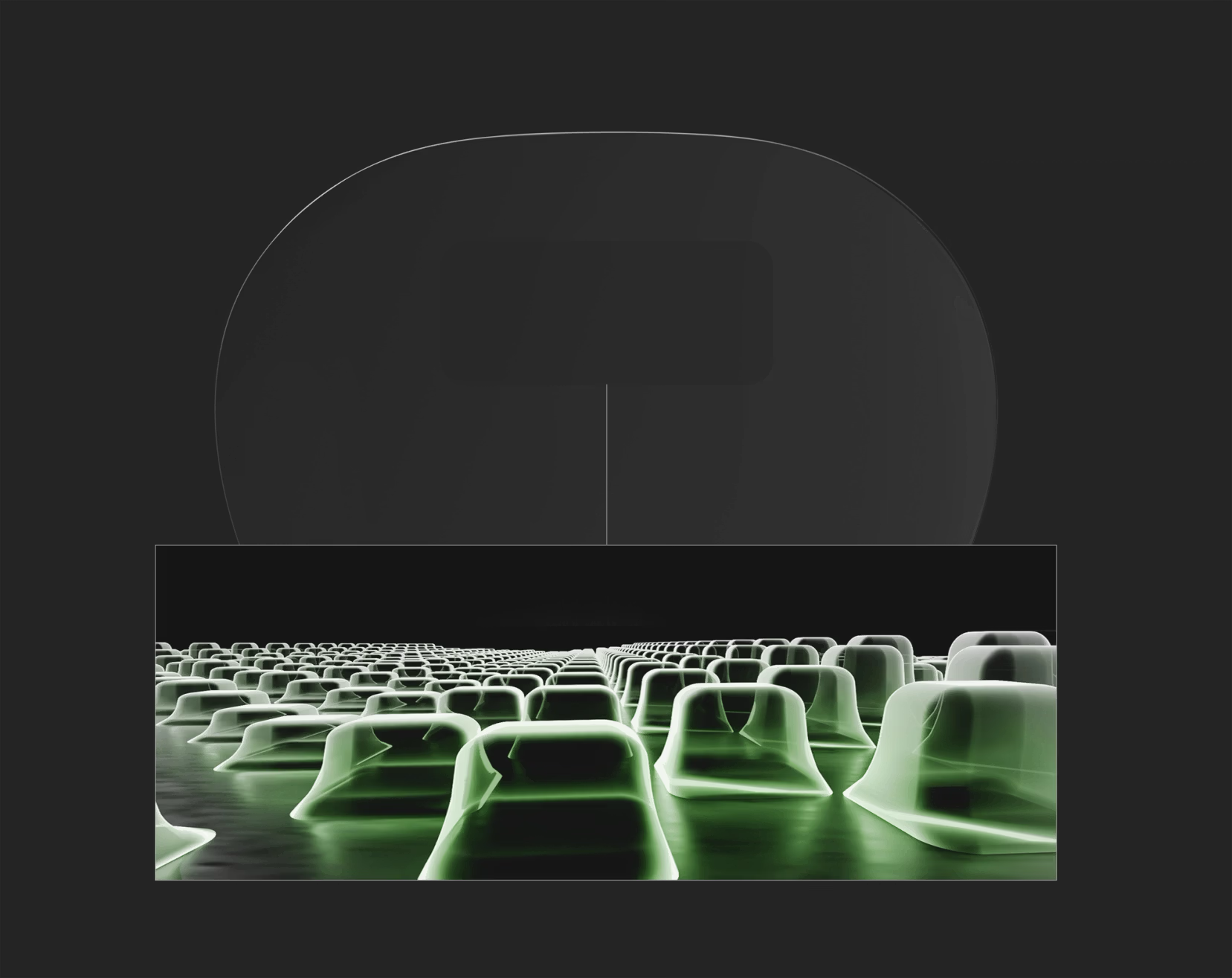
The plate carries display light while allowing light from the outside world to pass through. This lets a thin lens overlay information on the scene.
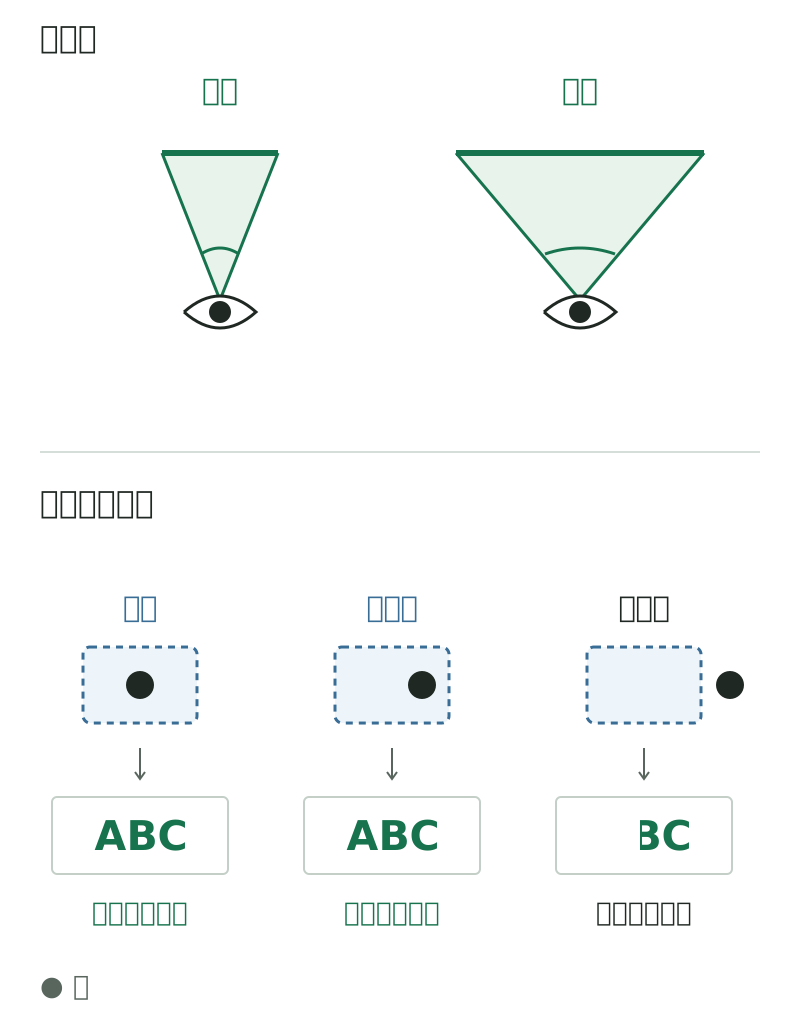
With only one exit point, a small pupil movement could take the eye out of the light path. Multiple exit positions broaden the area from which the same image can be seen. This is called exit pupil expansion.
The resulting range of eye positions from which the full image is visible is the eyebox. It differs from field of view, which describes the image's angular extent.
A wider view and tolerance for eye movement are different things.
Some light is lost along the way. Uneven brightness, light leakage, and rainbow-like artifacts from external light are also challenges. Their visibility varies by product. A review paper also discusses efficiency and manufacturing challenges.
Color adds complexity. Diffraction gratings bend different wavelengths by different amounts, so red, green, and blue must be aligned at the eye.
Manufacturing at scale affects the price
Designing a waveguide does not automatically make it inexpensive to manufacture. Microscopic structures and optical surfaces must be produced precisely, with consistent viewing quality across many units.
Yield—the proportion of manufactured parts that meet quality requirements—matters here.SCHOTT explains that improved waveguide yield reduces material waste and unit costs. Production equipment and accumulated processing expertise affect price and supply capacity.
Chinese companies play an important role in this manufacturing. For example, UK-based WaveOptics announced a diffractive waveguide manufacturing partnership with China's Goertek in 2018. It brings together a company with optical designs and a company with high-volume manufacturing expertise.
Waveguide factories are not confined to China. SCHOTT manufactures reflective waveguides at scale in Kulim, Malaysia.Lumus also lists Quanta in Taiwan, SCHOTT in Malaysia, and Crystal-Optech in China as manufacturing partners. These waveguides use reflective surfaces, rather than diffraction gratings, to extract light.
The design company's home country, the waveguide factory, and the final glasses assembly site are separate questions. This division of work shows why competition on price depends on reliable precision-optics manufacturing as well as display performance.
Even uses two engines; Rokid uses one central engine
Even within waveguide designs, the optical engine can sit in different places.
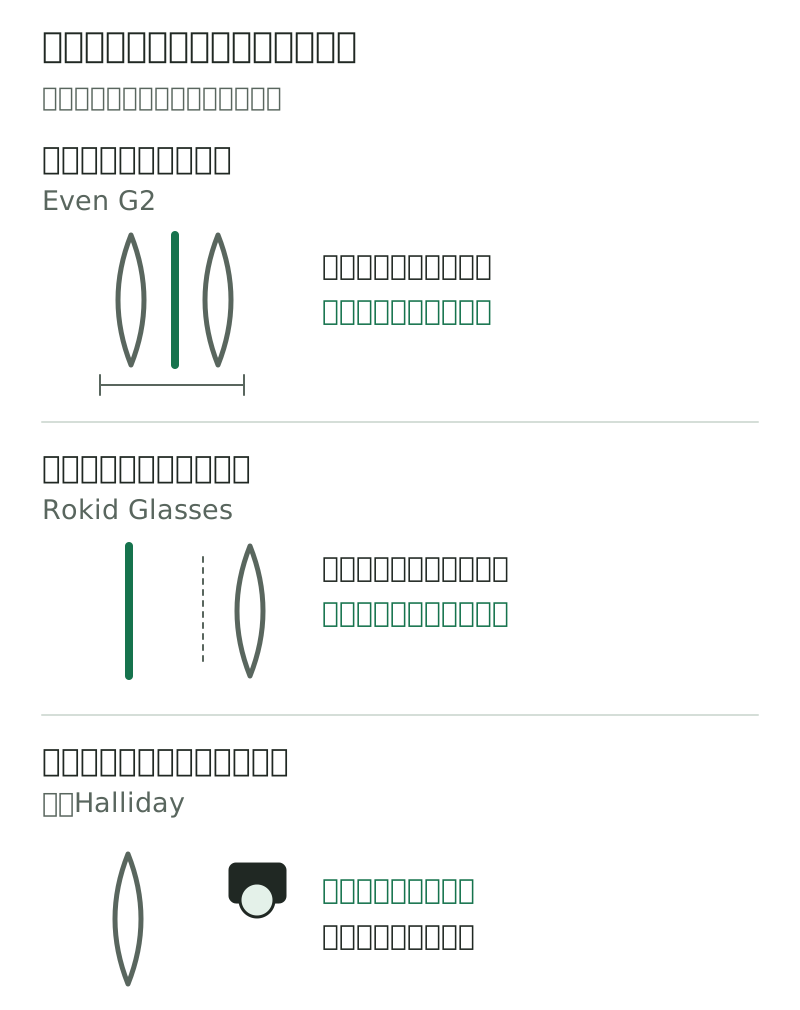
Even G2 places an optical engine near the front of each temple. Each engine sends light into its own lens.
Rokid Glasses uses one engine above the nose. Grating structures split its image light between both eyes. One central engine supplies both displays。
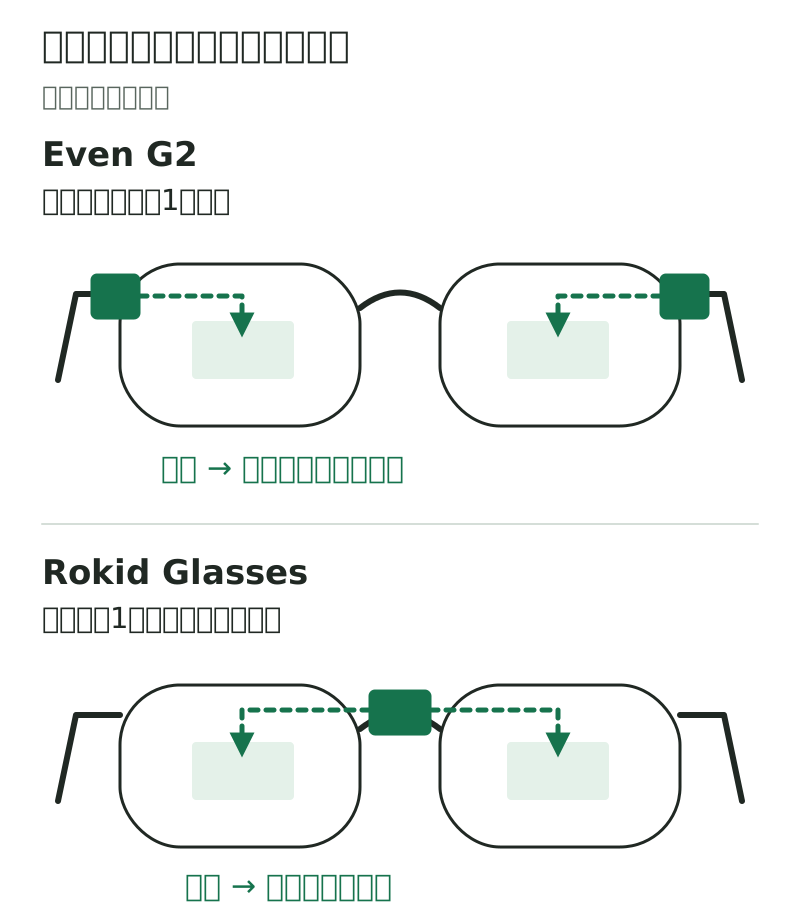
This difference also affects component placement and alignment.
| Aspect | One on each side / Even G2 | One in the center / Rokid Glasses |
|---|---|---|
| Image supply | Separate engine for each side | One image distributed to both eyes |
| Component placement | Optical components needed on both outer sides | Optical components concentrated at the bridge |
| Alignment challenges | Match brightness and position between the two optical systems | Balance and align the light distributed to the two sides |
| Cost factors | Two engines and their assembly | One engine, with additional optics to distribute its light |
The last two rows describe implications of the layout, not manufacturing costs or processes disclosed by the companies.
Rokid reduces the engine count and frees space near the temples. However, splitting light also causes losses. Cost and power consumption do not necessarily fall by half.
Even's two-engine arrangement alone is not evidence of stereoscopic display capability.
Comfort also depends on the battery, frame, and nose pads. In an earlier comparison, I described situations where Rokid's large pads felt comfortable. Central components alone do not establish that the glasses will hurt your nose.
A small display window can keep the lens separate
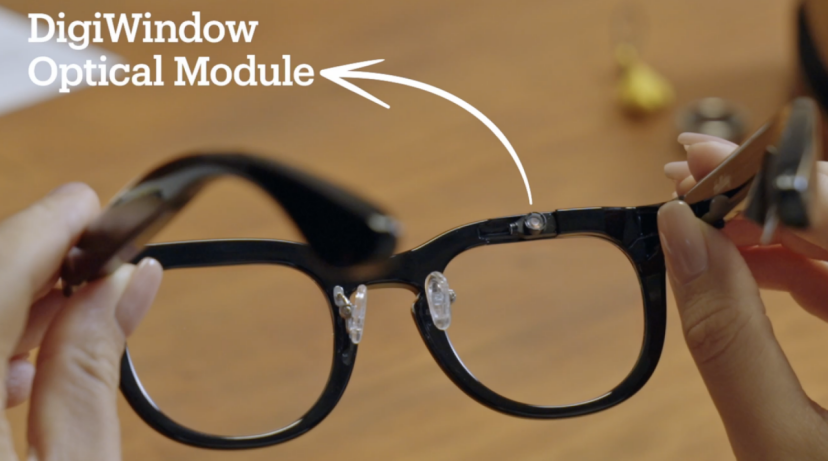
On the original Halliday, you look at the DigiWindow in the upper right. Its optics direct Micro LED light toward the eye, without requiring a waveguide in the large lens.
Halo also has a display window at the top of the frame, but uses a full-color Micro OLED. Its optical design is different from the original Halliday's.
Meanwhile, Halliday G2 is a different product with binocular waveguides and two Micro LED engines.
The advantage is keeping the display separate from the lens used to view your surroundings. The original Halliday accepts ordinary prescription lenses, allowing more flexibility in replacement than a lens integrated with a waveguide.
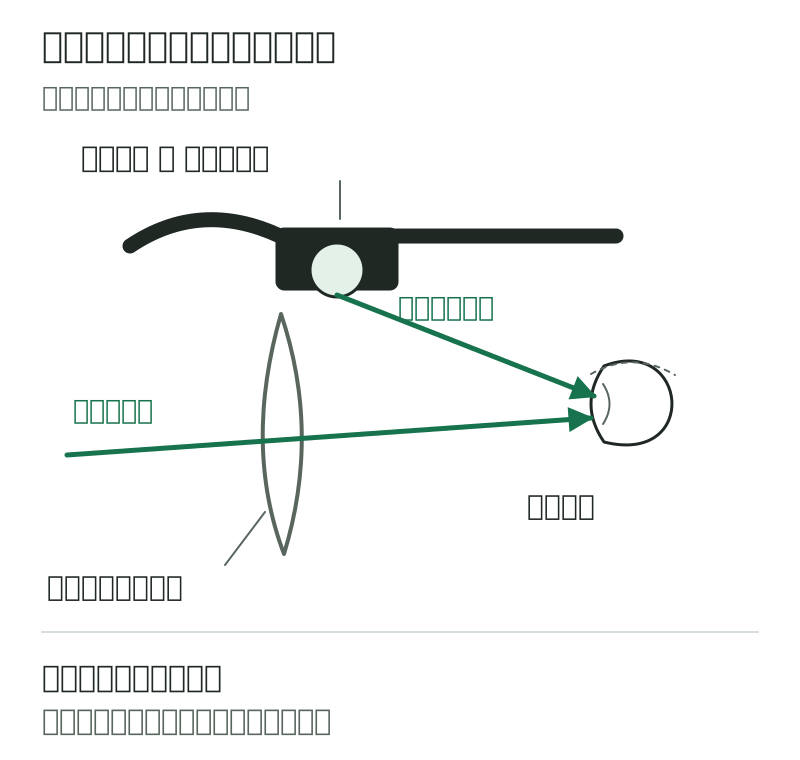
The trade-off is that your eye must align with the display window. That is why the original Halliday provides display-window position adjustment.
An upper display window can keep the everyday view unobstructed, but reading requires directing your gaze toward it. The actual layout determines how easily you can switch between a person and subtitles.
Halo also provides display focus adjustment from +2 to −6 diopters. This adjusts the display; it does not replace prescription correction for viewing the outside world.
With a monocular display, check how your eyes feel
Separate from the optical approach, monocular and binocular displays can feel different. With a monocular display, one eye sees the text while the other sees the surroundings.
For the original Halliday, a CES tester reported eye fatigue when looking continuously at the small upper display. Alongside monocular viewing, the effort of directing your gaze toward the window is worth checking.
SABERA uses a waveguide but displays to the right eye only. Eyewear wholesaler Sankyosha notes that monocular displays such as SABERA can initially cause viewing difficulty or eye fatigue。SABERA's official guidance also warns of eye strain from prolonged display viewing。
A comparative retinal-scanning display experiment also found a tendency toward greater subjective fatigue with monocular than binocular viewing. This was a result for a particular experimental setup, not evidence that monocular displays always cause fatigue or binocular displays never do.
Retinal projection relies less on focusing
Laser retinal projection scans a narrow beam with a small mirror to form an image on the retina. It creates the image differently from magnifying a small display panel.
TDK and QD Laser are developing this technology. In October 2026, TDK announced a prototype with a thin meta-optical mirror embedded in the lens. It supports monochrome images; color and mass production remain future goals.
A major advantage is that the display can appear sharp without prescription lenses dedicated to it. QD Laser calls this Free Focus.
A narrow beam passing near the pupil reduces reliance on the eye's own focusing. It can also reduce the need to match a prescription to the display.
Vision correction for the surrounding scene is still a separate issue. Display clarity also depends on the condition of the eye and the optical system.
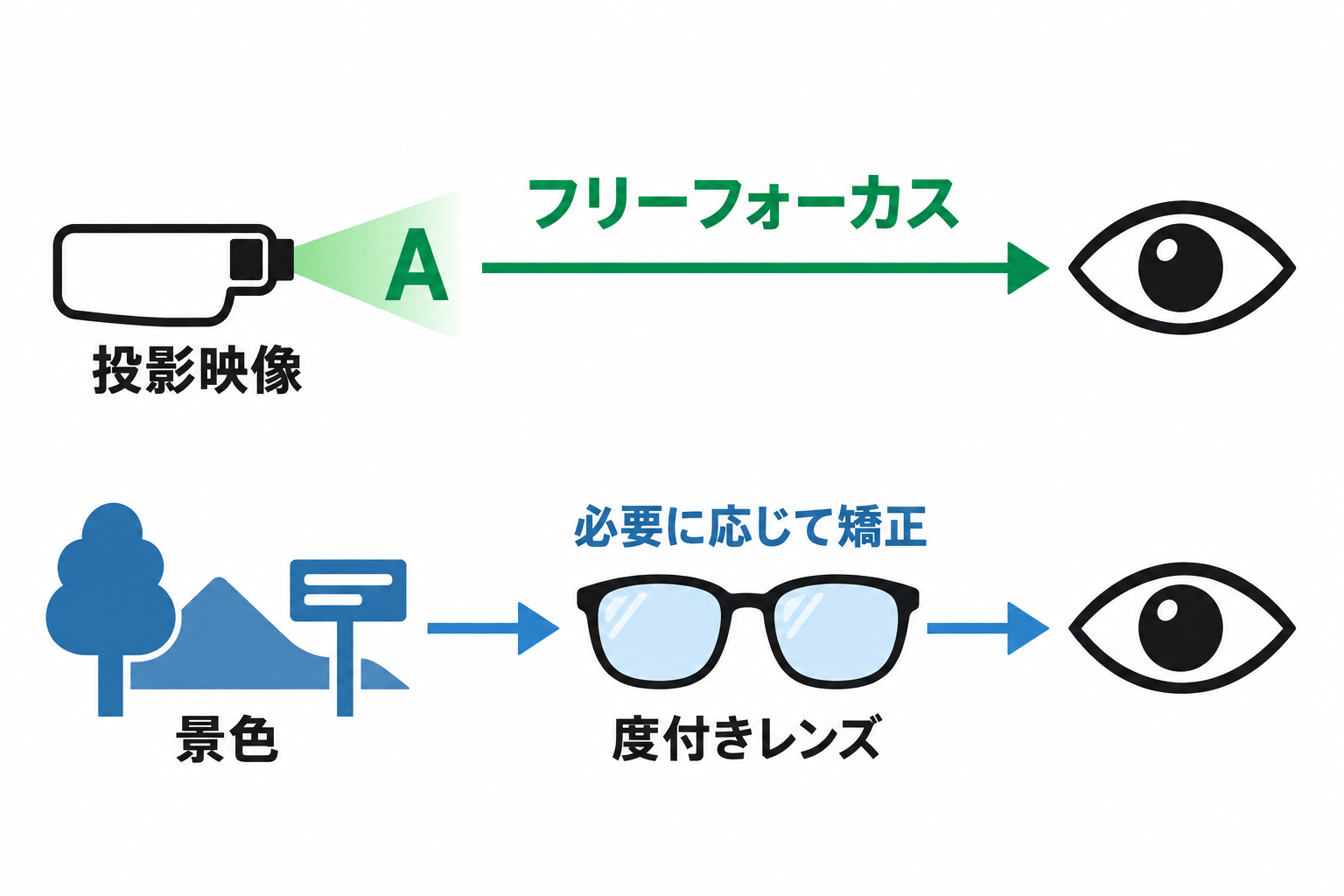
The challenge is keeping the light aligned with a moving pupil.
Eyes move, and glasses slip. If the pupil leaves the light path, the image may become partial or disappear. TDK is also prototyping a wider viewing region and eye tracking. Optical power and scanning must also be controlled.
Laser-generated images can also be sent into a waveguide. Laser scanning and waveguides are not necessarily mutually exclusive.
The optical approach alone does not determine the price
Fewer components do not automatically mean a cheaper finished product.
Waveguides require microscopic optical structures and control of brightness and uniformity. Yield and integration with prescription lenses also affect cost.
A small display window can omit a large waveguide, but still needs a panel, eyepiece optics, and adjustment mechanisms. Monochrome and color also require different configurations.
Retinal scanning still needs lasers, mirrors, control electronics, and optical alignment. TDK is aiming for competitive manufacturing costs; it has not established that this approach will be cheaper than existing products.
When buying, consider the device price and lens replacement costs separately。
| When costs arise | What to compare |
|---|---|
| Initial purchase | Total cost including prescription lenses, control ring, and charging accessories |
| Prescription changes | Whether you order dedicated lenses, replace a separate insert, or have ordinary lenses made |
| Lens damage | Whether the damaged part is integrated with or separate from the display optics |
| Long-term use | Whether the manufacturer continues supplying replacement parts and prescription lenses |
Even G2 integrates prescription lenses into its design. Rokid Glasses uses a magnetic prescription insert. The original Halliday separates ordinary lenses from its display window. A prescription change therefore involves different parts.
Halo's official device price is US$399, excluding prescription lenses and any applicable Japanese taxes. The companies do not disclose comparable optical component costs, so a price difference between the approaches cannot be calculated.
Can you still read after repositioning the glasses?
During a fitting, I would not stop after seeing text once. I would read for a while to check eye fatigue and the effort of holding my gaze toward the display.
Move your eyes. Put the glasses back in their usual position. Check whether you can still see the full text and whether the left and right images align comfortably.
With a display-window product, check whether you can shift naturally between the person you are talking to and the display. If you need prescription correction, check focus for both the scene and the display.
What matters to me is reading without repositioning the glasses, seeing the surroundings normally with the display off, and continuing to use the glasses after a prescription change.
My earlier comparison used the same criterion: can I wear it on my face for a whole day? A different optical approach does not change that.
 Even G2
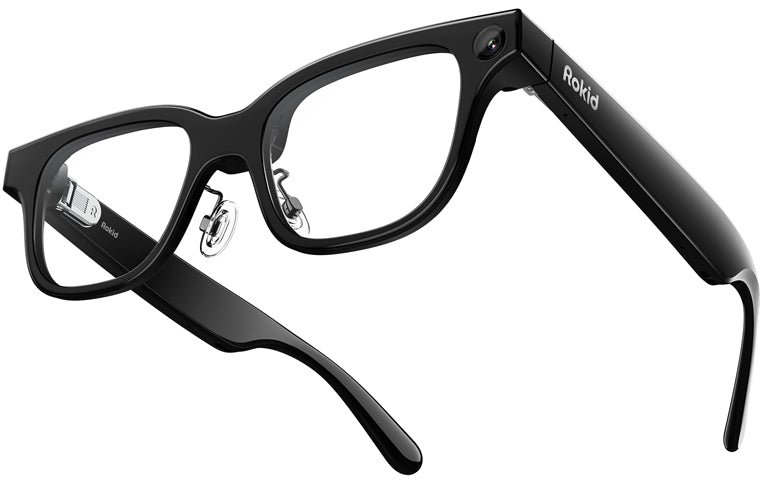 Rokid Glasses
 Halliday DigiWindow
 Brilliant Labs Halo