
Opinion
SABERA is on the optical-shop shelf. A right-eye-only display, set beside an everyday pair
Read from jig.jp’s 20 October announcement and the official product page. General sale started on 27 October, at ¥84,000 before tax. There is no camera, and the display is the right eye. The open question is whether it can sit in the Even G2 day I already spend reading notifications with both eyes.
SABERA’s general sale has been underway since 27 October. In the announcement jig.jp issued on 20 October, the set’s model number is SABERA-J1-GLASSES and the price is ¥84,000 before tax. Clip-on sunglasses are sold separately on the official store, at ¥9,900 before tax. From 28 October, the announcement says, they go on shelves in sequence at Bic Camera, Yodobashi Camera, Yamada Denki, and optical shops.
My everyday pair is Even G2. There is no camera. Green text sits on both lenses, and I read notifications and translation there. I treat Rokid Glasses as the benchmark when I want to capture. I have not worn SABERA yet. I am reading the announcement and the official pages against that way of using a pair.
The July full launch became an October shop shelf
The 17 April announcement planned to open Makuake at 11:00 on 20 April, and to begin full sales from July 2026 through the company’s own store and sales agents. The 20 October announcement says the move to general sale comes because the pre-sale shipments are finished. It also says volume production and quality improvements continued in between. A note adds that, for some people, fitting prescription lenses and individual checks are still outstanding.
Sabae-born smart glasses “SABERA” go on general sale from 27 October (jig.jp)
Preorders opened at noon on 21 October, on the official store and on the online shops of Bic Camera, Yodobashi Camera, Yamada Denki, and others. Shipping, the wording says, follows in sequence from the general-sale date. As of 20 October, 16 optical shops carry the body and 80 can handle prescription lenses. The announcement separates stock, and whether you can try a pair on in that shop, as something that varies by store.
As of April, the prescription range was written as myopia and astigmatism combined, from 0.00 to -6.00, and a prescription was required. A person whose unit arrived on 23 August writes that they could not swap the prescription lenses themselves and had to send the body back. The October announcement includes progressive lenses and gives shop counts. The shop list on the official site is updated in sequence. Whether a shop can now match a prescription is something I want to check after opening that list. I have not been to one of those shops yet.
jig.jp holds a launch event for the next-generation smart-glasses brand SABERA
Putting on the SABERA that just arrived (a record of a unit that arrived on 23 August)
The announcement also says Hirotake Kubo and Miki Ozaki have become official partners. What I want to know first is that you can now try them on at an optical shop.
If you only want the sale date and the pre-tax price in Japanese, Mogura VR has also given a short account.
Smart glasses “SABERA” go on general sale on 27 October, at ¥84,000 before tax
The official page says it does not carry a camera
The product page says the camera was left off on purpose, out of concern for the privacy of people nearby. The 20 October announcement puts the weight at about 38 grams. It also says transcription, notifications, an AI assistant, a teleprompter, realtime translation, and navigation are used without operating the phone. Translation covers more than 40 languages. The navigation figure is noted as an image, and it may differ from the actual display. The page explains Cellid’s plastic waveguide as the first of its kind adopted in Japan. It says battery life is up to 14 hours. The same page does not say which way of using the glasses produces that time. I am not planning a day around it yet.
This shelf is the camera-free everyday side. What I wanted to keep on Rokid was footage from the hours when both hands are full. The camera AI’s “what is this?” did not become a daily habit over a few days. What the SABERA page describes is reading in the field of view, not capturing. The work I still keep on Even G2 is close to that. A verification code appears in front of me. A slight look up, and the next task is there. With translation, the margin that let me read it as subtitles mattered more than a jump in accuracy.
The feature list is wider than that day. A teleprompter that advances with the pace of a voice, and transcription of a conversation, are not the center of my days on the G2. The range the page says can be used free of charge is something I have not checked inside my own day yet.
A right-eye display looks different in front of a computer
The official safety notice says that dark places, or looking at the display for a long time, can cause eye strain or a decline in vision. It also says not to use them when tired, short of sleep, drinking, or unwell. The notice does not go so far as to say that a single eye always makes you tired. The piece on projection methods sets SABERA’s right-eye-only display, and this notice, apart from the results of an experiment.
A person whose unit arrived on 23 August writes that the image focuses about five meters out in the right eye, and blurs when they look at something close, such as a computer screen. They also write that it was hard to see with both eyes open, and easier with the left eye closed. With prescription lenses, the same record separates out reflections of the nose pad and their own face inside the lens, and says cycling or driving is dangerous. That is one prescription and one unit. I do not read it as true for everyone.
A record of borrowing a demo unit for several days describes green text in the right eye, and the need, in daytime outdoors, to look toward a darker part of the scene when reading navigation. That points the same way as the product page’s note that the navigation figure is an image. I have not checked it outdoors.
A hands-on review after several days with Sabera
What I do every day on the G2 is read a verification code in front of the computer, and lift my head slightly to see the next task. The display is on both sides. A near screen, and both eyes open, is the premise. Whether SABERA can do the same is something I will not know until I check, on my own face, the other person’s record of a focus about five meters out. Being able to try them on at an optical shop matters because that check now has a place.
If capture comes first, the benchmark stays Rokid Glasses. If what I want on my face is notifications and translation, I am still wearing Even G2 every day. If I am going to treat SABERA as a candidate for the same shelf, I want to see the right-eye text at a working distance, in an optical shop, first.
 Even G2
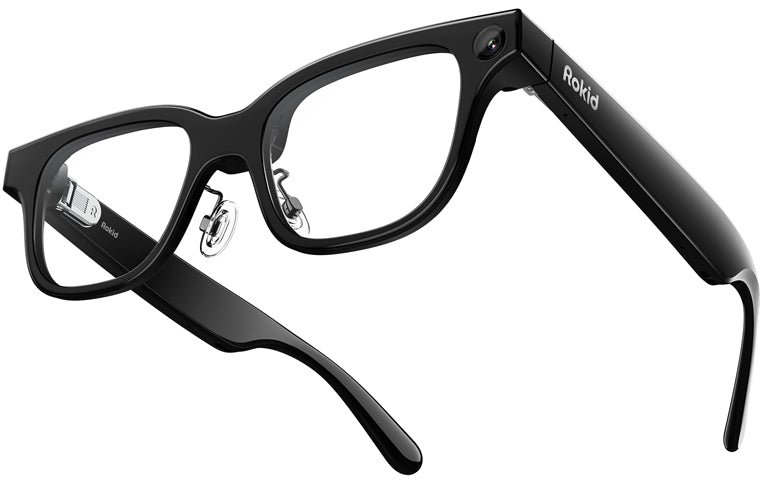 Rokid Glasses
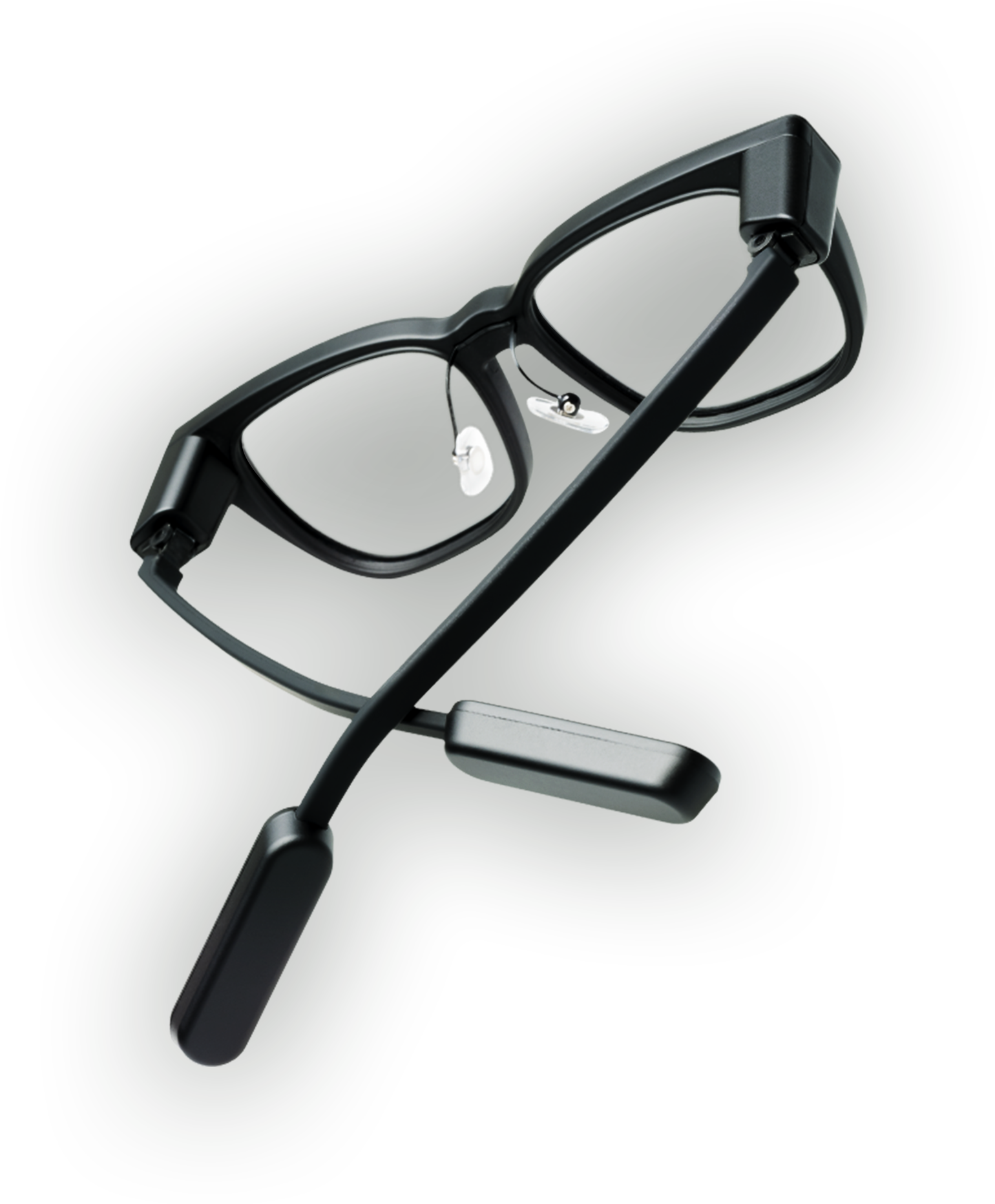 SABERA