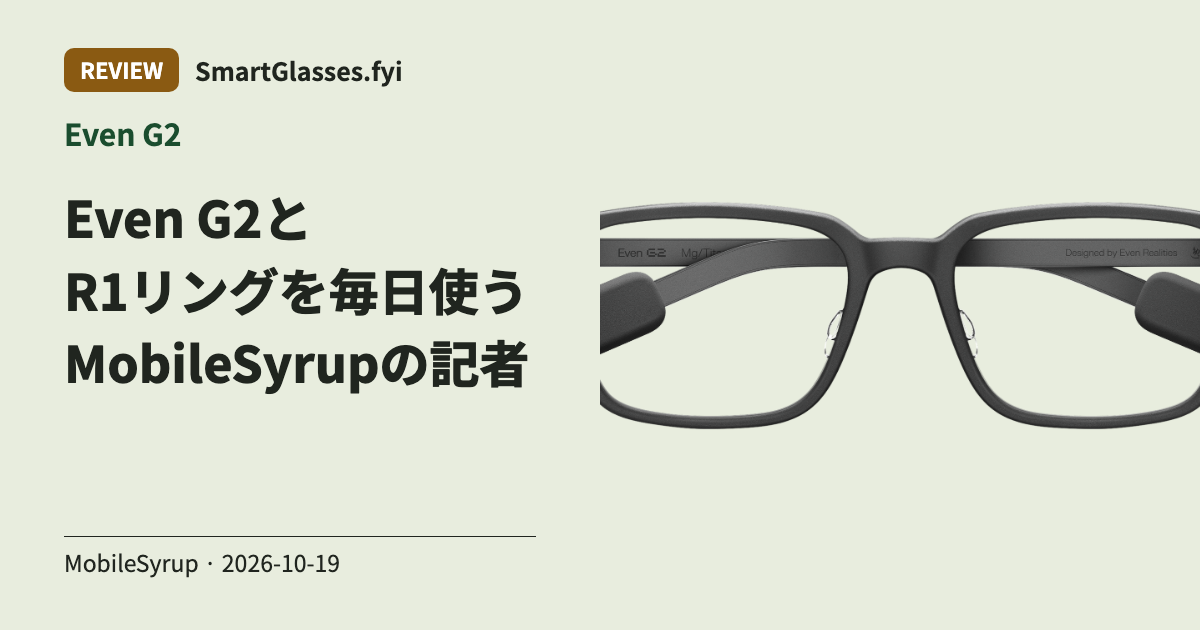
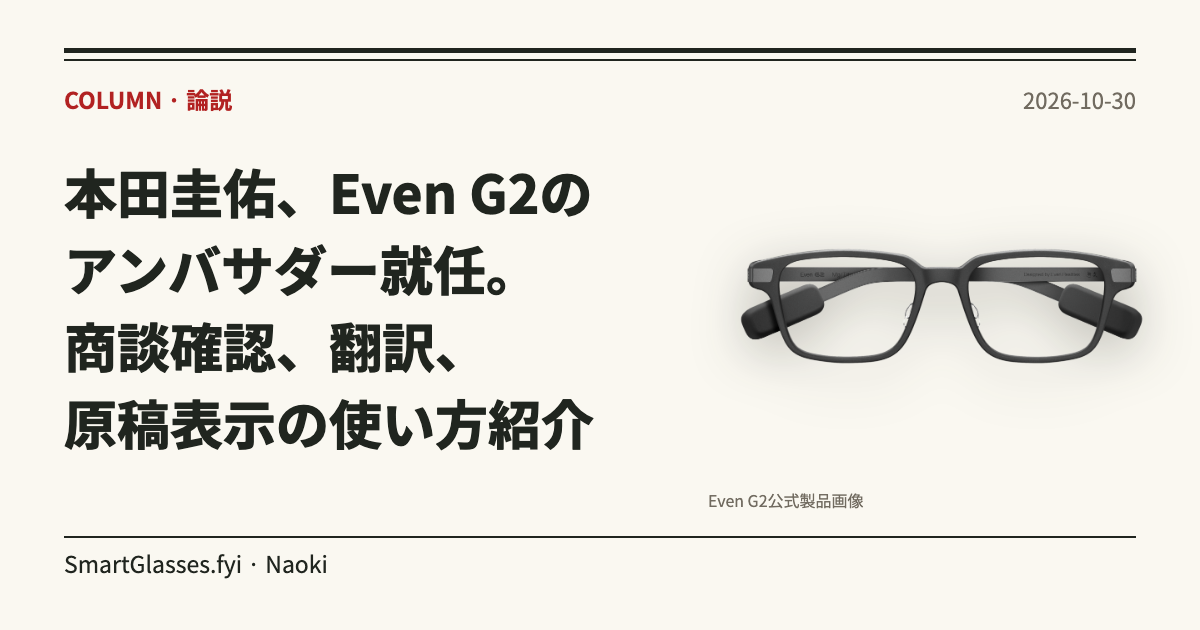
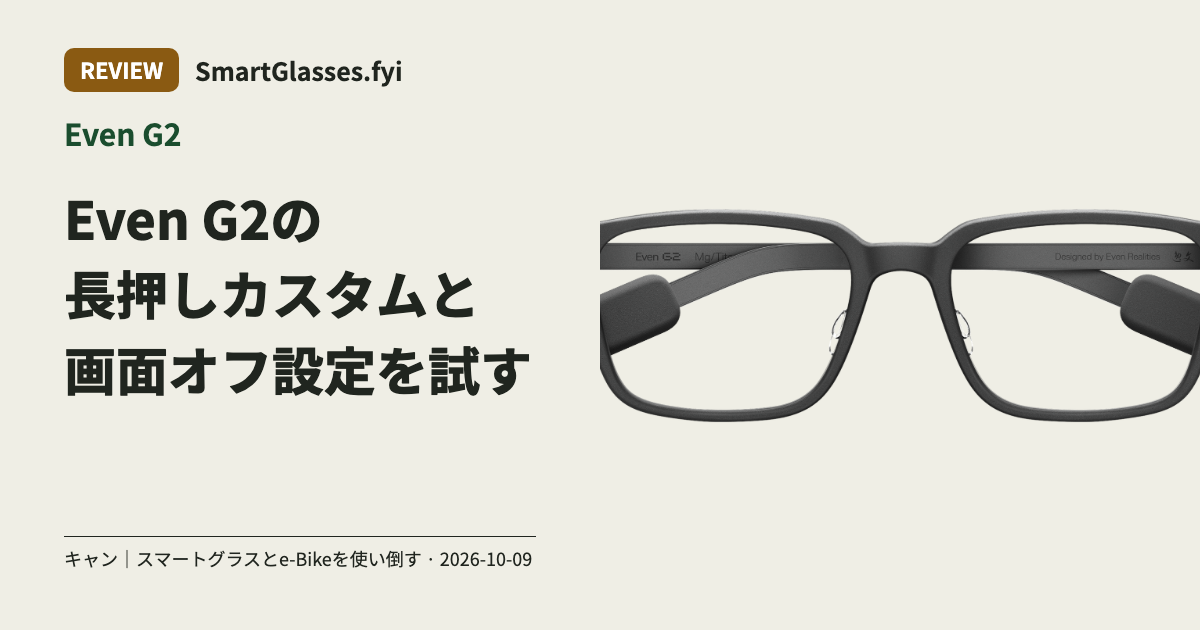
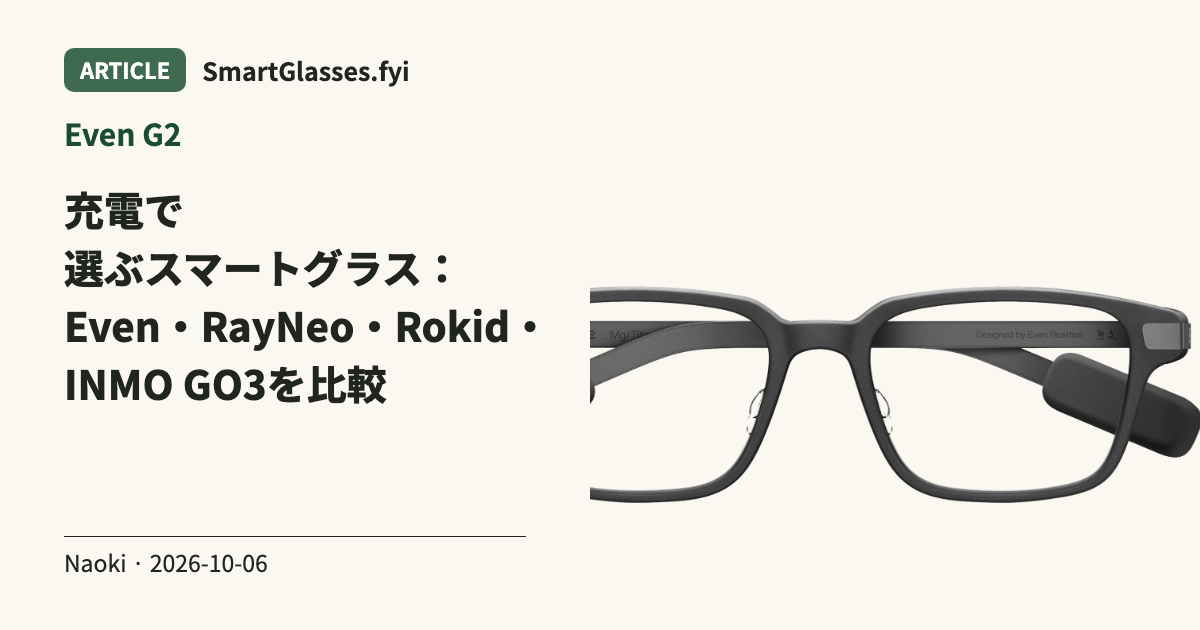
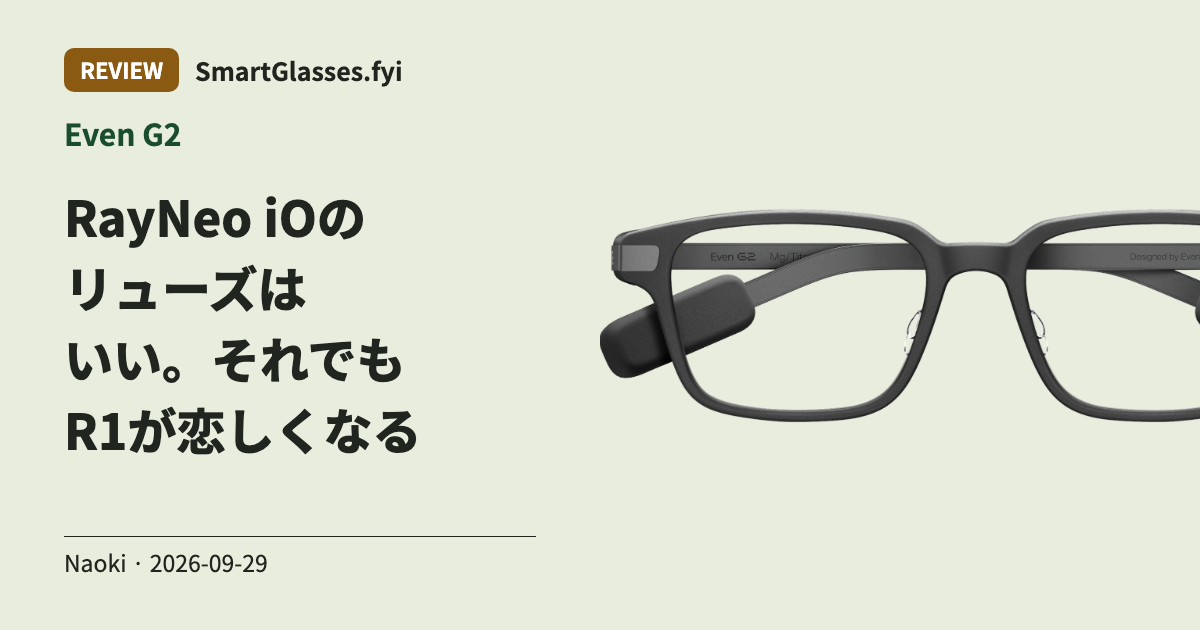
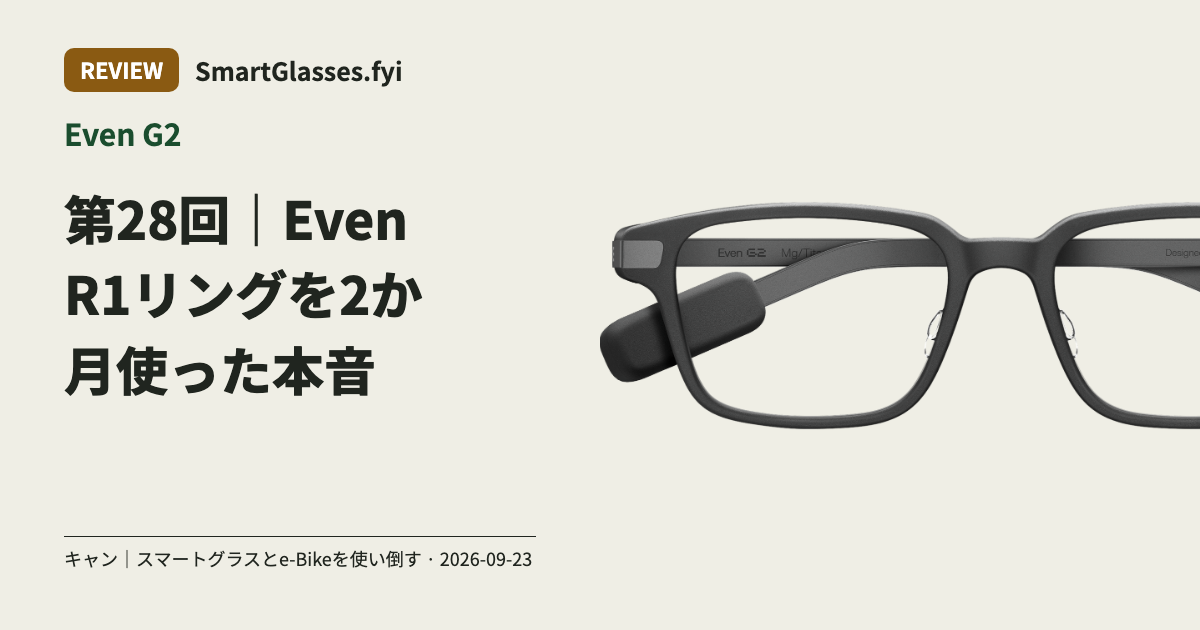
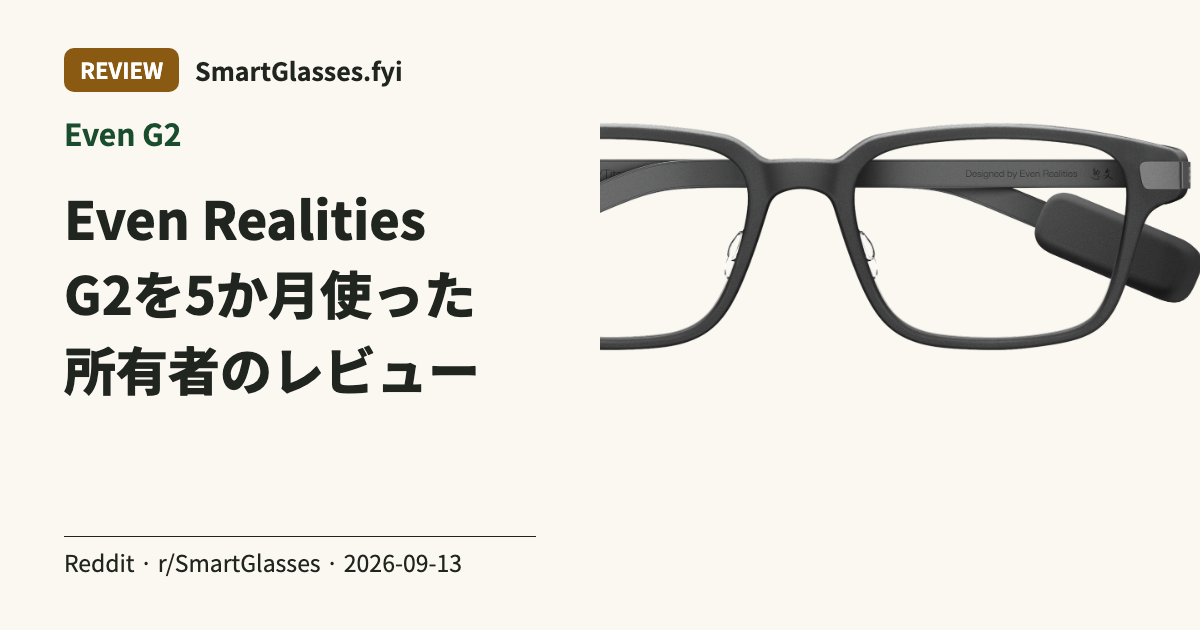
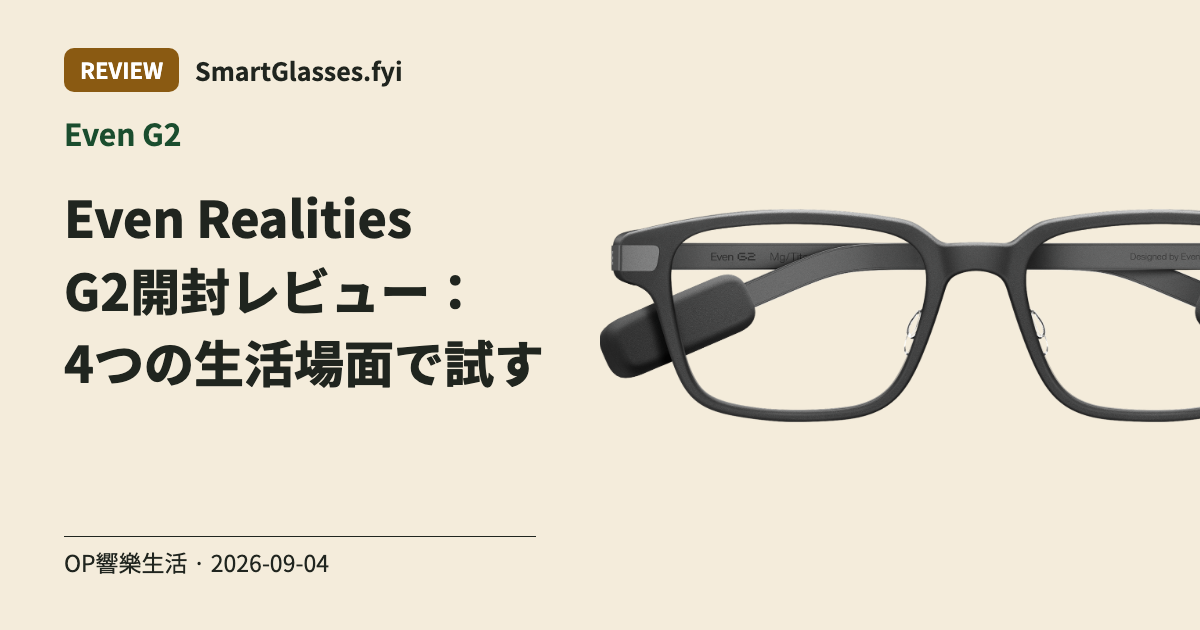
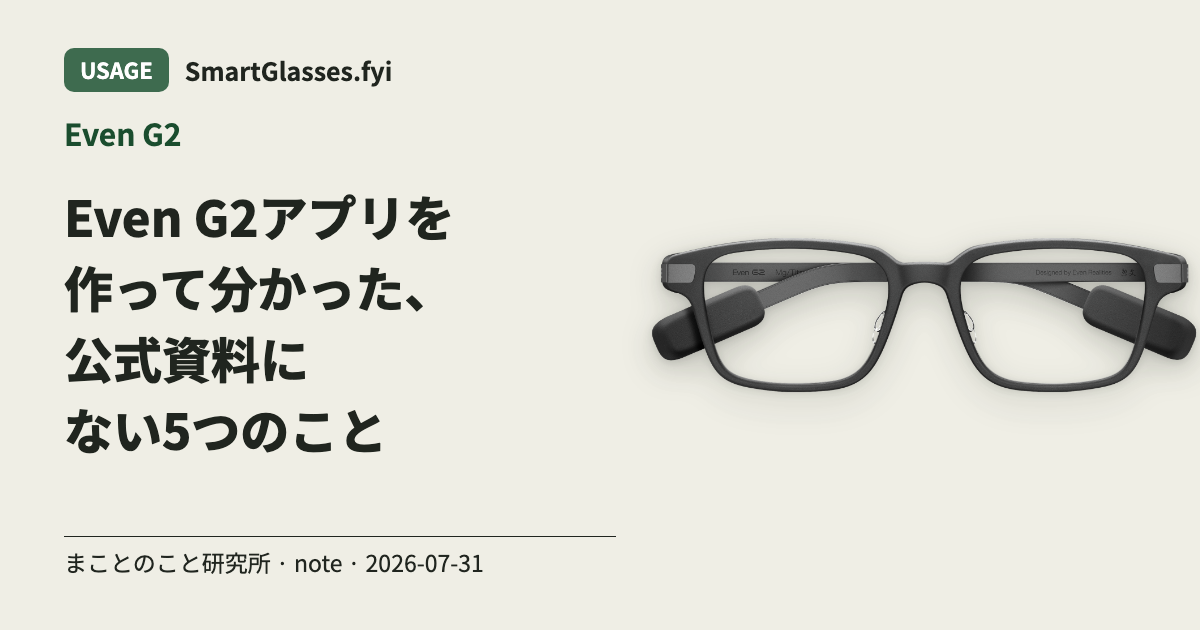
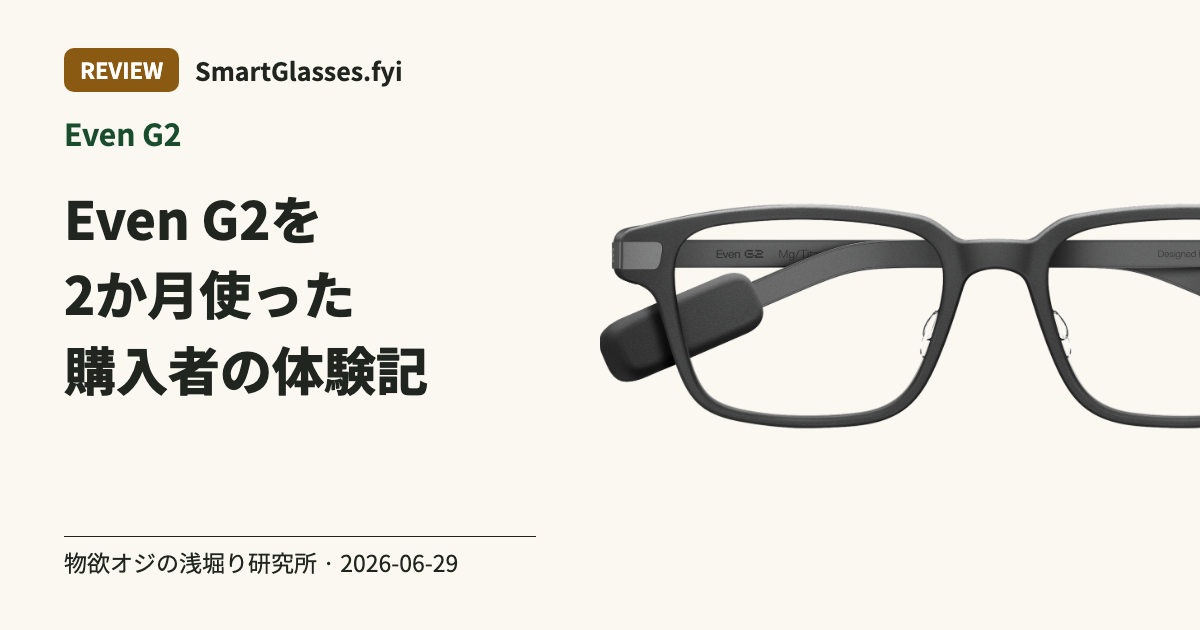
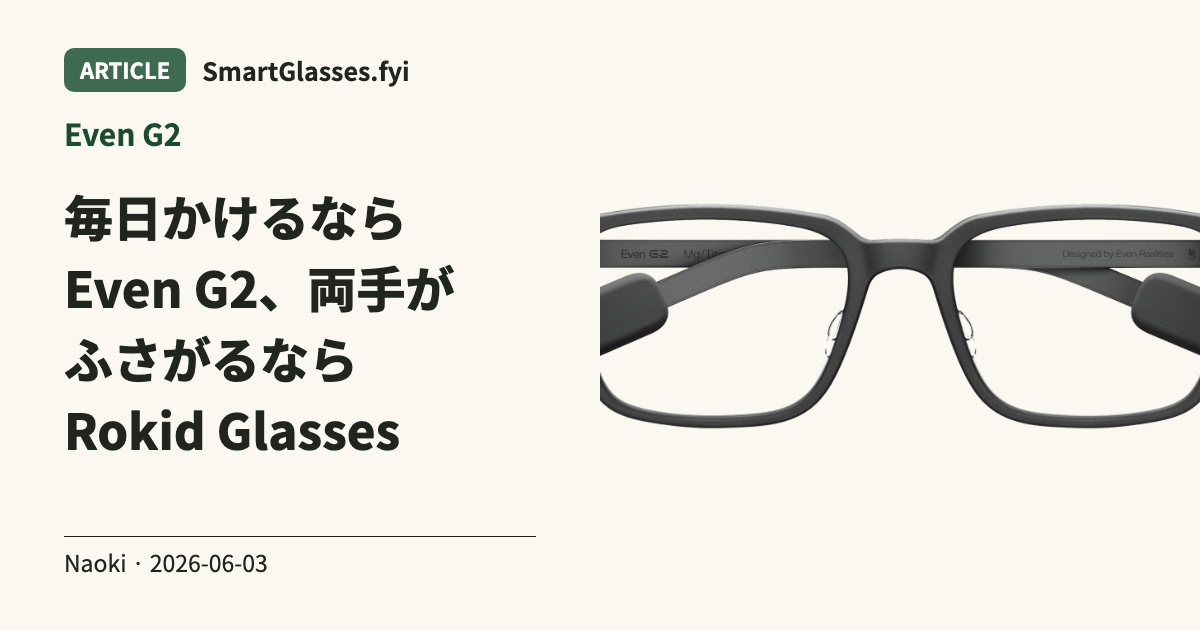
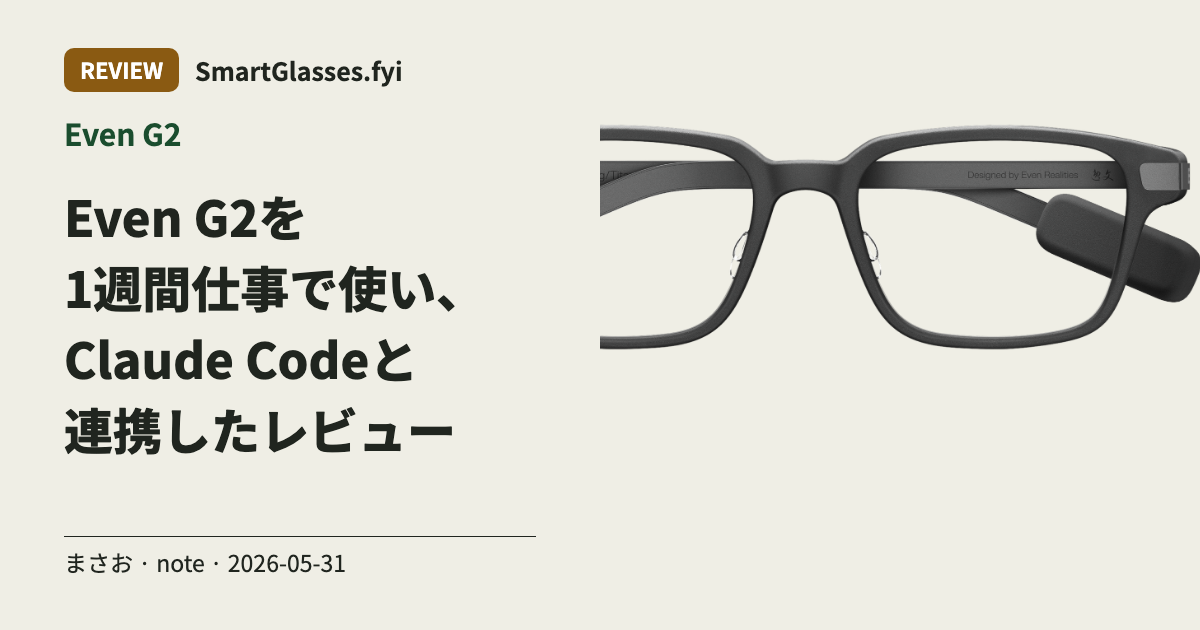
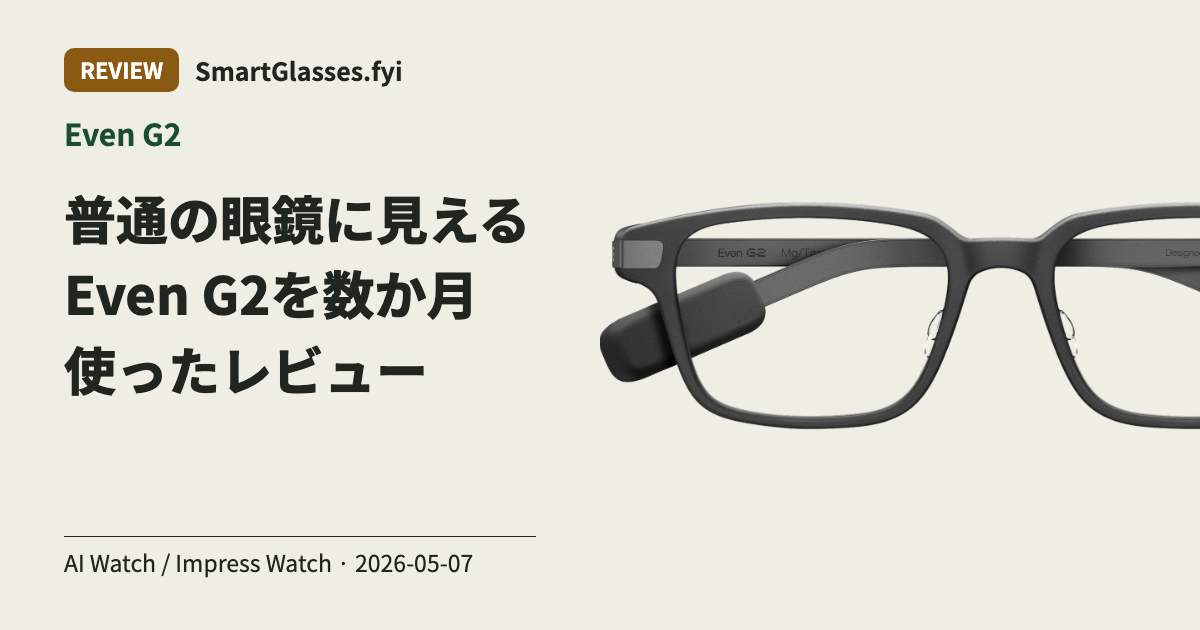
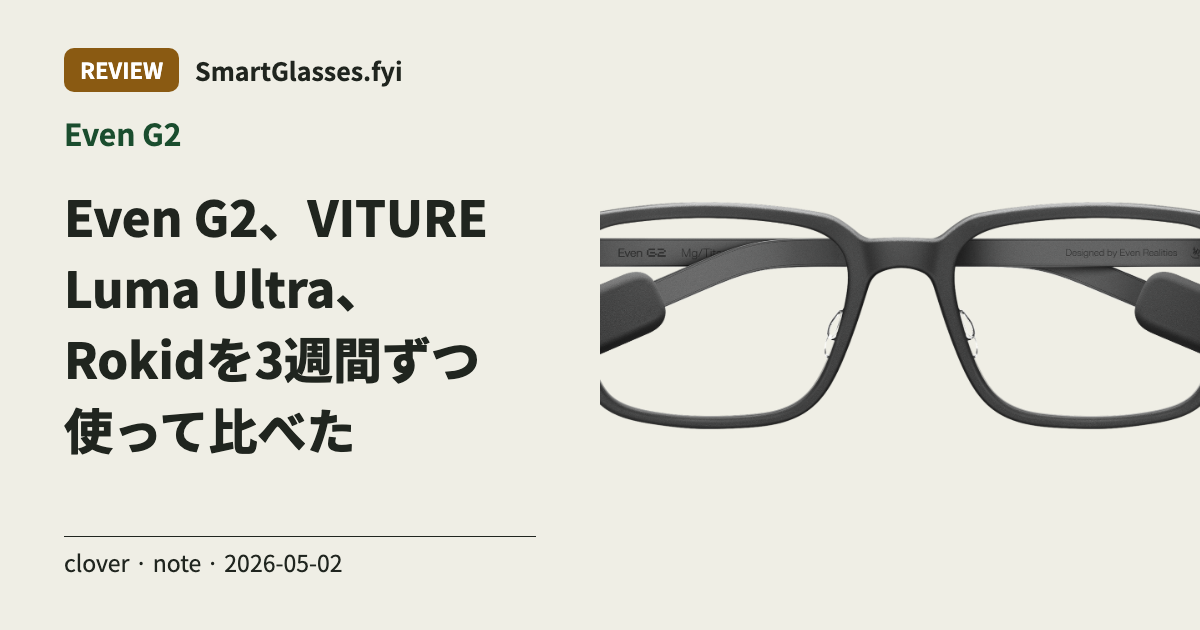
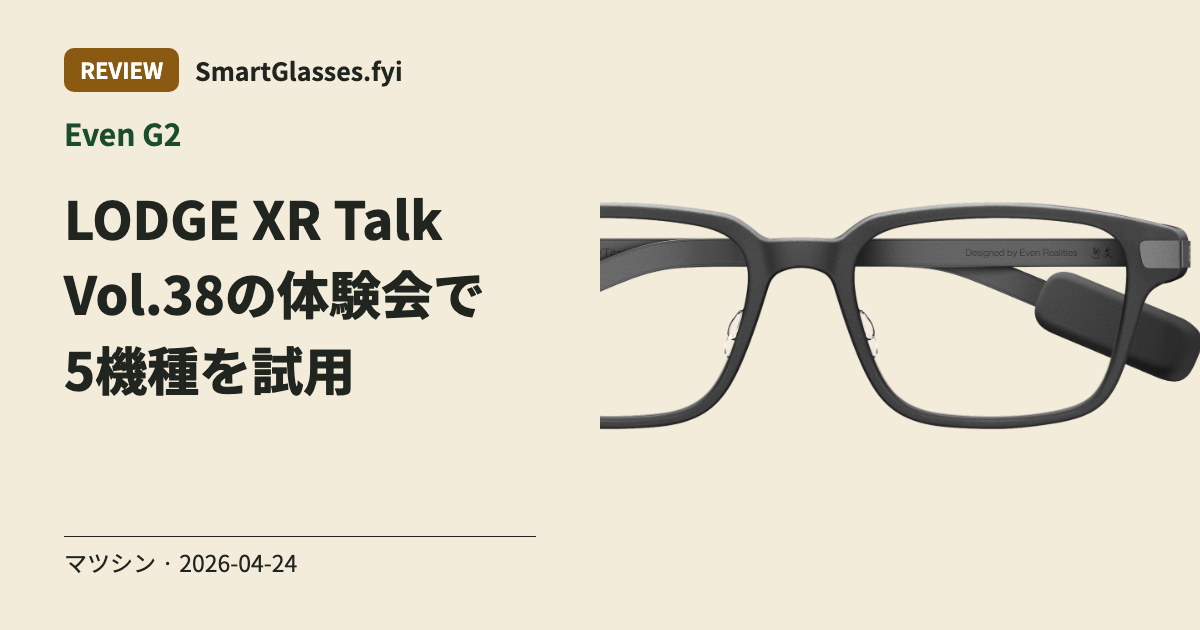
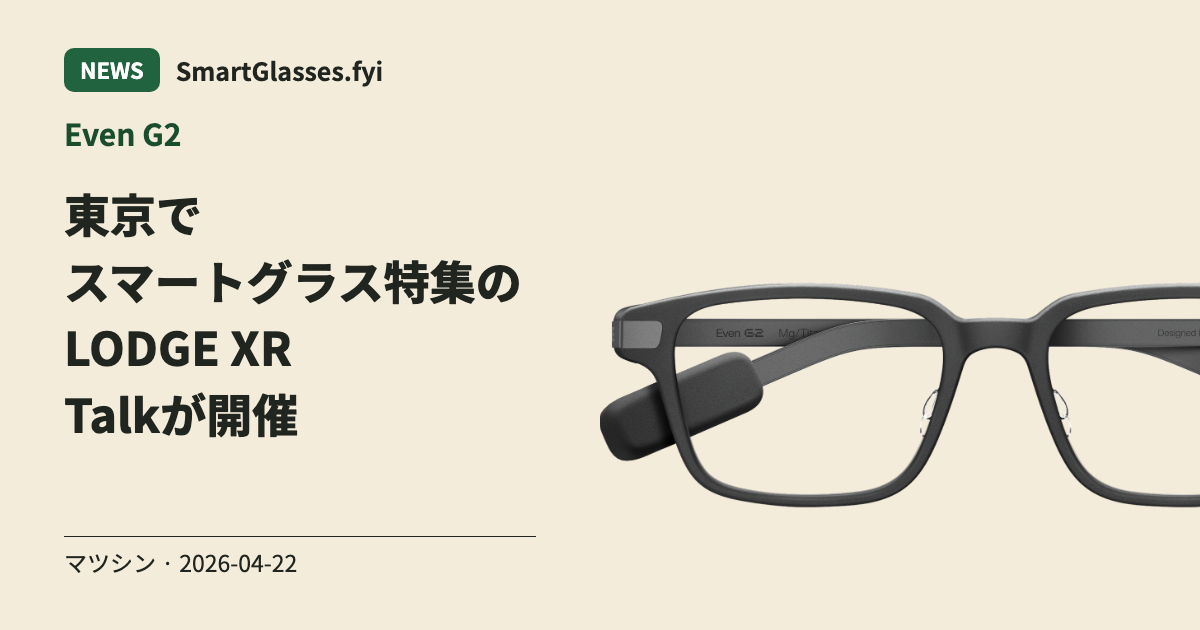
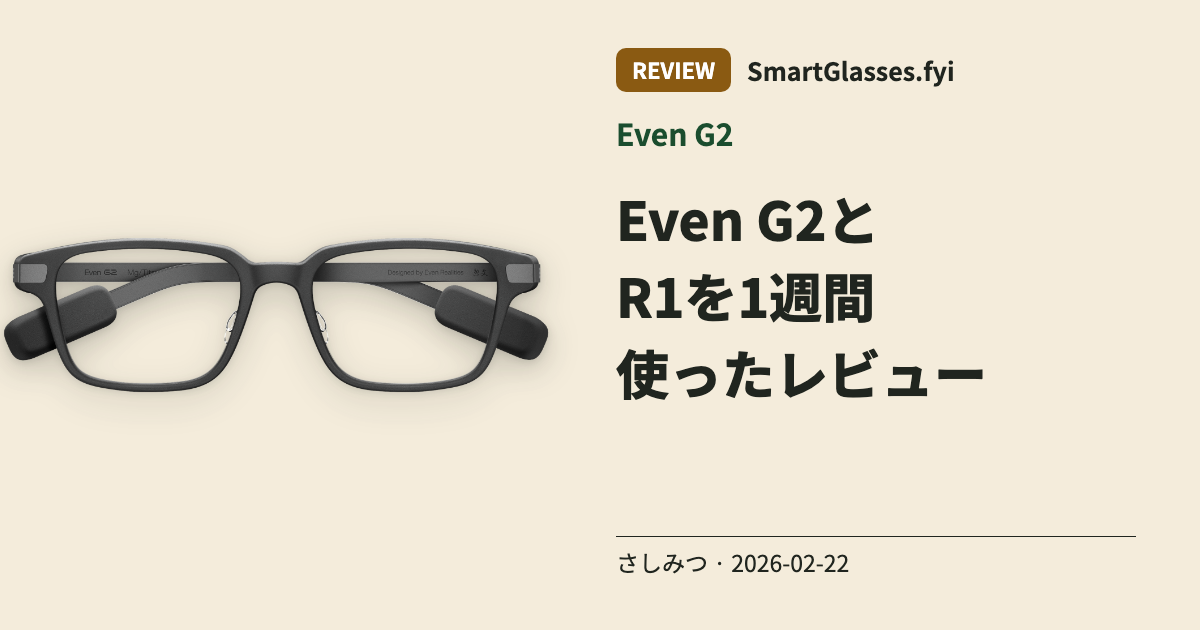
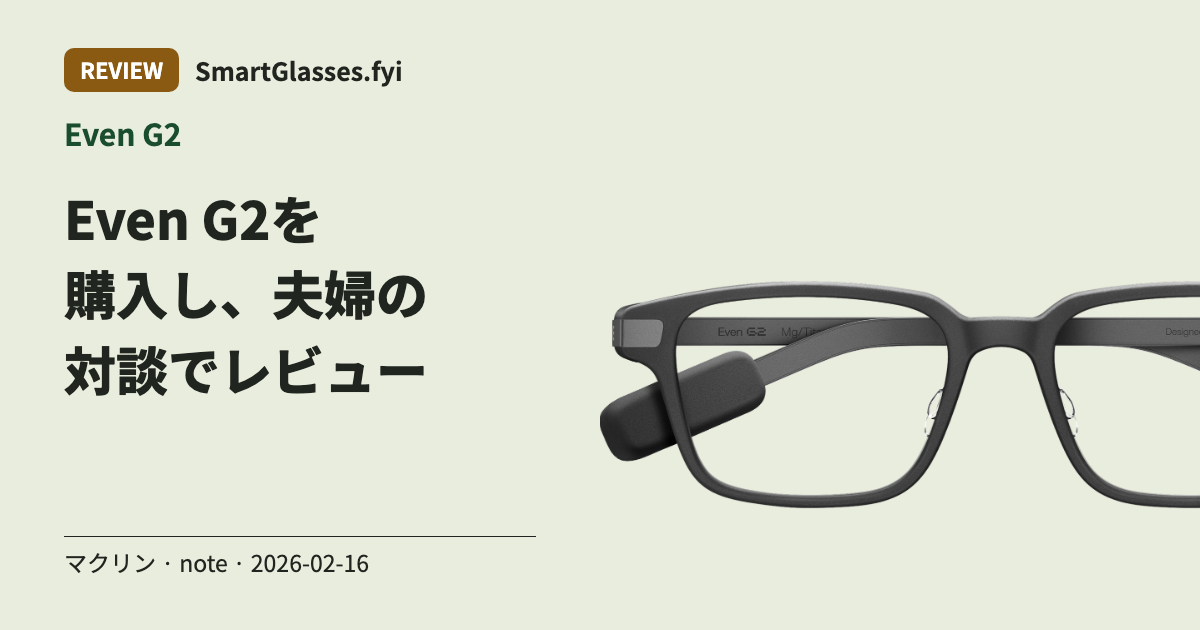
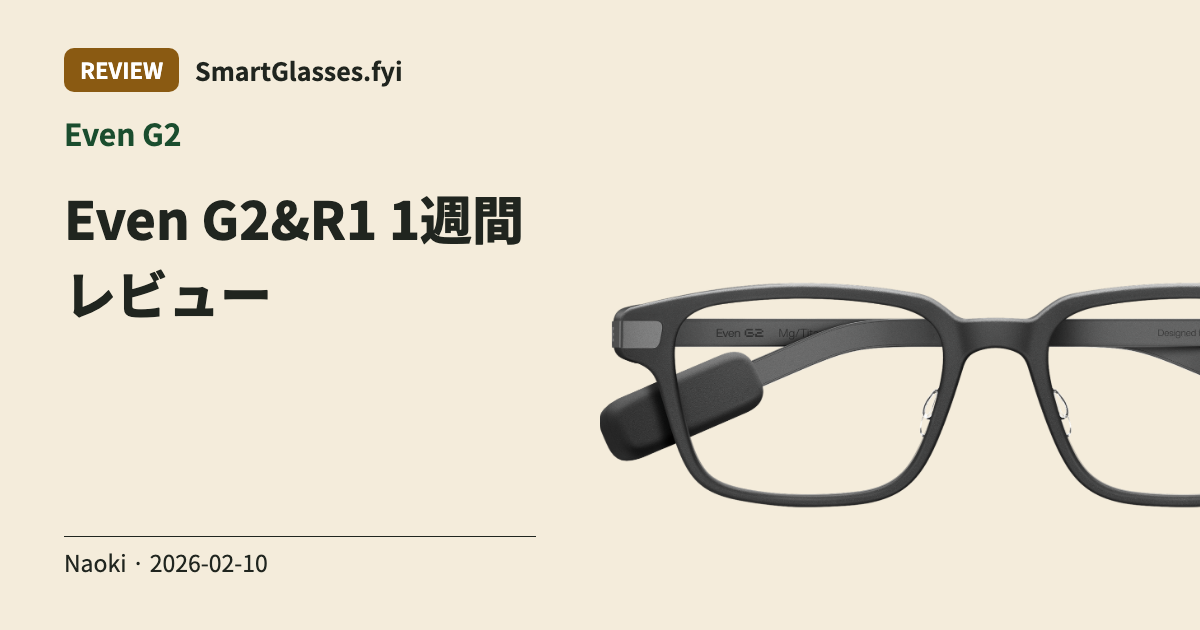
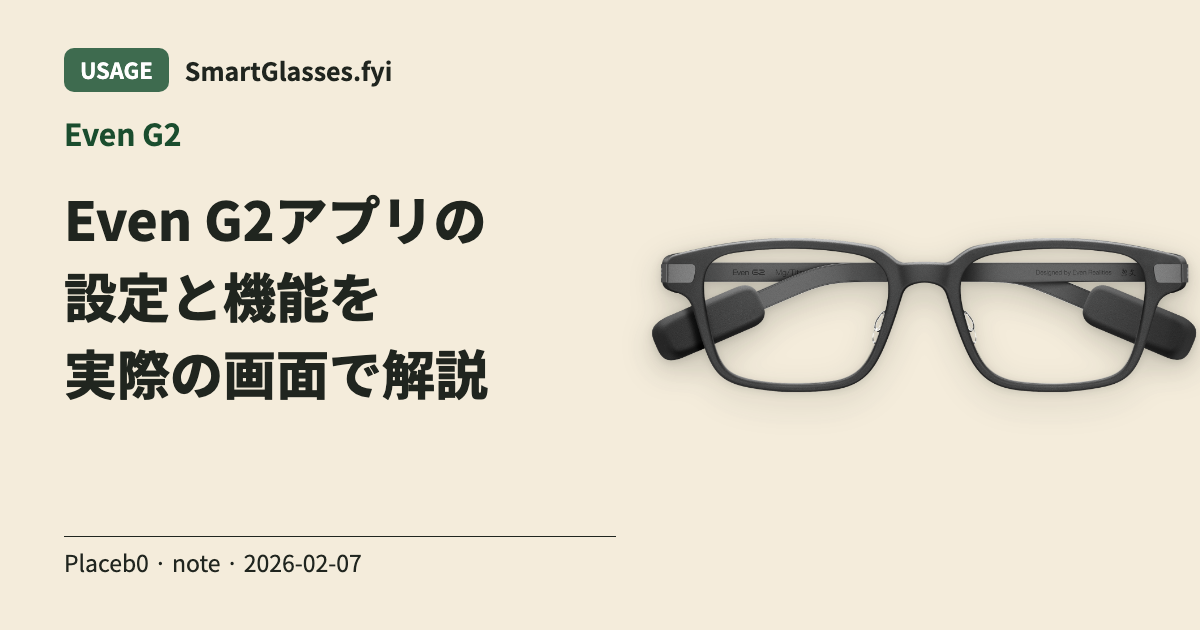
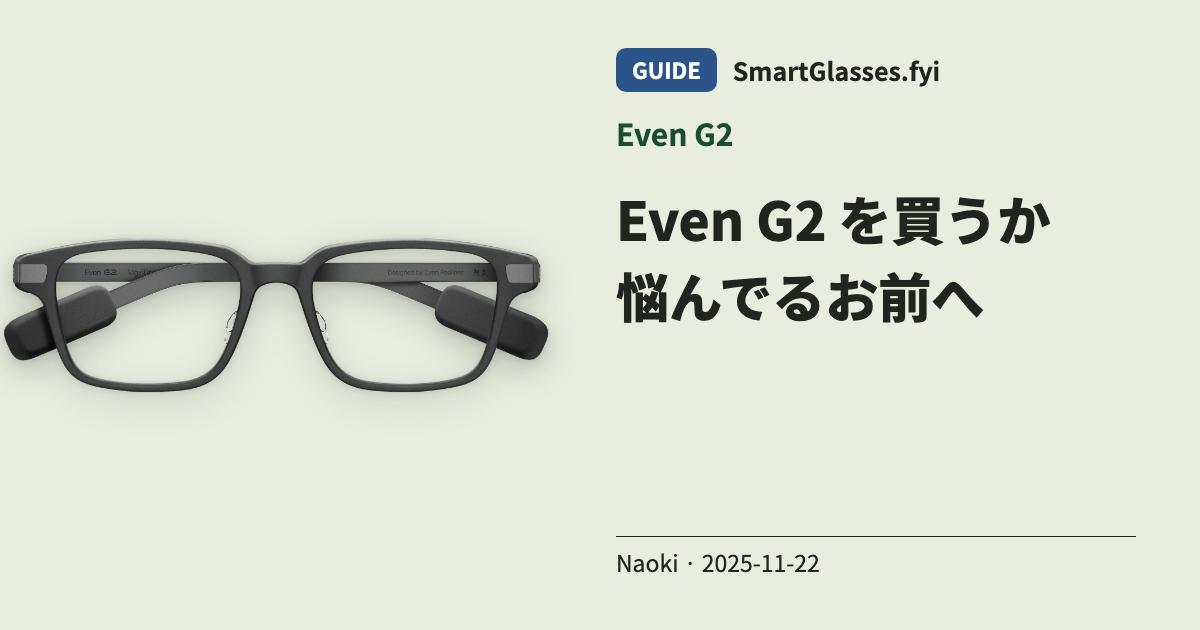
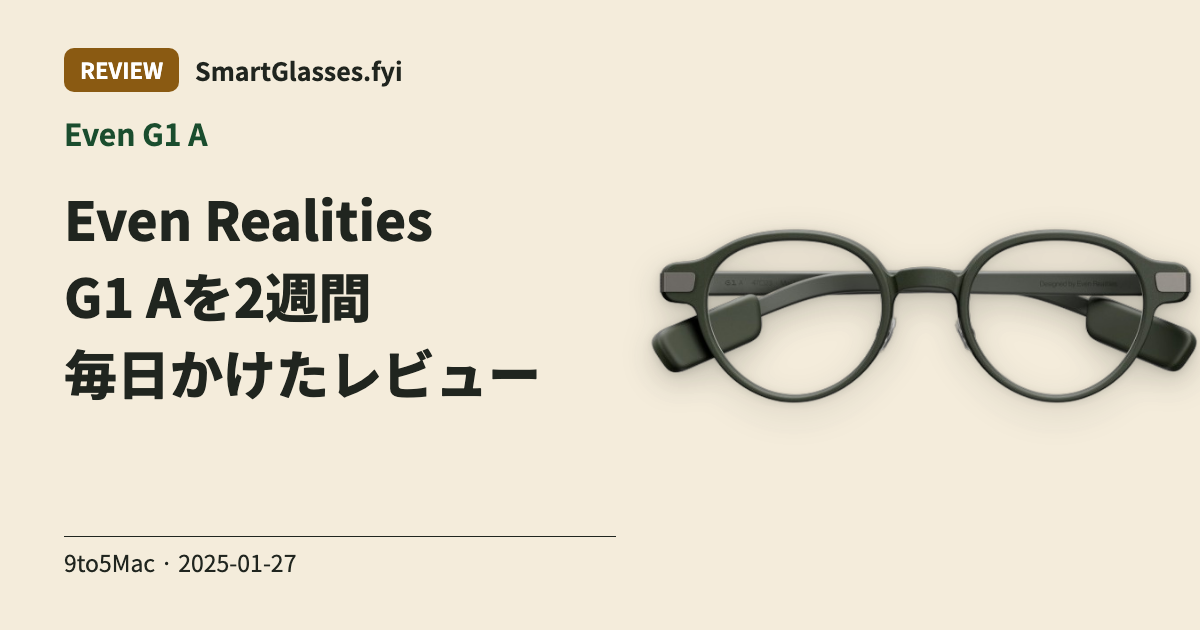
A MobileSyrup writer uses Even G2 with the R1 ring every day, trying ring controls and connectivity, dashboard customisation, and conversation captions and translation.

A MobileSyrup writer uses Even G2 with the R1 ring every day, trying ring controls and connectivity, dashboard customisation, and conversation captions and translation.

Rokid has partnered with Chinese optical chain Doctor Glasses so customers can try AI glasses in store and get professional fitting in one visit. The article is an announcement provided by Rokid.

Zhejiang Online reports from the Taizhou international eyewear expo on smart-glasses exhibits and a compact computer that uses glasses as its screen, along with materials and manufacturing companies.

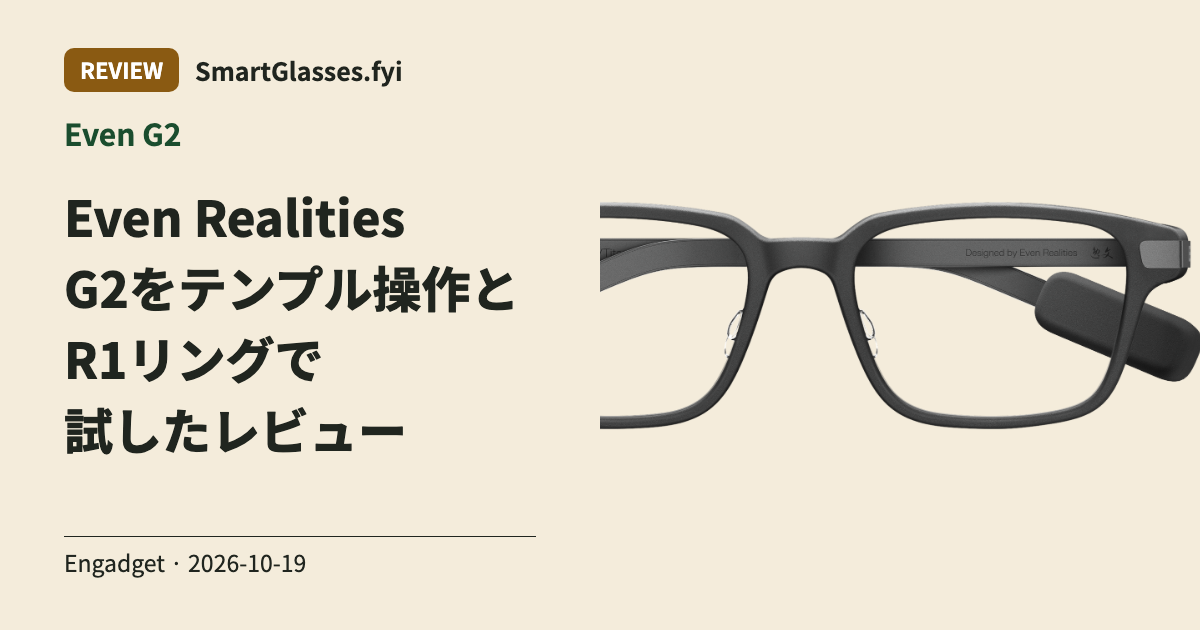
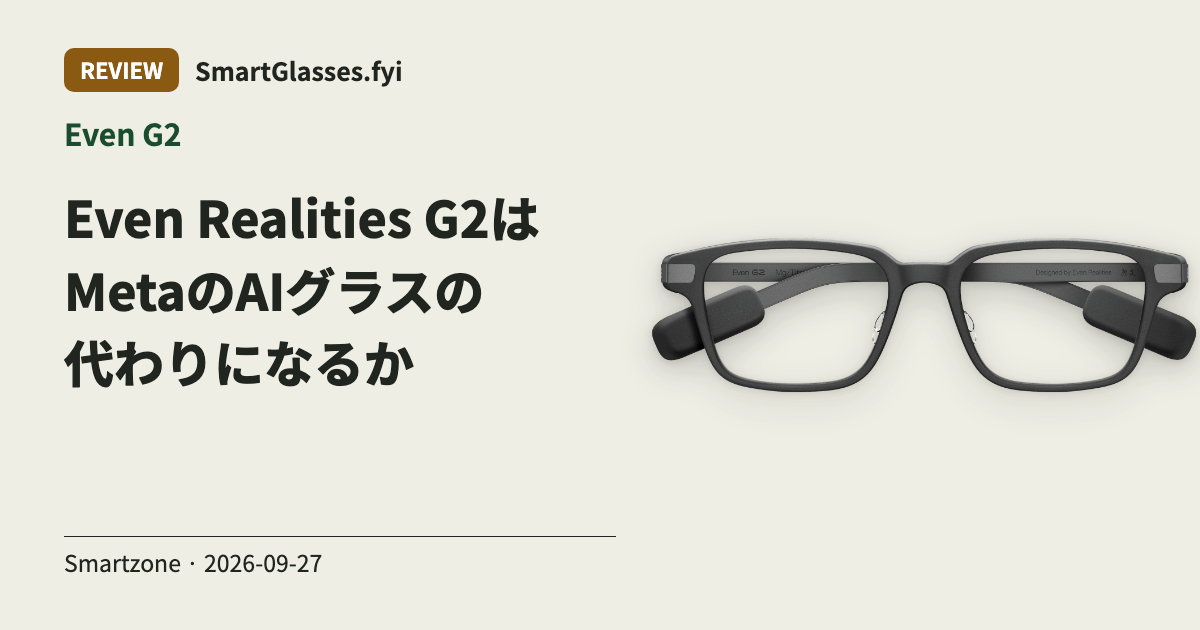
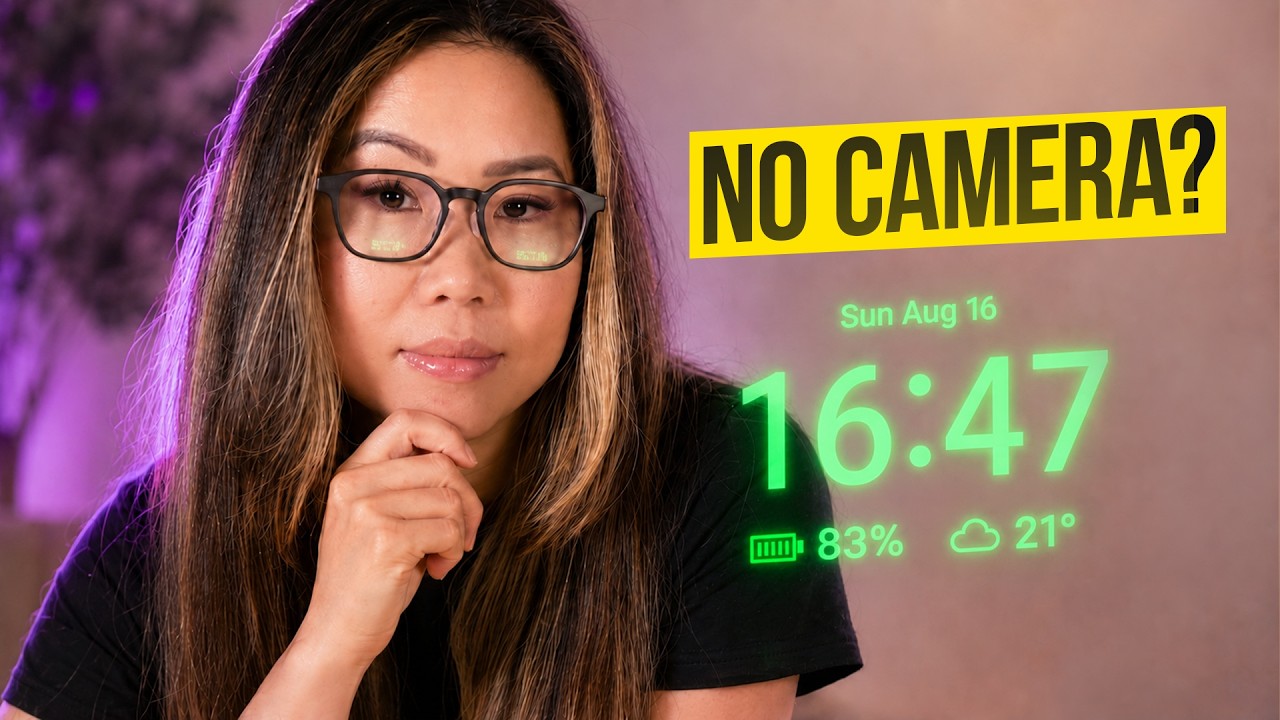
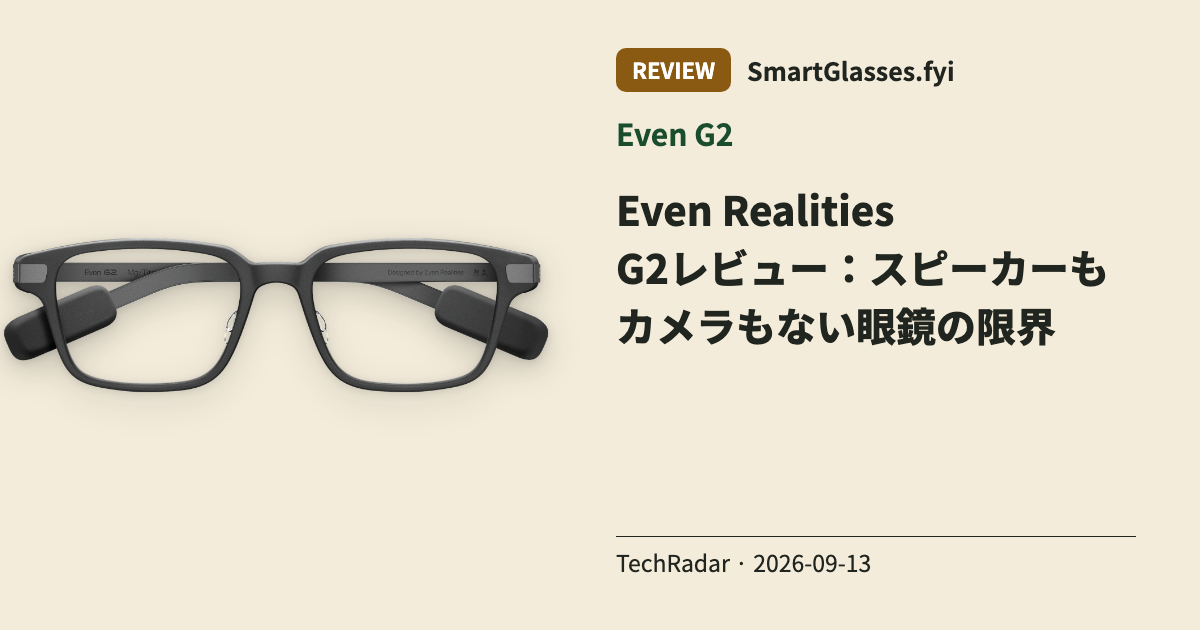
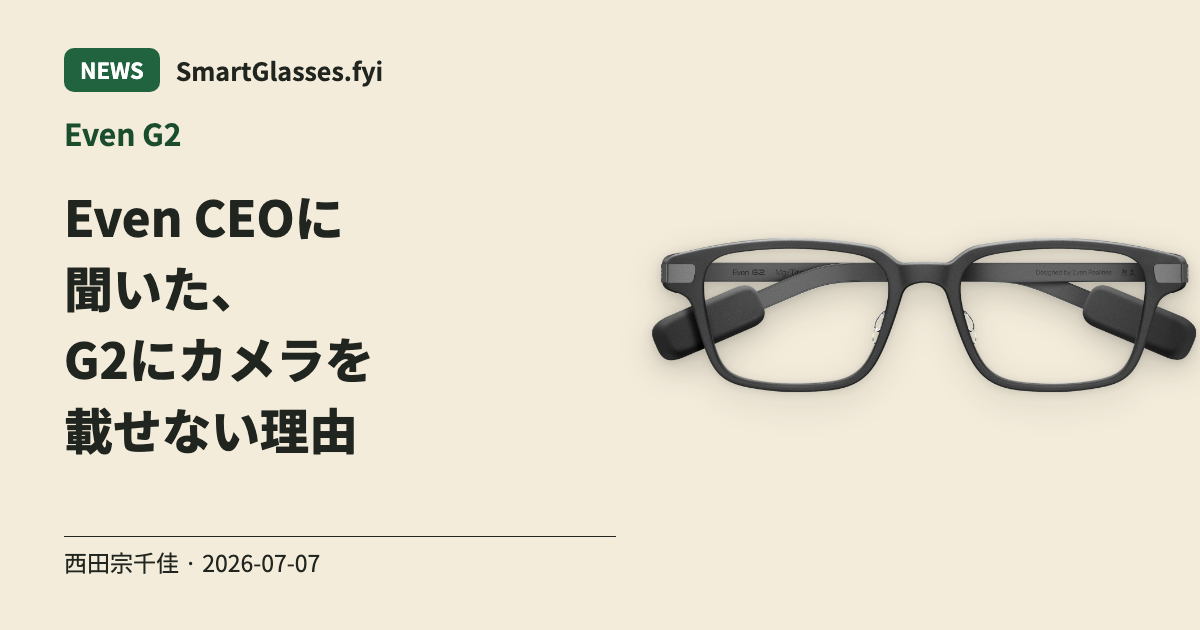
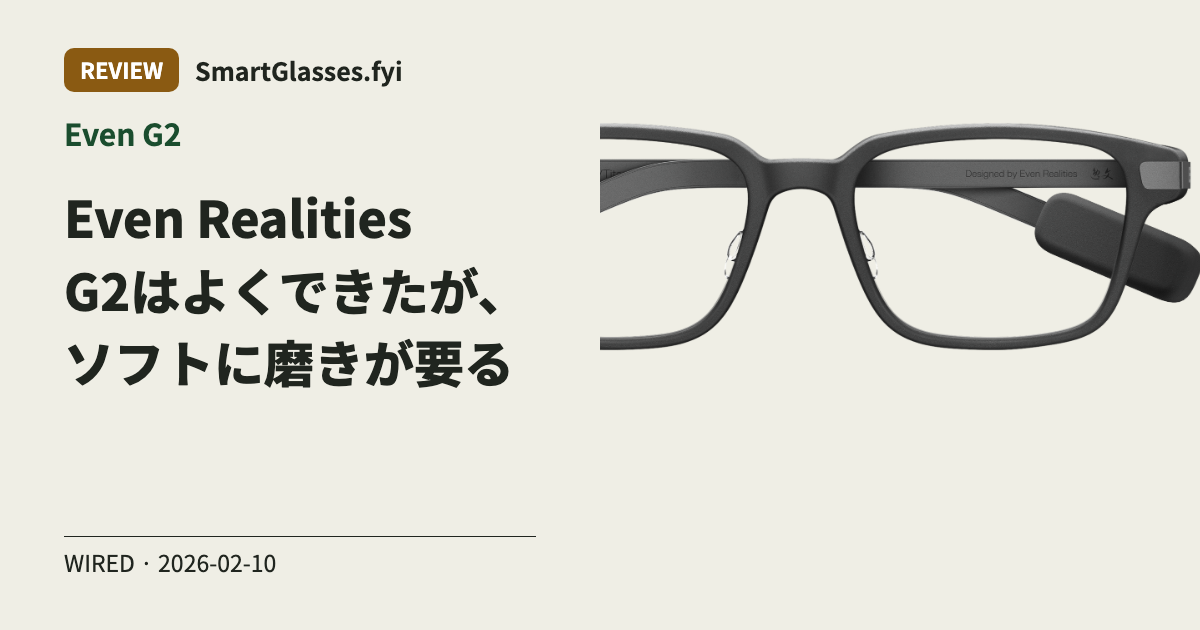
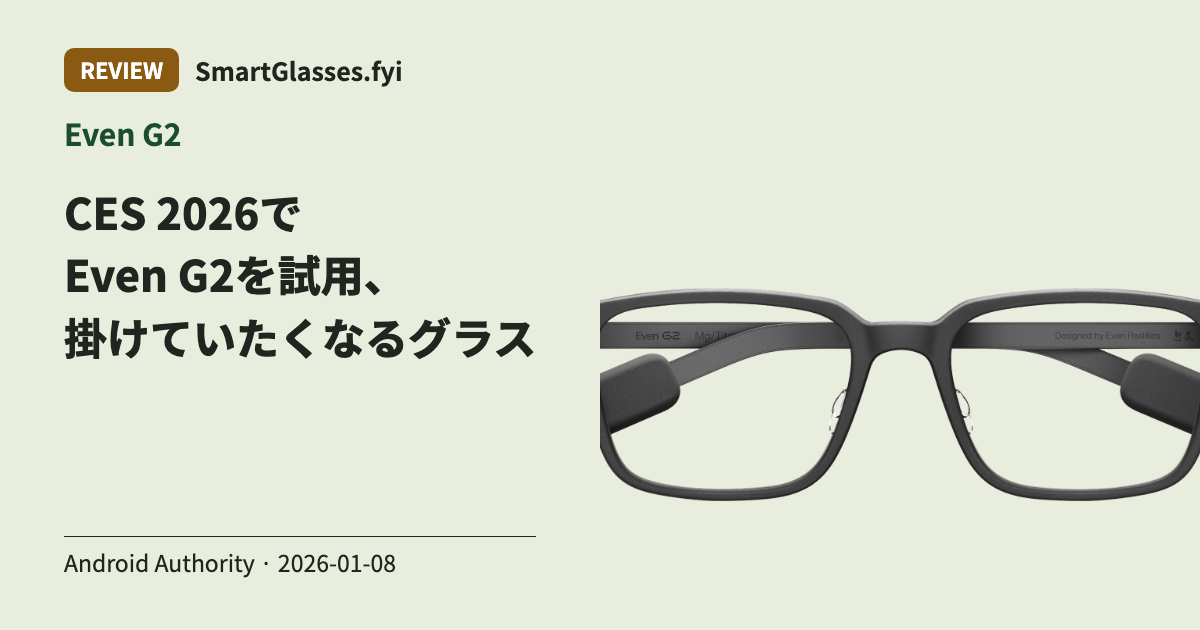
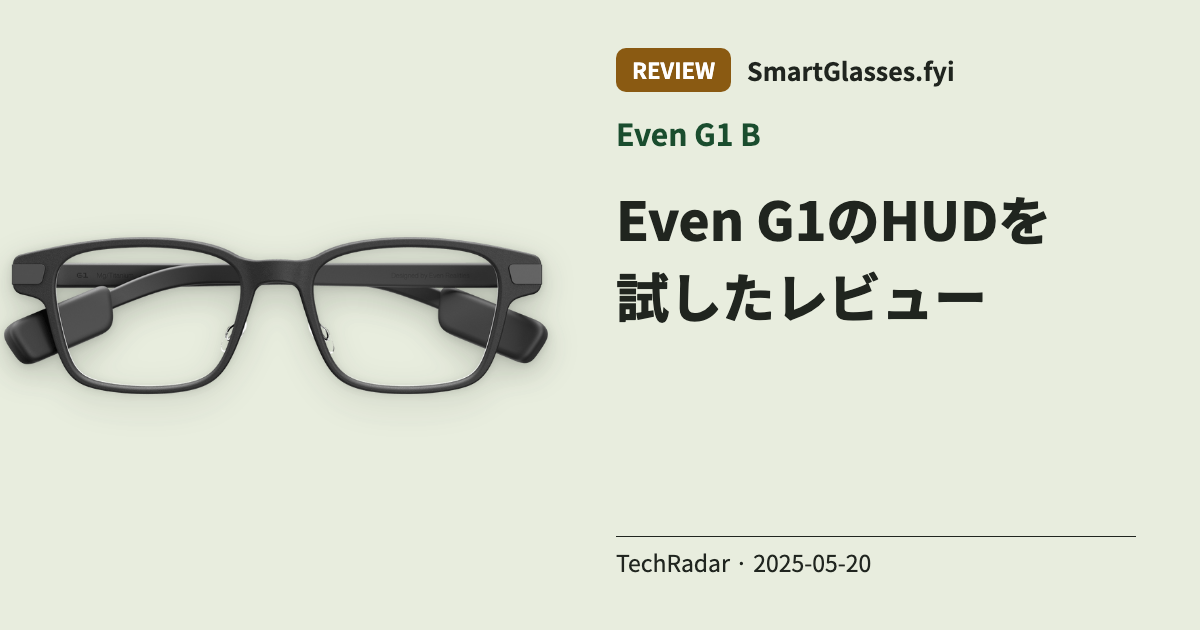
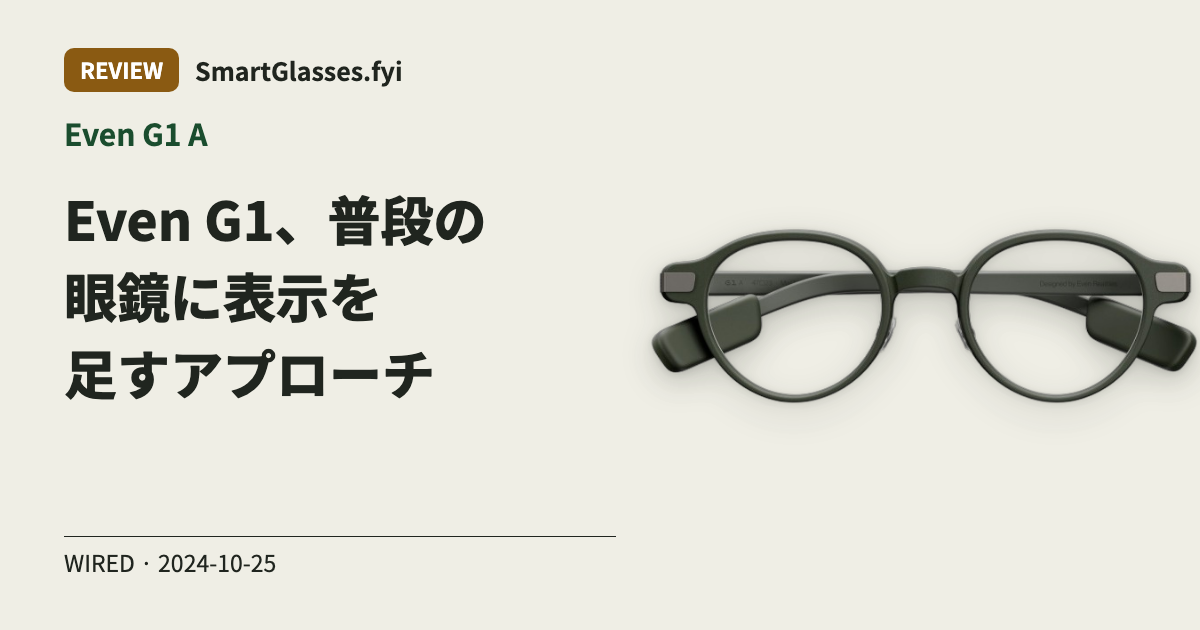
Engadget tests the camera-free Even Realities G2, focusing on its temple touch controls and input through the optional R1 ring.

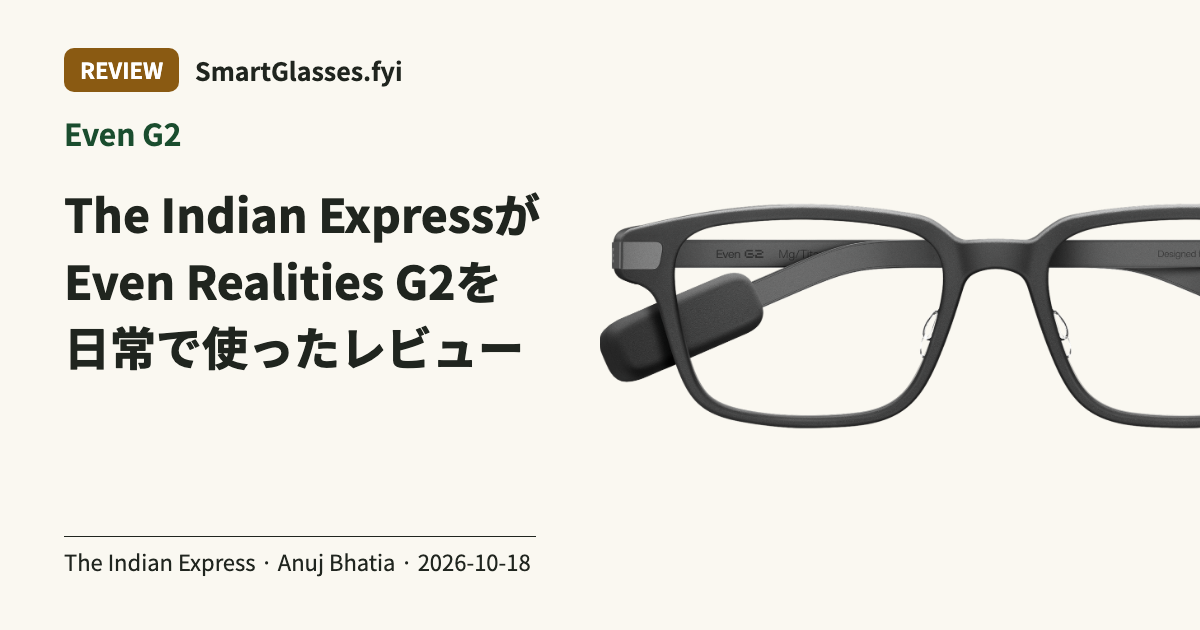
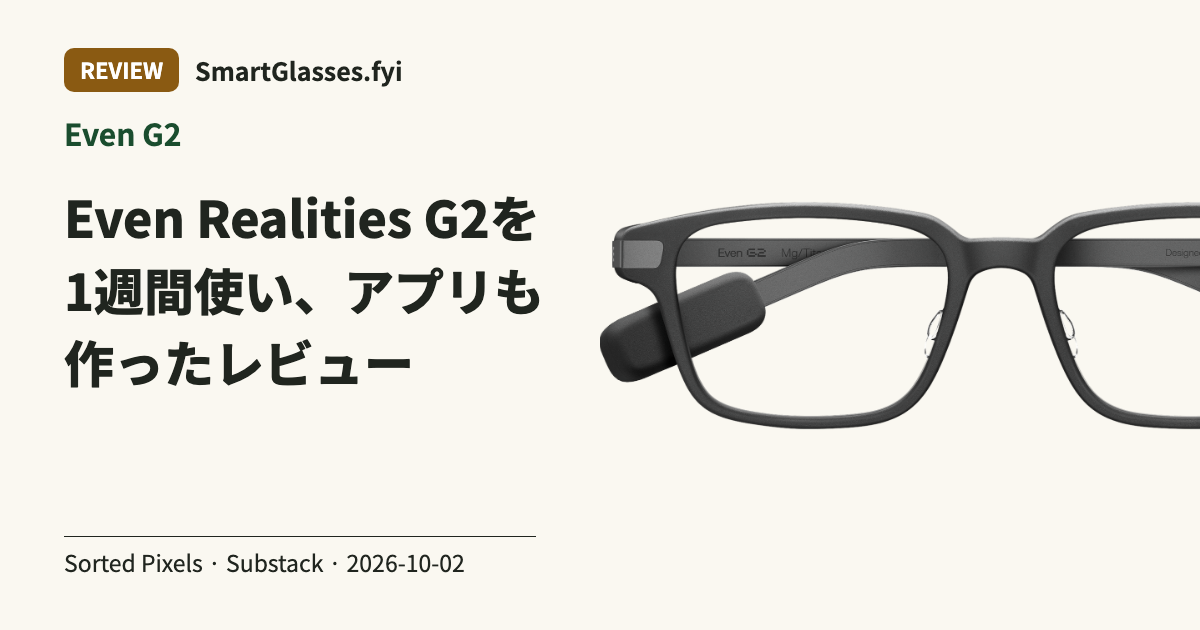
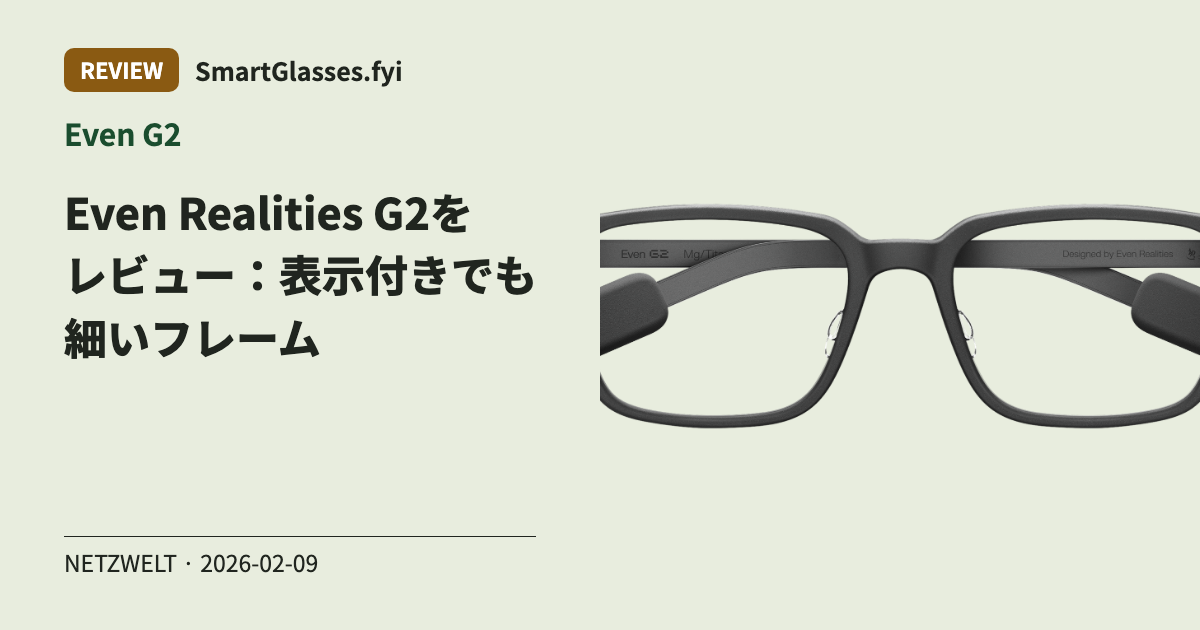
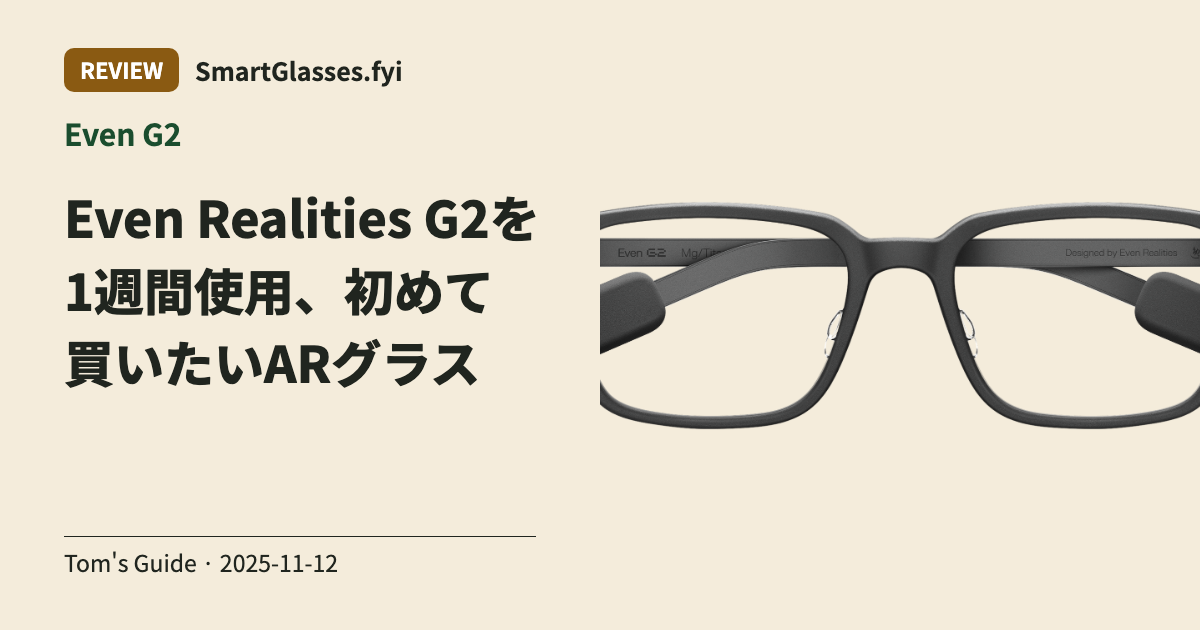
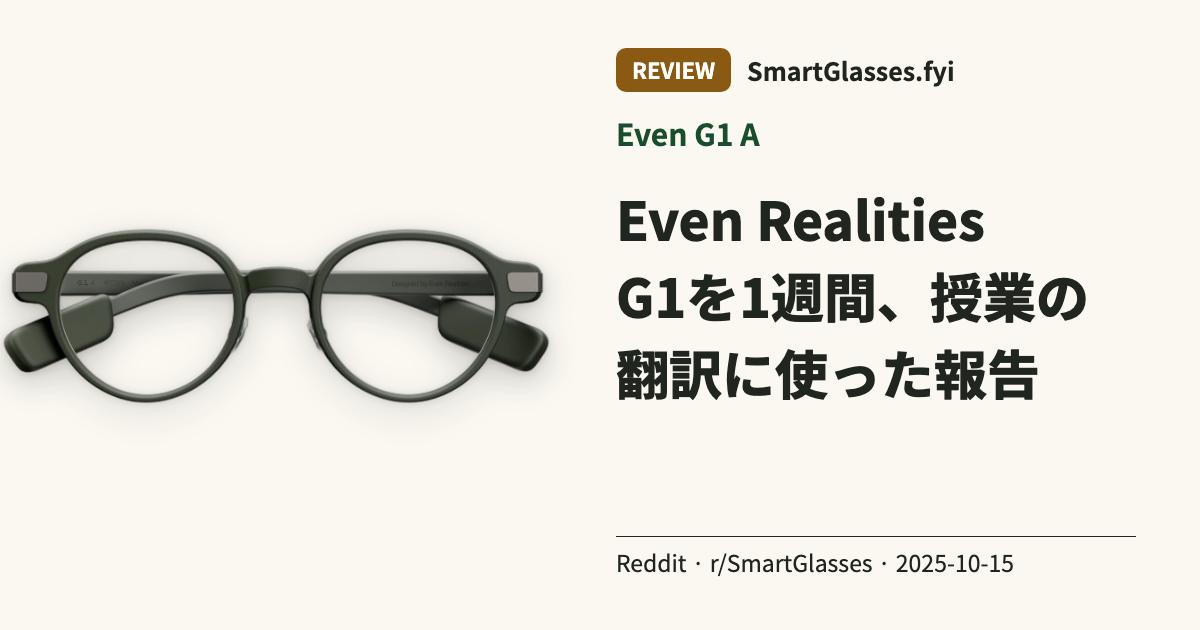
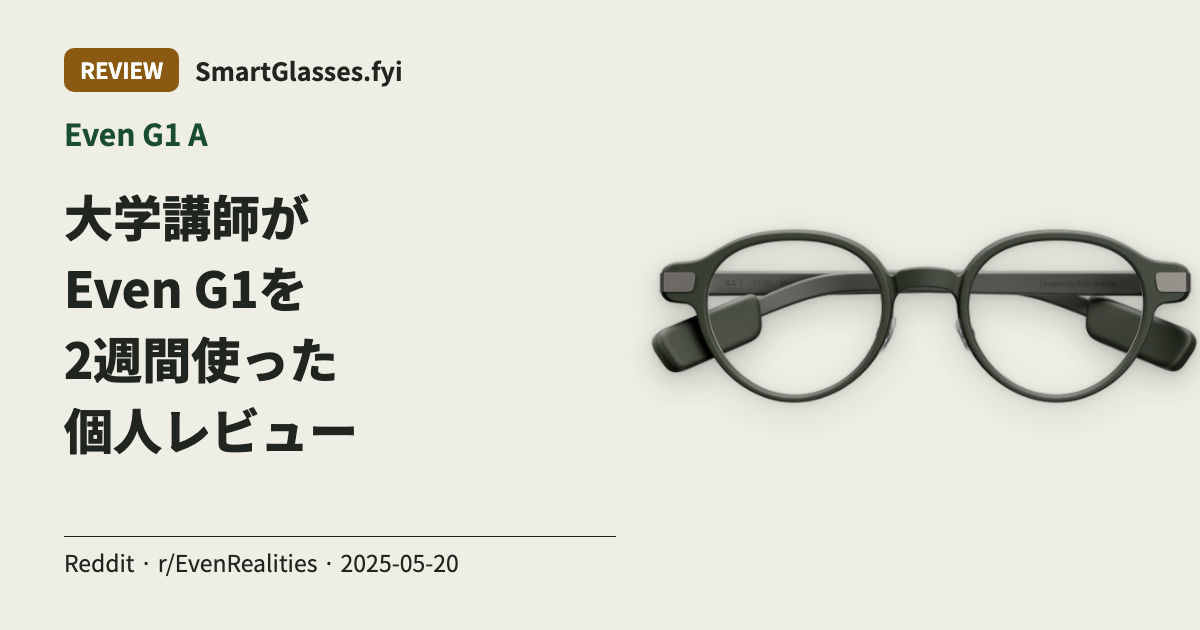
Anuj Bhatia uses the Even Realities G2 day to day, trying its monochrome display, controls and the Conversate conversation-summary feature. The article says the company sent a sample made to his prescription.

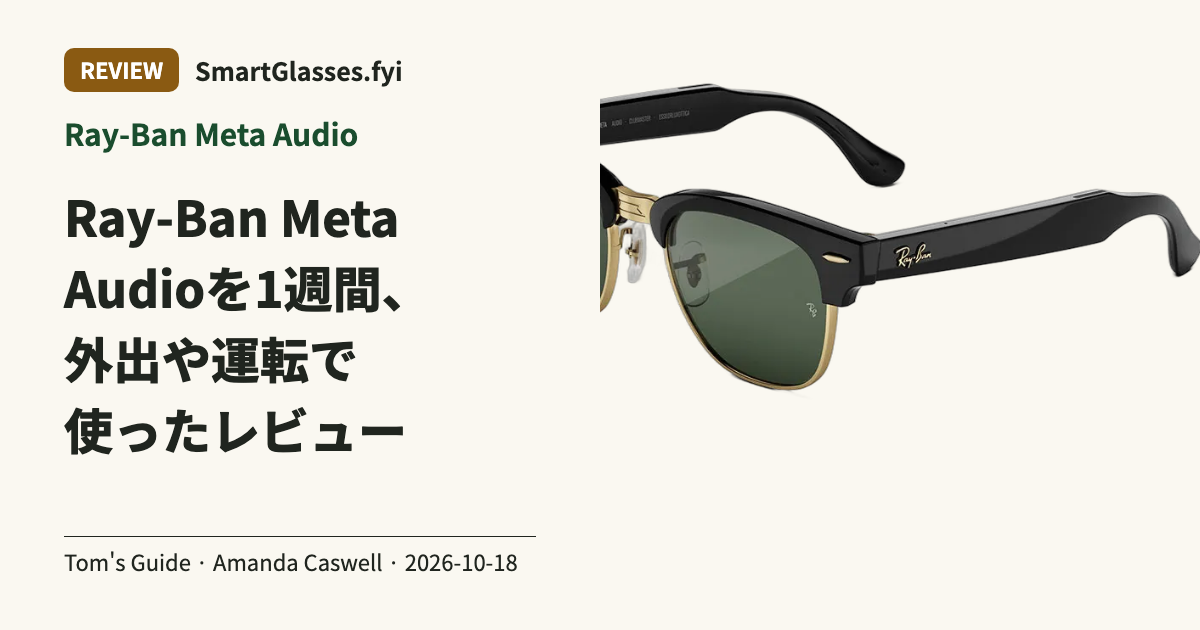
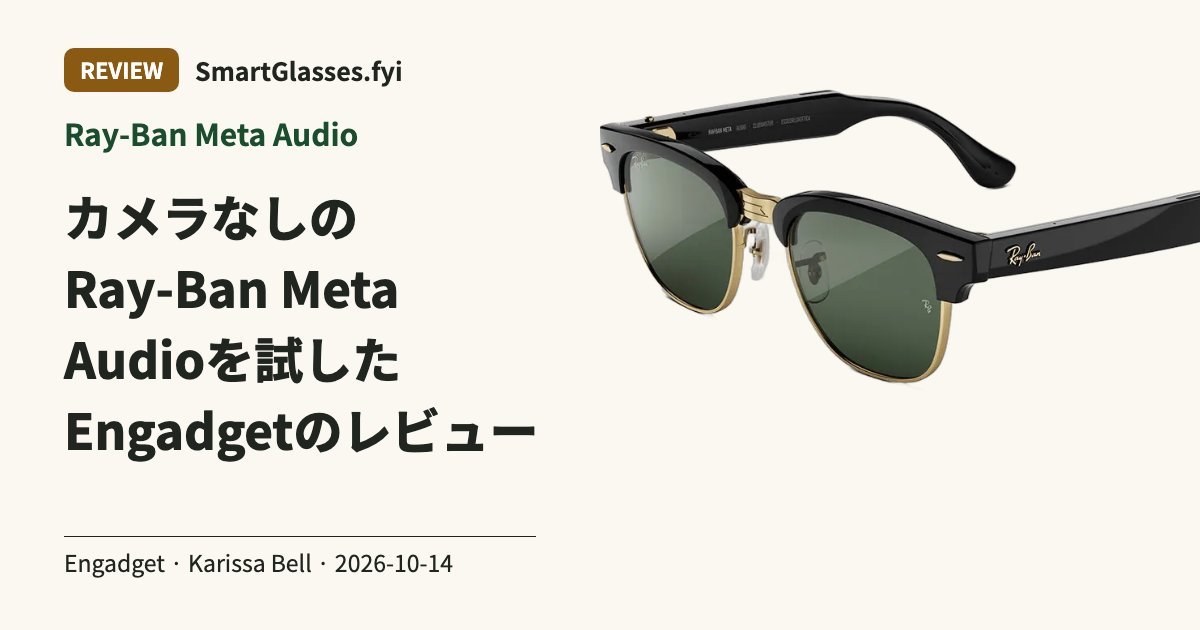
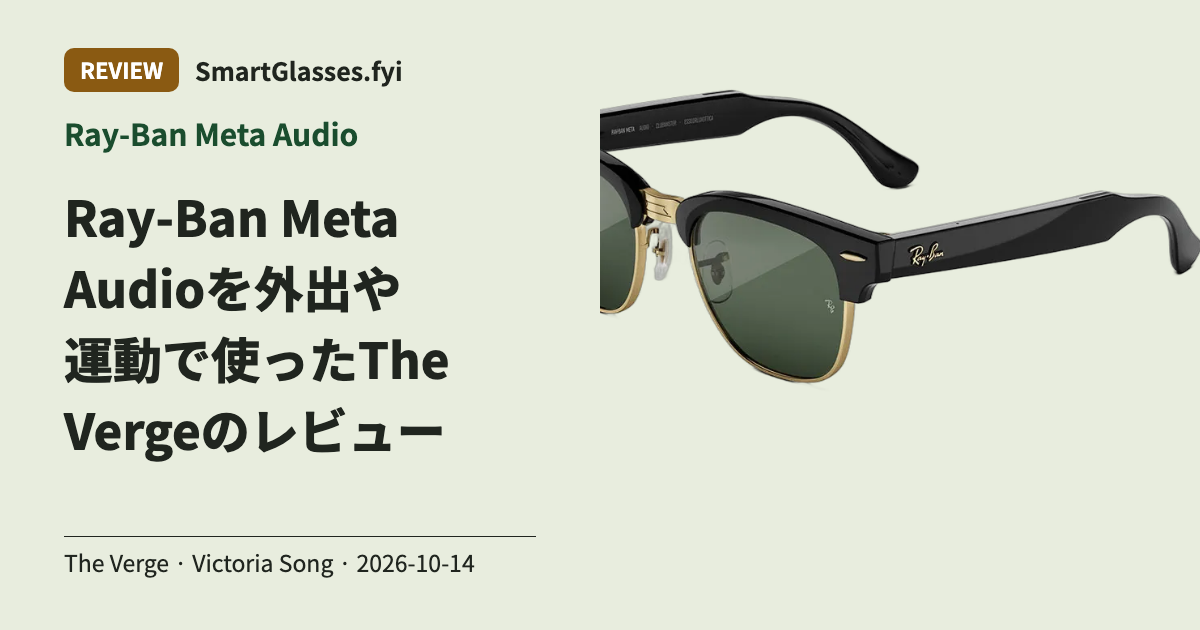
Tom’s Guide’s Amanda Caswell wore the camera-free Ray-Ban Meta Audio for a week on family outings, drives and errands, trying calls, translation and spoken navigation in each setting. The article contains affiliate purchase links.

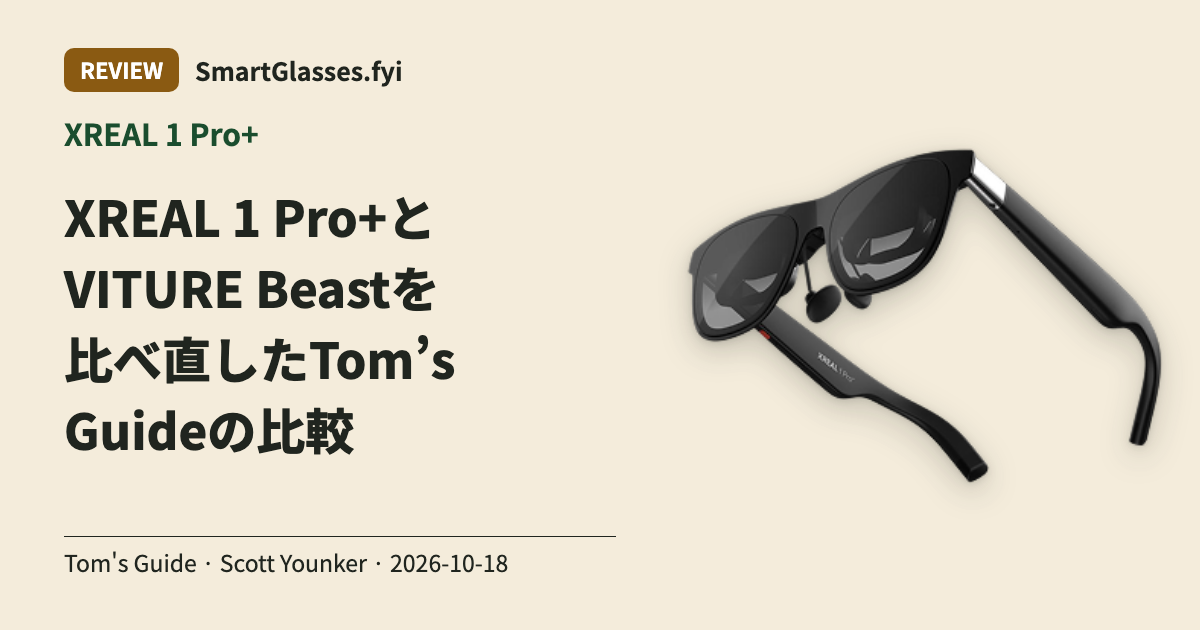
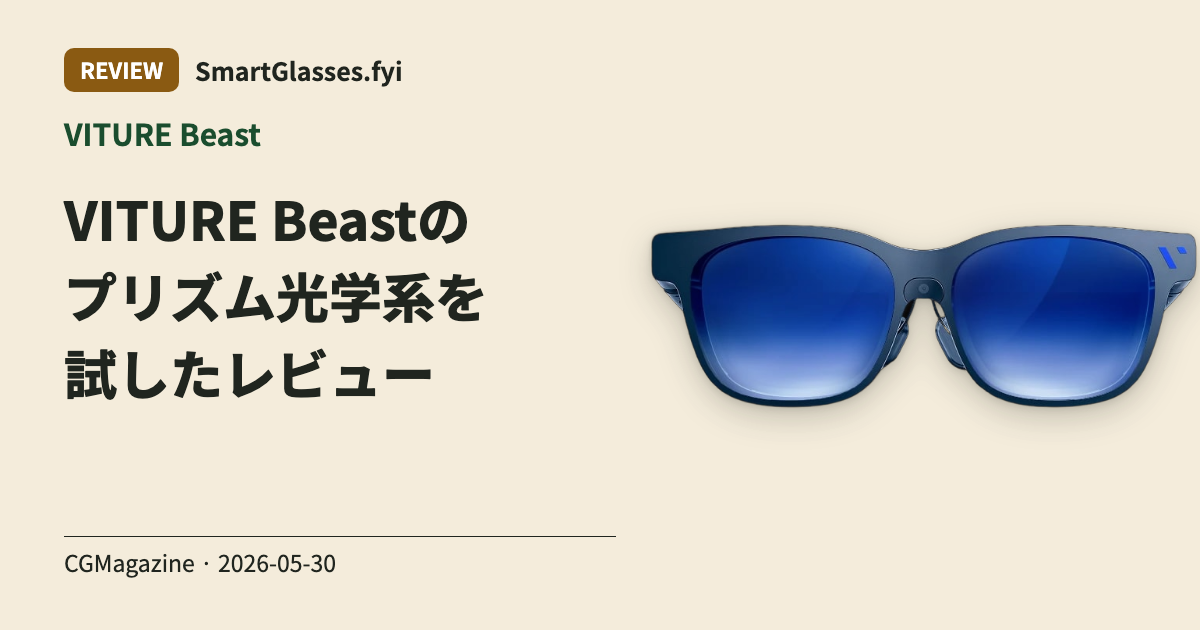
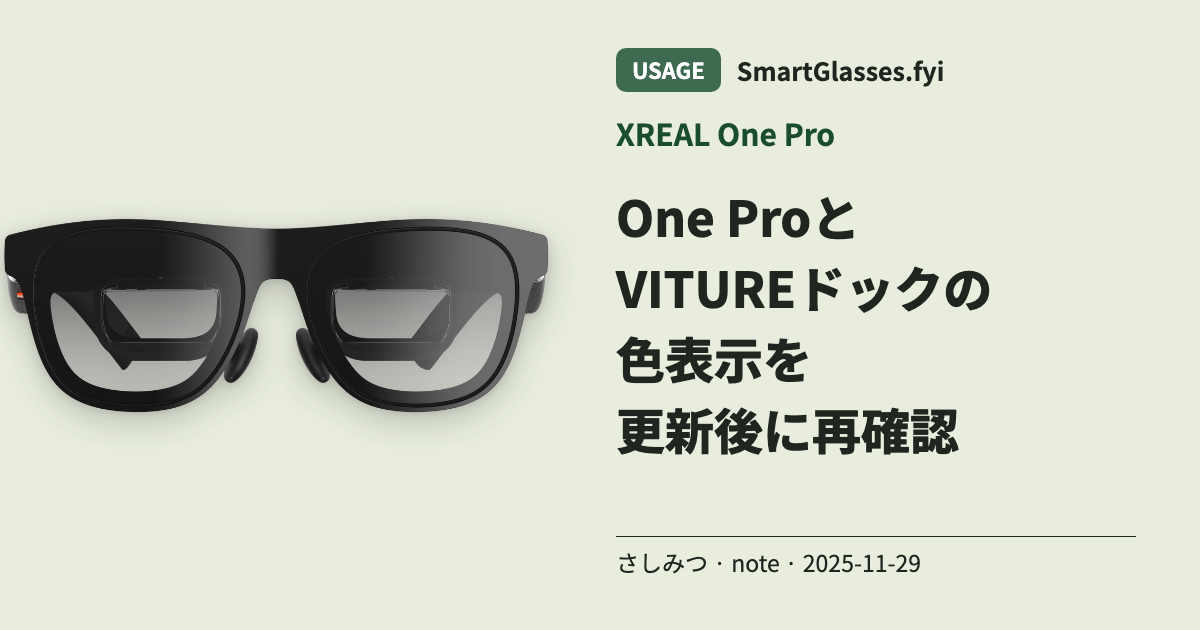
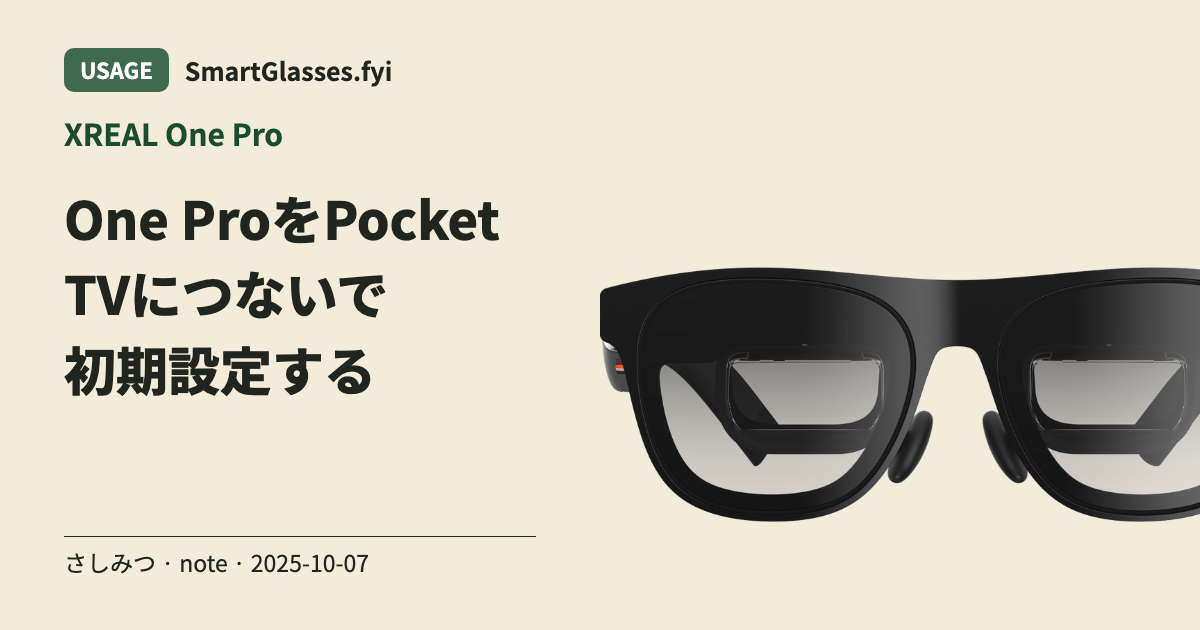
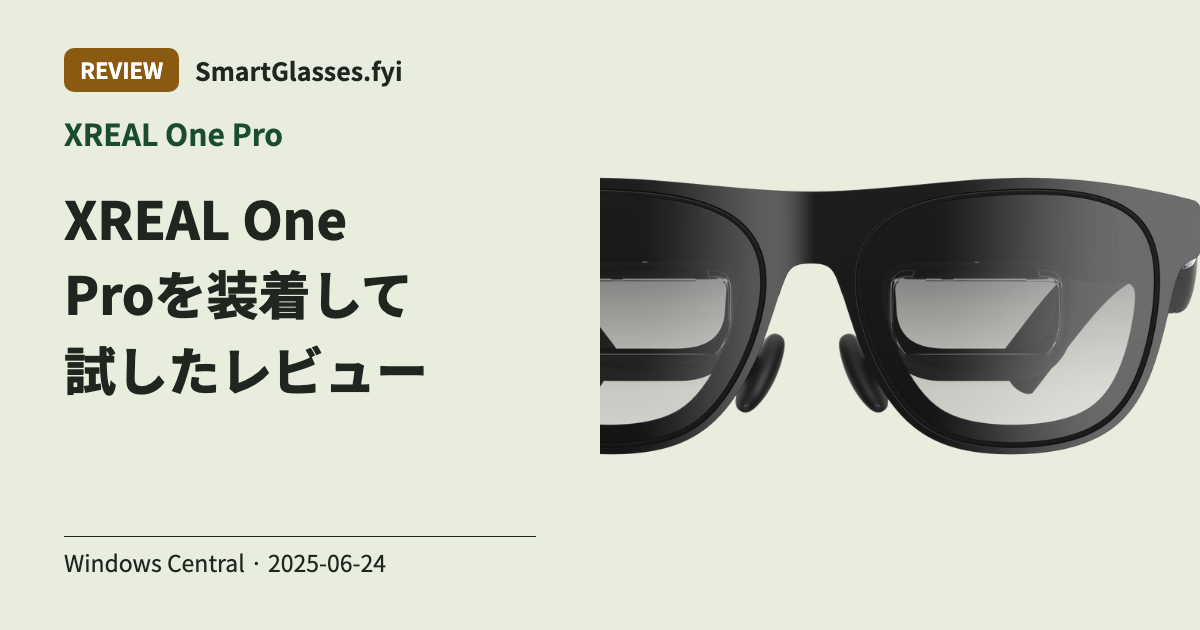
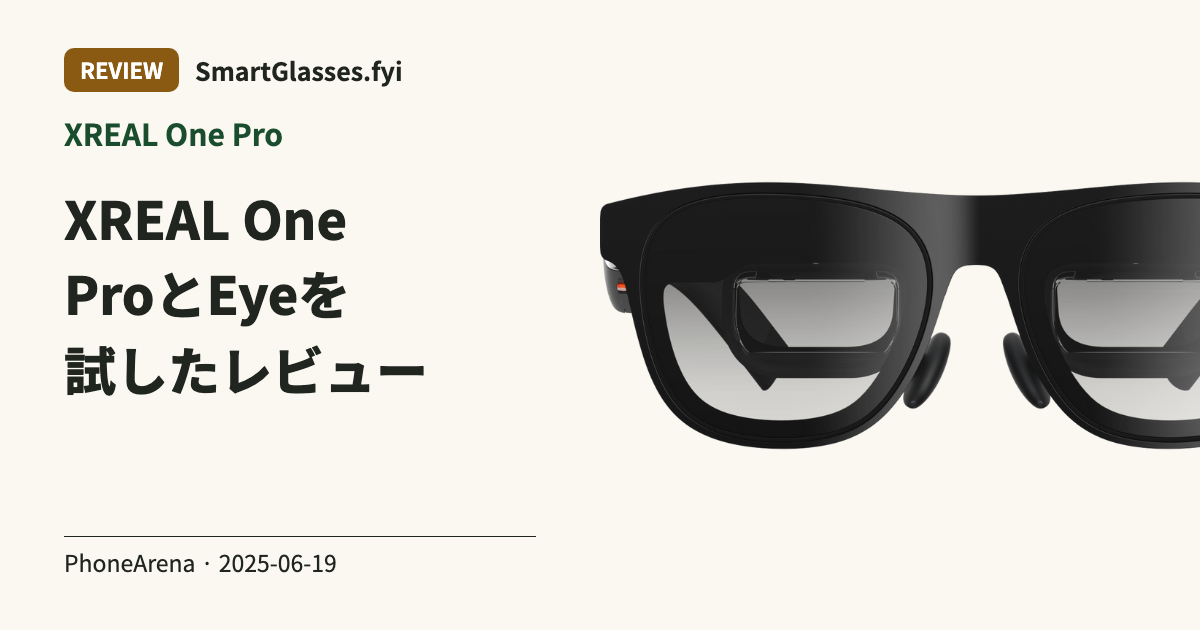
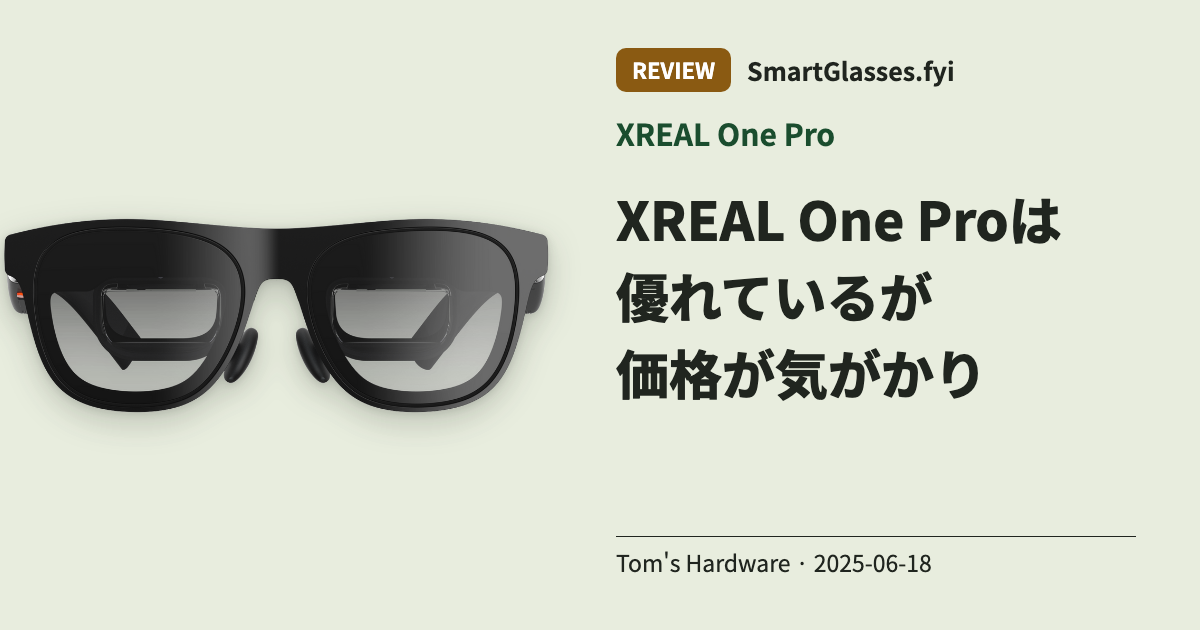
Tom’s Guide compared the older One Pro with VITURE Beast earlier in the year and now repeats the matchup with the updated Xreal One Pro Plus, lining up display, controls and companion-app needs. The article has affiliate links.

EssilorLuxottica executives in Colombia describe plans for new smart-glasses models, optical retail and events such as festivals ahead of Ray-Ban’s 90th anniversary in 2027.

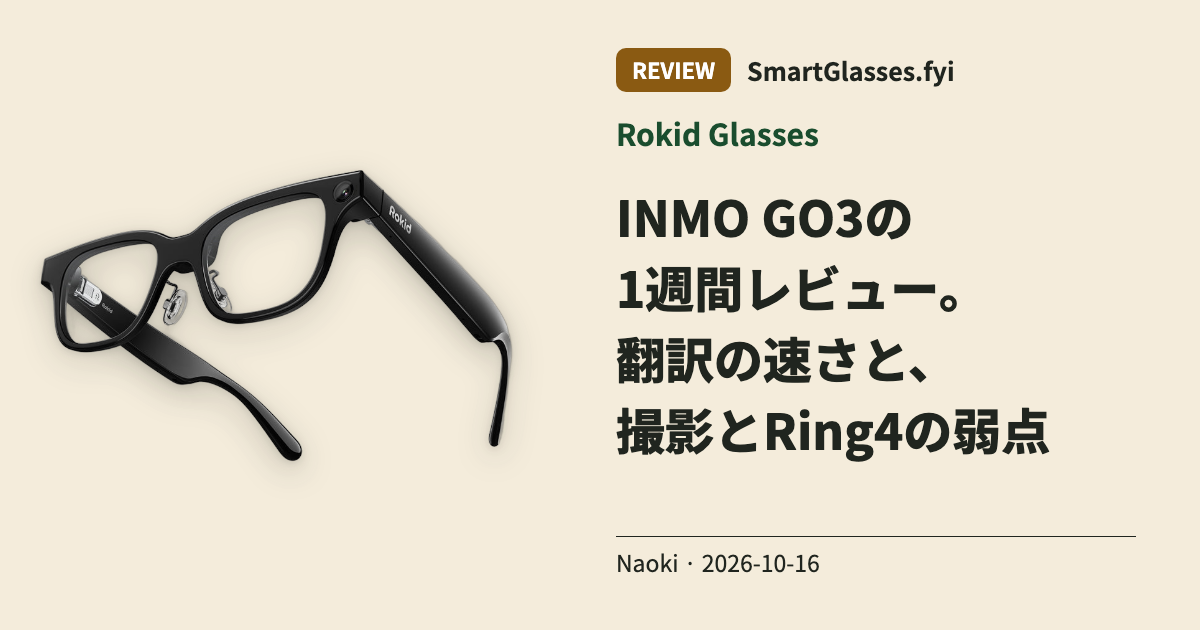
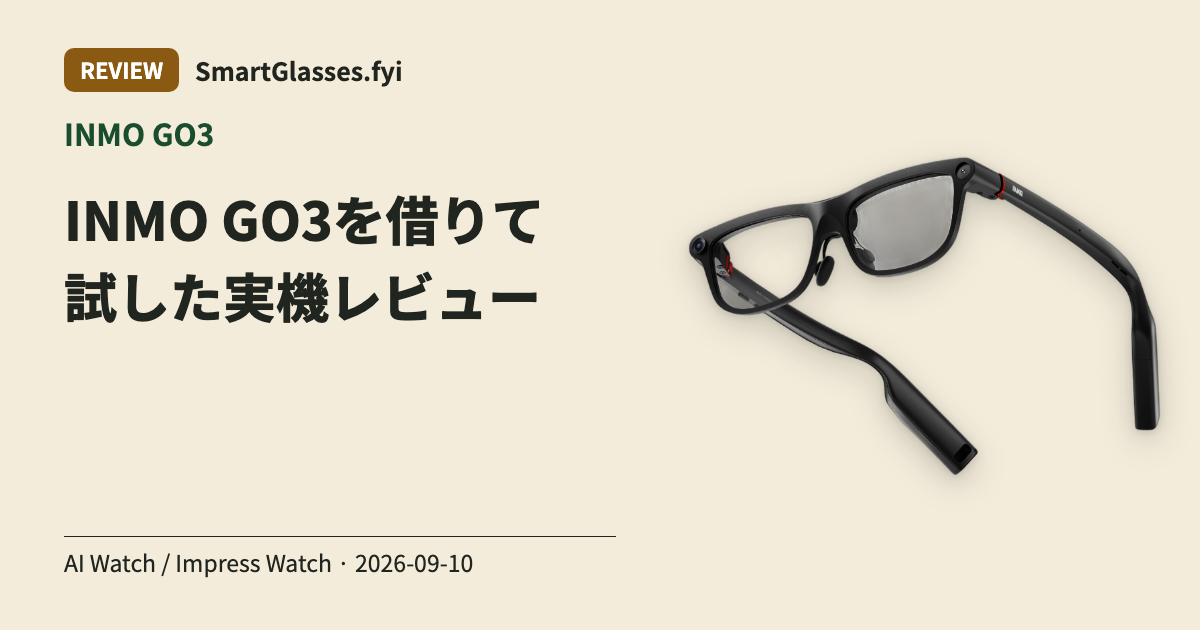
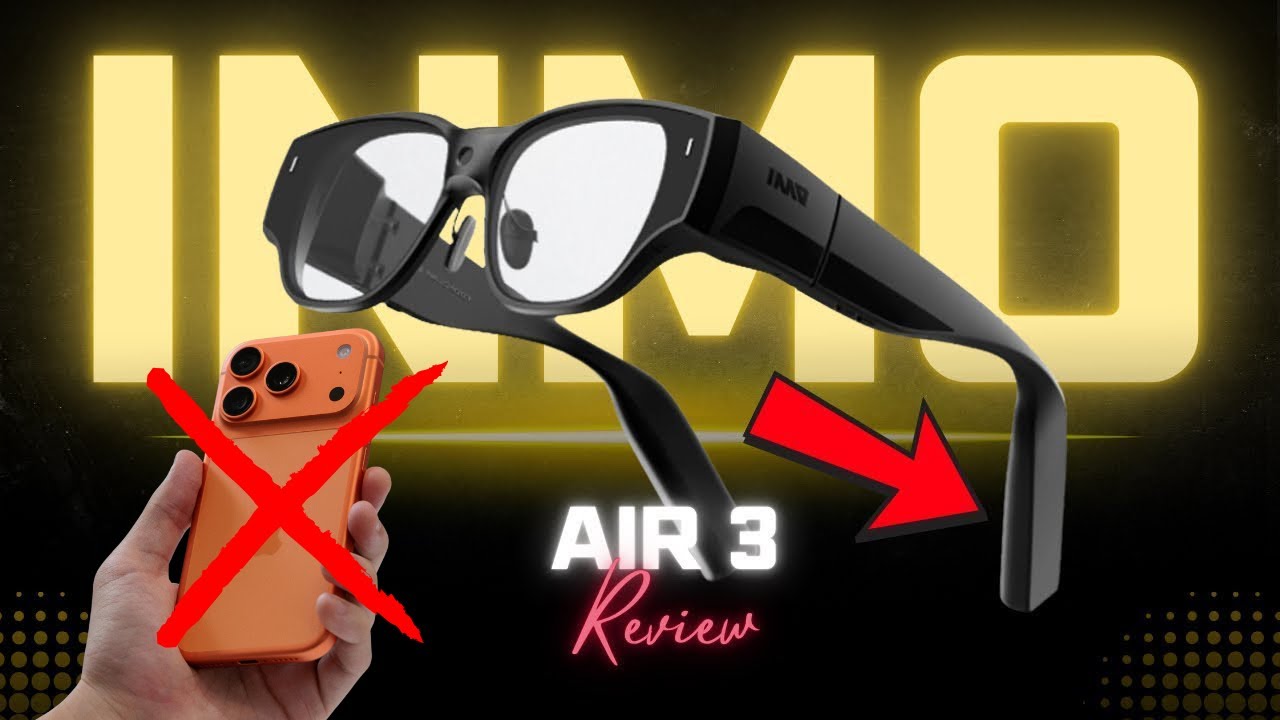
Swappable batteries and fast translation are appealing. What about sore ears, slow shooting and Ring4 controls? A week with INMO GO3, illustrated with photos and comparisons to help you decide.

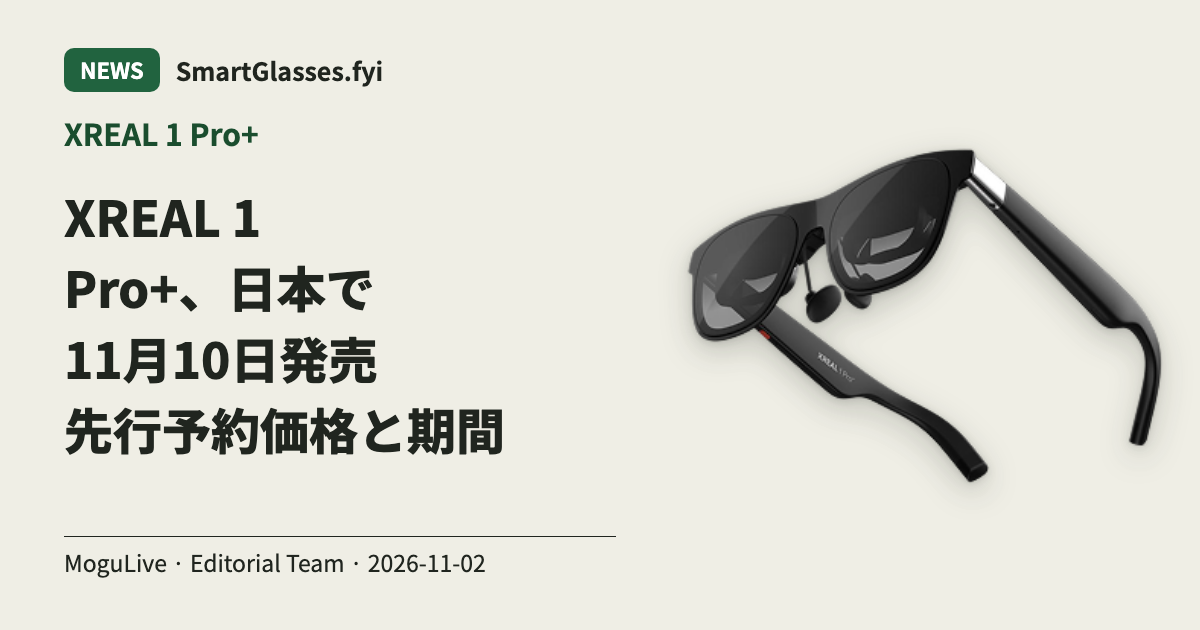
MoguLive reports the XREAL 1 Pro+ announcement and the product’s status on XREAL’s Japanese official store. At announcement, Japanese shipping timing and radio certification status had not been disclosed.

TrendForce projects AR-glasses shipments will roughly double to 1.31 million units in 2026. The release also gives its estimates on Meta, Chinese brands and display-engine trends.

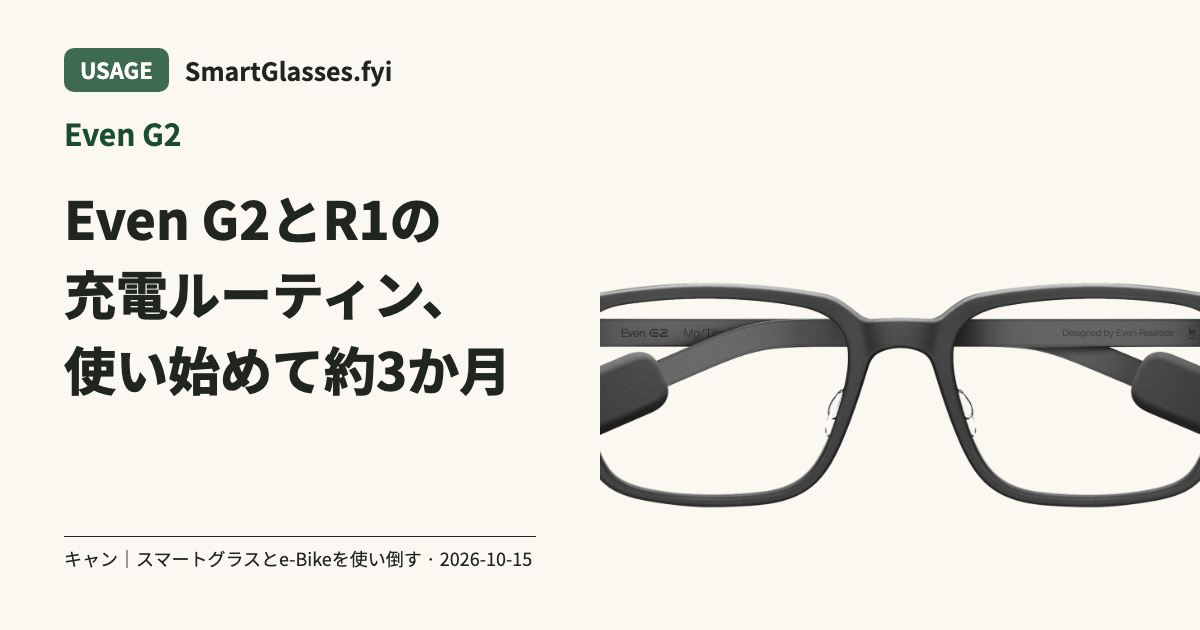
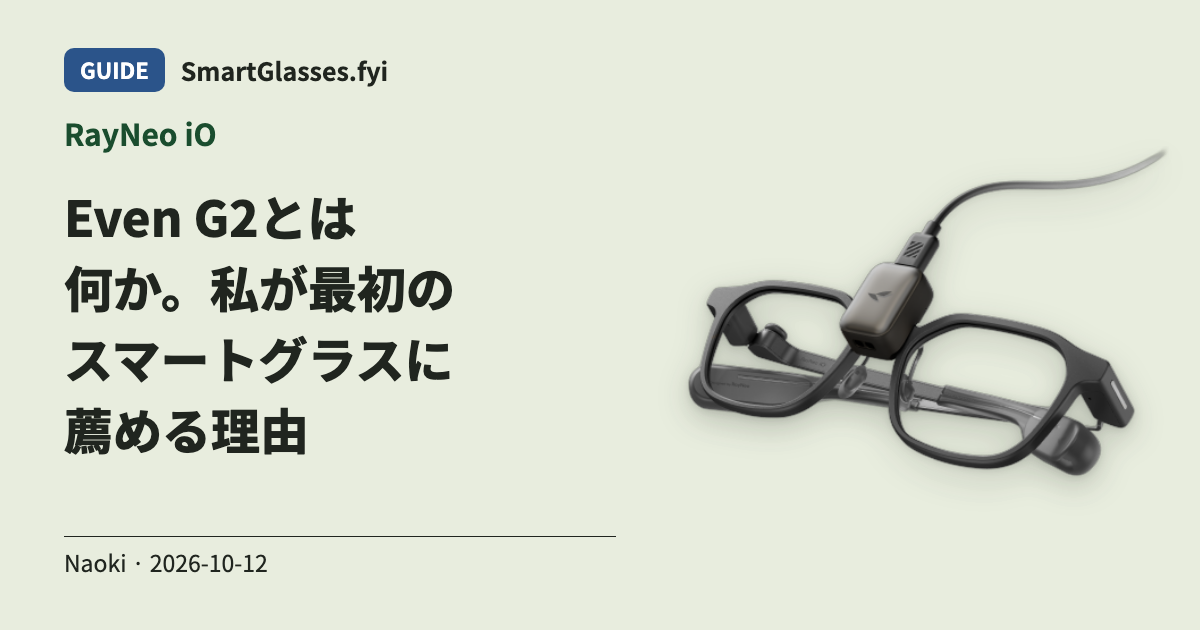
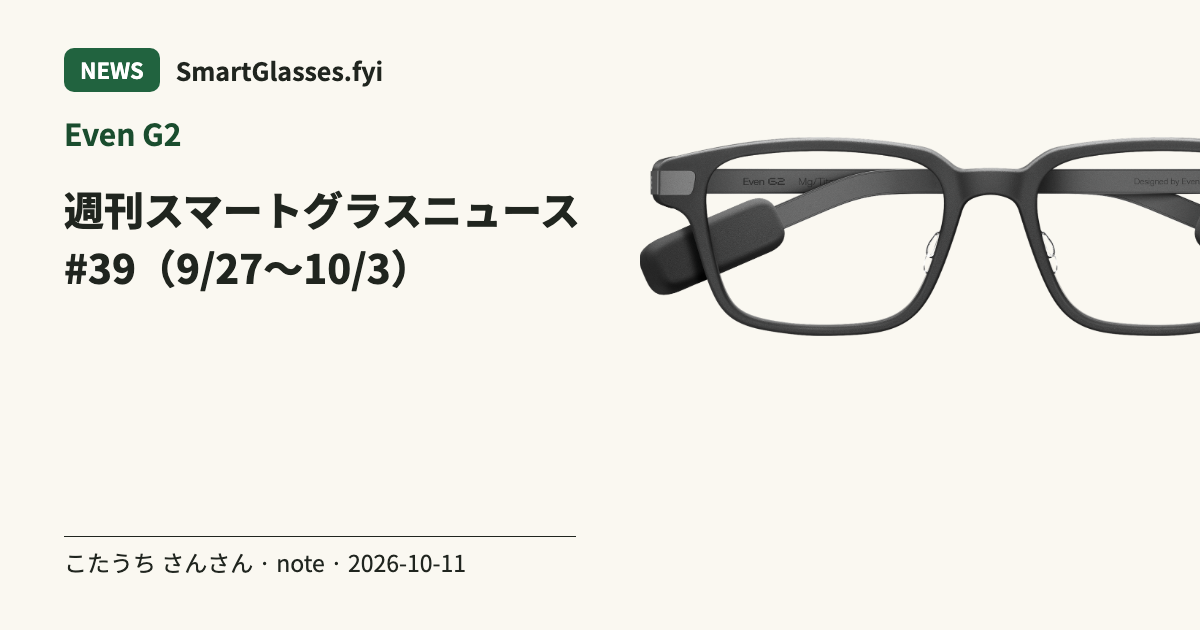
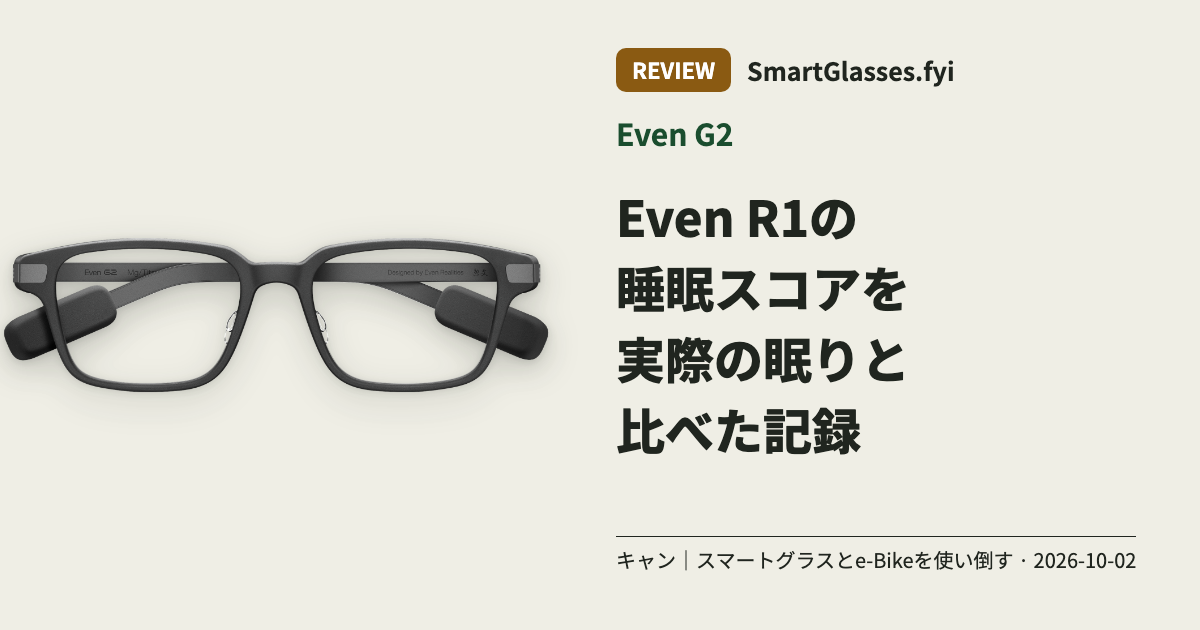
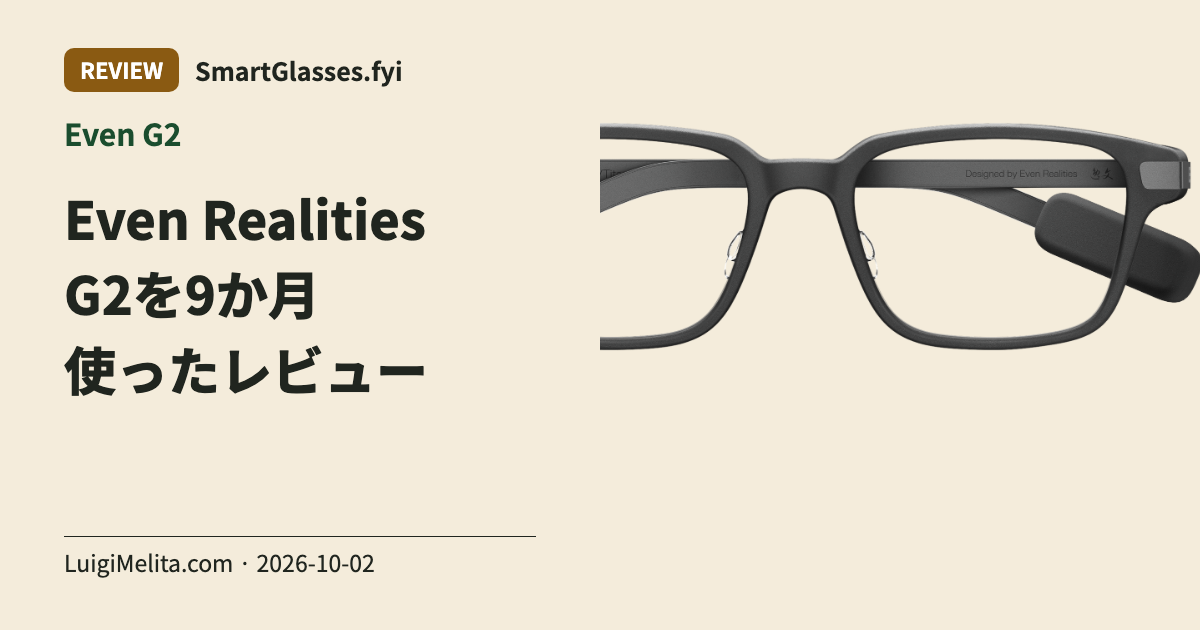
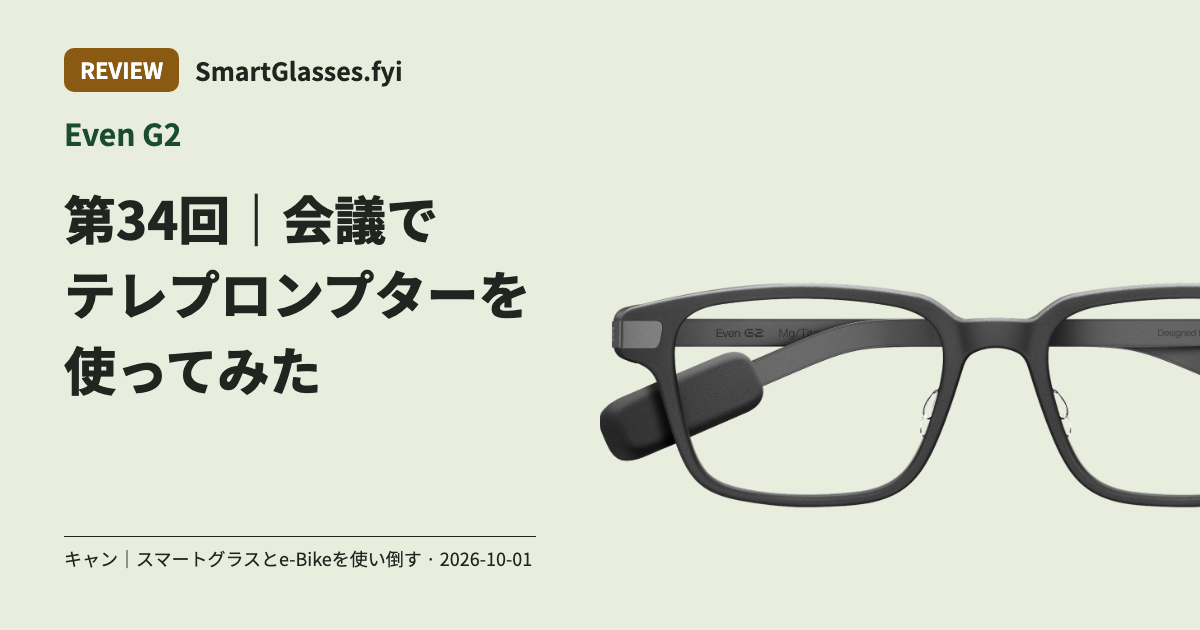
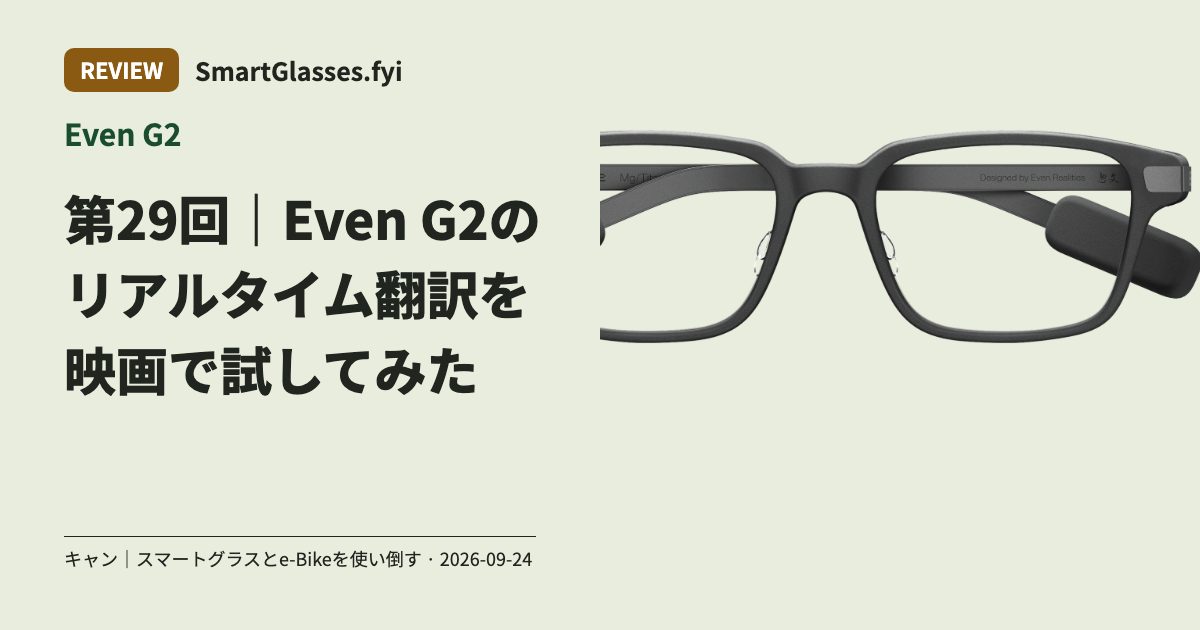
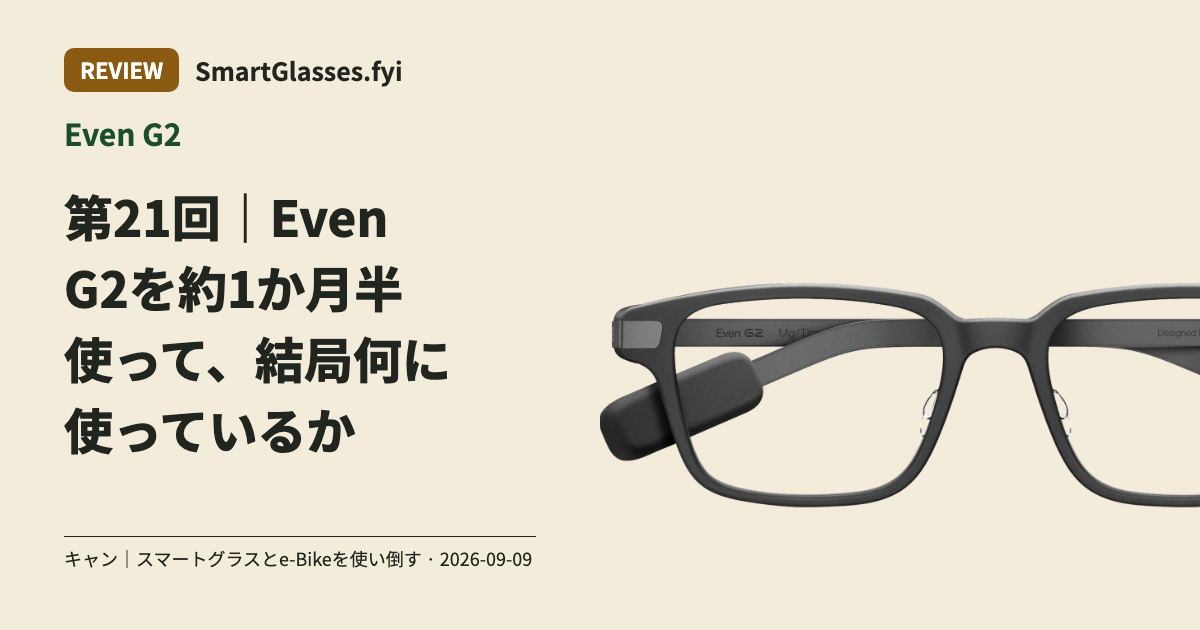
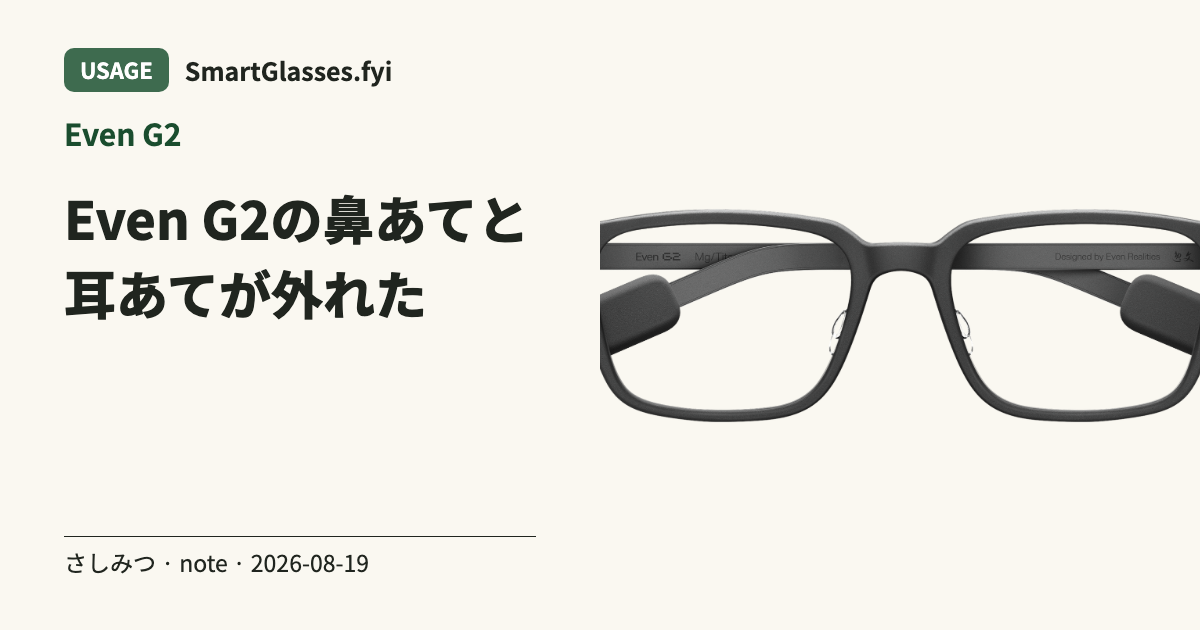
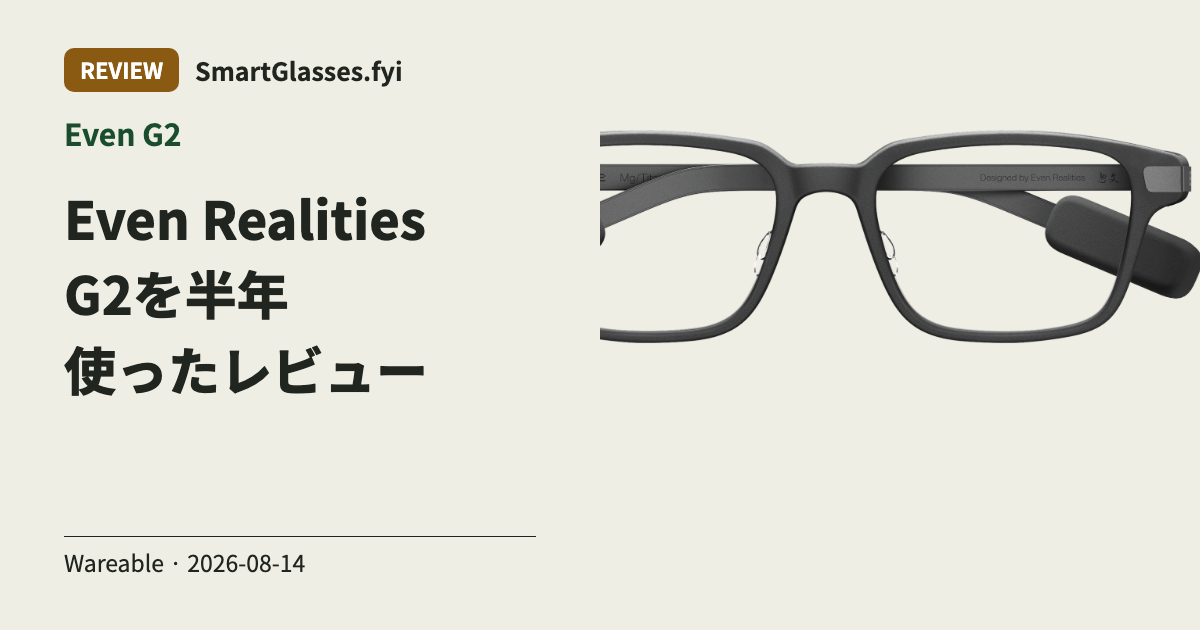
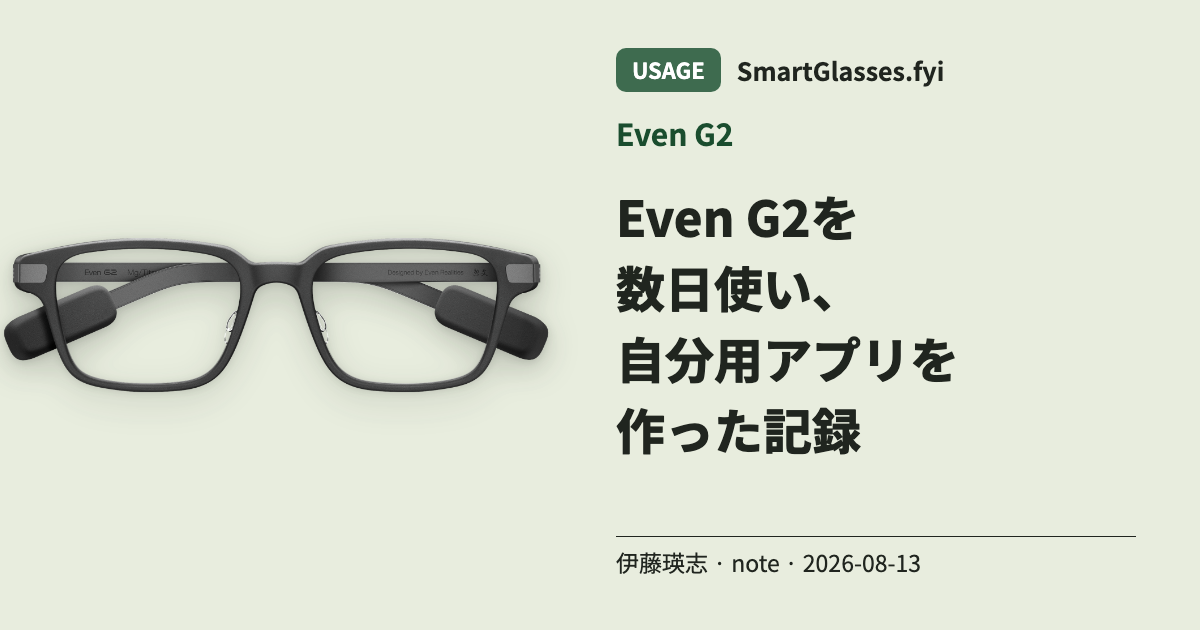
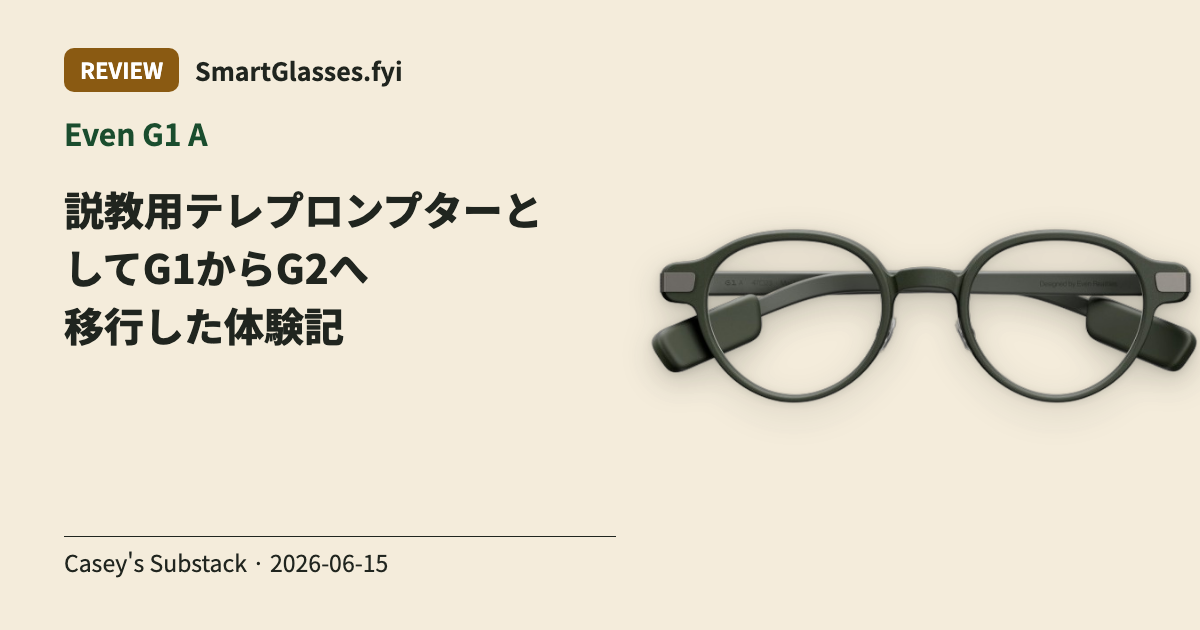
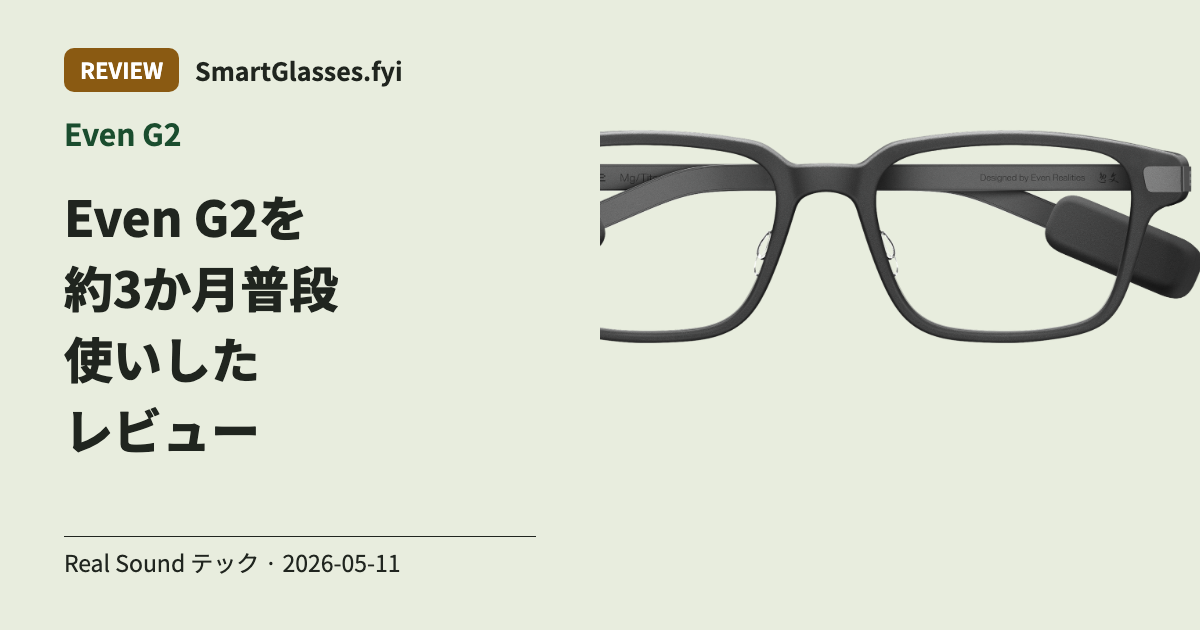
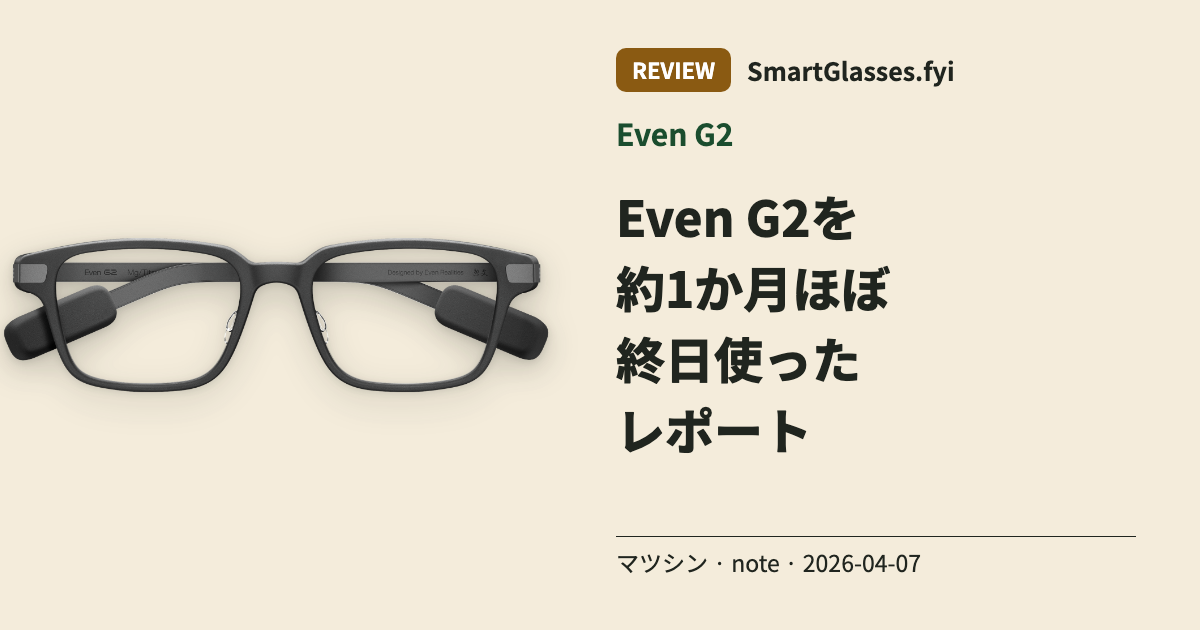
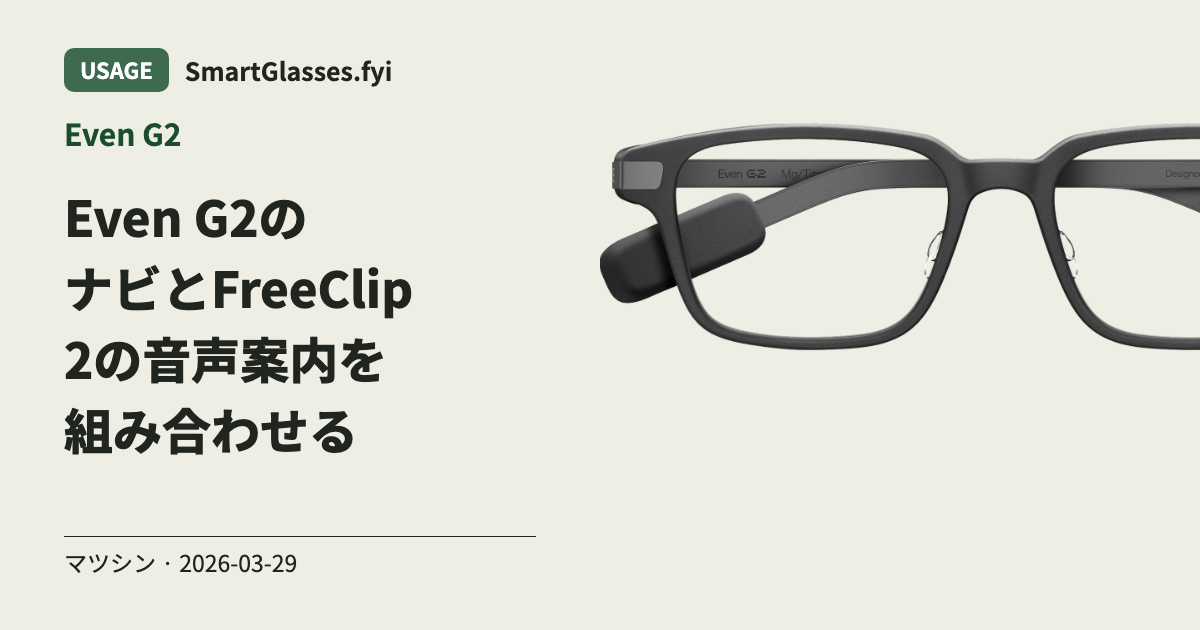
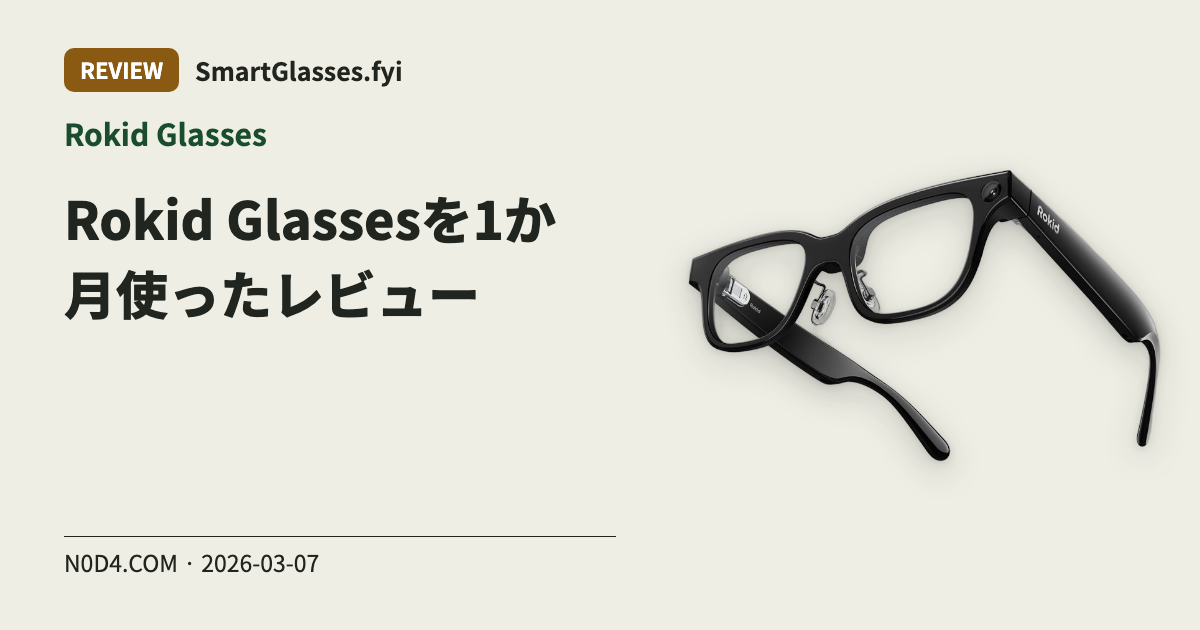
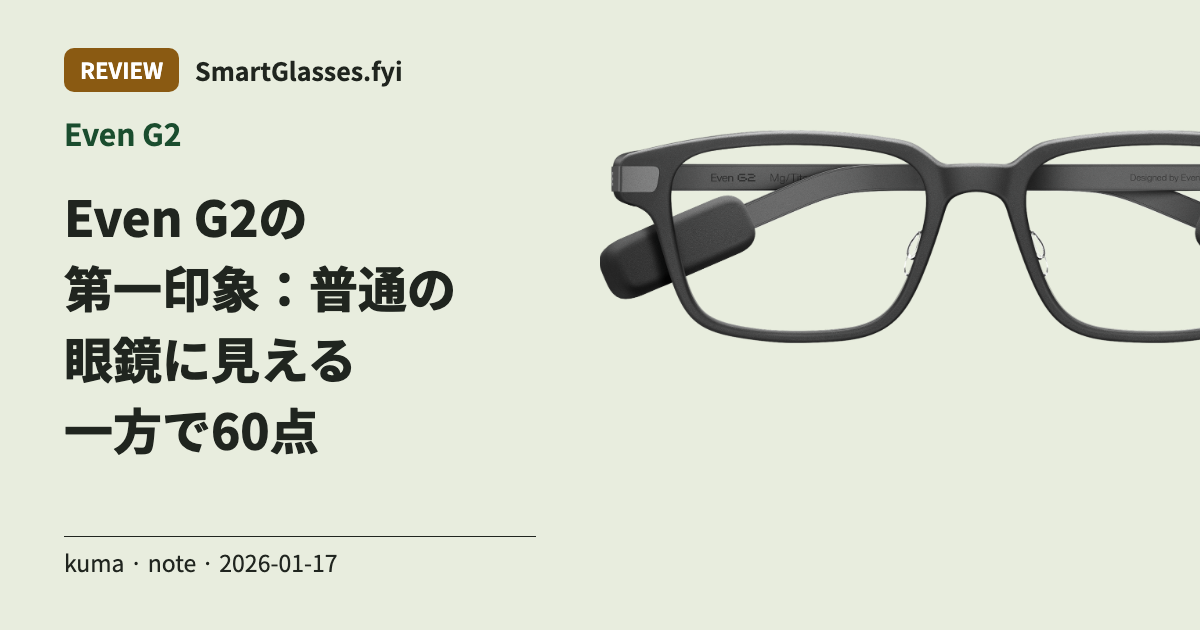
About three months into owning Even G2, the writer returns the glasses to their case every night and charges the R1 ring during a bath every other day, describing it as a personal routine.

Meta, EssilorLuxottica and the Pinacoteca di Brera launched an eight-artwork route where visitors hear audio descriptions from the Grande Brera app through AI glasses, with artwork recognition and Be My Eyes support.

Northwestern University researchers built GlassTENG, a prototype that uses triboelectric sensors in the frame to track pulse and facial movement. The paper tests facial-motion classification and pulse estimation on 20 people.

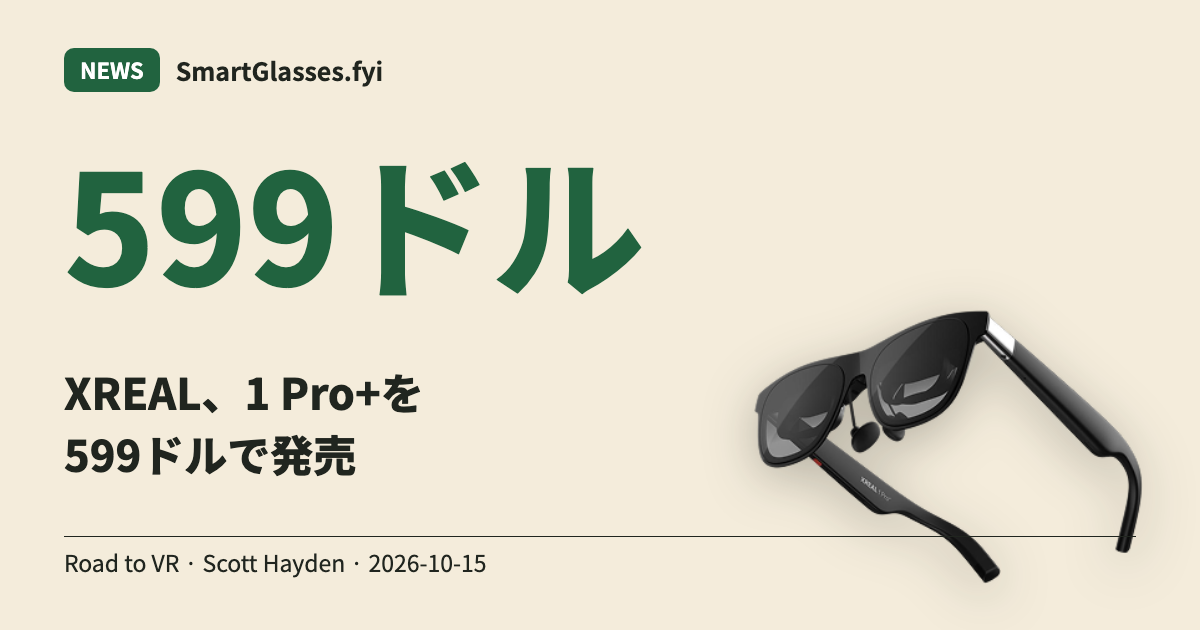
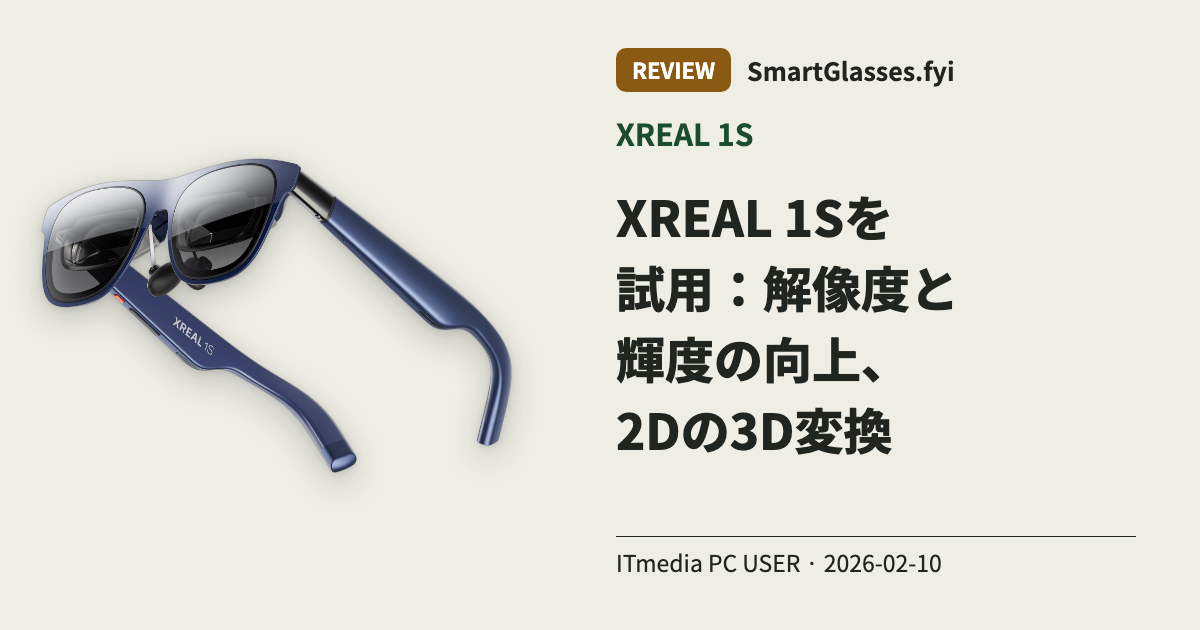
XREAL announced the 1 Pro+, display glasses built on the One Pro, and put them on sale at $599. They offer 1200 nits, 120Hz and a 57° field of view.

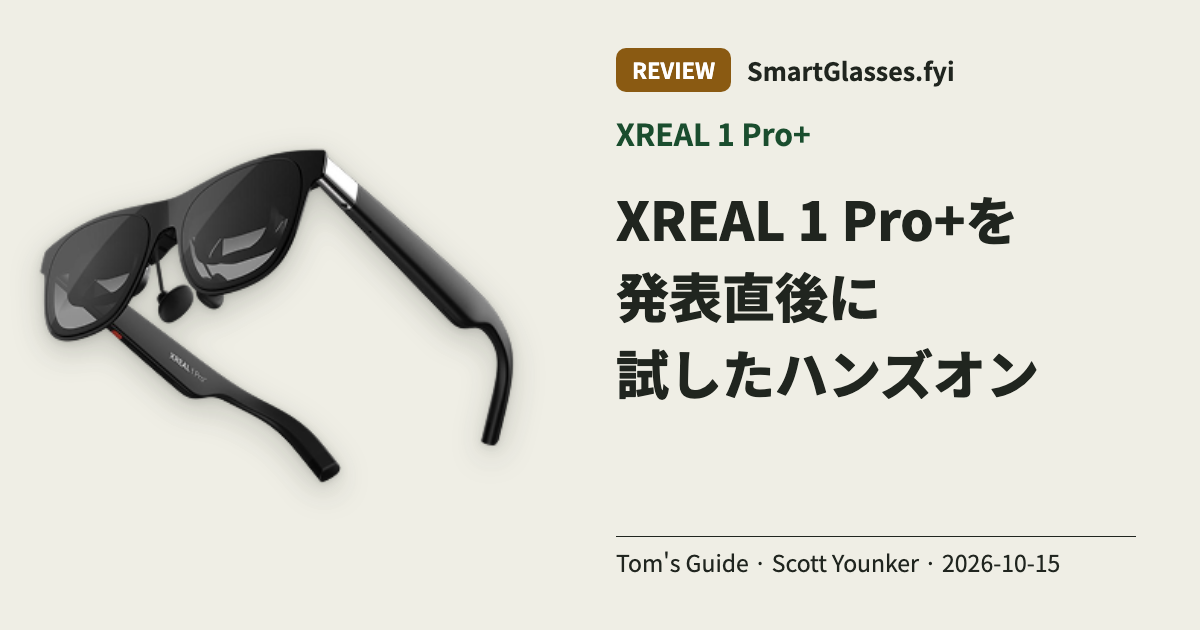
Scott Younker of Tom’s Guide wears the XREAL 1 Pro+, trying its display modes, 2D-to-3D conversion and nose pads. The article contains affiliate links.

XREAL announced on its official Reddit that REAL 3D runs at 60fps on the 1 Pro+, and a November firmware update will bring it to One, One Pro and 1S.

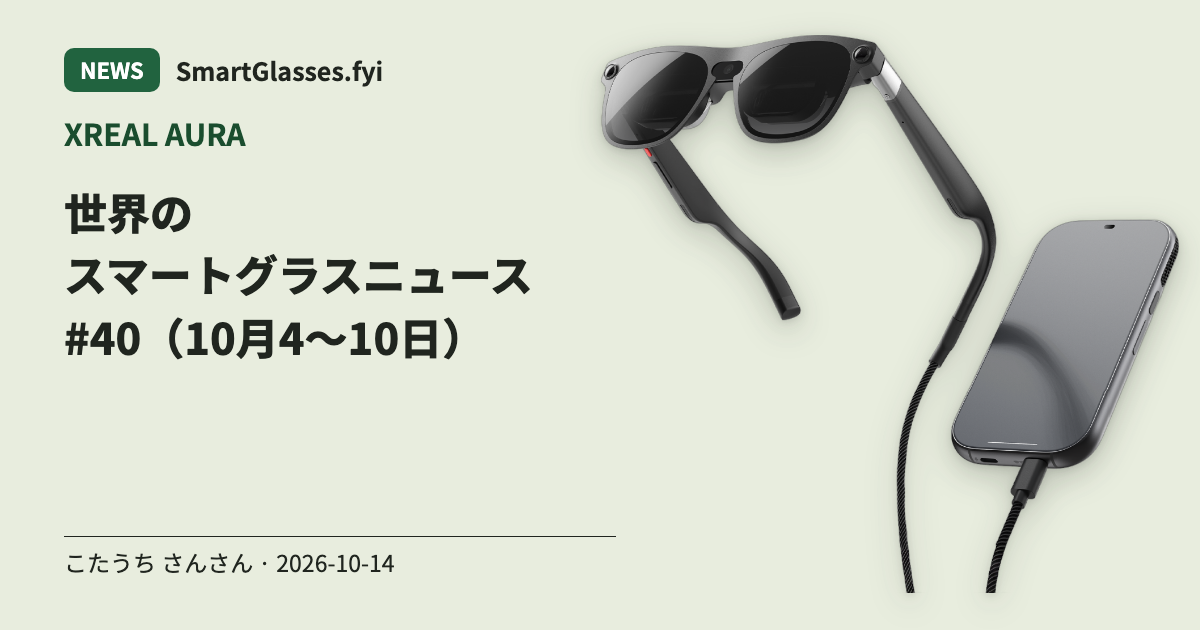
A weekly roundup of announcements, policy, research and new products from October 4–10, 2026, with links to the original reports and related reviews.
No stories match these filters.
16 / 40

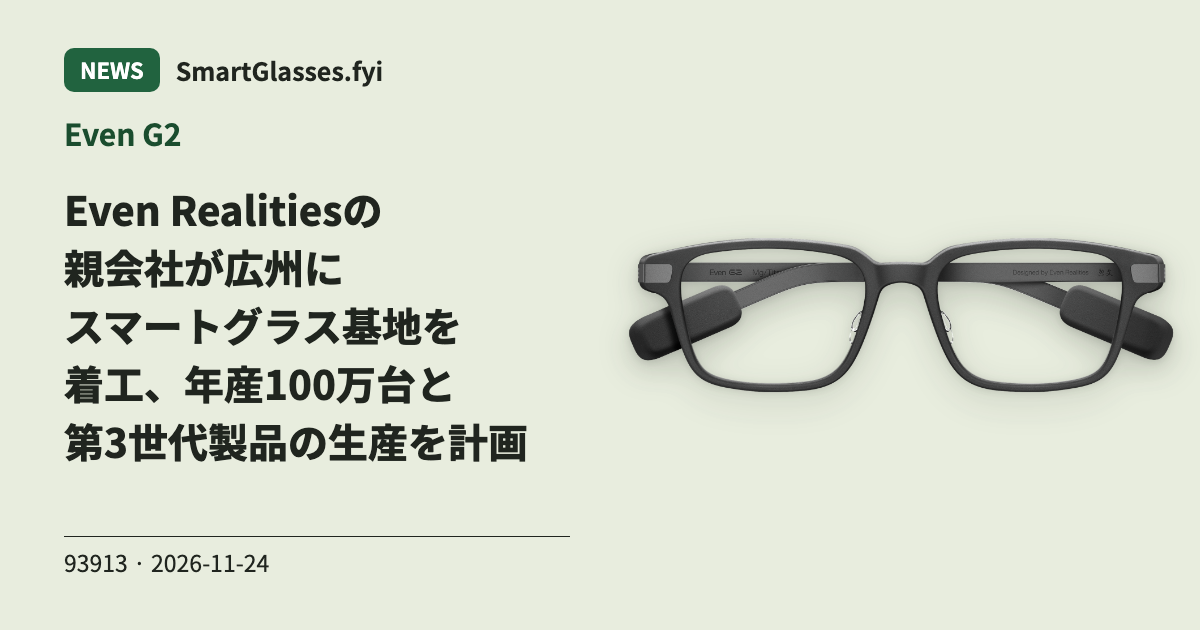
93913 reported that Yiwen Technology, the parent of Even Realities, has broken ground on a smart glasses headquarters base in Guangzhou. The 180 million yuan project is due to start production in July 2027, targeting over a million units a year including a third-generation model.

At Argentina's Ministry of Health residency selection exam, footage said to show exam questions being filmed with camera smart glasses spread, and 141 candidates whose scores were inconsistent sat a retest. All 117 who sat it failed to reproduce their original scores, and the national unified exam was then abolished in favour of province level exams.

Japan's Common Test guidance for the Reiwa 9 academic year now treats a connected device left outside the bag as cheating in itself. South Korea relies on dedicated identification officers at venues and sanctions that include revoking passes and a five year ban. In Argentina, a retest ended with the national unified exam abolished. This column compares how each country writes the ban, what happens after a detection, and how supervision is organized.

On November 19, 2026, the Dutch Data Protection Authority (AP) examined six AI camera glasses models on sale and advised consumers not to buy them for general use for now. It found models that kept filming when the recording lamp was covered, a model that gave wrong advice in an emergency scenario, and models a nearby person could connect to. The model names have not been published.

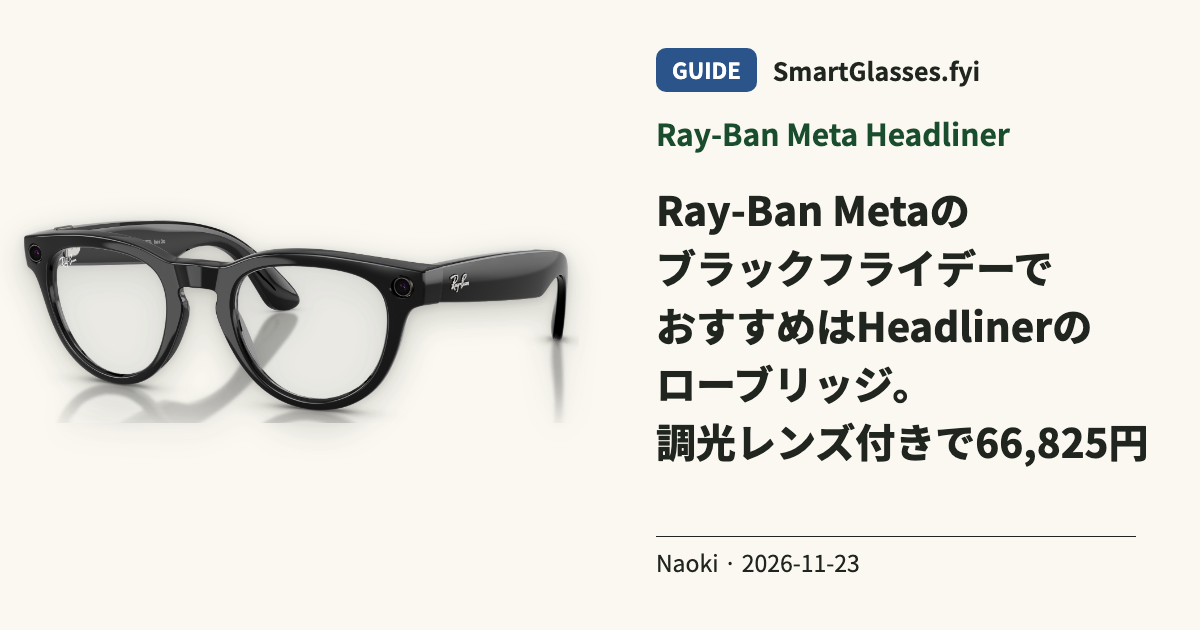
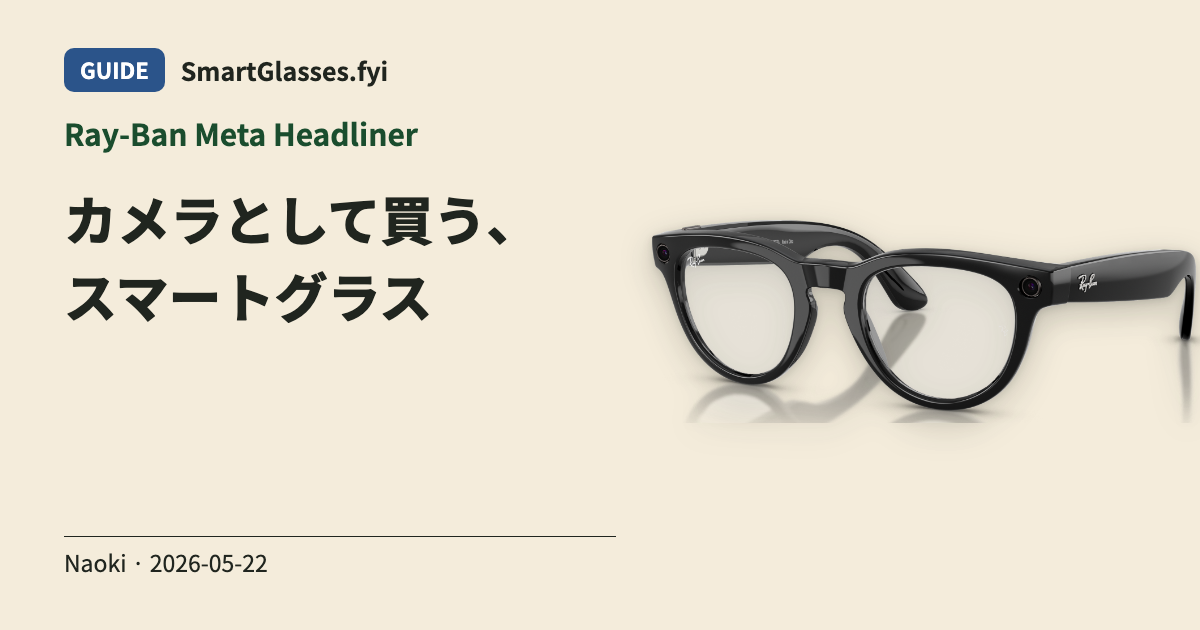
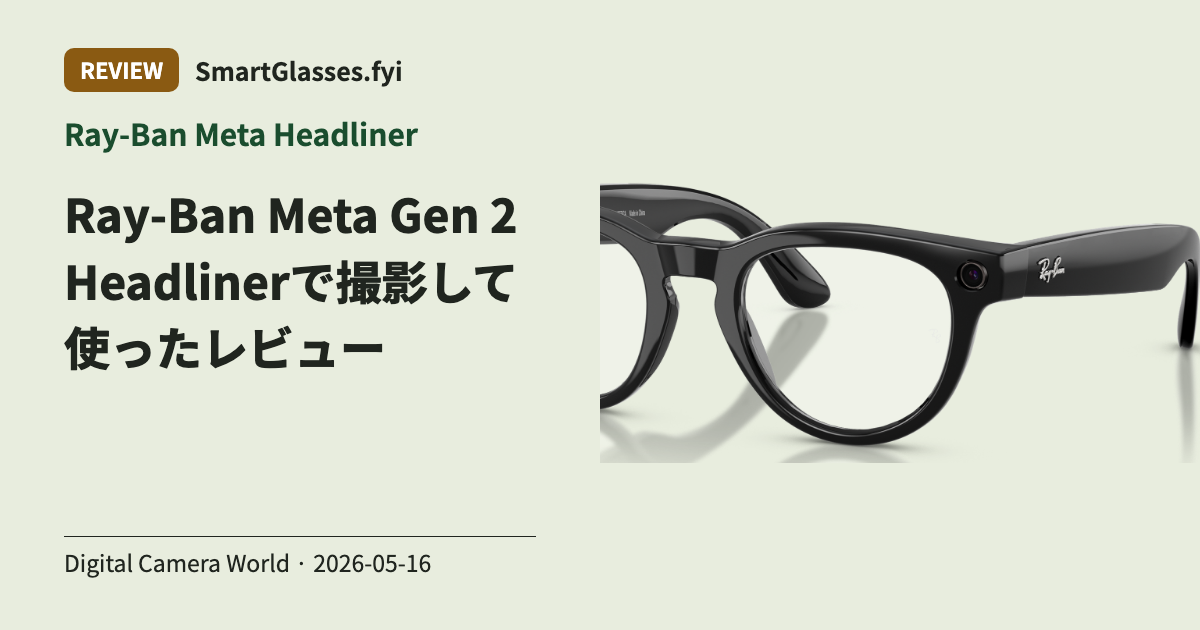
The Meta official store holiday sale runs until November 30. With the Ray-Ban Meta Gen 2 at 25% off, this guide makes the case for the Headliner, the one discounted model with a low bridge fit for lower nose bridges, and covers lens choices, the gap with Gen 3, and what to watch for with aftermarket nose pads.

The countermeasures against smart glasses, rearranged by the kind of measure. The wording of bans, identification capacity, detection technology, and exclusion from the market. Countermeasures have added a layer with each incident, and the thick layer differs by country.

93913 reported that foreign tourists in Shenzhen are increasingly buying AI glasses as souvenirs, with stores at the Henggang glasses market seeing foreign foot traffic rise 20 to 30 percent during the APEC period, helped by instant departure tax refunds.

A Korea Herald editorial argued that after the turmoil over anti-cheating measures at the Suneung and the education minister resignation, Korea needs to redesign its assessment system rather than rely on hasty crackdowns, noting smart glasses accounted for one of 111 violations.

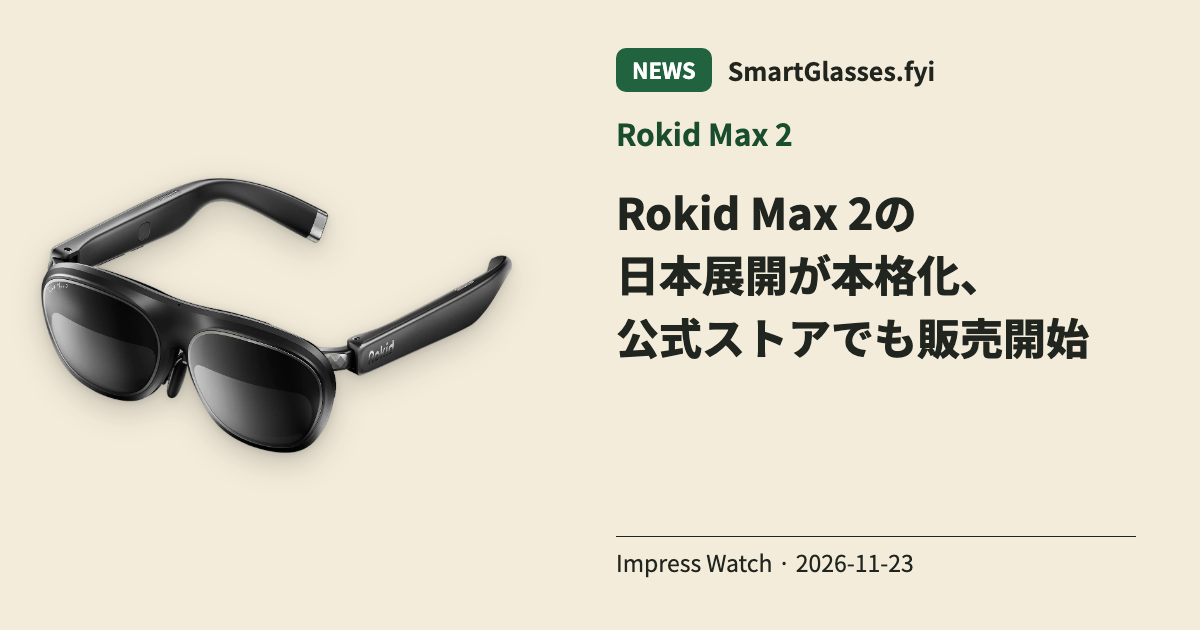
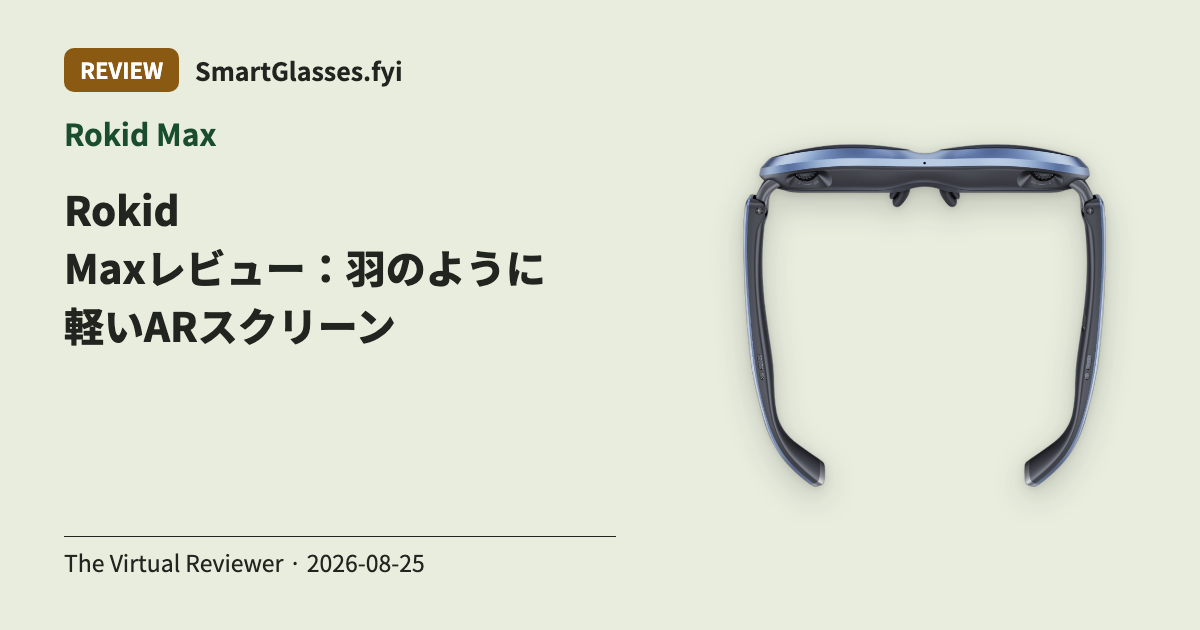
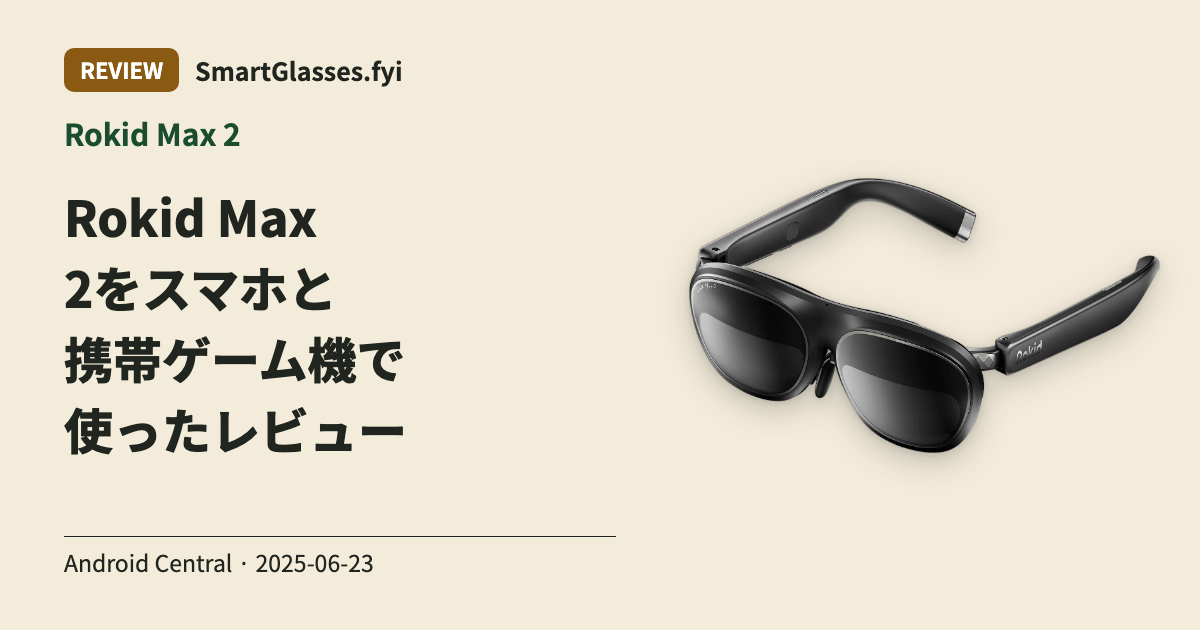
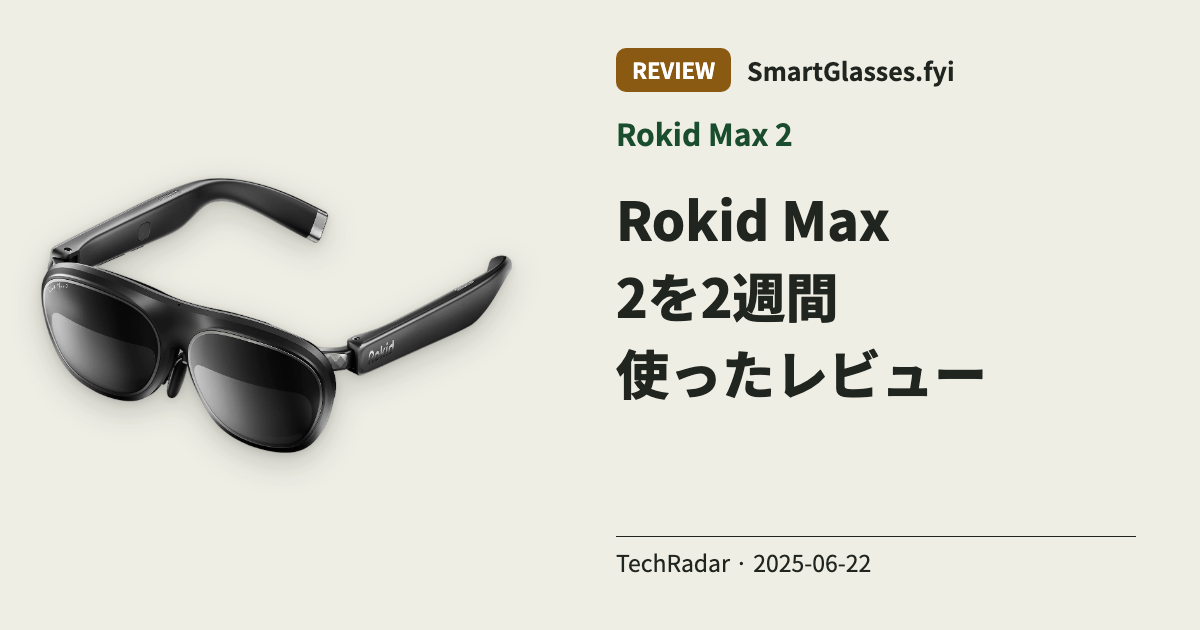
Impress Watch reported that Rokid has begun a full-scale rollout of the Rokid Max 2 AR glasses in Japan, adding sales through its official online store. The price is 69,800 yen, with a 75 g body showing a 215-inch-equivalent virtual screen.

A student-led group in South Korea gathered 2,964 signatures across two petition drives following confusion over AI anti-cheating steps at the CSAT. It asks education authorities to spell out appeal procedures and criteria for invalidating exam scores.

South Korea's HRDK, which runs 528 national qualification exams, resumed collecting examinees' phones on Nov. 21 after six years and doubled proctors to two per room. It caught 12 smart-glasses cheating cases this year, and security instructor examinees also wore disposable aprons.

Samsung and Google's Intelligent Eyewear launches Dec. 10 in the US and South Korea, starting at $395 in the US across 30 designs. Weighing about 41g with a 12MP camera and Gemini, it disables capture if the indicator LED is covered.

Lawmakers led by ruling Democratic Party Rep. Lee Ju-hee proposed a bill requiring smart glasses to signal when photos or videos are recorded. It also seeks pre-recording notice guidelines with fines of up to 10 million won for violators.

South Korea's education ministry is completing criminal complaints on Nov. 23 against five examinees who used smart glasses or miniature cameras during the CSAT. Among 111 electronic-device cases, it separates possession from active use to decide on revoking early admissions.

VR Tuoluo reported that South Korean Education Minister Choi Kyo-jin resigned on Nov. 22 and President Lee Jae-myung accepted it. The piece recounts last-minute CSAT rule shifts—from pencil-only limits to button stickers—and 111 suspected electronic-device violations.

Chery's Ruixiang Life ecosystem brand introduced the 49g Lingxi AI smart glasses with 89-language translation and lens navigation. Owners of supported Fulwin models such as the A9 can use voice commands to start A/C, open the trunk and check charging status.

South Korea's National Assembly hosted a policy debate on Nov. 23 on stopping AI-glasses misuse while supporting the industry. A lawmaker wore Rokid glasses to solve a CSAT question on stage, and participants discussed tighter customs screening for overseas direct purchases, NFC-based identification and encrypting exam papers.

Finnish startup IXI is developing glasses that switch between distance and reading prescriptions using liquid-crystal lenses and infrared eye tracking. They have no camera or display, and pricing, launch timing and regulatory approval are still undecided.

The Hankyoreh reported that trades in miniature cameras and other cheating devices continued in anonymous chats until just before the CSAT, with complaints of fraud where devices never arrived. A seller pitched a new method using a camera hidden in clothing and a vibrating device, saying smart glasses were already exposed.

South Korea's Anti-Corruption and Civil Rights Commission will pay 100 million won per tip that leads to detection of CSAT cheating, up to 500 million won in total. Those who confess and report accomplices can receive the full reward with reduced penalties, with reports accepted until Jan. 19.

South Korean police said they are investigating four cheating cases from the 2027 CSAT involving smart glasses, miniature cameras and earphones. A dedicated task force is handling 33 exam-cheating cases in total, five of them involving cheating equipment.

The final tally for the CSAT was 111 cases of electronic device misconduct, and 54 of them were found through disaster alerts sent during the exam. Around the same time, South Korea lined up a budget proposal for 7,200 radio wave detectors and specialist personnel, a detector development race, a secondhand trading ban, and a presidential order to overhaul the exam system with rewards for reports. This article organizes the stage that followed bans and visual checks: equipment, budgets, and institutions.

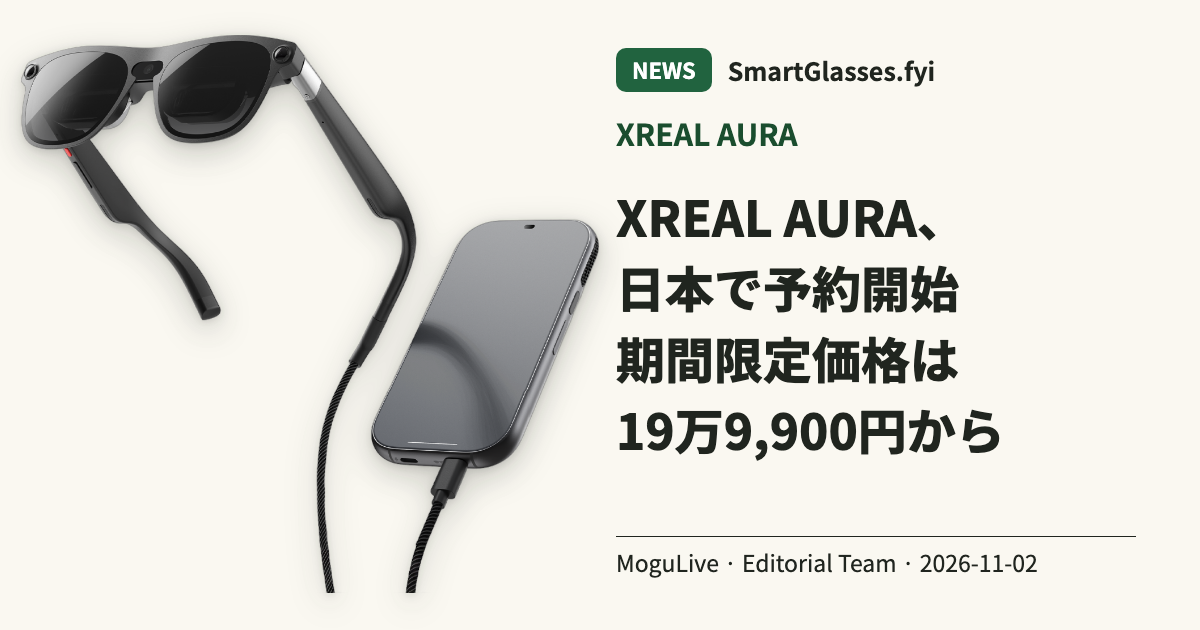
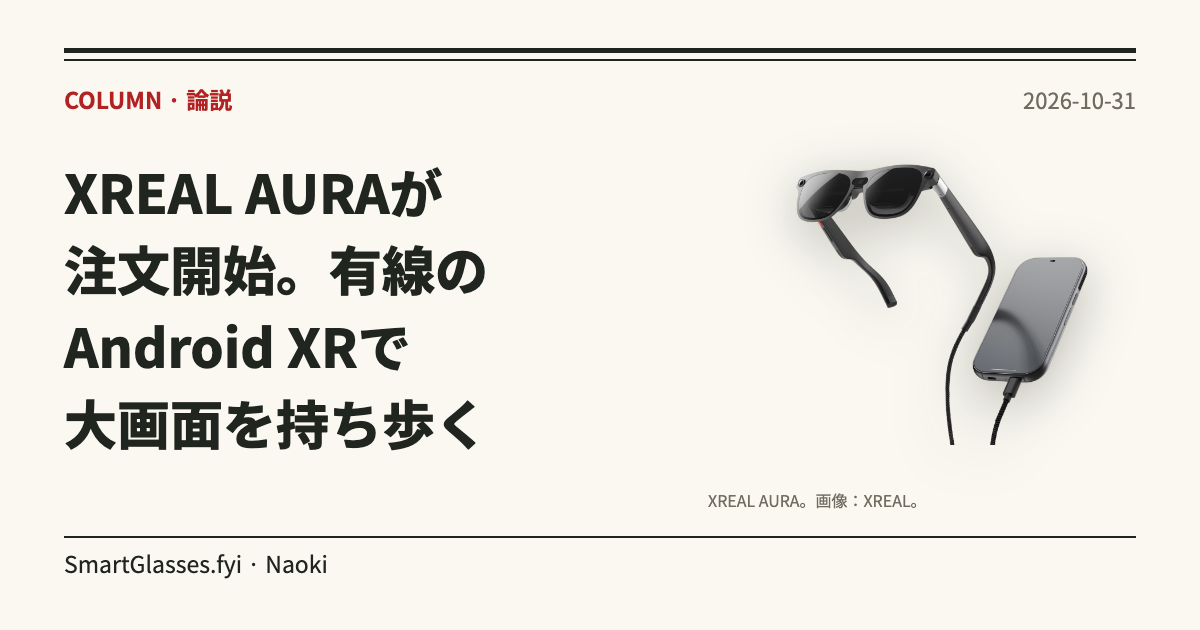
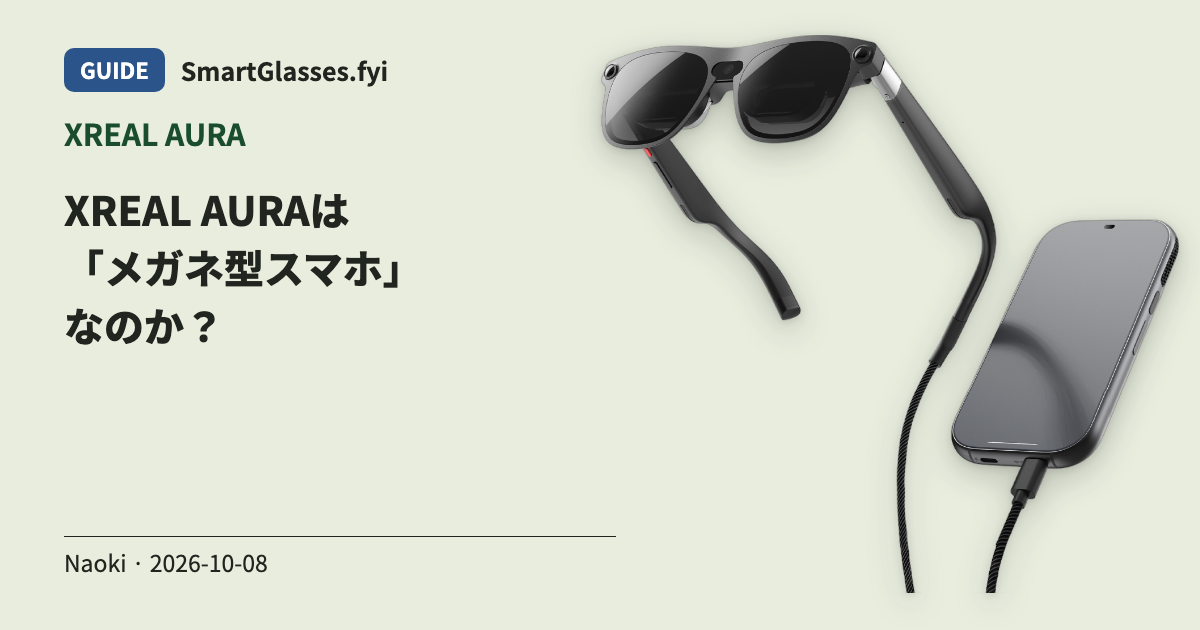
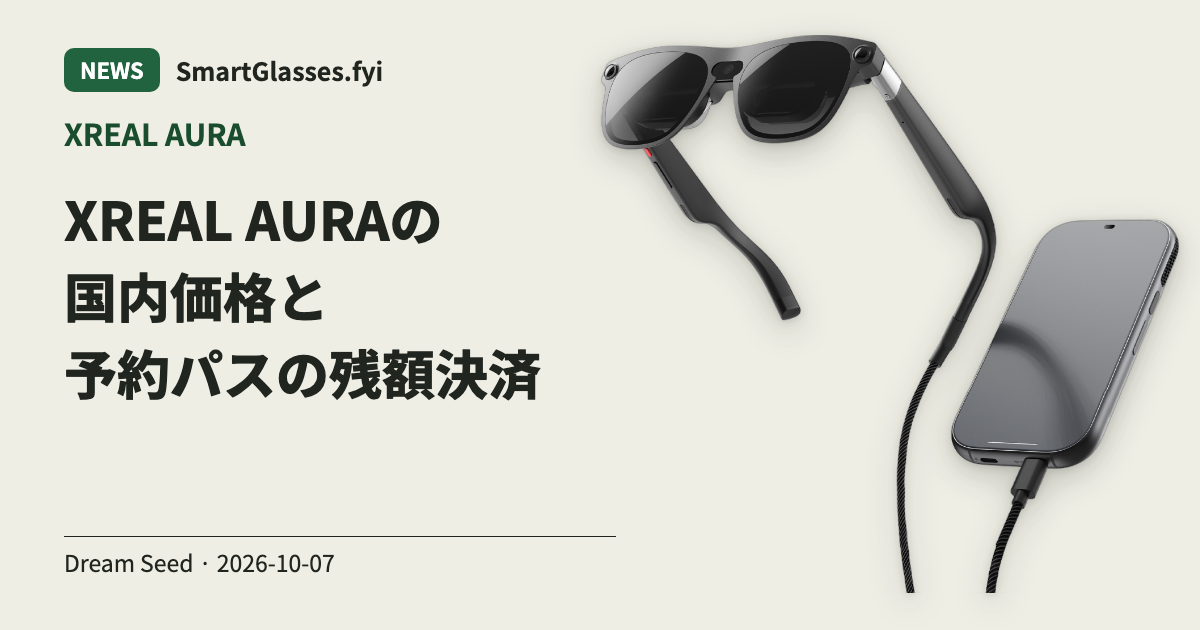
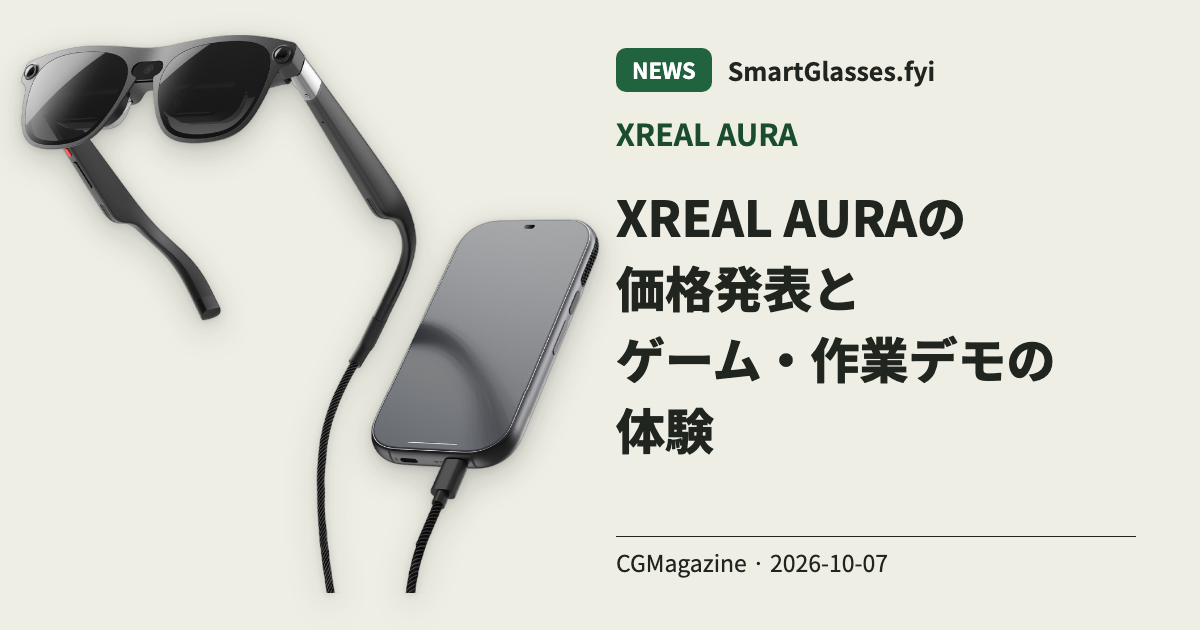
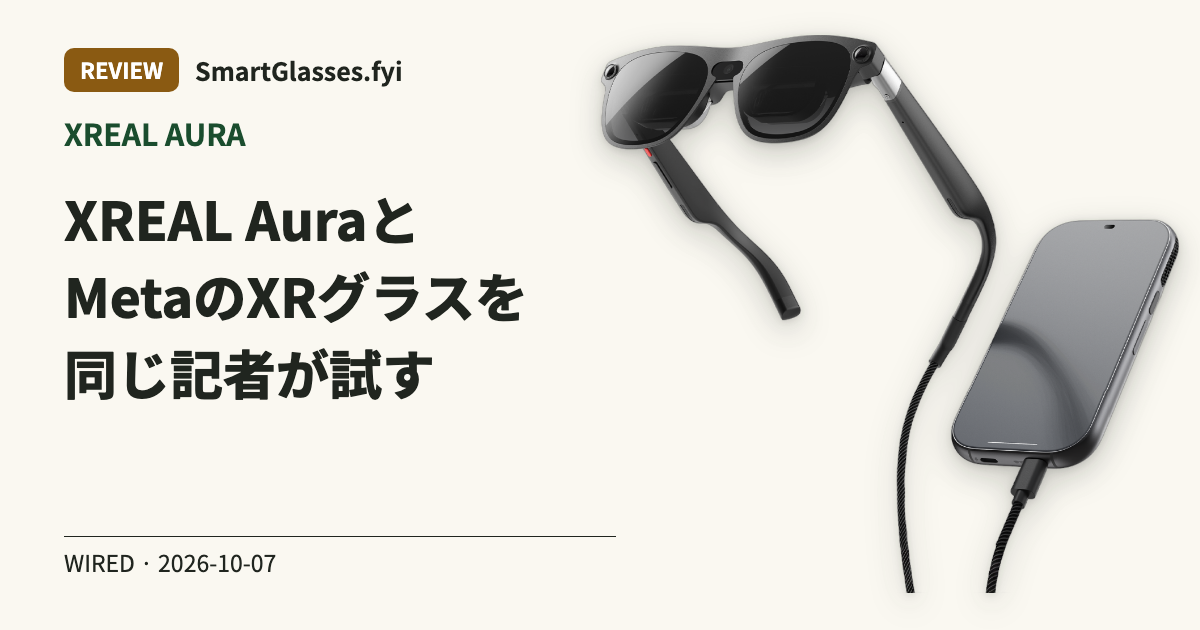
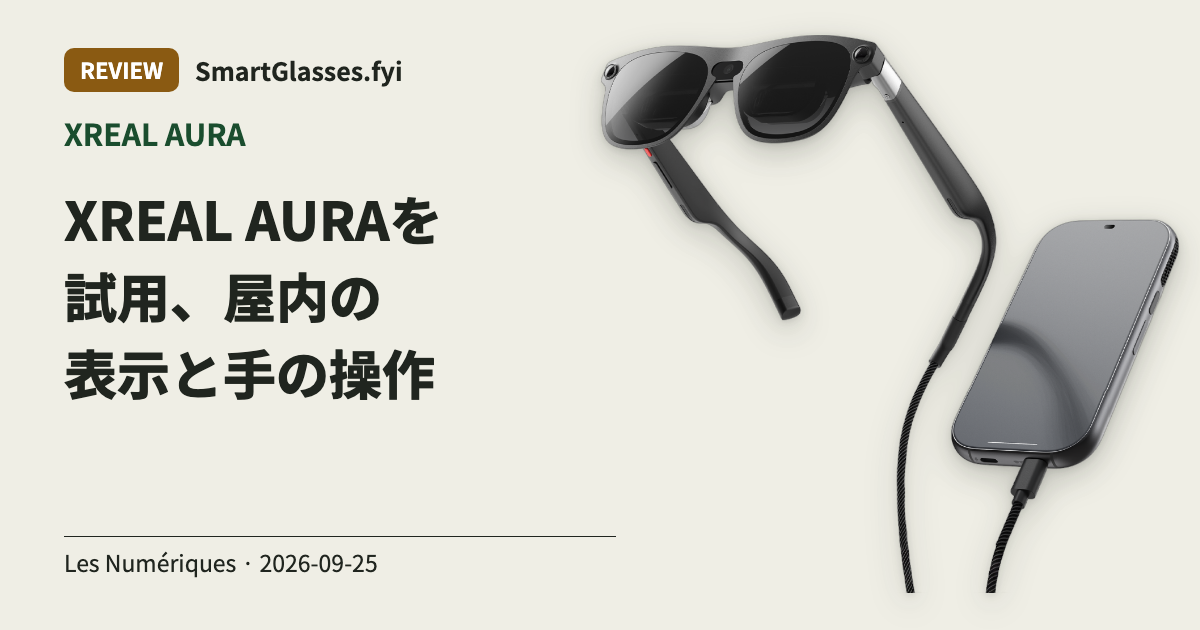
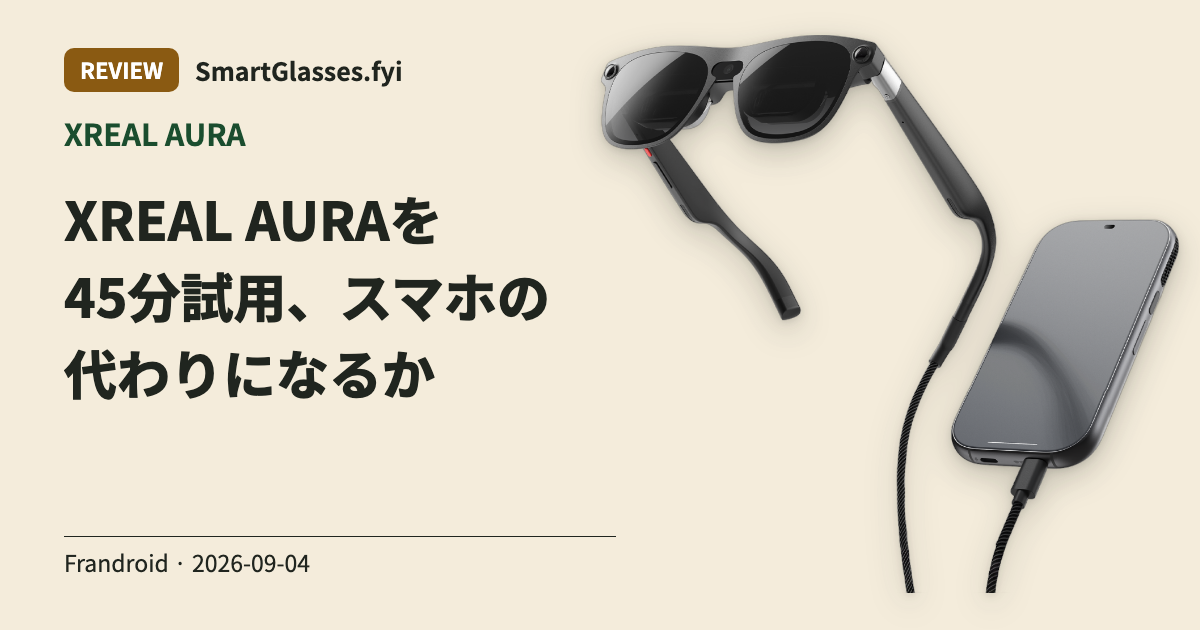
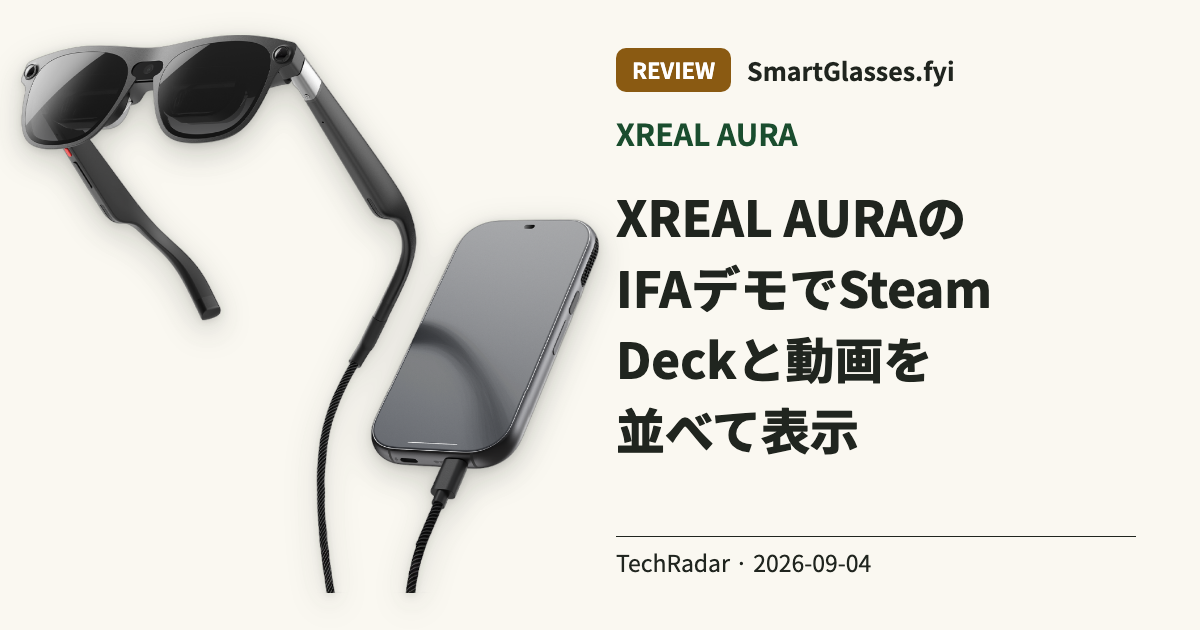
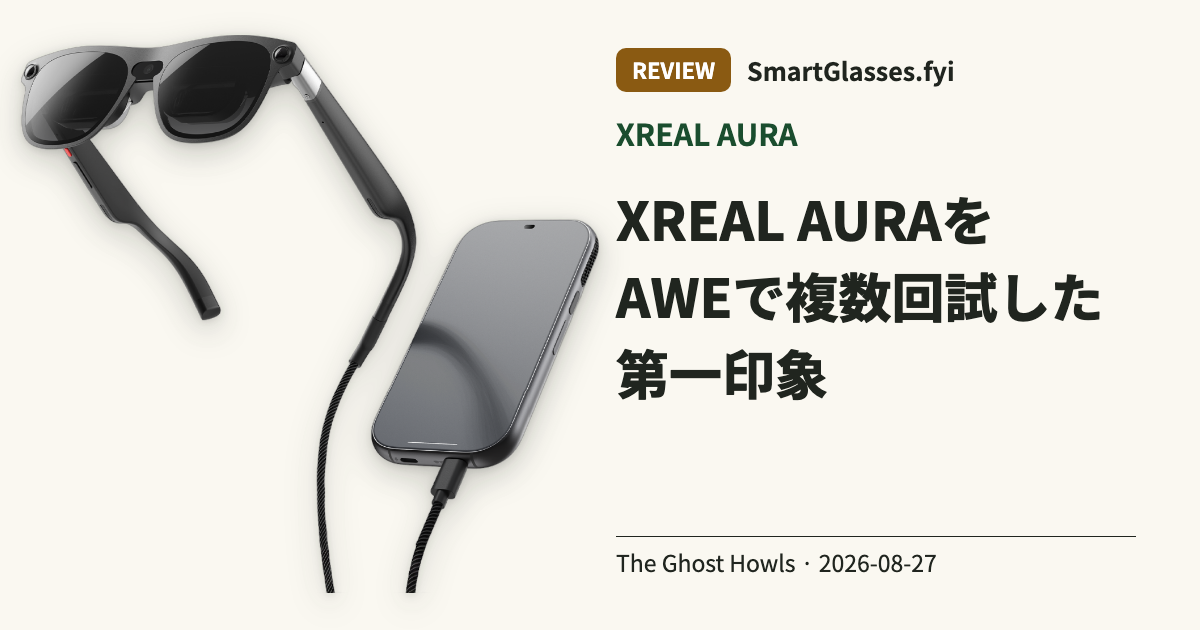
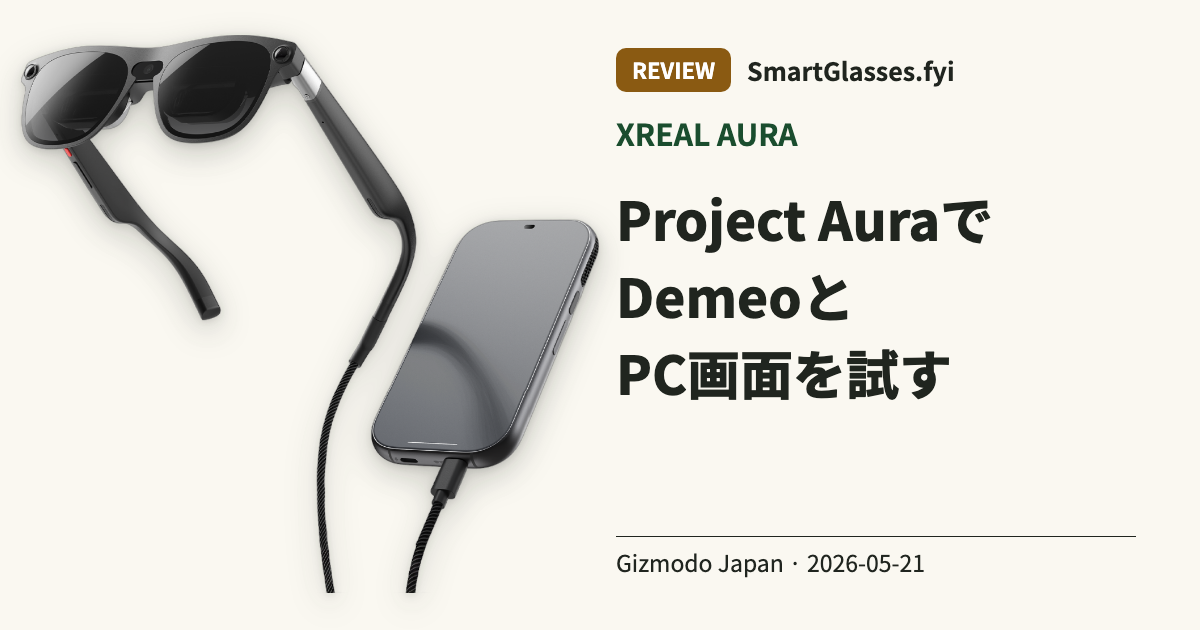
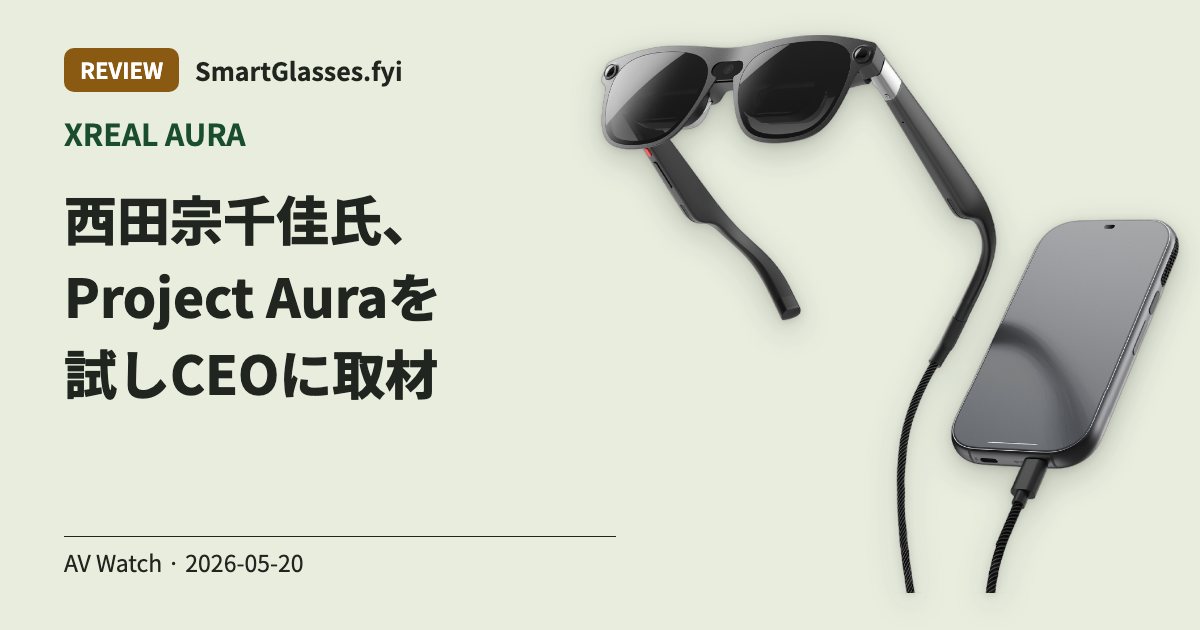
A Gizmodo US reporter reviewed XREAL AURA ahead of launch, praising its lightness, image quality and performance. The narrow field of view and small XR game library were cited as weaknesses; the Japan launch is November 27 from 229,800 yen.

VR Gyro reported that XREAL withdrew its German preliminary injunction application against VITURE, lifting the sales ban on VITURE products. The report also cited the European Patent Office's preliminary opinion, as the year-long patent dispute moves toward resolution.

Yonhap reported that Education Minister Choi Kyo-jin offered to resign, taking responsibility for confusion caused by last-minute changes to AI cheating countermeasures ahead of the CSAT. The measures had initially focused on smart glasses, drawing criticism for a belated response to miniature cameras.

At Argentina's national medical residency selection exam, a video said to show a candidate filming questions with camera-equipped smart glasses spread online, and the government filed criminal complaints. Of 141 candidates whose scores did not match their academic records, all 117 who sat the retake failed to reproduce their original scores.

Segye Ilbo reported that after 111 electronic-device cheating cases at the Suneung, Korean universities and teacher appointment exams are also tightening supervision, including stickers on glasses, thermal-camera checks and metal detectors.

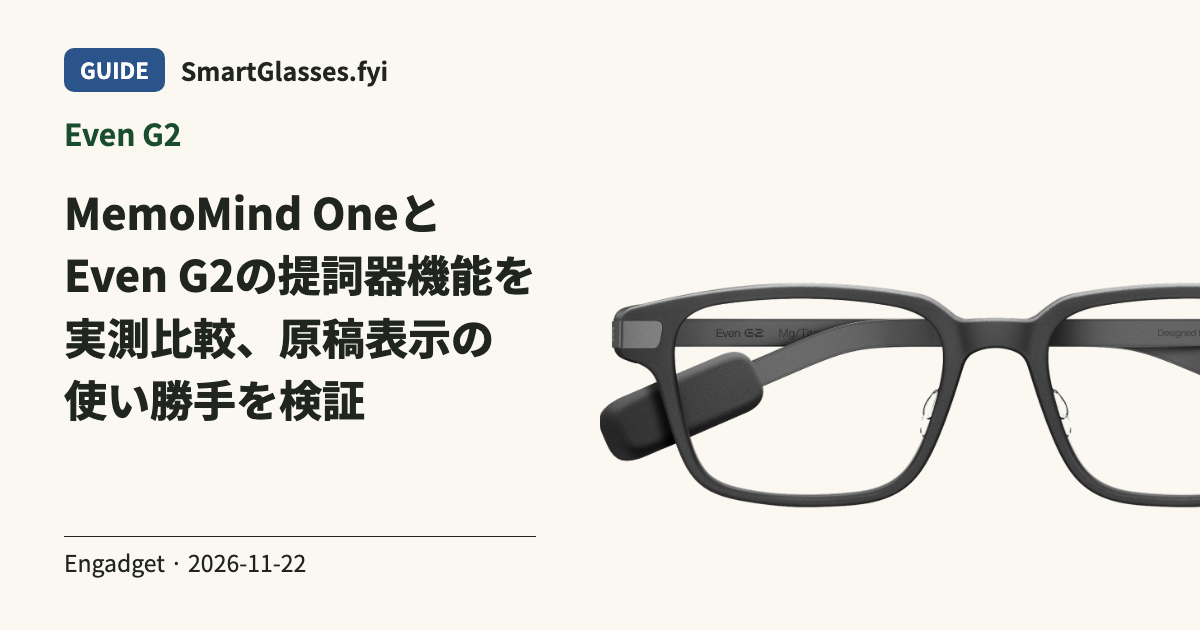
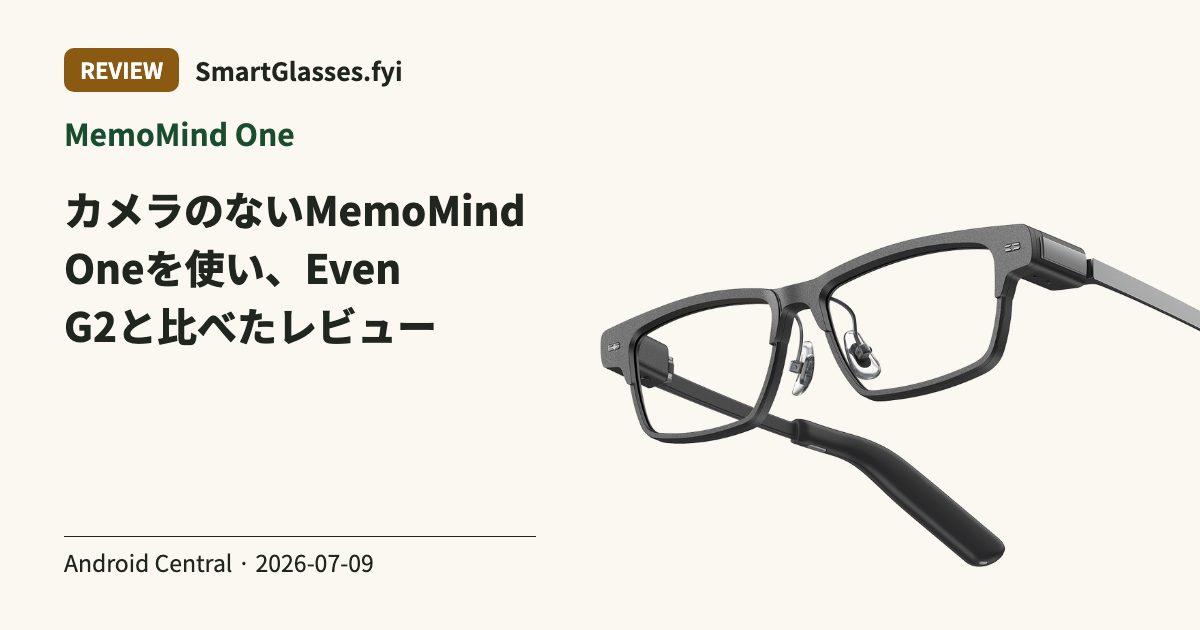
Engadget tested the built-in teleprompter modes of the MemoMind One and the Even Realities G2, loading scripts and trying auto-scroll that follows speaking pace. Both glasses are camera-free, and the text stayed readable outdoors.

President Lee Jae Myung reiterated that anyone reporting cheating on South Korea's college entrance exam will receive 100 million won per case. Those who turn themselves in and report accomplices will get a reduced punishment while still receiving the full reward.

South Korea's HRD Korea said six cheating cases were caught at the security instructor exam and the results were voided. Specialist AI inspectors used Bluetooth detection to find devices and visually checked glasses for the look, sounds and lights of smart glasses.

FNN reported that a man who scored perfectly on South Korea's law-school entrance exam and faced AI cheating allegations was found dead on the day of a planned public demonstration. At the CSAT, 111 examinees were confirmed cheating, five of them using devices such as smart glasses.

The Chosun Ilbo reported that President Lee Jae Myung called AI-device exam cheating a serious crime and ordered a full overhaul of the national exam system. A total of 111 examinees were caught at the CSAT, and student groups are demanding action over inconsistent inspection methods.

The Dutch Data Protection Authority tested six AI camera glasses sold in the Netherlands and found recording lights that are hard to see or easy to cover while recording continues. The authority advised consumers against buying the devices for general use.

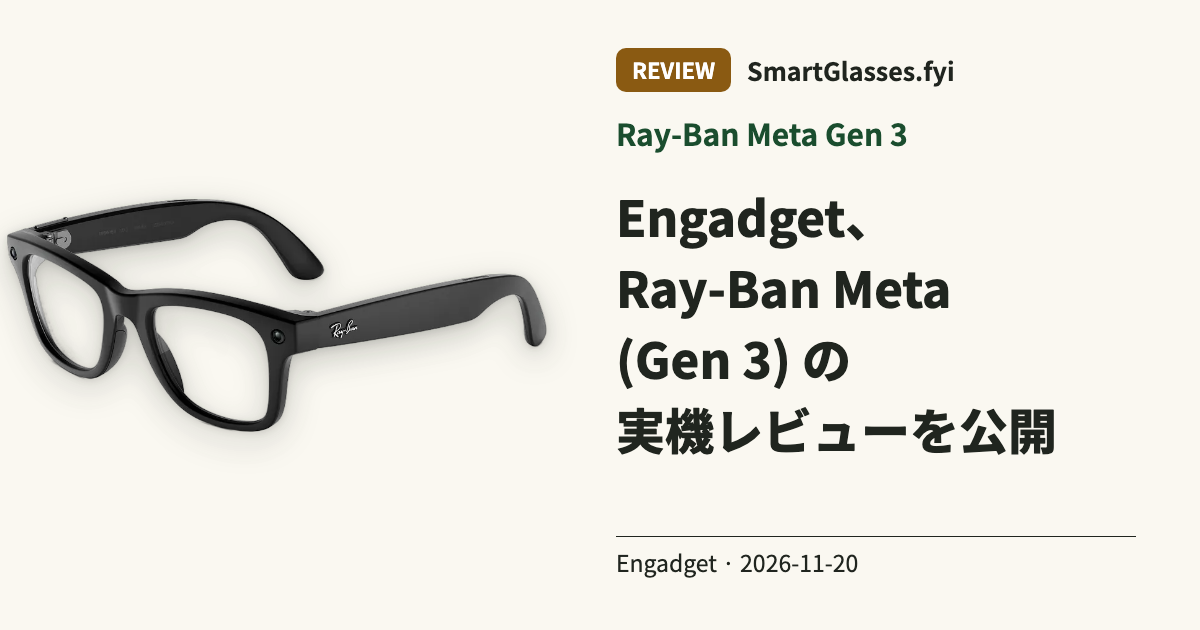
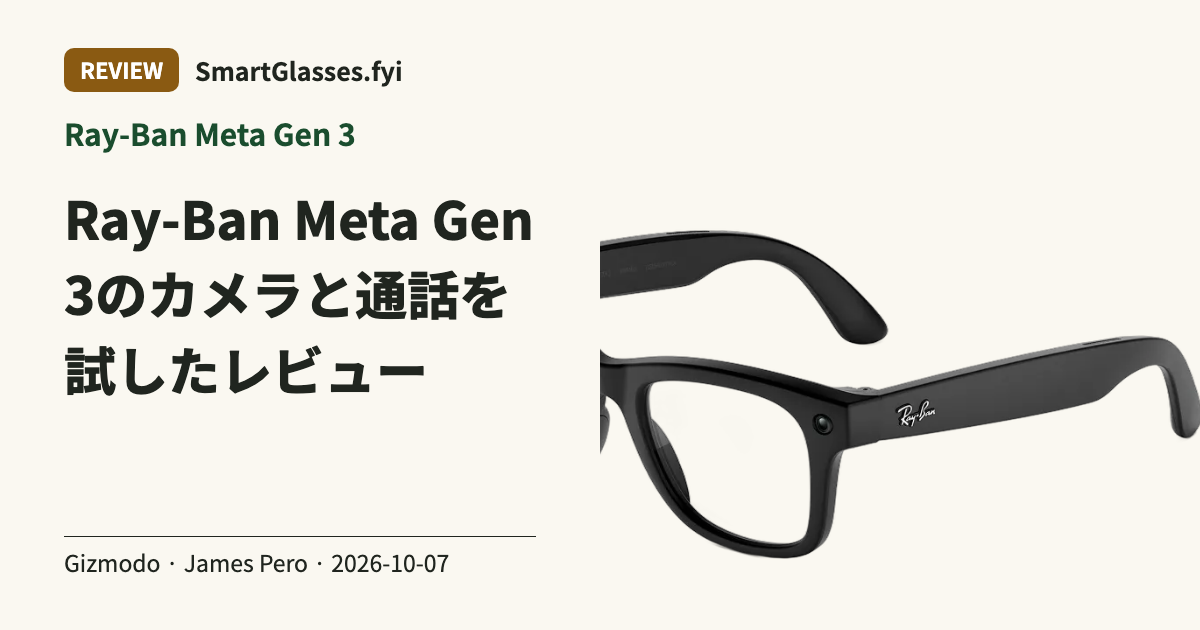
Engadget tested the Ray-Ban Meta (Gen 3) in daily use, checking the three frame styles, the new action button and battery life of up to nine hours. It scored the glasses 7.3 out of 10, finding the upgrades small for the $449 starting price.

Yonhap reported that South Chungcheong police booked a test taker suspected of cheating with smart glasses during the CSAT in Cheonan. Police are analysing the seized evidence, checking for accomplices and considering an arrest warrant.

South Korea's education ministry said the final tally of electronic-device cheating during the CSAT reached 111 cases, up from 98 a day earlier. Disaster alerts uncovered 54 cases, and five test takers were caught using smart devices.

Sankei News reported that 111 cases of electronic-device cheating were confirmed during South Korea's CSAT, including five cases in which test takers were caught actually using devices. It also reported the death of a man who had faced allegations of cheating with AI devices on a law-school admission test.

ITmedia Mobile reported that Magnetic Laboratory has launched speaker-equipped sound glasses under its HIDISC brand, priced at 3,980 yen. The glasses feature blue-light-cut lenses, Bluetooth 6.0 and a light body of about 31 grams.

ETNews reported that China's Rokid and RayNeo are releasing AR glasses with full-color micro-LED displays in both eyes one after another. It said supply chains that cover everything from components to finished products within China are becoming a strength.

Yonhap reported that President Lee Jae Myung ordered a complete overhaul of South Korea's state examination system to combat AI-assisted cheating. The call followed the CSAT, where more than 110 test-takers were caught possessing illegal electronic devices, including AI-powered glasses.

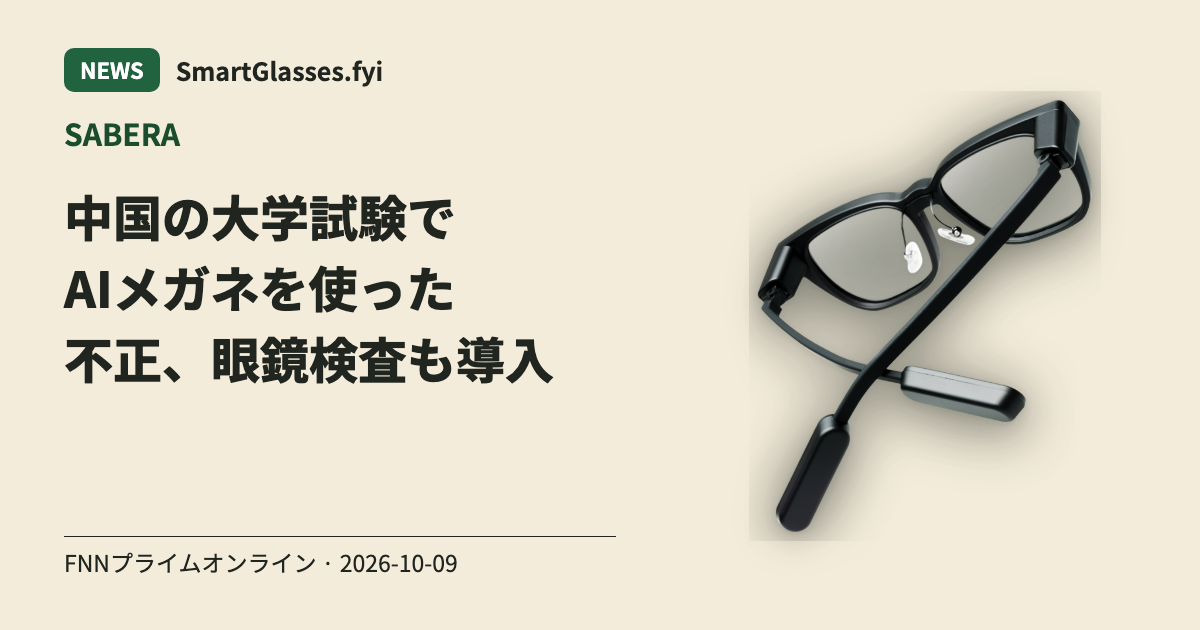
Mogura VR rounded up the smart-glasses exhibits and sessions at XR Kaigi 2026, which opens November 30. Highlights include hands-on sessions with XREAL AURA, INMO models on display, and Cellid exhibits including SABERA and Linse Display.

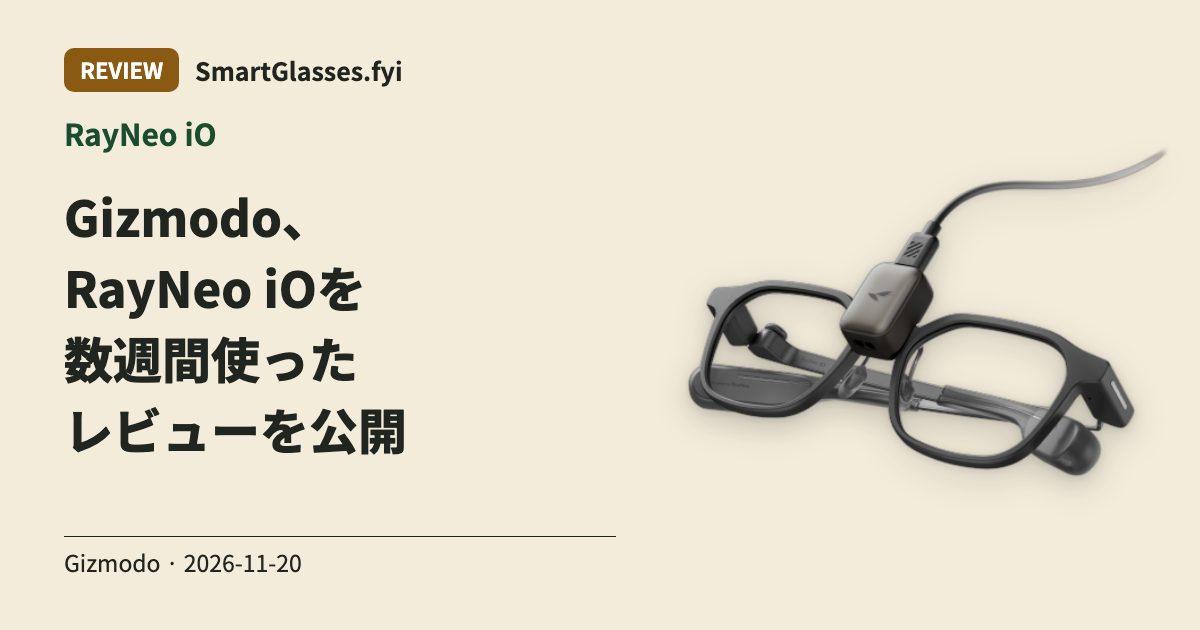
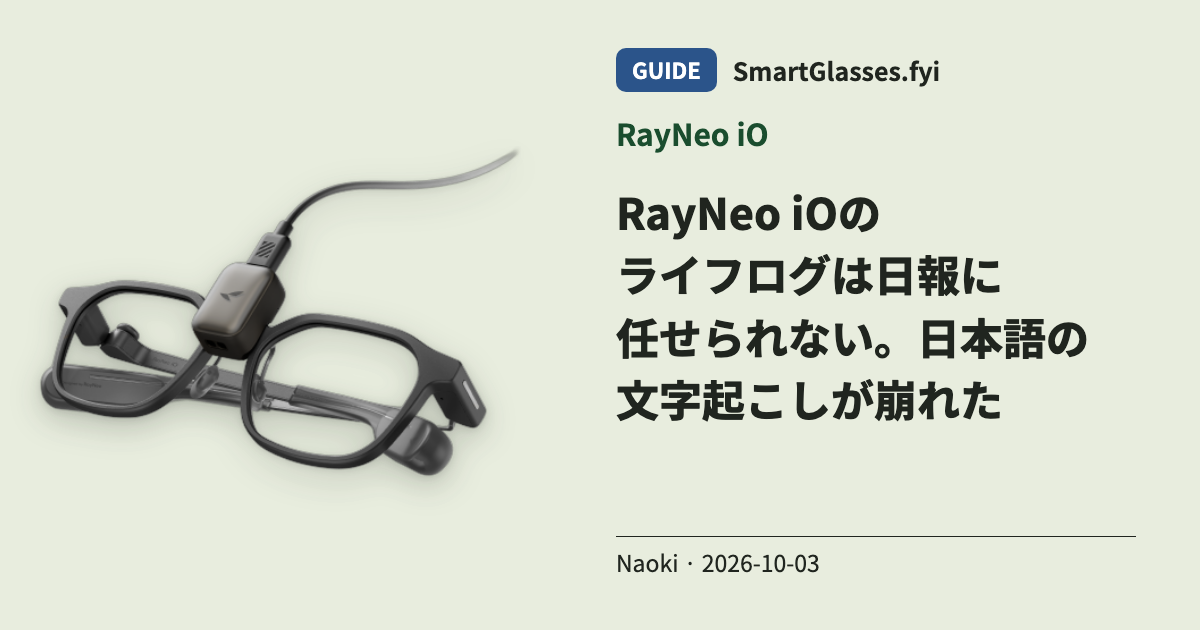
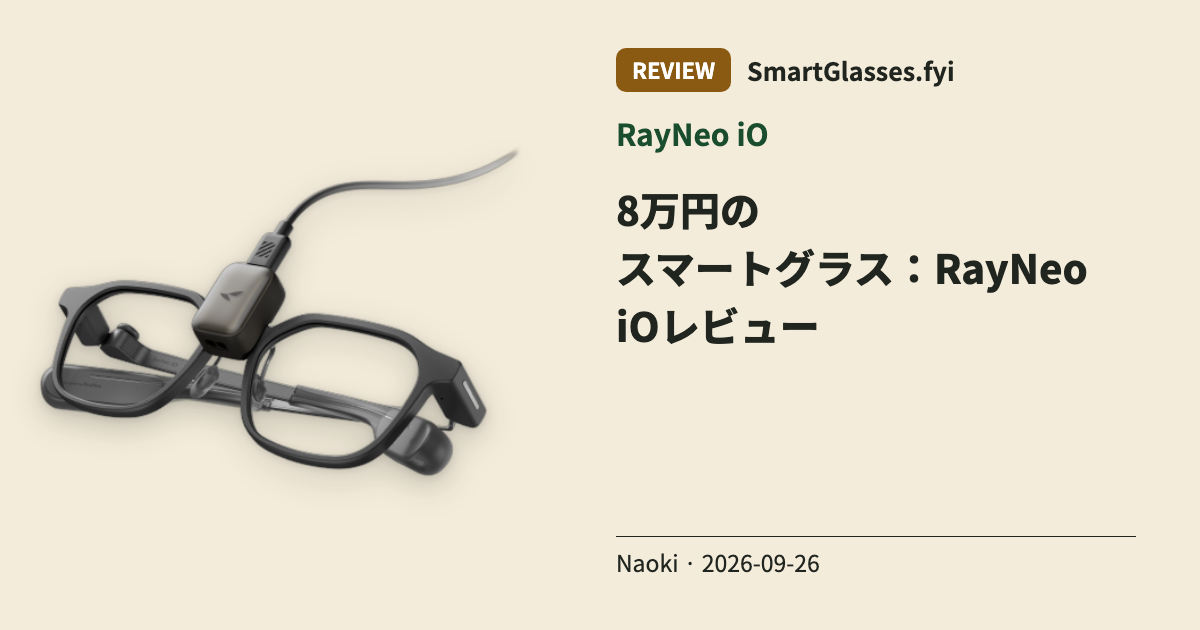
A Gizmodo reporter used the RayNeo iO for several weeks, focusing on Lifelog, which records everyday conversations and turns them into summaries and to-dos. The review praises the crown dial and bright display, while questioning the always-listening design.

Key models of the Intelligent Eyewear collection from Samsung and Google sold out within hours of pre-orders opening, with a second pre-order alert now offered. Apple is also weighing a June reveal of its own AI glasses, setting up a three-way contest with Meta.

Meta has begun beta testing Muse, a personal AI agent for its AI glasses, and published a usage guide in its official help center. Muse supports camera-based visual questions and hands-free task execution, and can be switched with Meta AI in device settings.

A Seoul National University student who became the first perfect scorer on the Legal Education Eligibility Test and faced AI cheating allegations failed to appear for a public test he had pledged to take to prove his ability. Police have opened an investigation on obstruction of business complaints.

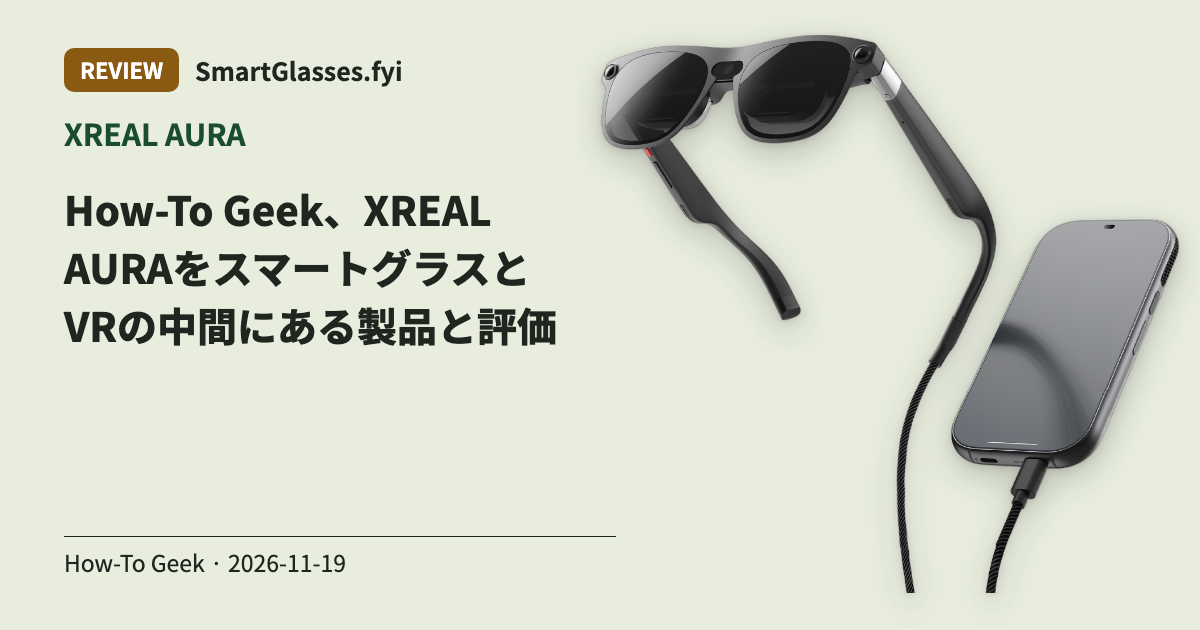
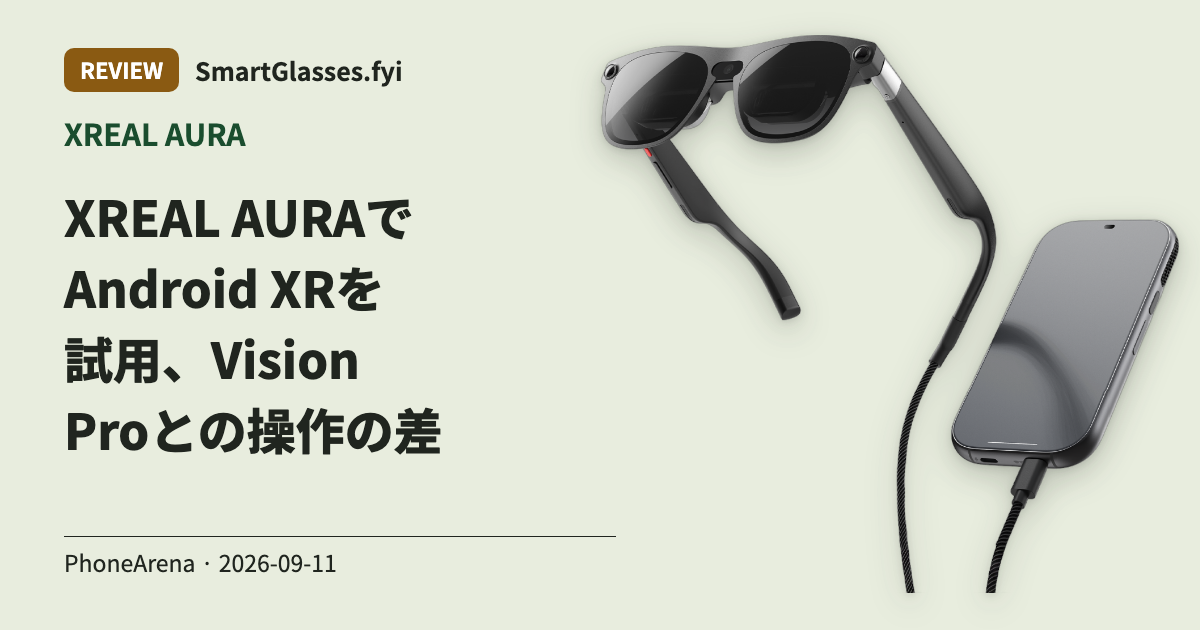
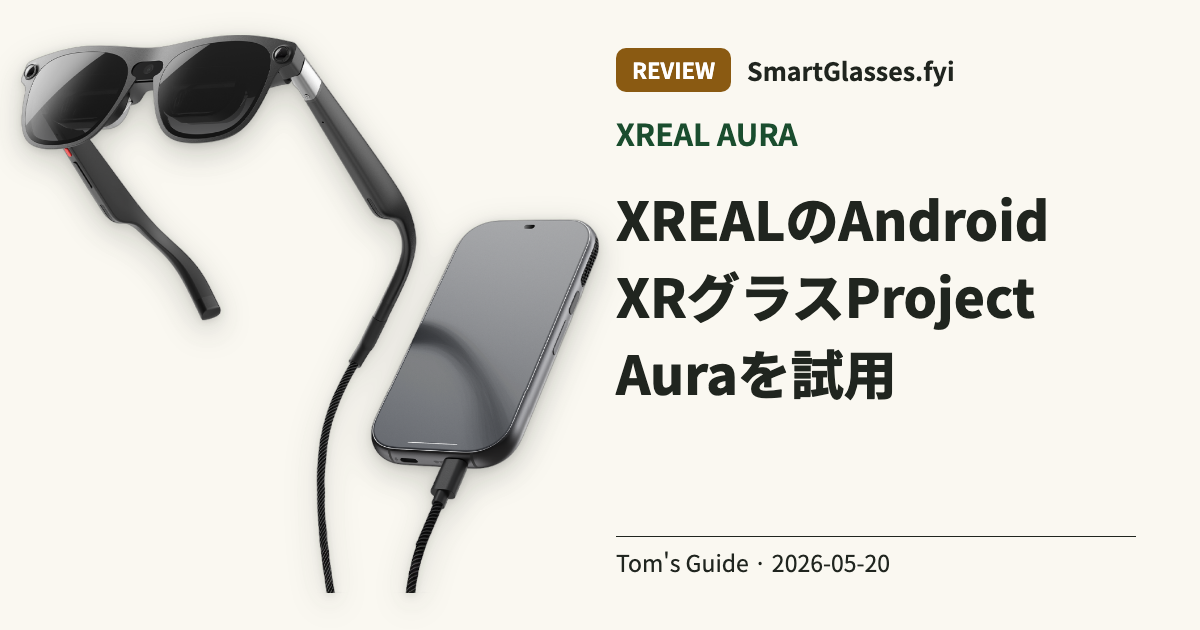
How-To Geek tested the XREAL AURA and praised its 95-gram weight, optically transparent displays and intuitive Android XR. It rated the glasses 7.5 out of 10, noting weaker low-light tracking and resolution limits.

South Korea's College Scholastic Ability Test was held at 1,312 test centers nationwide on Thursday, with 551,864 applicants taking the exam. Authorities strengthened measures against cheating involving AI and smart devices, including inspecting every pair of glasses and sending disaster alert messages to detect unsubmitted phones.

93913 reported that Legato Frames, eyeglasses with hearing technology built into the frame, were named WIRED's Best Hearing Aid Glasses of 2026. They use SpeechSense AI on femtoAI's SPU-001 to amplify speech only, and HearAdvisor scored them 4.6 out of 5.

93913 reported that Meta is running holiday ads presenting its Meta Lab stores through handmade shop windows. Six short spots built around products including Ray-Ban Meta aim to spark interest in visiting a store and trying the devices.

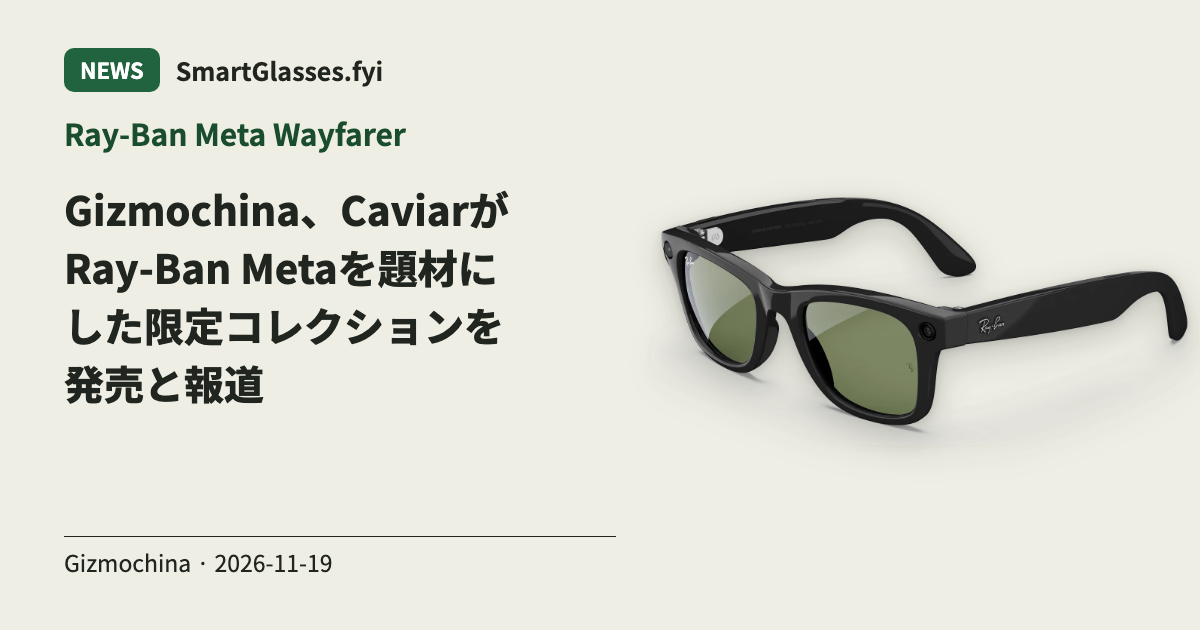
Gizmochina reported that luxury customization brand Caviar released two reworked versions of the Ray-Ban Wayfarer Gen 2. Each design is limited to 19 units, and the camera and audio hardware inside remains the stock retail hardware.

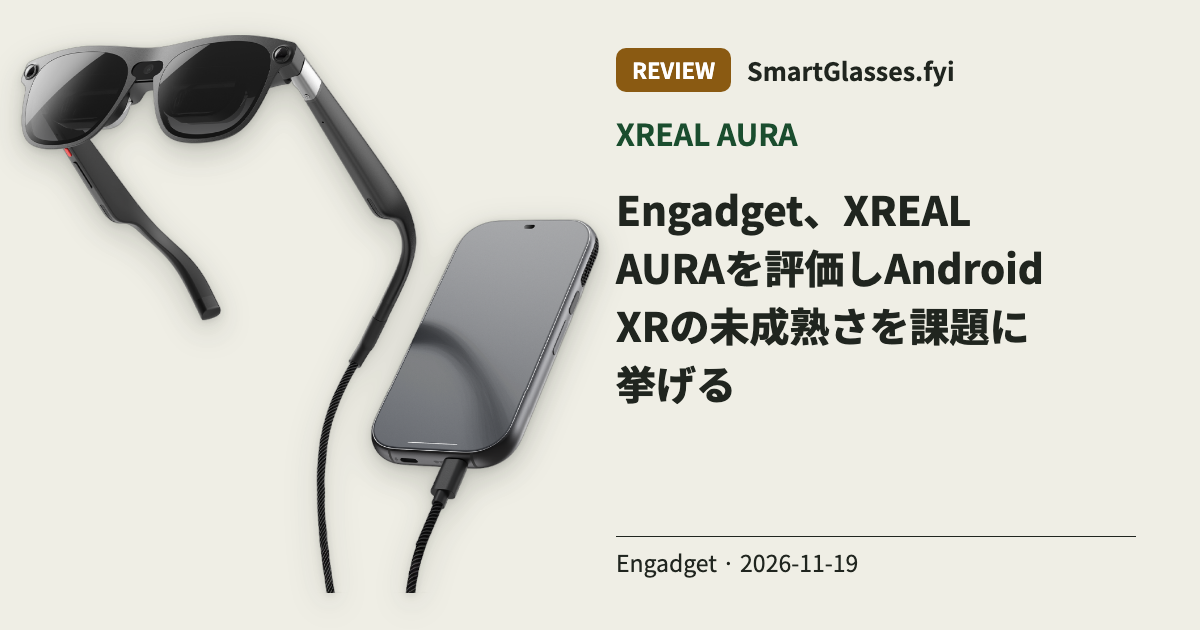
Engadget tested the XREAL AURA and praised its bright, sharp displays and light fit. It rated the glasses 7 out of 10, citing unstable Android XR, few dedicated apps and a warm compute puck.

Yonhap reported that 22 test takers were caught for misconduct during South Korea's College Scholastic Ability Test. The vice education minister said phones that students had failed to hand in were exposed when they sounded for a disaster alert message.

A law school admission test top scorer suspected of AI-assisted cheating was found in cardiac arrest at a Seoul motel after failing to appear for a public skills verification scheduled that morning. Police had been searching for him following a report concerned for his safety, and he was taken to a hospital.

Vuzix introduced Ultralite Color, an OEM reference platform with binocular full-color waveguide displays in a design weighing under 40 grams. The platform lets eyewear brands build their own AI glasses and was named a CES 2027 Innovation Awards Honoree in Fashion Tech.

ZDNET Japan tried Google and Samsung's Intelligent Eyewear again, checking the Warby Parker and Gentle Monster frames and privacy measures such as the recording LED and a physical power switch. It also tested Gemini Live translation and navigation, and noted the glasses pair with an iPhone as well.

Police in Almaty, Kazakhstan have begun testing smart glasses with facial recognition that check passersby against Ministry of Internal Affairs databases. The glasses have already helped officers spot and detain a man wanted in Shymkent, found inside a mosque.

Korean eyewear brand Brism has launched Insight, open-ear audio smart glasses with speakers and microphones built into the temples. The glasses weigh about 25 grams, cost 248,000 won, and are made to fit each wearer's face using 3D face-scan data.

ITHome reported that Korean security firms K&Us and Gison are developing detectors that analyse Bluetooth and Wi-Fi signals to spot people wearing smart glasses. Both firms joined a KCA tender for such detection equipment, with a prototype and a fixed exam-hall model planned for next year.

Yonhap reported that 98 test takers were caught for misconduct during South Korea's College Scholastic Ability Test, including five who used smart devices during the test. Phones that had not been handed in were exposed when disaster alert messages sent three times during the exam made them sound.

Yonhap reported that a ruling party lawmaker introduced a package of bills that would allow criminal penalties, including prison terms, for bringing devices such as smart glasses into test sites. The package amends eight laws and aims to allow criminal liability regardless of the type of exam.

Hankyung reported that 12 cases of smart-glasses cheating were caught this year in South Korea's gas-related national technical qualification exams, after zero cases from 2022 through last year. A dedicated radio-wave detector for smart glasses is planned for introduction next March.

Reuters reported that the Netherlands' privacy watchdog AP has advised consumers not to purchase AI-powered glasses with cameras, after studying six types sold on the Dutch market. Beyond secret filming, the agency found wrong advice in a simulated emergency and security flaws that could let nearby people connect without permission.

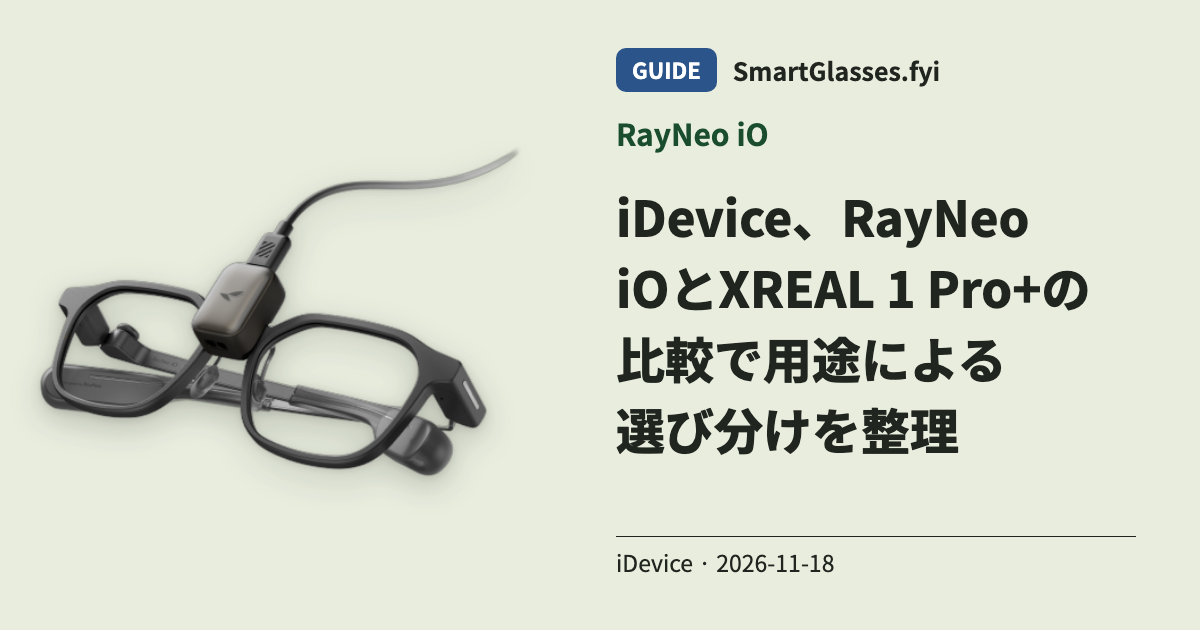
iDevice compared the RayNeo iO and the XREAL 1 Pro+, placing the iO for everyday captions and translation and the 1 Pro+ for big-screen video and games. Prices checked on November 18, 2026 were $499 for the iO and $599 for the 1 Pro+.

Seoul National University will hand out disposable gowns for candidates to wear over their own clothes at its late-November early-admissions interviews. Smart glasses and similar devices count as cheating by possession alone, and every candidate wearing glasses is checked.

Ahead of the November 19 CSAT, personal stationery was limited to black pencils and inspections of glasses and clothing were strengthened. More than 90 percent of the 1,229 cases caught over the past five years came from carelessness, most often writing after the end signal.

Chosun Biz reported that Coupang notified sellers on the day before the Suneung that disguised cameras and smart glasses whose recording state is unclear would face immediate sales suspension. NAVER had sent a similar management notice to Smart Store sellers on November 16.

Nocut News reported that Daejeon's education office will station dispatched supervisors responsible for smart glasses checks at all 35 Suneung sites, with buttons, collars and sleeves also inspected at identity checks. The article also carries students' worries that simply wearing glasses could invite suspicion.

Nocut News reported that Busan's education office will post dedicated anti-device staff at all 64 Suneung sites in the city and inspect students' glasses and buttons every period. Teacher groups voiced concern that abrupt, harsher penalties could cause confusion on site.

Nocut News reported that South Korea's education ministry will limit stationery students may bring to the Suneung to black pencils, with four previously allowed items such as marker pens supplied at the venue instead. Before the first period, every student will remove their glasses for a full inspection for smart glasses.

Aju Press reported that the top scorer in South Korea's tax accountant exam cheated not with smart glasses but with a calculator modified into a transmitter. The on-site inspection manual had no procedure for checking modifications, and supervisors had only about a minute for belongings checks.

Chosun Biz surveyed how countries counter AI-assisted exam cheating. It describes China's Gaokao security screening and signal jamming, and India's medical entrance re-exam, which used more than 50,000 phone jammers and AI-monitored cameras.

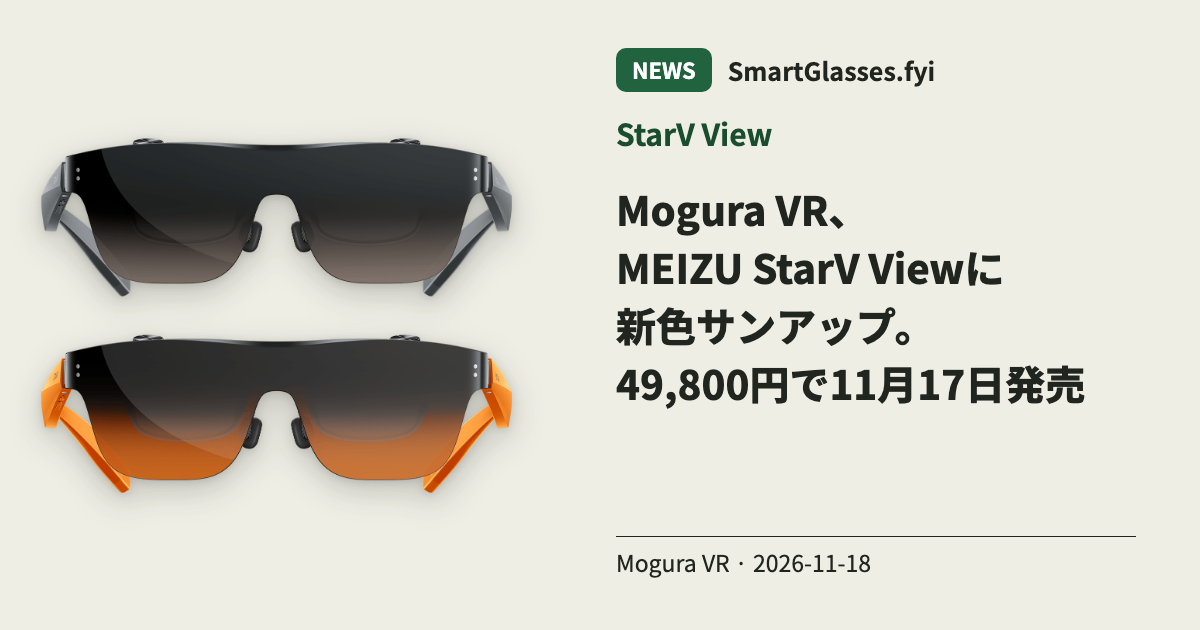
Mogura VR reports that Earth Reborn launched a Sunup colorway of MEIZU's StarV View on November 17 for 49,800 yen. The orange temples join the existing gray, giving buyers two colors of the tethered display glasses.

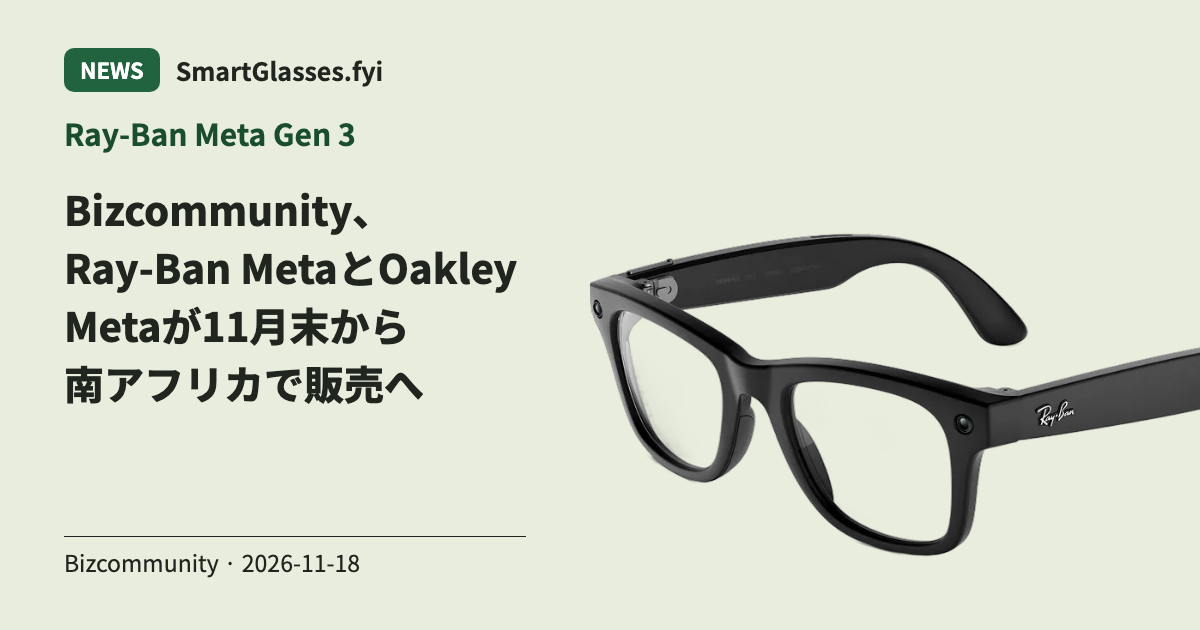
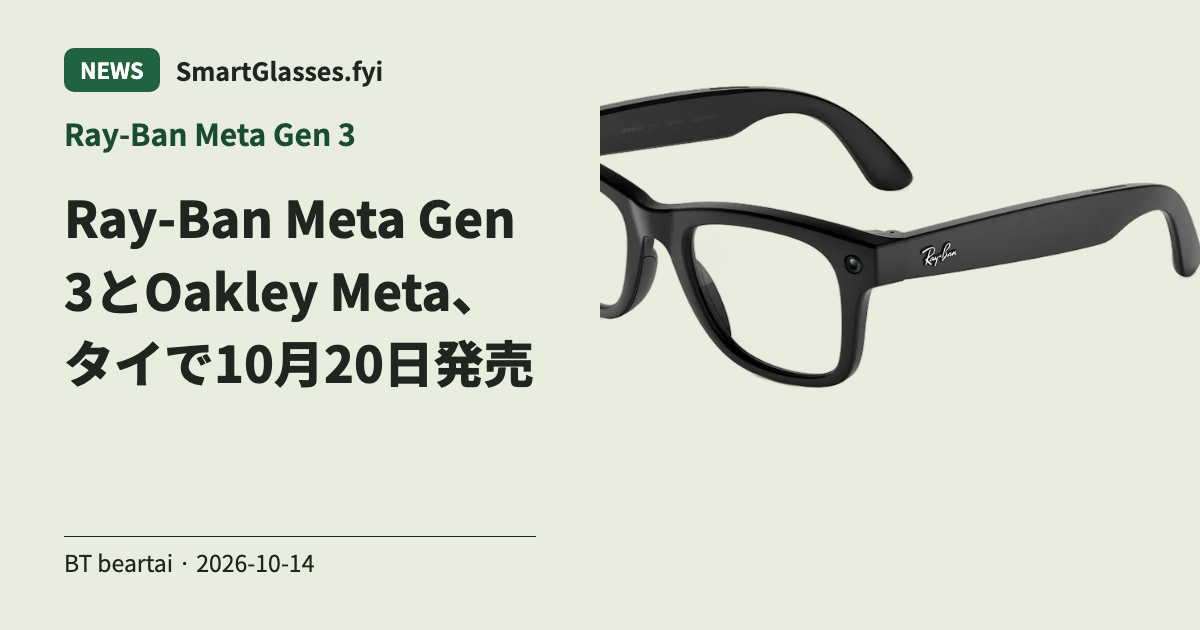
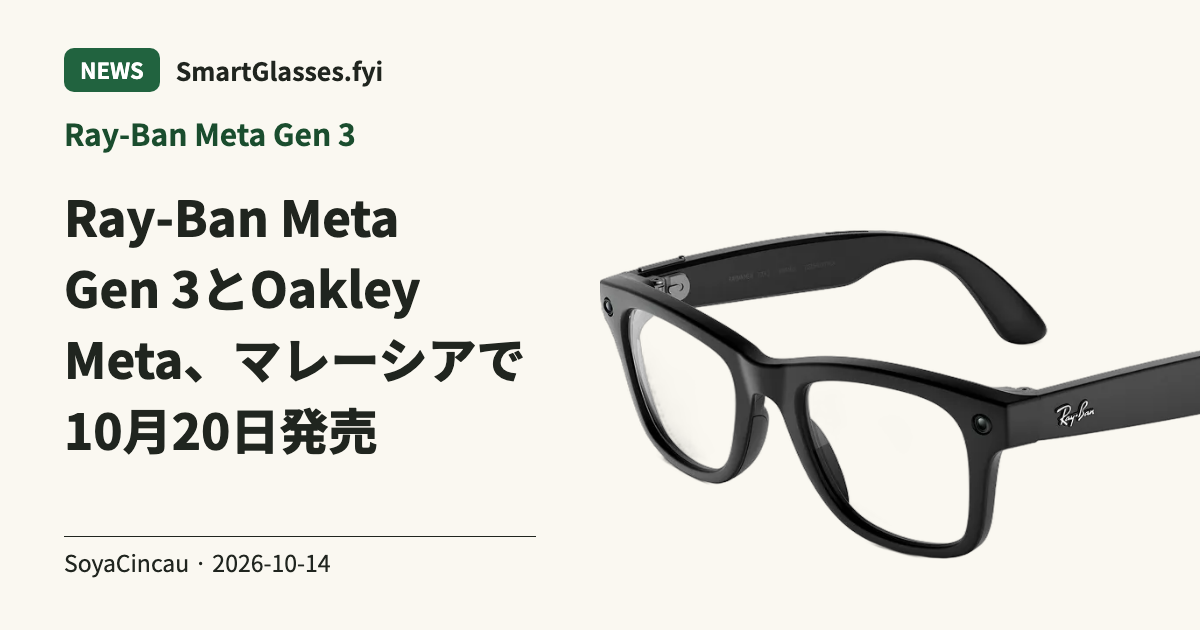
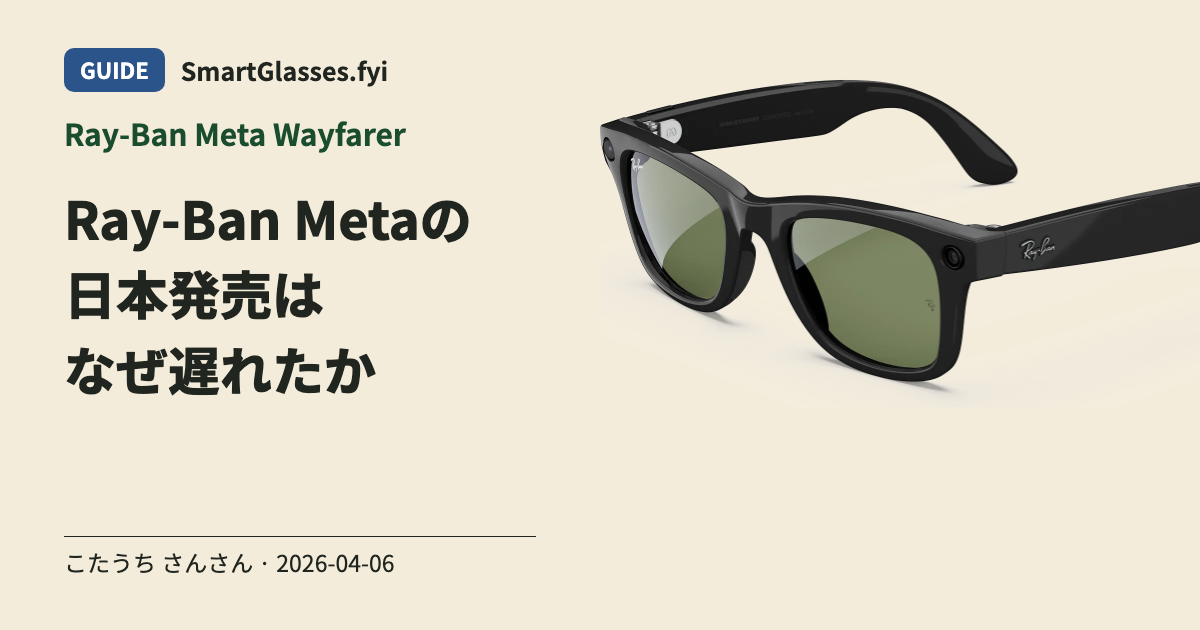
Bizcommunity reports that the Ray-Ban Meta and Oakley Meta collections will go on sale in South Africa from the end of November. The third-generation Ray-Ban Meta and the sports-oriented Oakley Meta models will be sold through optical retailers and online.

Yonhap reported that South Korea is considering sending additional unannounced disaster alert messages during the Suneung, on top of a planned pre-exam alert. The loud alerts are intended to reveal mobile phones that candidates failed to hand in to supervisors.

The Dong-A Ilbo reported that South Korea's Suneung anti-cheating measures were rolled out only two days before the exam and rely on manual methods such as inspecting glasses and sealing clothing buttons with stickers. It also noted the science minister's remark that blocking radio signals is not feasible with current technology.

Financial News reported that Gyeonggi Province, which has the largest number of Suneung candidates in South Korea, will deploy 702 dedicated staff across 351 test sites against AI-assisted cheating. The provincial education office has also trained supervisors using actual smart glasses, aiming to avoid disadvantages for students from excessive inspection.

Yonhap reported that, a day before the Suneung, some students are considering changing their regular glasses or wearing contact lenses out of concern their glasses could be mistaken for AI glasses. Teachers and lecturers are urging students not to be shaken by the cheating controversy and to focus on the exam.

An editorial in Chungcheong Today described the Suneung ban on electronic devices including smart glasses and the inspection of students' glasses. It held up an Incheon high school that has run unsupervised exams for 70 years as a model, and called for developing scientific detection technology.

Nocut News reported that the South Korean government's additional AI cheating measures, announced by the prime minister two days before the Suneung, caused confusion among students and schools due to late preparation and mixed messages between ministries. Teacher groups criticised the sudden burden placed on exam supervisors.

93913 published an opinion piece on Chinese maker DPVR entering display-free AI camera glasses. It argues the move may lift short-term sales, but DPVR strengths in VR optics and spatial tracking transfer poorly, and the category sits away from the display and spatial-computing mainstream.

Eyeon Medtech unveiled Eyeon Focus, a concept AI glasses product that integrates near-infrared light technology into the frame. It aims to support eye health such as dry-eye management, with a showcase planned at CES in January 2027.

VR Tuoluo reported that visual effects company DNEG has partnered with Meta to produce stereoscopic 3D film content for the Meta VR Glasses, planned for release in spring 2027. Work has begun on a 3D version of the upcoming Hunger Games film as one of the first projects.

Yonhap reported that South Korea's ruling party and government agreed to pursue legislation extending the Suneung ban for AI-assisted cheating to a maximum of 10 years. They aim to apply it retroactively from this week's exam and also seek rules allowing universities to expel students caught cheating.

Yonhap reported that President Lee Jae Myung instructed the government to consider extending the exam end time by the time lost when a candidate's device sounds a disaster alert and a proctor must intervene. He said the necessary measures should take only about two to three minutes unless there are multiple cheating cases.

Incheon's education office decided at an emergency meeting on the eve of the CSAT to station a dedicated smart-glasses inspector at each of the city's 63 test sites and add 243 corridor supervisors. Glasses are rechecked before every session, and stickers are placed over clothing buttons.

Yonhap summarized guidance for candidates on the eve of the CSAT, noting that merely wearing smart glasses during the exam invalidates this year's test and suspends eligibility for next year. Glasses are inspected every session, and stickers are placed over clothing buttons.

Asia Daily reported that AI glasses solved 30 past Suneung math questions in 22 minutes and scored 98 points in a demonstration. It also noted that glasses inspections, added staff and tougher penalties are advancing ahead of the exam, while a filing argues the measures were not verified enough.

IT之家 reported that South Korea temporarily suspended public Wi-Fi at CSAT venues and within 100 meters around them, from the evening of the 18th until the evening of exam day, as an anti-cheating measure. It noted personal routers and tethering are not covered, so a complete shutdown has limits.

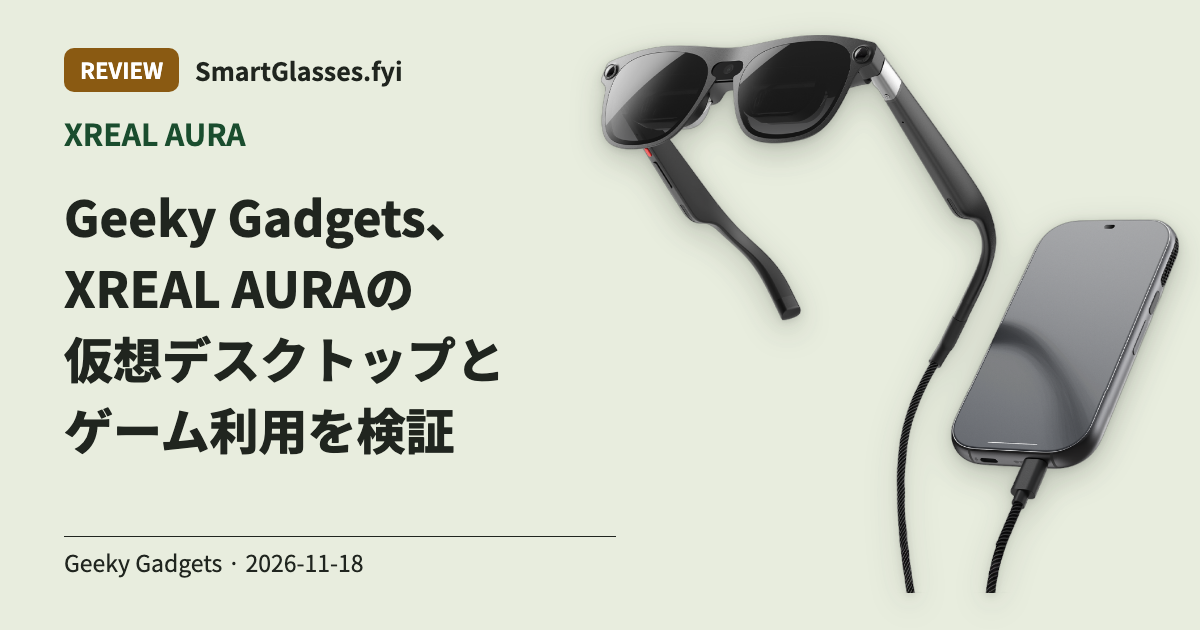
Geeky Gadgets, drawing on a hands-on video review, tested the XREAL AURA with up to five windows and wireless virtual desktops. It also noted puck overheating and a field of view narrow for full VR immersion.

Newsis reported that South Korean resale platform Bungaejangter has designated AI glasses and smart glasses as prohibited items. Since November 16 the platform has registered related keywords as banned terms and blocks them in both search and listings.

South Korea's Ministry of National Defense has strengthened inspections of smart glasses across all military units, and since November 1 suspicious glasses have been checked by X-ray. The entry bans that began at exam sites have spread to the military and large companies. This column looks at the limits of frame thickness as a tell, and at how each site has built its checks on the assumption that the devices cannot be told apart by sight.

As the movement to stop smart glasses from being brought into exam sites and military units spreads, the makers have begun to respond. Gentle Monster ran an internal review of its privacy and security policies ahead of the Intelligent Eyewear launch, and Meta released an audio-only model with no camera. This column traces how pressure from the side doing the stopping has begun to change product design.

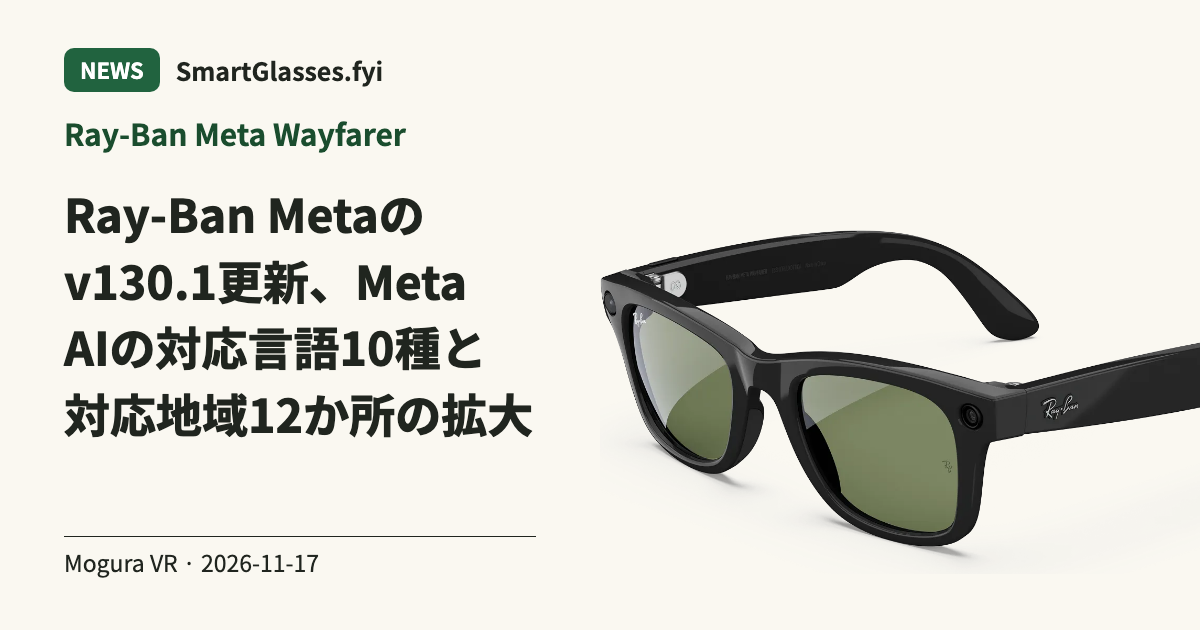
Firmware v130.1 for Ray-Ban Meta adds 10 languages to Meta AI on models without a display. Availability also grows by 12 regions, including Hong Kong, Thailand and Portugal.

INMO Future has gone on sale in China through JD.com. The roughly 125-gram glasses pair dual 1080P 120 Hz Micro OLED panels with an array waveguide, launching at 5,999 yuan before subsidies.

South Korea's government has reiterated that it is not considering postponing this week's college entrance exam, despite calls to delay it over fears of AI-assisted cheating. The exam will go ahead as scheduled, with specialized personnel assigned to detect smart glasses at test sites nationwide.

Vision Monday spoke with Warby Parker's co-CEO ahead of the Intelligent Eyewear launch. He discussed the 41-gram weight, privacy built into the design, and a multi-year plan to expand frame styles and lens options.

South Korea's presidential office has formed a dedicated task force to devise countermeasures amid growing concerns over AI-assisted cheating. It will stay on emergency duty through this week's college entrance exam and develop longer-term strategies for next year's exam and beyond.

Newsis reported growing anxiety among examinees and parents in Daegu that even ordinary glasses may draw suspicion ahead of the CSAT. The Daegu education office has assigned identification officers to all 51 test sites and trained proctors using real smart glasses.

Green Economy News reported that cheating with AI glasses had also been caught in South Korean financial-sector qualification and hiring exams. The insurance institute announced detailed inspections and bans of up to three years, while banks are stepping up glasses checks or redesigning their assessments.

Sejong's education office said that at the November 19 CSAT, merely wearing a smart device such as smart glasses during the test will be treated as cheating. It will place a dedicated smart-device officer at each of its 16 test sites and require candidates to cooperate with proctors' inspections.

VR Gyro reported detailed specifications of TOZO's AIVU AI glasses. The roughly 45-gram glasses use a binocular single-green display, offer a sunglasses version with a wine-red gradient tinted waveguide lens, and support a voice assistant, translation and teleprompter features.

Yonhap reported that South Korea's prosecution will take stern action against exam cheating involving generative AI and smart devices. Prosecutors will in principle seek formal trials rather than suspended indictments, and will actively pursue arrest warrants and prison terms in organized cases.

Seoul Economic TV reported that Gentle Monster has run an internal review of privacy and security policies for Intelligent Eyewear ahead of its December 10 launch in South Korea and the United States. The first preorder batch has sold out, and the article also outlines safeguards such as an LED indicator during filming.

South Korea's Ministry of National Defense has issued strengthened inspection guidelines to all units, effective November 1, banning unauthorized devices with camera, recording or communication functions. Glasses with suspicious features such as thick frames are subject to X-ray screening.

South Korea’s defense ministry has ordered all services to tighten screening of recording-capable wearables such as smart glasses. Glasses face X-ray or visual inspection, and suspicious pairs can be checked down to model and charging specifications.

Ahead of the CSAT, South Korean students worry their ordinary glasses could be mistaken for AI glasses. Some are switching to contact lenses or thin metal frames to avoid suspicion at test sites.

After the tax exam confession, suspicions of AI cheating are spreading online to other South Korean national exams. The report also surveys device bans and detection efforts at test sites in China, the United States and elsewhere.

Chosun Biz rounded up how AP, Reuters, CNN and Bloomberg covered the AI cheating case in South Korea’s tax exam. Their reporting focused on trust in the testing system and readiness for hard-to-spot devices.

The top scorer of South Korea's tax accountant exam apologized to reporters before police questioning. He admitted using a miniature camera and a smartphone, and said he would tell investigators the truth and take responsibility.

South Korea's prime minister used a Cabinet meeting to restate the government's CSAT anti-cheating plan. An interagency emergency team will be activated, smart devices banned, and examinees' glasses and watches inspected.

A former Seoul city councilor has filed a police complaint accusing the education minister of dereliction of duty. It targets his remark that catching every form of AI cheating would be difficult, and the decision not to postpone the CSAT.

The leader of South Korea's ruling Democratic Party said it will prepare legislation barring AI cheats on national exams for up to 10 years. Current bans run five years for national exams and one year for the CSAT.

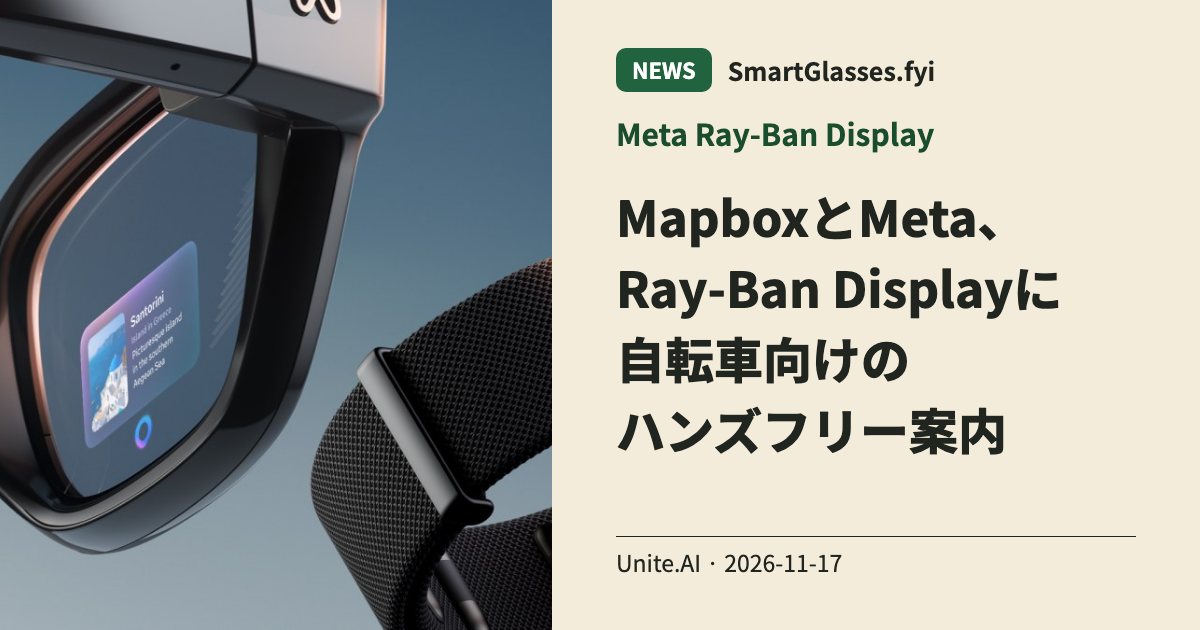
Mapbox has expanded its work with Meta to support hands-free cycling navigation on Meta Ray-Ban Display. Directions appear on the lens and are also spoken, and the route recalculates when the rider takes a different street.

South Korea's prime minister used a national address to set out detailed measures against AI-assisted cheating in the CSAT. The plan includes stickers on clothing buttons, 8,400 additional staff, and follow-up investigations with global tech firms.

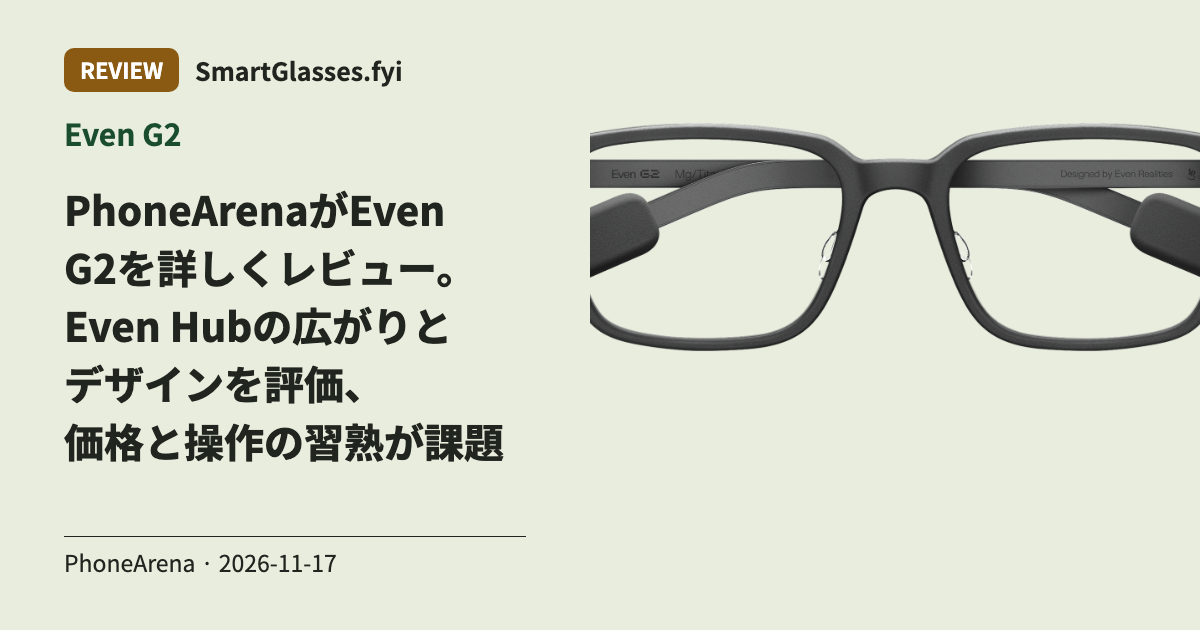
PhoneArena published an in-depth review of the Even Realities G2 display glasses. It praises the third-party app store Even Hub and the polished design, while flagging the $599 price, phone battery drain from apps, and the gesture learning curve.

Mogura VR reported that RT has opened crowdfunding for its VR SHINECON A18 viewing glasses. The CAMPFIRE campaign runs until December 30 with a ¥5 million goal and discounts of up to 55 percent during the campaign.

The Gwangju branch of the Korean Teachers and Education Workers Union raised concerns that responsibility for identifying smart glasses at the CSAT could fall on individual proctors. In a union survey of 2,716 teachers, 82.3% said smart glasses are hard to identify under current procedures, and the branch called for clear decision-making responsibility and education-office handling of complaints.

A South Korean high school senior has filed a constitutional complaint arguing that holding the CSAT as scheduled without an effective system against AI-assisted cheating infringes test takers' rights. The student also sought an injunction suspending the Nov. 19 exam date designation.
South Korean President Lee Jae Myung told officials at an emergency readiness meeting to prepare thorough measures against AI-assisted cheating in this week's CSAT. The government also plans a reward of over 100 million won per confirmed report of cheating involving advanced gadgets.
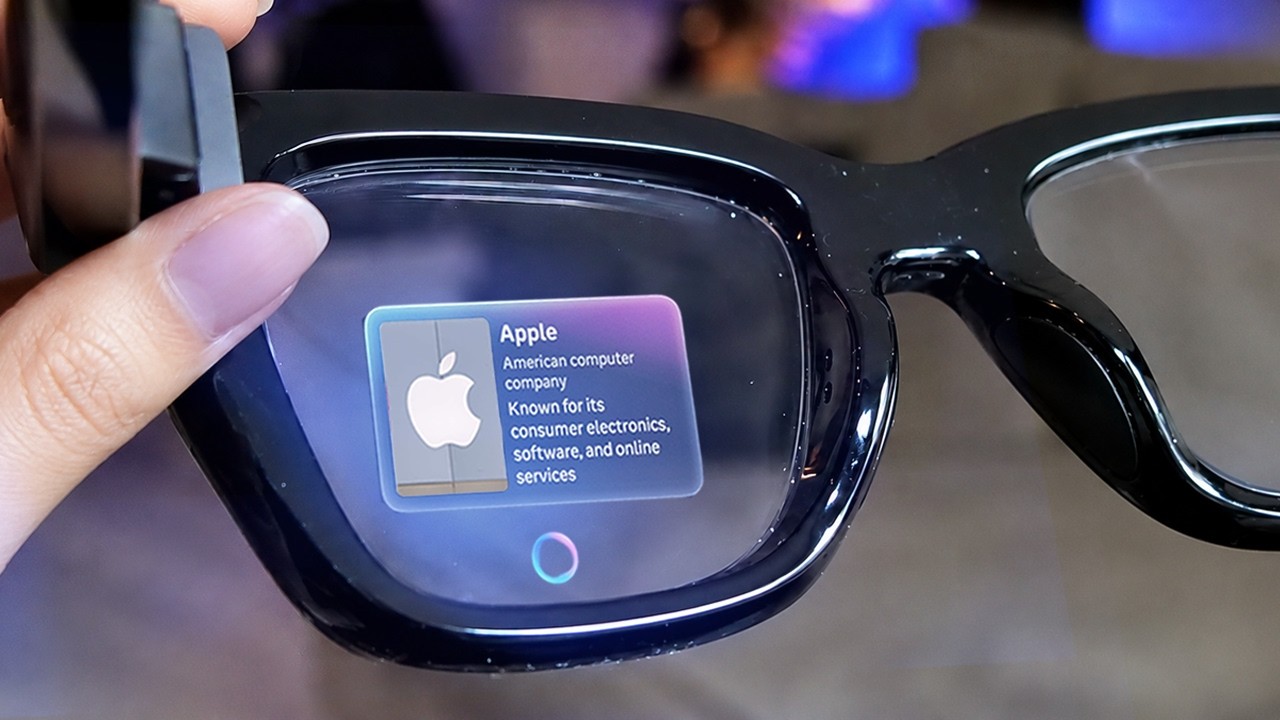
Road to VR reports that Apple has finalized the hardware for its upcoming smart glasses and placed Siri at the strategic center of the product. Details such as launch timing and pricing have yet to be announced.

As concern over AI-assisted cheating grows in South Korea, China, India, Japan and other Asian countries are also tightening exam-hall security, Financial News reported. China and India lean on surveillance and signal-blocking technology, while Japan focuses on ban rules and visual checks by proctors.

South Korean lawmaker Park Sun-won proposed three bills creating penalties for exam cheating using AI and smart glasses, New Korea Journal reported. Organized cheating for profit would face up to 10 years in prison, and the CSAT eligibility suspension would rise to three years.

The Korea Economic Daily reported the education ministry guidance for CSAT candidates. Banned devices such as smart glasses must be handed in before the exam, and repeatedly refusing a proctor glasses check can void the exam and bar the candidate the following year, even without actual use.

Major South Korean banks are tightening controls on their new-hire written exams, requiring candidates to hand in electronic devices and inspecting all glasses wearers, ChosunBiz reported. IBK Industrial Bank of Korea is also considering signal jammers, while KB Kookmin Bank began checking glasses at its October hiring exam.

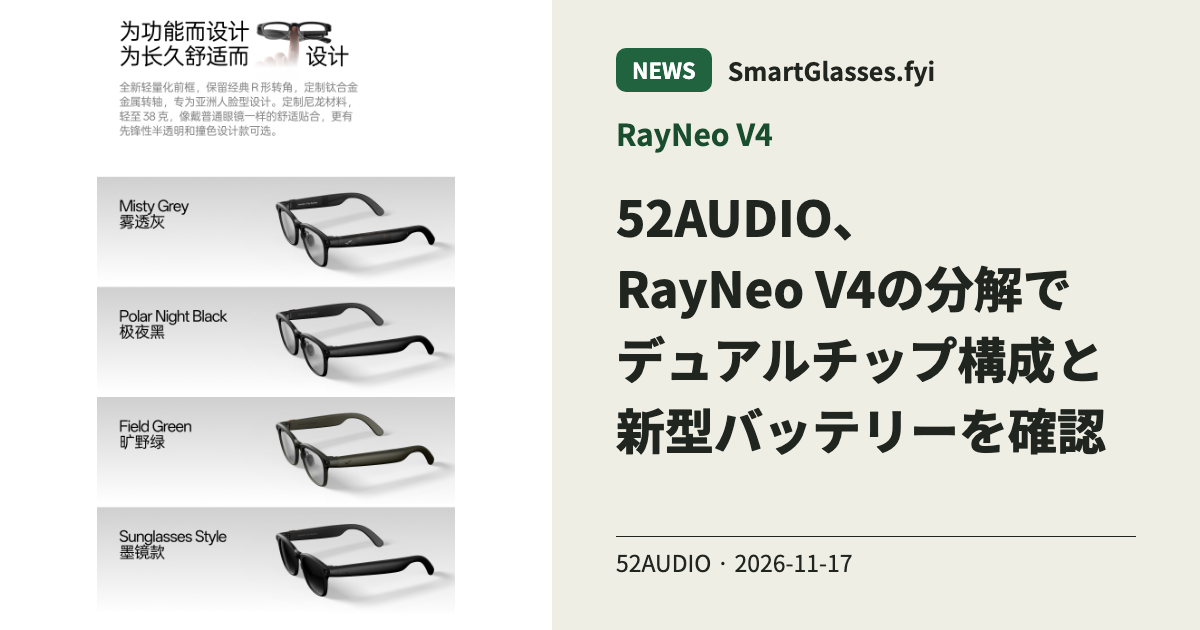
Chinese outlet 52AUDIO has published a full teardown of the RayNeo V4 camera AI glasses. The teardown confirms a dual-chip platform pairing the Snapdragon AR1 Gen 1 with a BES2800BP, a semi-solid-state battery, and a new square image sensor.

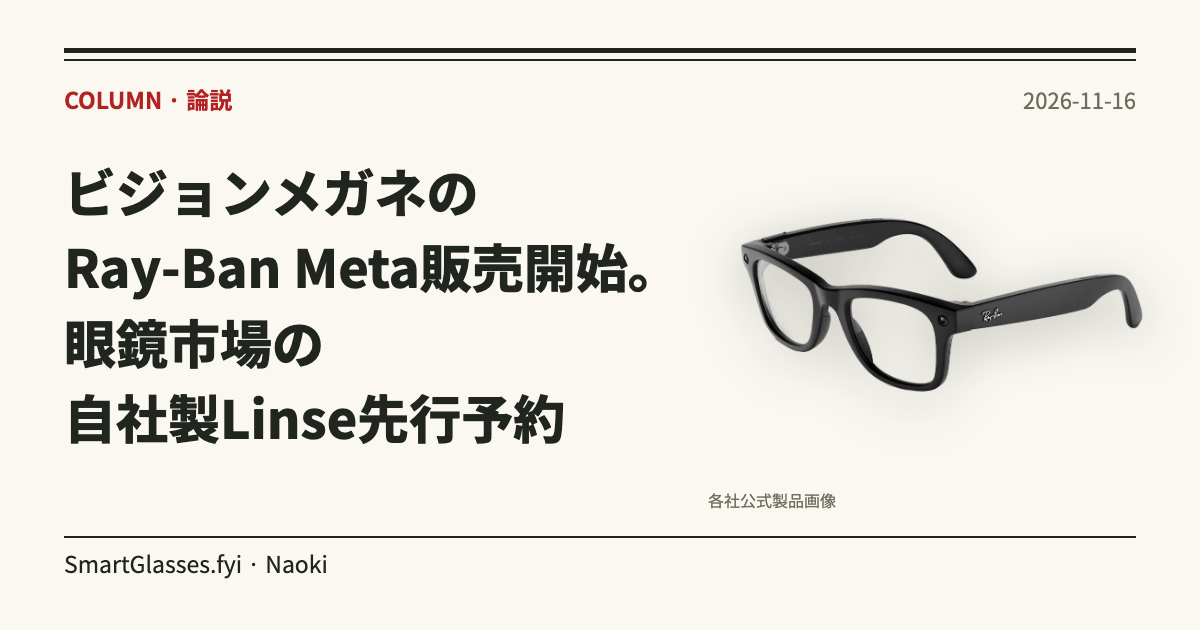
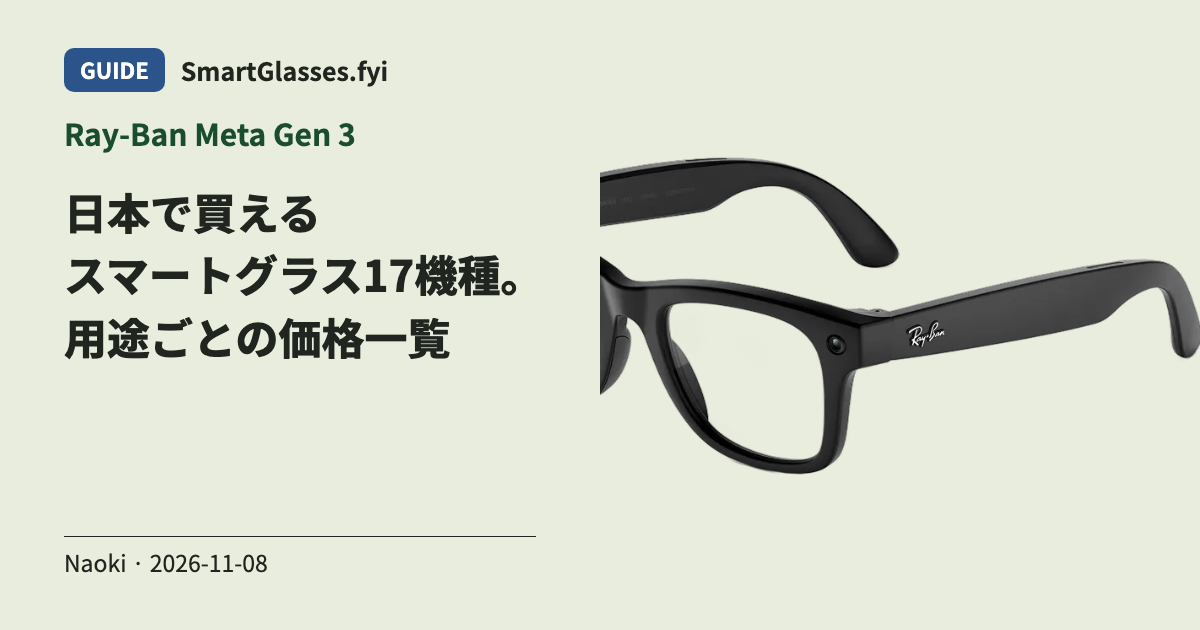
Ray-Ban Meta Gen 3 sold by Vision Megane, SABERA also sold at eyewear stores, and Linse Display made by Megane Ichiba itself. The relationship between eyewear stores and smart glasses has split into three patterns. Here is the order in which to check things at the store before buying.

Maeil Business Newspaper reported that 12 cases of cheating with smart glasses were caught in South Korean national qualification exams this year, and one candidate was caught at the Korea Exchange hiring exam. The national agency is now reviewing all 528 exam categories held this year for AI-assisted cheating.

Yonhap reported that Prime Minister Han Seong-sook pledged to mobilize all national capabilities to prevent AI-assisted cheating in this week's college entrance exam. The government will set up an interagency emergency response team to develop preventive and follow-up measures.

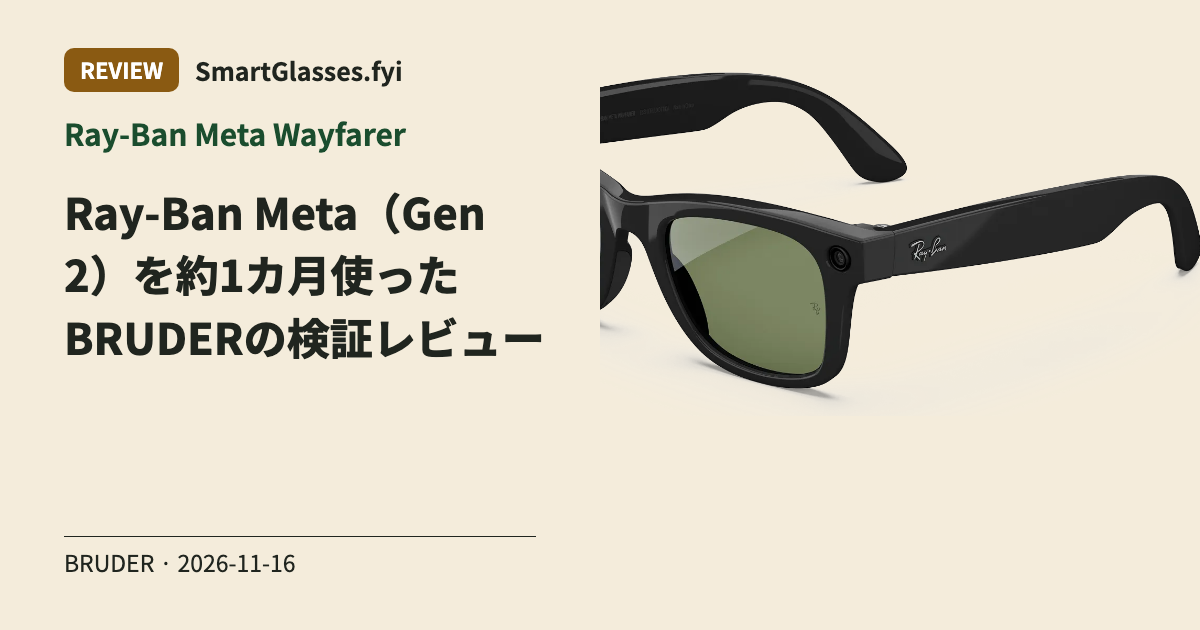
BRUDER, from Golf Digest, spent about a month with Ray-Ban Meta (Gen 2), testing voice search, 3K capture and live translation. It praises the low sound leakage and microphone performance while also noting privacy care when filming.

Nocut News examined South Korea's smart-glasses measures for the CSAT after a tax exam cheating confession. With only one dedicated staff member per test site, voices question effectiveness amid concerns over mistaken inspections and complaints.

Following the tax accountant exam cheating confession, South Korea is stepping up measures against AI-assisted cheating ahead of the CSAT. Specialist staff will be dispatched to all 1,312 test sites to spot AI glasses, while electronic detectors will not be introduced this year, leaving concerns over effectiveness.

Aignite has announced AI-ignite Glass, which connects Oracle NetSuite with smart glasses. Users can check sales and inventory by voice, and in warehouses combine QR code scanning with voice input to pick and inspect goods without putting items down.

South Korean police have secured, through the suspect’s lawyer, a miniature camera, a laptop and a mobile phone allegedly used to cheat on the tax accountant exam. The devices reportedly included no AI glasses, and police are also forming a nationwide response team for the CSAT.

Nocut News reports that the tax exam confession has surfaced non-glasses cheating methods such as miniature cameras, leaving education authorities—whose CSAT measures had centred on smart glasses—scrambling. Busan’s education office is discussing countermeasures for other methods with the ministry.

South Korea's education ministry demonstrated how invigilators can identify smart glasses by eye ahead of the CSAT, with hourly checks and dedicated staff at each venue. Measures against miniature cameras are still being refined, and a decision on radio jamming during the exam will be announced on Nov. 17.

AFPBB reported that Intelligent Eyewear, the AI glasses co-developed by Samsung, Google, Gentle Monster and Warby Parker, will go on sale in South Korea and the US on December 10. In Korea, 16 Gentle Monster models will be available to try and buy at the brand's stores, with hands-on displays at Samsung stores.

Ahead of South Korea's Nov. 19 CSAT, examinees, parents and teachers are questioning measures that focus on AI glasses when the tax accountant case used a miniature camera and earpiece. Teachers' unions say proctors cannot check every device by eye, and an expert urges a shift to managing the security of the whole exam environment.

Korean veterinary outlet DailyVet reported that smart glasses were added to the prohibited items list for the 71st national veterinary licensing exam in January 2027, for the first time. Candidates caught using them face a voided pass and a ban from the next two exams.

At a demonstration held three days before the CSAT, South Korea's education ministry relied on visual checks by proctors rather than detection equipment to spot smart glasses. Introducing tools such as thermal cameras was described as realistically difficult, and a teachers' group called for technical measures including radio-wave detection to be verified quickly.

South Korea's education ministry discussed checking every CSAT candidate's glasses ahead of the exam, Maeil Business Newspaper reported. The ministry was cautious about adding tools such as thermal cameras, and wearing a smart device alone will void the exam and bar the candidate from the following year.

Newspim reported that South Korea education officials will treat repeated refusal of a proctor glasses inspection at the CSAT as cheating, even if smart glasses use is not confirmed. Glasses are checked every session, with dedicated identification staff at all 1,312 test sites.

The top scorer of the 63rd tax accountant exam admitted to cheating with a micro camera and generative AI, and surrendered to the police. A short chronological account of how suspicion over a near-perfect score spread, how HRD Korea announced that it had found no abnormality, and how he turned himself in anyway.

Newsis reported exclusively that South Korea's newly created AI Inspectors, dedicated staff who watch for AI-device cheating in national qualification exams, caught a candidate writing answers while wearing smart glasses at the gas engineer practical exam in Seoul. It was the first catch since the inspectors were deployed on October 25, with 327 assigned across two exams.

Newsis explained that in South Korea's College Scholastic Ability Test, AI-glasses cheating reported after the exam can still lead to the same sanctions as an on-the-spot catch, following a deliberation process. Wearing or using the devices voids the exam and bars the candidate the following year, and even simple possession voids the exam.

The Korea Economic Daily reported that Han, the top scorer in South Korea's tax accountant exam, confessed on his lawyer's YouTube channel to cheating with electronic devices and generative AI. He said he photographed questions with a miniature camera, sent them to an AI and checked answers on a smartphone, did the same in the certified public accountant exam, and submitted a statement of surrender to the Seoul police.

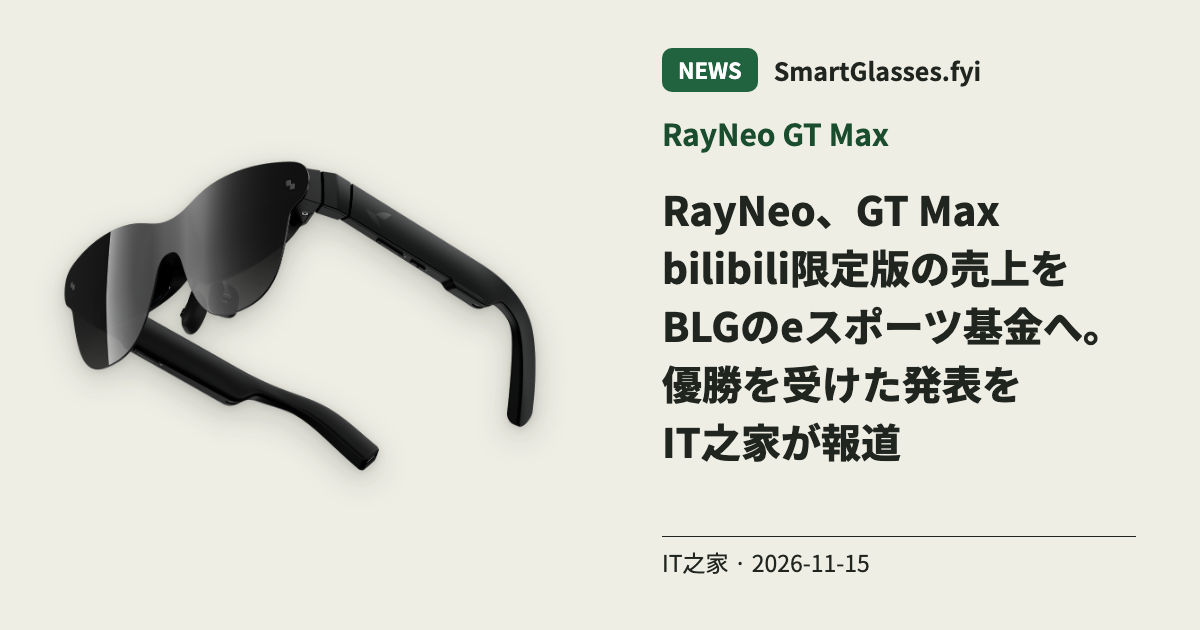
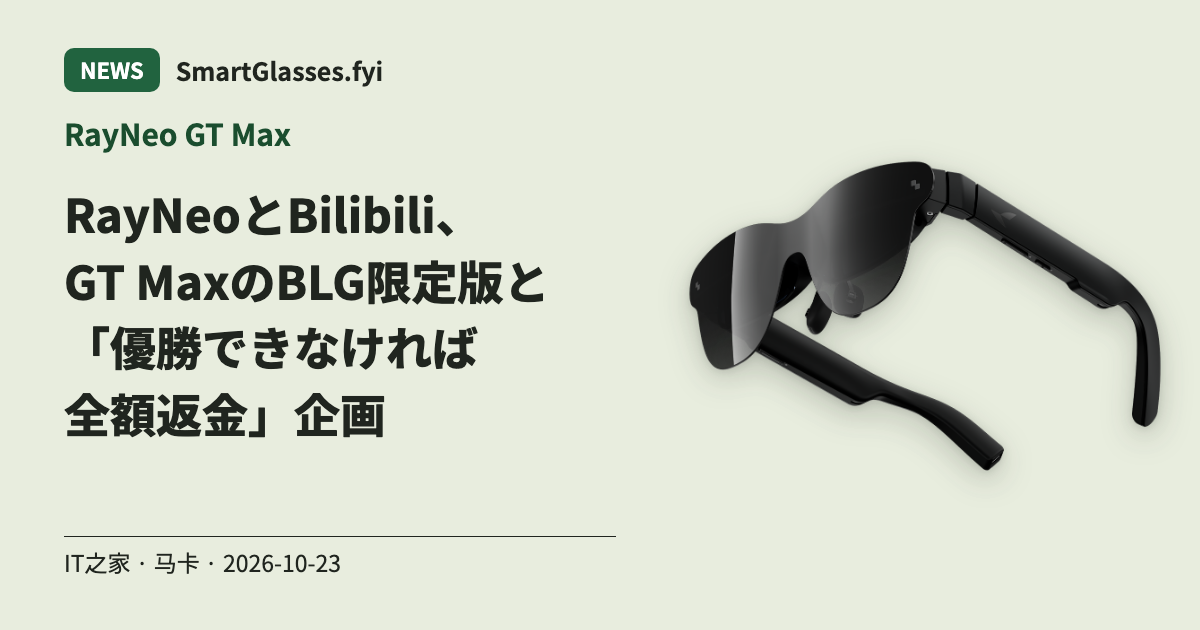
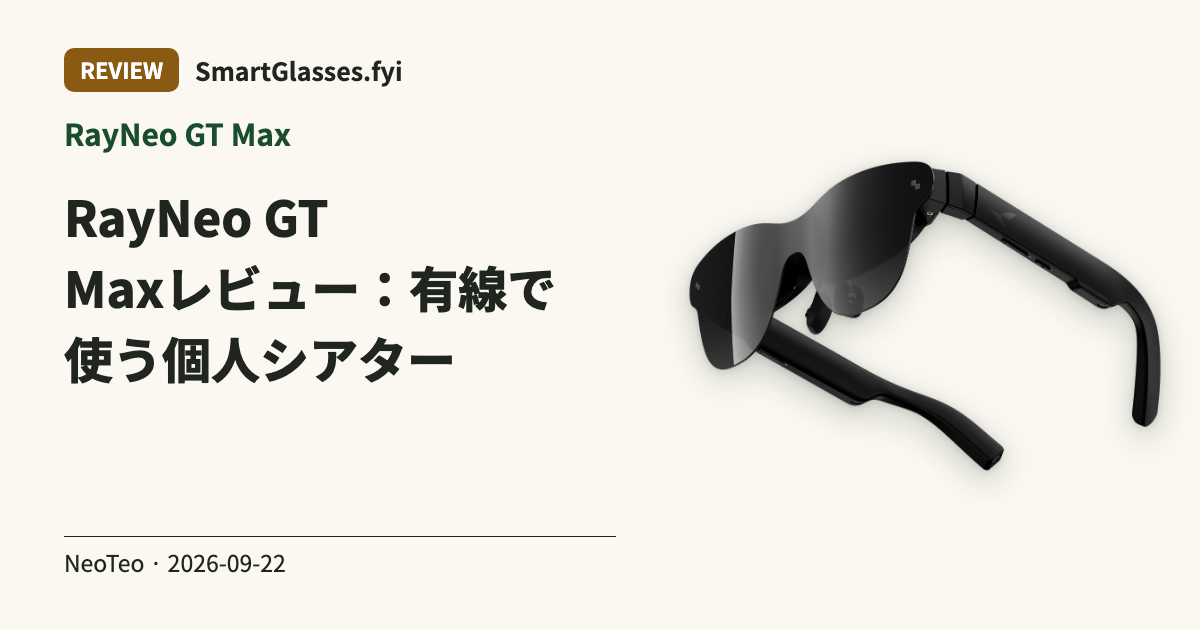
IT Home reported that after BLG won the League of Legends world championship, RayNeo announced the sales of its GT Max bilibili limited-edition glasses will go into the BLG esports fund, honouring the spirit of its earlier campaign. Buyers will also receive a commemorative champion-signed Bilibili premium annual membership card.

Yonhap reported that the Seoul Metropolitan Police assigned the case of the tax accountant exam top scorer, who admitted cheating with electronic devices and generative AI and surrendered, to its Metropolitan Investigation Unit, promising a swift and strict investigation. The written surrender was submitted through his lawyer on the morning of November 15.

Newsis reported that South Korea's Financial Supervisory Service, which administers the certified public accountant exam, is verifying the tax exam top scorer's statement that he used the same method there: photographing questions with a miniature camera, sending them to an AI and checking answers on a smartphone. The FSS said only that the matter is under review.

Yonhap reported that South Korea's Ministry of Economy and Finance is discussing suspending the validity of the pass certificate of the tax exam top scorer who admitted cheating with electronic devices and generative AI and surrendered to police. The response of the ministry overseeing the national qualification has become a focus of the case.

Newsis reported that the Financial Supervisory Service confirmed the tax exam top scorer, who admitted using the same AI method in the certified public accountant exam, actually failed this year's 61st first-stage CPA exam. The regulator continues to verify the facts of the cheating claim.

The People Power Party's chief spokesperson criticised the government's zero-tolerance stance on AI-glasses cheating ahead of the CSAT as an empty threat, noting the detector-development contract was only recently tendered at 50 million won and no verified equipment exists.

The People Power Party leader said the tax-exam top scorer's confession to AI-assisted cheating makes it hard to trust national qualification results at all, and urged education authorities to present credible countermeasures that do not rely on visual checks alone before the CSAT.

SixTONES member Juri Tanaka tried on the AiLENS AI smart glasses at the TOKYO Universal Walking 2026 event at Tokyo Metropolitan Gymnasium. When he asked the name shown on an illustration panel, the answer appeared as text in the lens; the glasses also support translation and notifications via a smartphone link.

South Korea's Maeil Business Newspaper reported that Samsung's Intelligent Eyewear AI glasses will officially launch in South Korea on December 15. The article details safeguards against misuse, including a flashing LED while filming, shooting blocked when the LED is covered, and a camera that works only when the glasses are actually worn on the face.

IT Home reported that South Korea's government will investigate all national qualification exams held this year for similar AI cheating, after the top scorer in the tax accountant exam admitted misconduct. The candidate faces cancellation of the result and a five-year ban, and the government plans comprehensive countermeasures within the year, including infrared detectors and clearer bans on smart devices such as smart glasses.

MacRumors, citing Bloomberg's Mark Gurman, reported that Apple plans to unveil its first smart glasses at WWDC in June 2027 and ship them before the end of that year. The display-free prototypes, code-named N50, would rely on Siri controlling iPhone apps, with no separate glasses apps planned.

A Korean business daily covered a YouTuber's experiment answering the actual 63rd tax accountant first-stage exam with AI glasses. After earlier attempts fell short, a newer Claude model scored a perfect 400 out of 400, and the creator warned about supervision, penalties and whether the exam system remains fit for purpose.

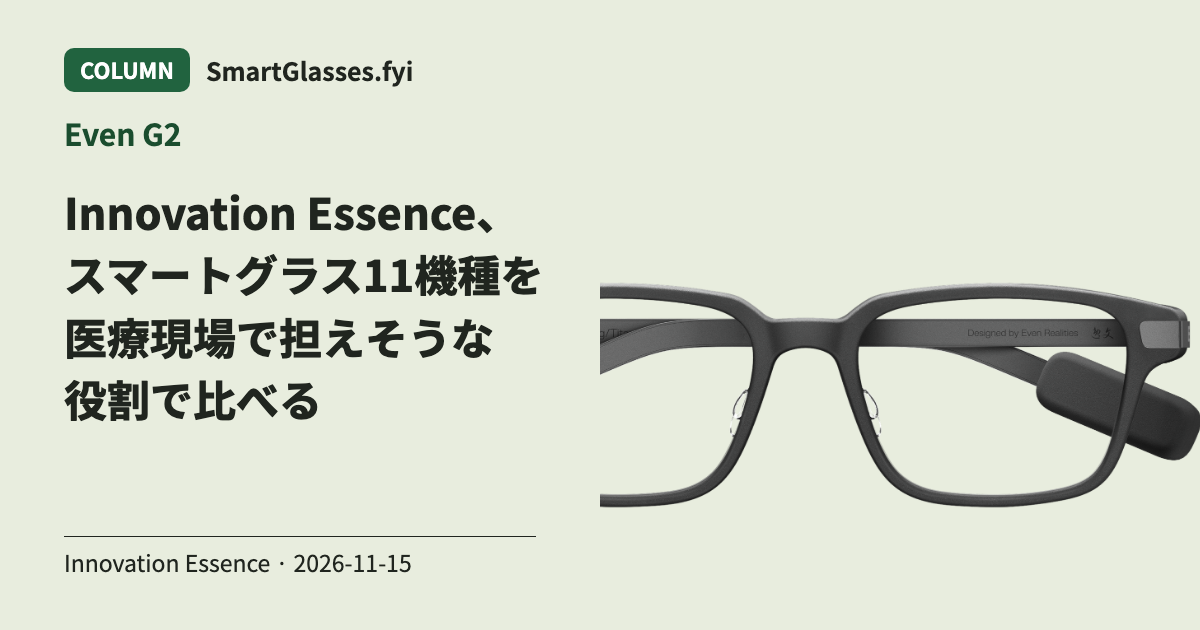
Innovation Essence compared 11 current smart glasses across camera, display, standalone AR and tethered categories, assigning each the healthcare job it could most plausibly do. It argues camera-free display glasses are the easiest to defend today, while consent and record governance remain shared challenges.

A chronological roundup of confirmed smart glasses cheating cases in South Korean exams in 2026. Busts in national technical qualification exams, a swap to smart glasses after entry checks in university essay exams, four cases in school exams, the tax accountant exam that ended with the top scorer turning himself in, the final CSAT tally, and the countermeasures that have since moved to detectors and budgets.

Herald Business reported suspicions that the top scorer in South Korea’s 63rd certified tax accountant exam, who scored 397.5 out of 400 on the first-stage exam, cheated using AI smart glasses. The finance ministry has ordered the exam operator to establish the facts, but no evidence supporting the allegation has emerged and the case remains at the suspicion stage.

Newsis reported that ahead of South Korea's College Scholastic Ability Test, even students who wear ordinary glasses fear being suspected of using AI glasses. Telling the devices apart by appearance is hard, the recording LED can be hidden with a cheap sticker, and proctors still lack clear on-the-ground criteria.

The Korea Economic Daily published an exclusive phone interview with Han, the top scorer in South Korea's tax accountant exam, who denied using AI glasses to cheat. He argued he also placed first in the essay-based second stage, and the exam body said none of the four proctors saw suspicious behavior and no CCTV existed to review.

The Asahi Shimbun reported on a trial at an Ibaraki Robots basketball game where four hearing-impaired spectators watched through smart glasses. The system, developed by Hiroshima-based BeRise, projects the score and player information onto the lenses and flashes icons for whistles and buzzers.

Newsis reported that South Korean streamer Gamst, who describes his own school math level as near the bottom, used AI glasses bought for about 900,000 won to work through past suneung math questions and missed only five, finishing with roughly 50 minutes to spare. He voiced concern about cheating and called for thorough pre-exam checks of devices and glasses.

A National Assembly e-petition in South Korea calling for stronger nationwide exam supervision and legislation against cheating with AI smart glasses reached its 100-supporter preliminary threshold. Sparked by the tax exam controversy, it asks agencies to set common rules for electronic devices while protecting ordinary glasses wearers and medical-device users from unfair disadvantage.

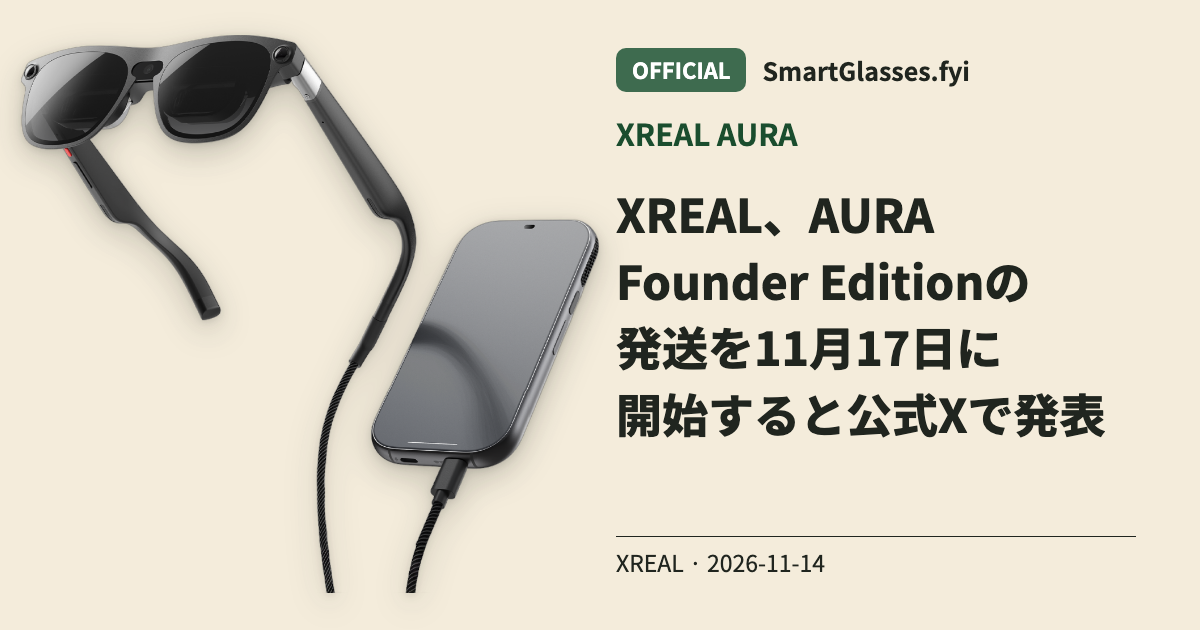
XREAL announced on its official X account that shipping of the AURA Founder Edition, its Android XR glasses, begins on November 17, with first deliveries expected in the following days and shipping confirmation emails sent to founders.

Yonhap took an in-depth look at AI glasses as both an exam-cheating tool and a covert-filming risk. Universities and schools in South Korea have caught a series of cases, identification training is under way for the suneung, and the article says everyday rules, such as making recording visible to bystanders, have yet to catch up.

A proctor at the Korean tax accountant exam testified that pre-exam training never mentioned AI glasses and that he never saw a metal detector, while phones were not collected either — contradicting the administering body's account, TopStarNews reported, citing MBC's interviews.

Waseda, universities and schools in South Korea, Taiwan, China. Smart-glasses cheating cases have surfaced one after another across these countries, but the decisive factor in detection was never a device. This article takes stock of where Japan's exam organizers stand, using South Korea's choice for the Suneung — stationing people who can tell the difference — as the reference point.

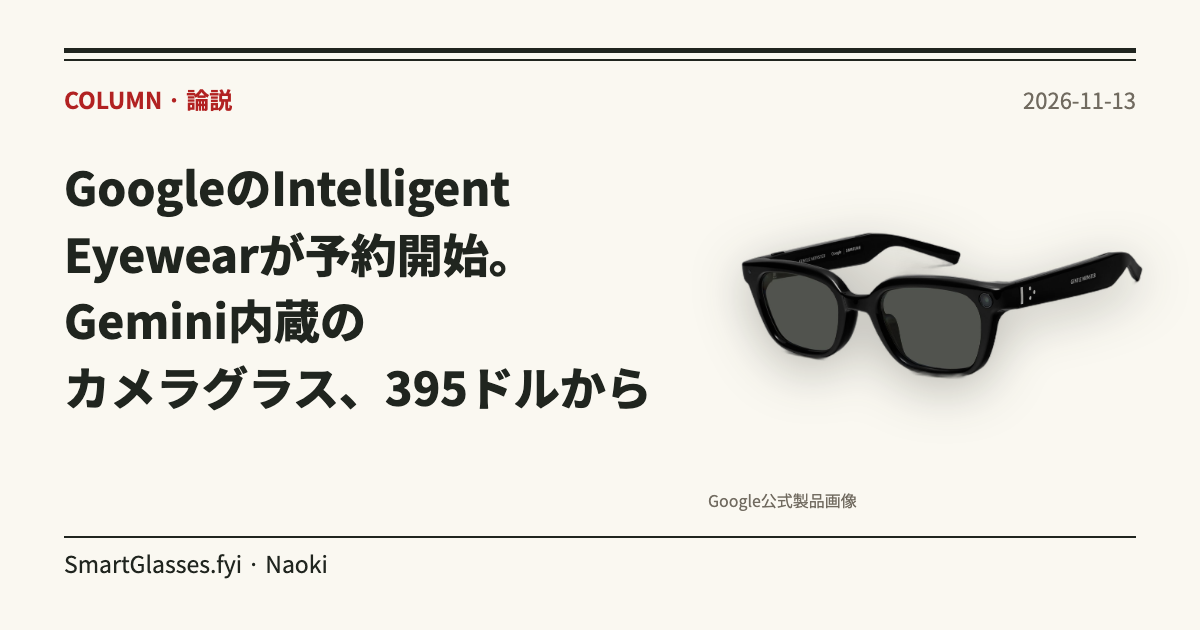
Camera-equipped AI glasses Google began taking pre-orders for on November 12, 2026, built with Samsung, Gentle Monster, and Warby Parker. There is no display; you use them through Gemini, Maps, and translation. They go on sale December 10 in the United States and South Korea. Japan is not included.

South Korea's Ministry of Education surveyed every middle and high school in the country and announced four cases of cheating with AI smart glasses in school exams. The decisive clues were a hand repeatedly touching the frame, a green light, and glasses the student did not normally wear. This article explains why clues that worked at schools, where teachers know their students, cannot be relied on in large-scale exams.

For the Suneung on November 19, 2026, South Korea's Ministry of Education will station one dedicated smart-glasses identification officer at each of all 1,312 test sites. Judgments follow a three-step process, and the officers receive training with real devices beforehand. This article sets out the difference between South Korea, which has moved on to stationing people, and Japan, where preparations still center on the wording.

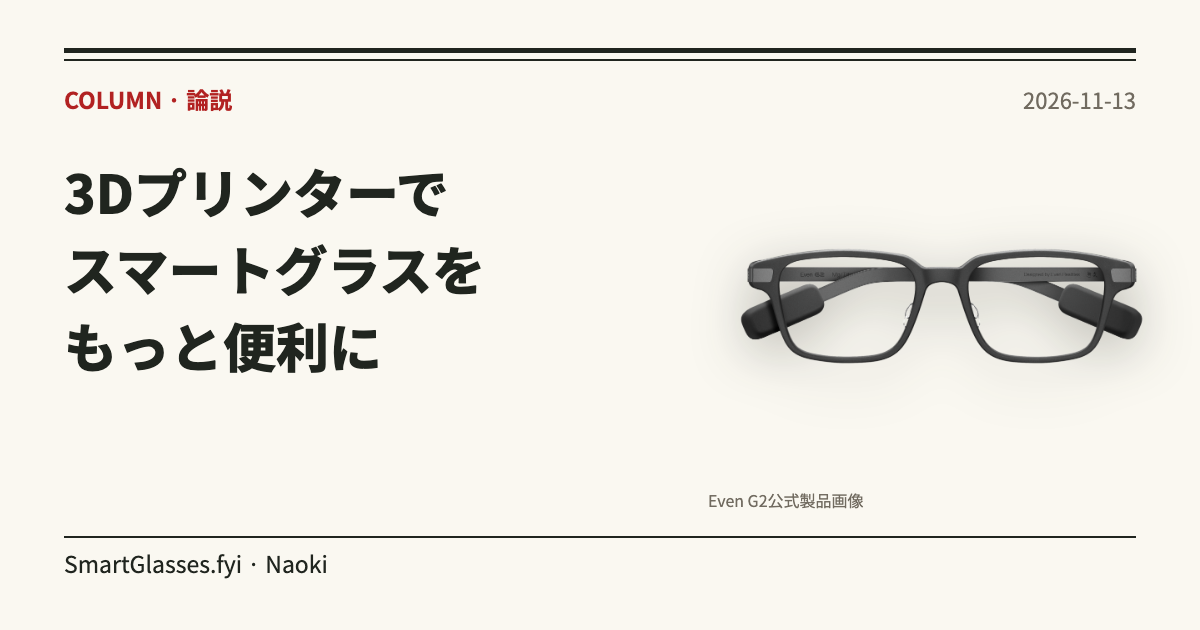
A roundup of small accessories to print first if you own both smart glasses and a 3D printer. Ear pads and temple covers for the Even G2, a drop-prevention ring for the Even R1, light-blocking parts for XREAL, and a camera cover for Ray-Ban Meta, picked from free models on MakerWorld and Printables. Entry-level printers are also cheaper in Bambu Lab's Black Friday sale.

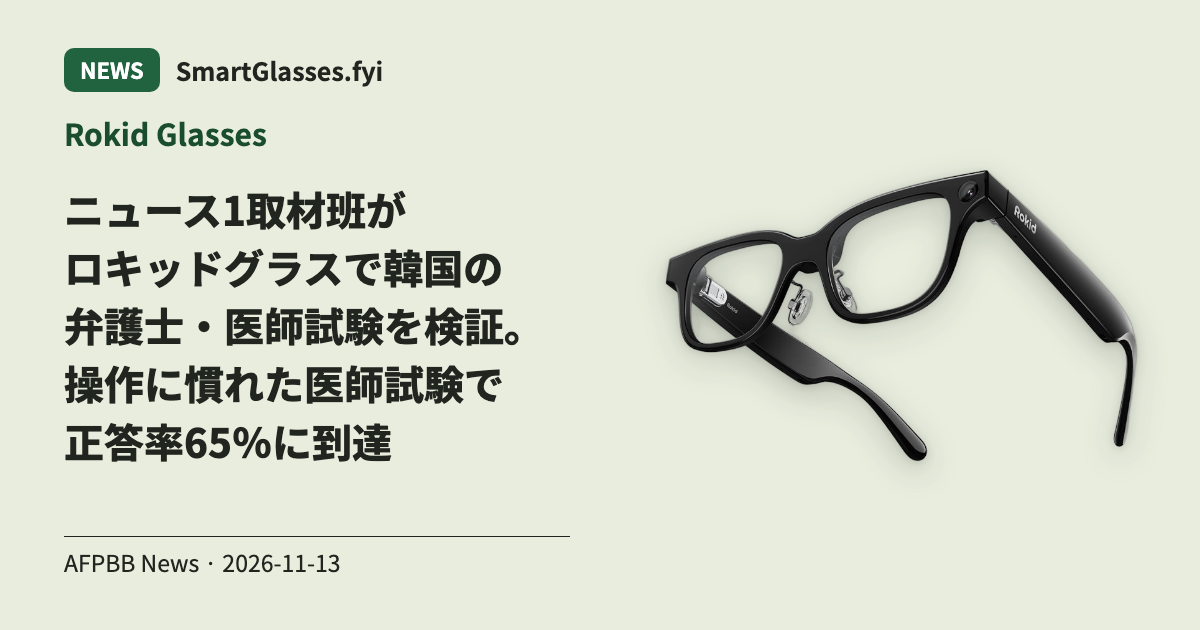
A News1 reporting team in South Korea used Rokid Glasses to work through questions from the national bar examination and the medical licensing examination. While still unfamiliar with the operation they answered only 5 of 19 bar exam questions correctly, but after learning the capture routine they scored 13 of 20 on the medical exam, an accuracy of 65 percent.

Financial News reported that as AI-glasses cheating suspicions spread around the top scorer of South Korea's tax accountant exam, the runner-up, surnamed Yoon, posted a video of himself solving problems impromptu, drawing wide attention. Yoon said he has never worn glasses and asked people to refrain from groundless criticism.

Sisa Journal reported that ahead of South Korea's College Scholastic Ability Test, an online proposal spread to dunk every candidate's glasses in an ultrasonic cleaner before entry, supposedly cleaning regular glasses while disabling AI glasses. Experts rated the idea impractical, noting some AI glasses are water-resistant and there is no legal basis to force cleaning.

Yonhap reported that South Korea's National Assembly is pushing to add about 6.57 billion won to next year's budget to counter AI smart glasses cheating in national qualification exams. The plan funds 7,200 radio-wave detectors and more than 23,000 specialist staff; six smart-glasses cheating cases were caught in such exams this year.

ET News reported that the first preorder round for Intelligent Eyewear, the AI glasses from Samsung, Google and Gentle Monster, sold out its main models within hours in South Korea and the US. The New York public preview is also fully booked ahead of the December 10 launch.

VR Tuoluo reported on a smart-wearables industry matching event in Shenzhen, where Guangdong province said it is studying designating AI glasses as a key support area for low-power chips, micro-displays and flexible electronics. INMO and other makers published procurement needs for core components, and Ant Group's digital unit showed AI glasses being used for chain-restaurant inspections.

Munhwa Ilbo reported that the first-ever perfect scorer on South Korea's Legal Education Eligibility Test also came under online suspicion of using AI glasses, and announced he will solve the suneung Korean section in a live, unedited broadcast on exam day to prove his ability. The tax exam controversy has spilled over to other top scorers.

Daily NTN reported that the Human Resources Development Service of Korea is fact-checking the AI smart glasses allegation against the tax accountant exam's top scorer. The four proctors said they saw no suspicious behavior, there was no CCTV in the borrowed school classroom, and the candidate's essay answers are under expert re-review.

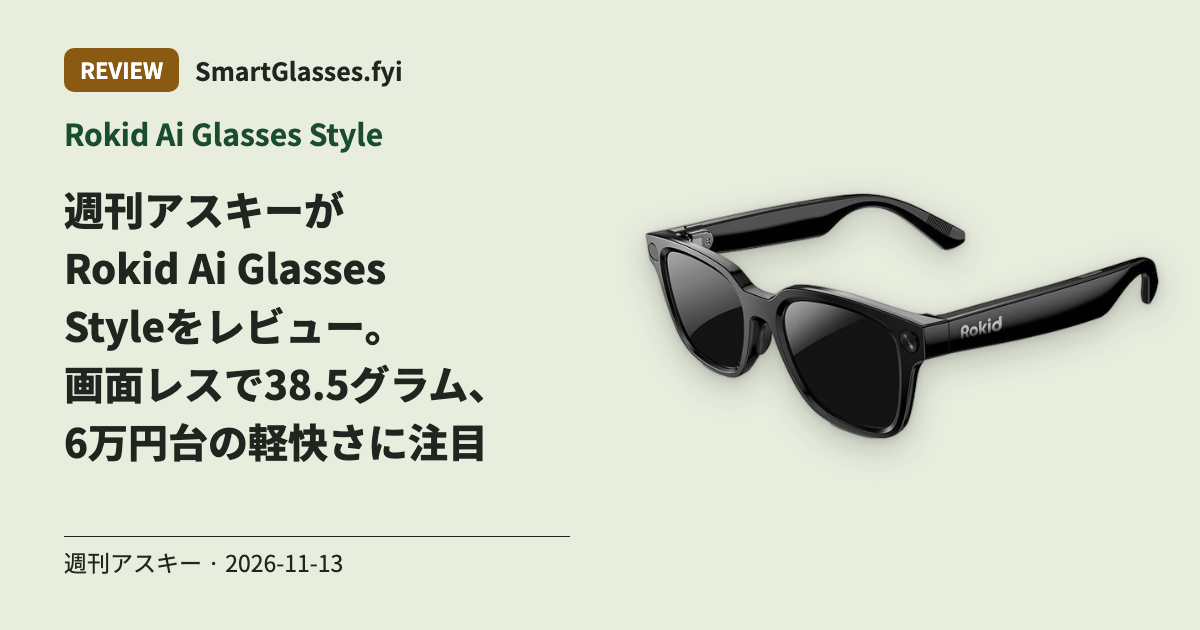
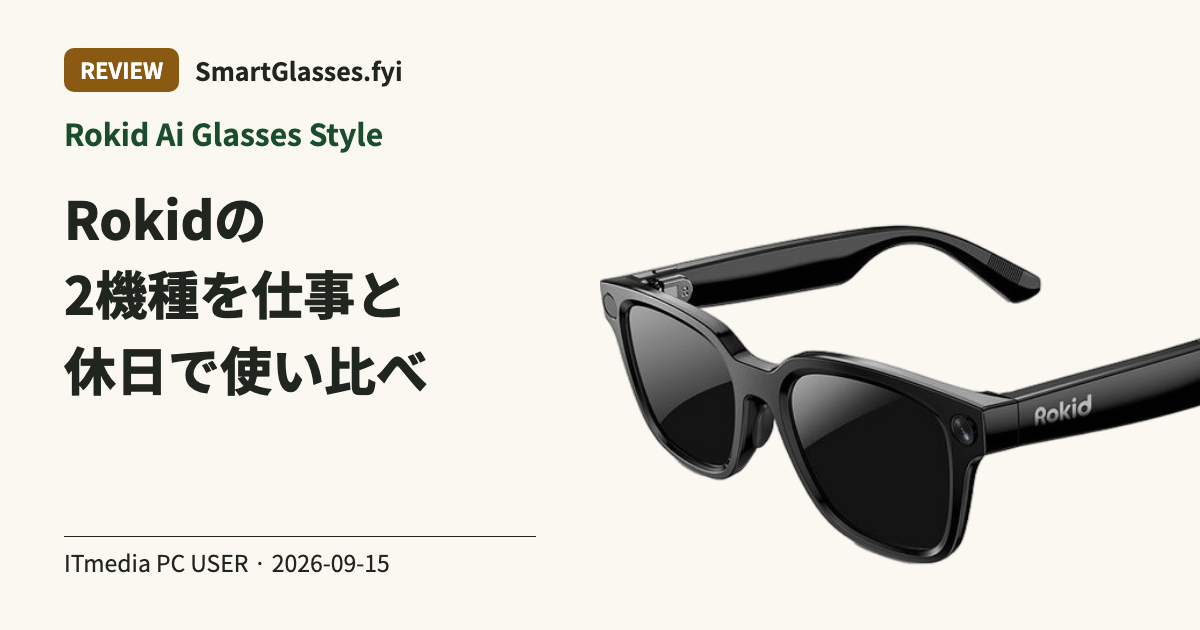
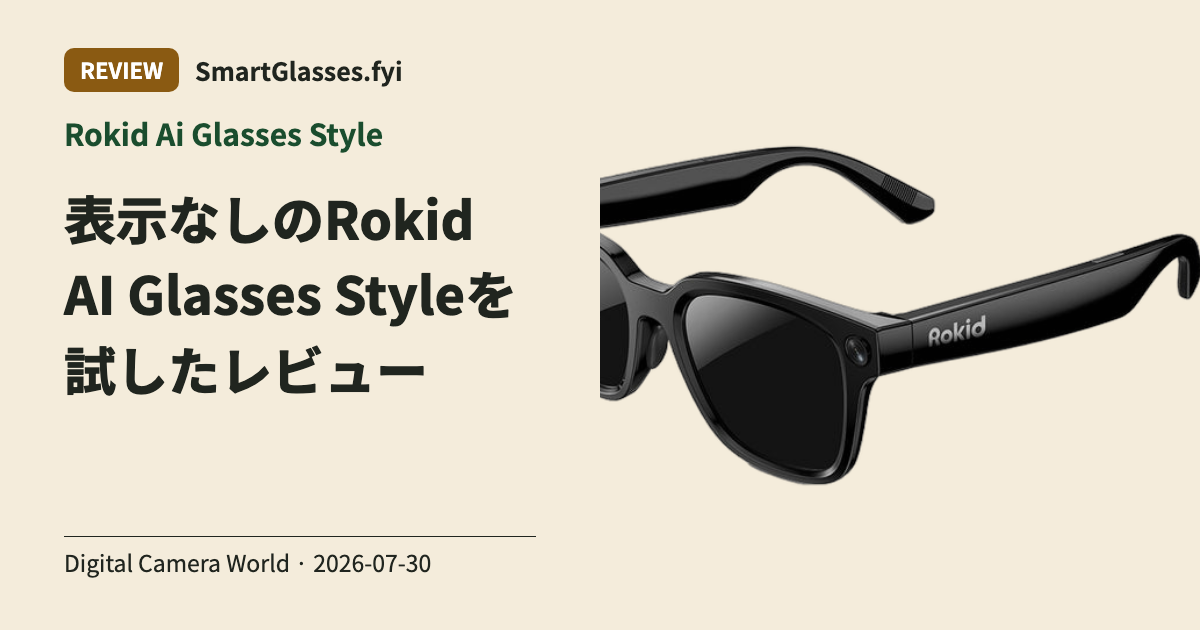
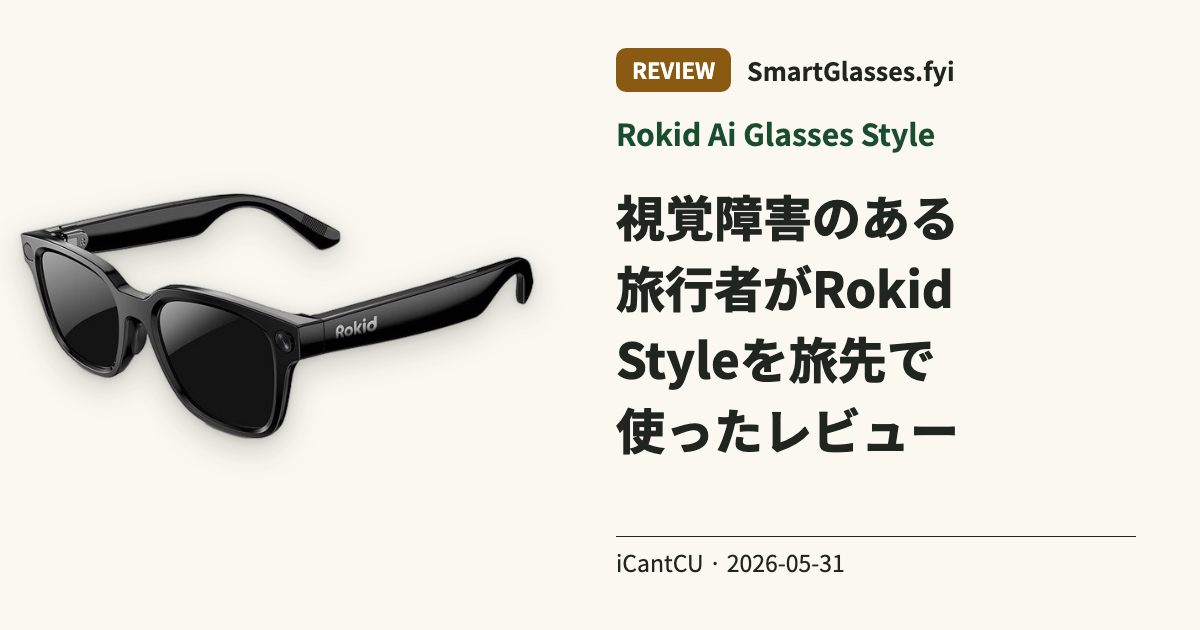
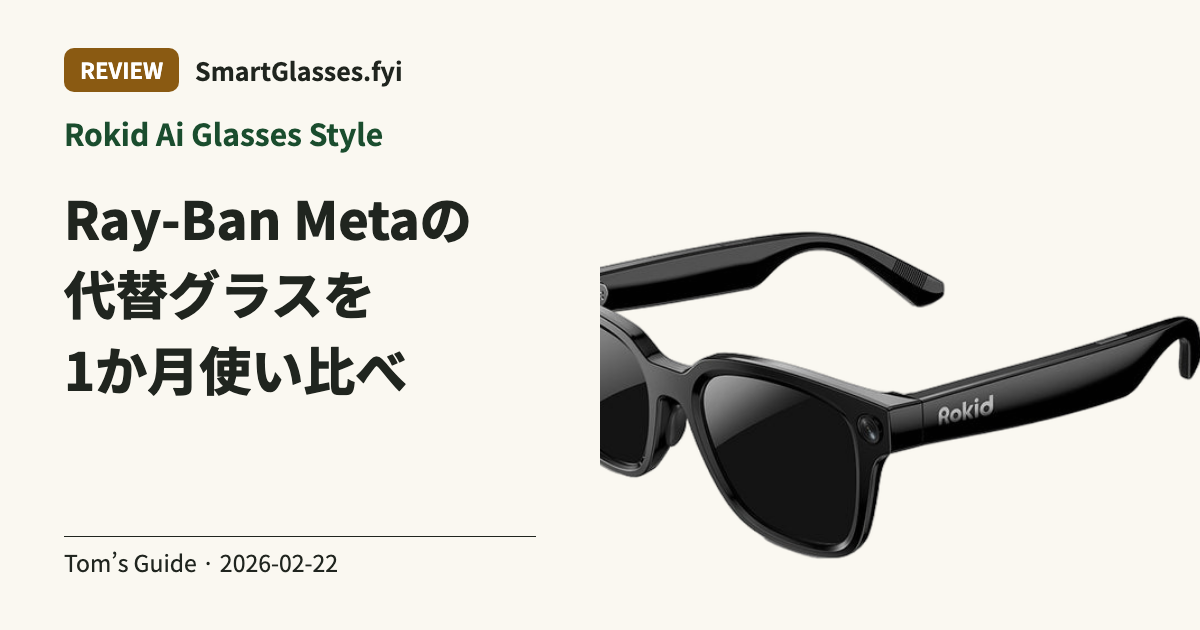
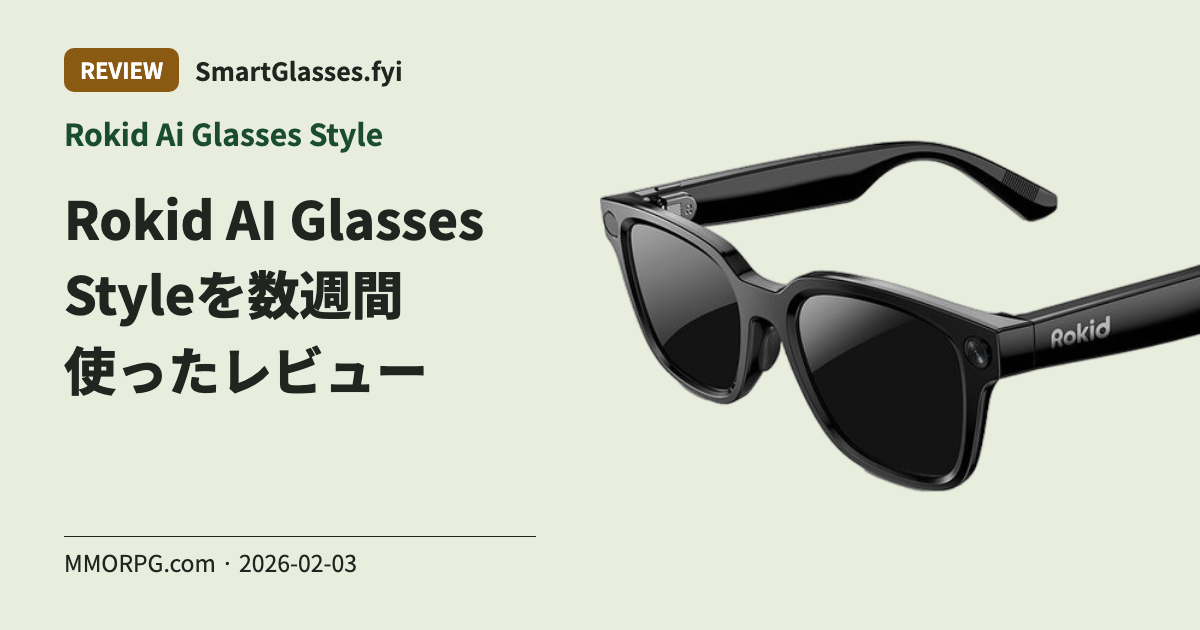
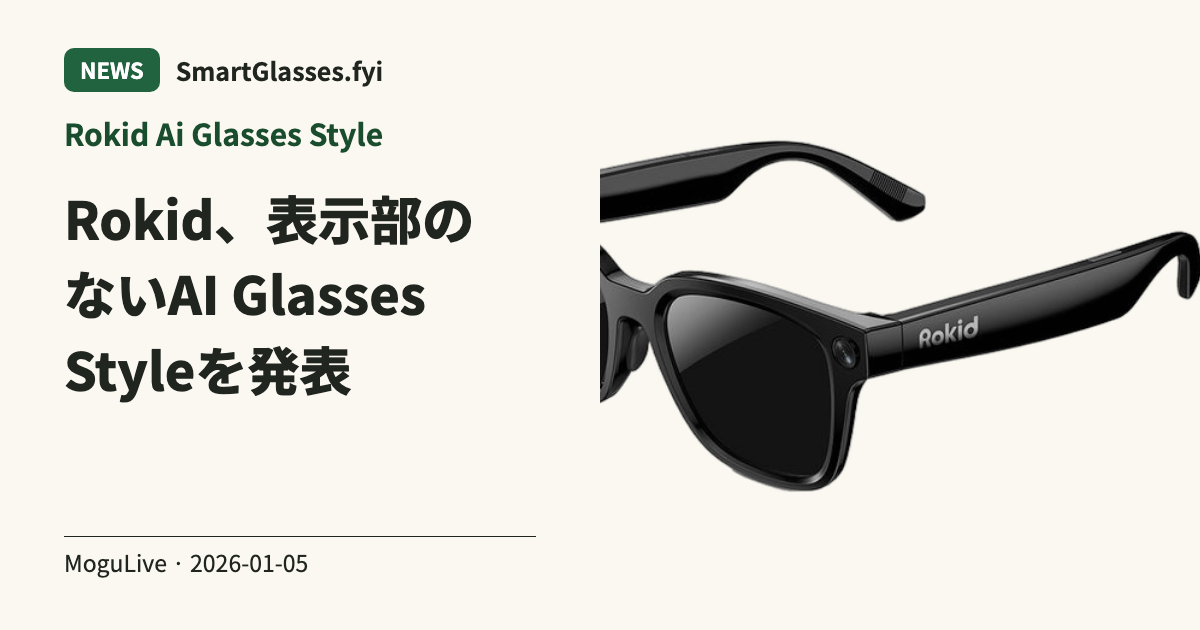
Weekly ASCII published its review of the Rokid Ai Glasses Style, an AI glasses model that drops the display entirely. It highlights the roughly 38.5 g weight, a price in the mid-60,000-yen range, a 12-megapixel wide-angle camera with stabilization, voice AI and translation features, and up to 12 hours of battery life.

The Senedd's presiding officer told members he will not consider further requests to use AI-equipped glasses in the chamber until a review of wearable technology reports, reversing an earlier ruling that had allowed them as teleprompters. Recommendations are due in 2027.

AI sunglasses from China's DPVR have placed in the upper ranks of Amazon's smart glasses bestseller lists in both the United States and Japan, reaching the top three by brand. VR Gyro attributes the result to the dominance of display-free camera-and-voice designs and to DPVR's wide range of frame styles.

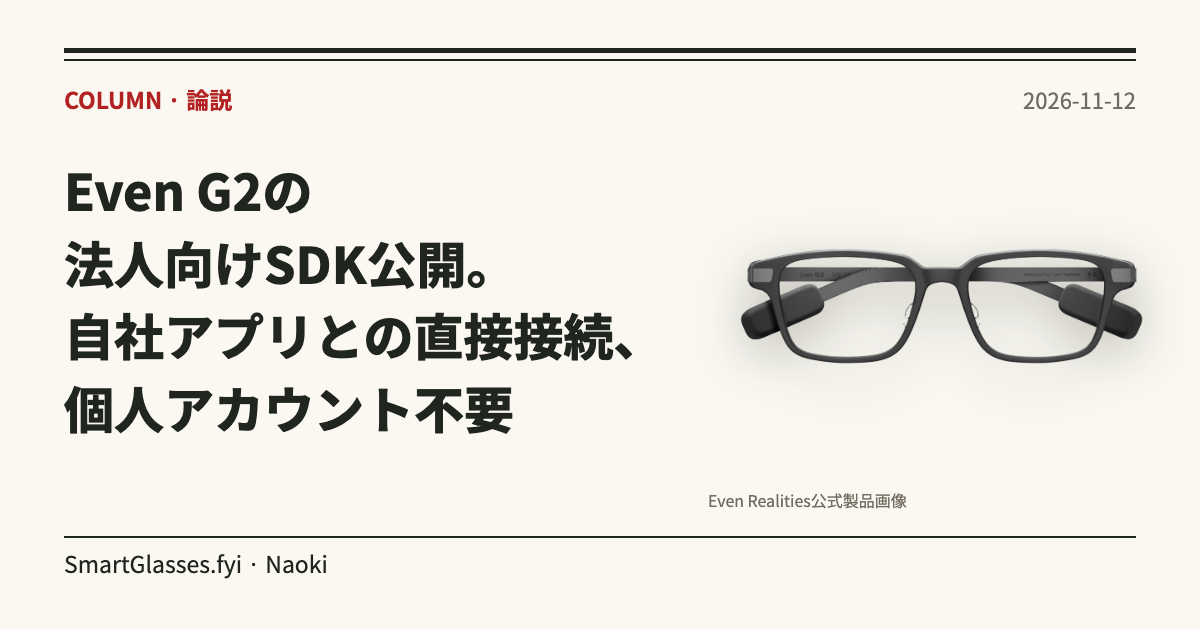
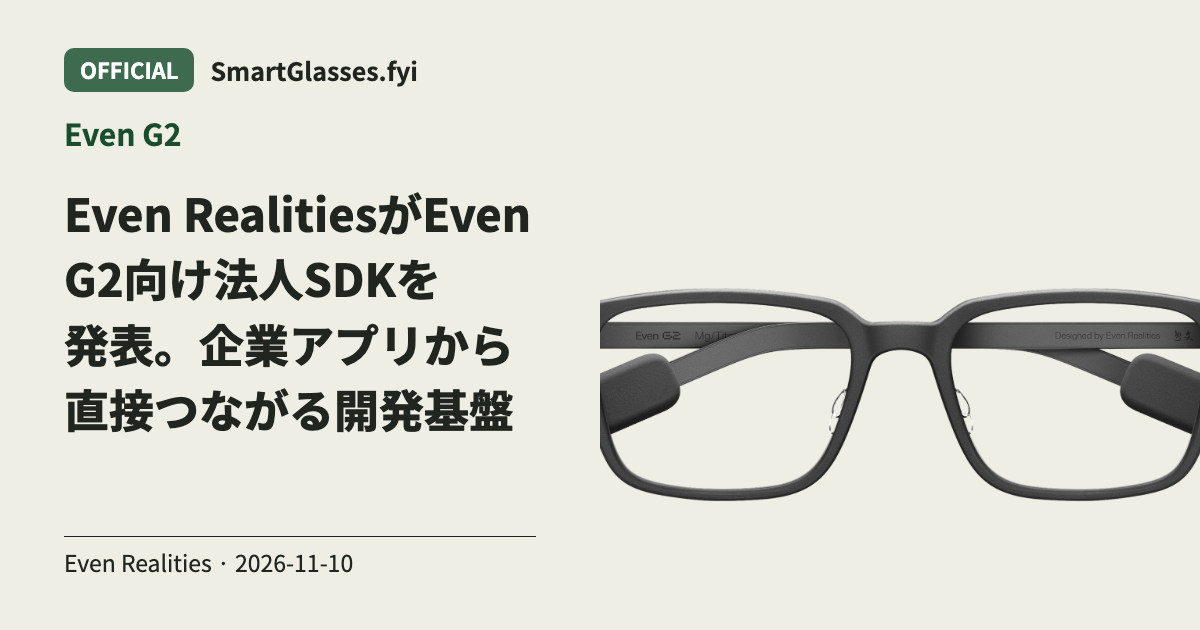
The Enterprise SDK, released on November 10, 2026. It supports Flutter and native iOS and Android, and connects the glasses directly to a company's own app over Bluetooth. Employees need no personal account, and each developer account includes three free device licenses.

At an education symposium held at South Korea's National Assembly by the Coalition for Digital Literacy, a visually impaired doctoral researcher from Seoul National University presented her experience using Meta AI glasses for content accessibility. Participants, including Meta Korea's vice president, also discussed ordinances and institutional support for using AI glasses in schools.

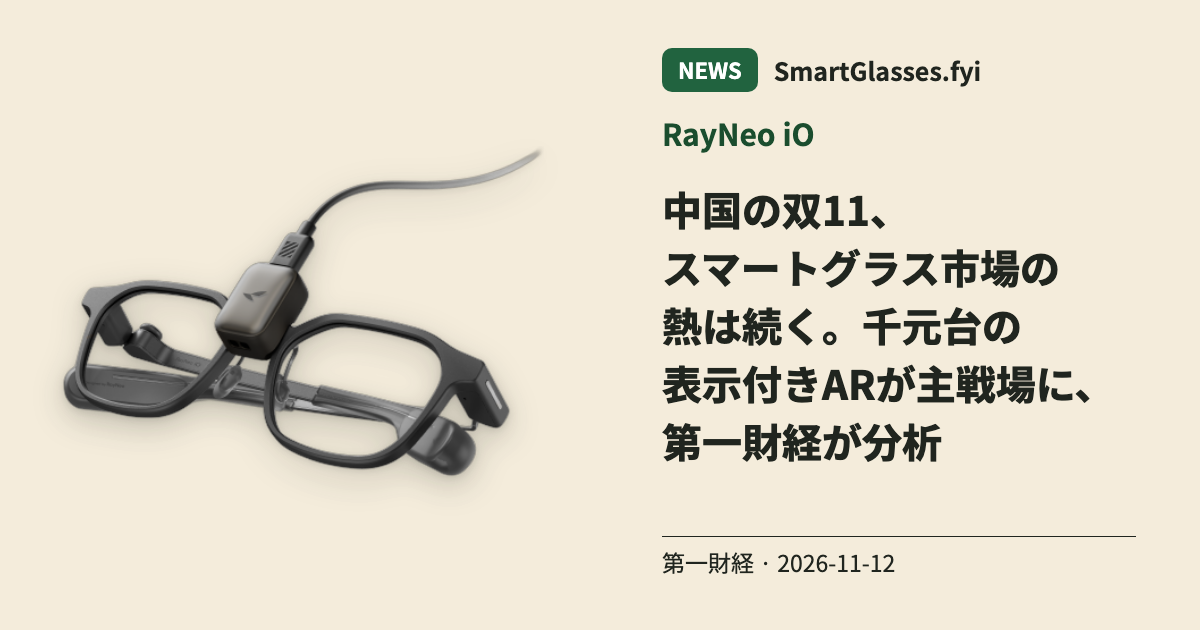
Yicai analyzed China's smart glasses market during the Double 11 shopping festival. Baidu and ANTAVIC teased a co-branded AR model for December, and display-equipped glasses in the 1,000-yuan class became the volume sellers, while overall market growth slowed and analysts said everyday use cases have yet to take hold.

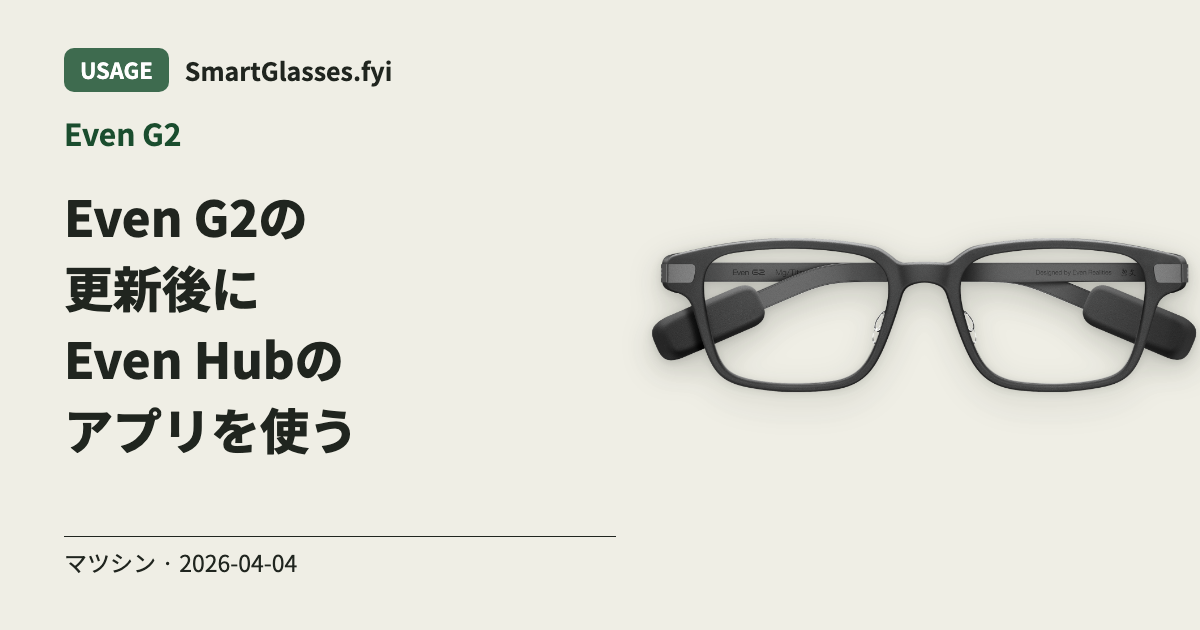
Even Realities published a video titled 'New On Even Hub' on its official YouTube channel, presenting what is new on the Even Hub companion platform for G2 users.
Google announced on its official blog that pre-orders have begun for Intelligent Eyewear, its Gemini-powered glasses made with Samsung, Gentle Monster and Warby Parker. The frames weigh around 41 grams, with general availability set for December 10.
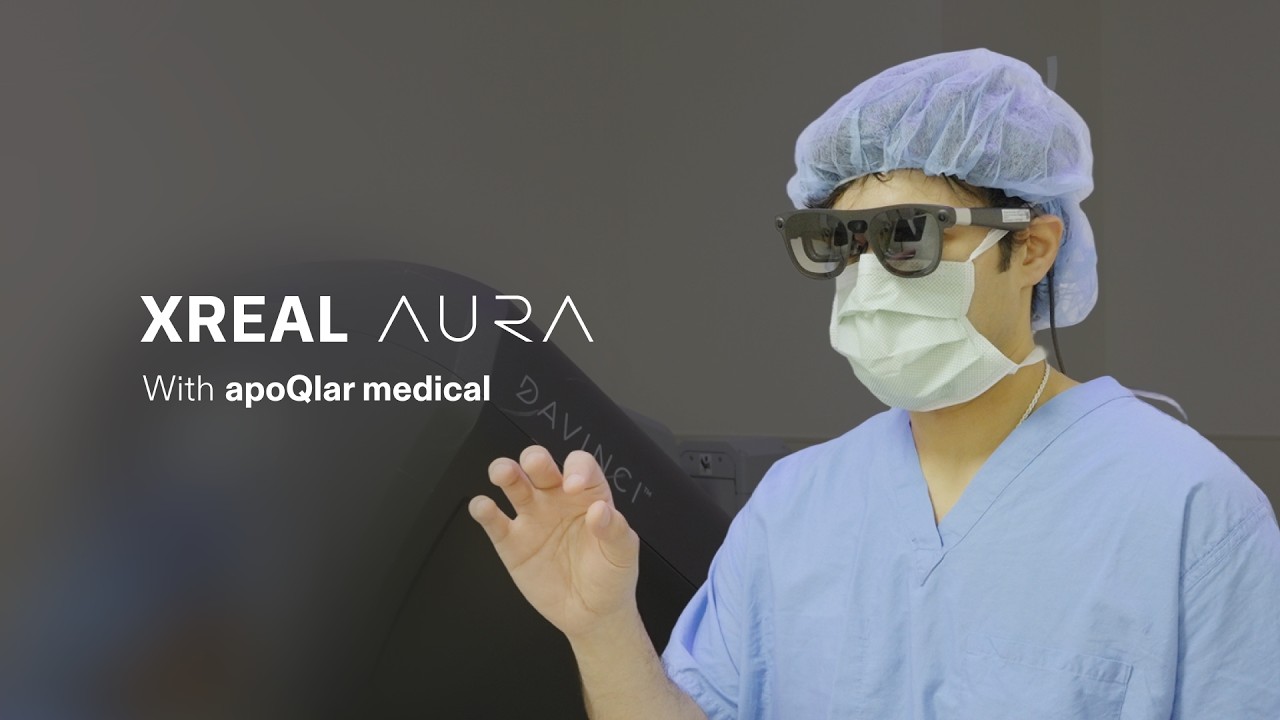
XREAL Japan published an official video showing its Android XR glasses XREAL AURA working with apoQlar's HoloMedicine platform, letting medical teams share a 3D point of view.

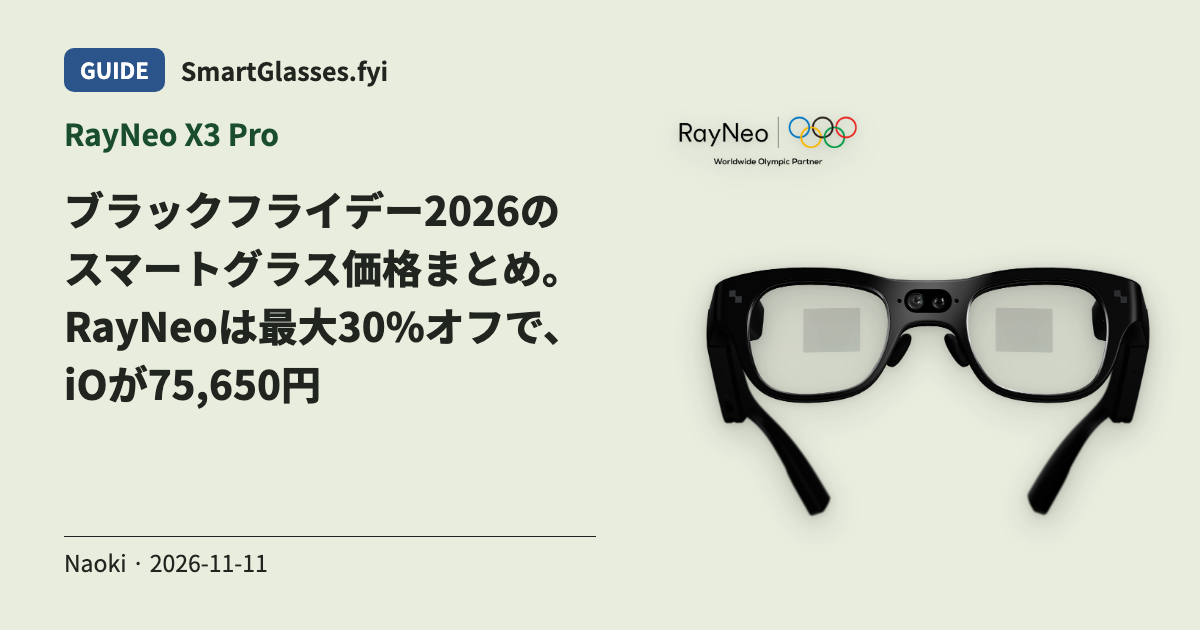
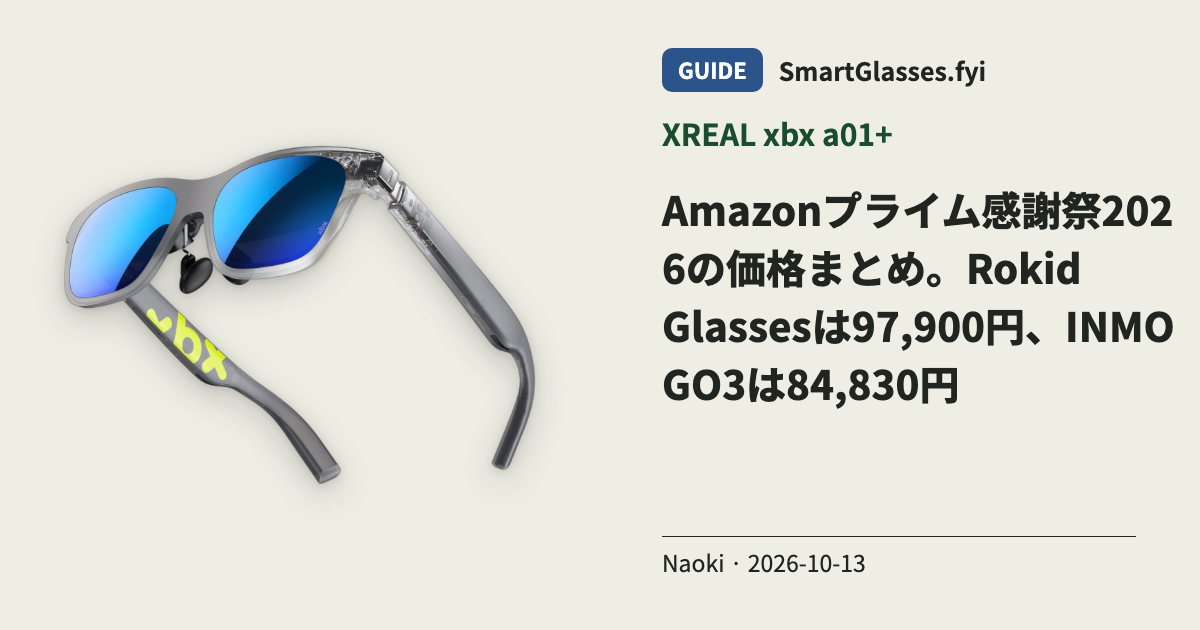
Current prices in RayNeo's main sale, Rokid's early sale gifts and Even's year-end campaign, listed at prices confirmed on each maker's official Japanese store. VITURE's early-winter sale ended on November 12 and prices are back to regular.

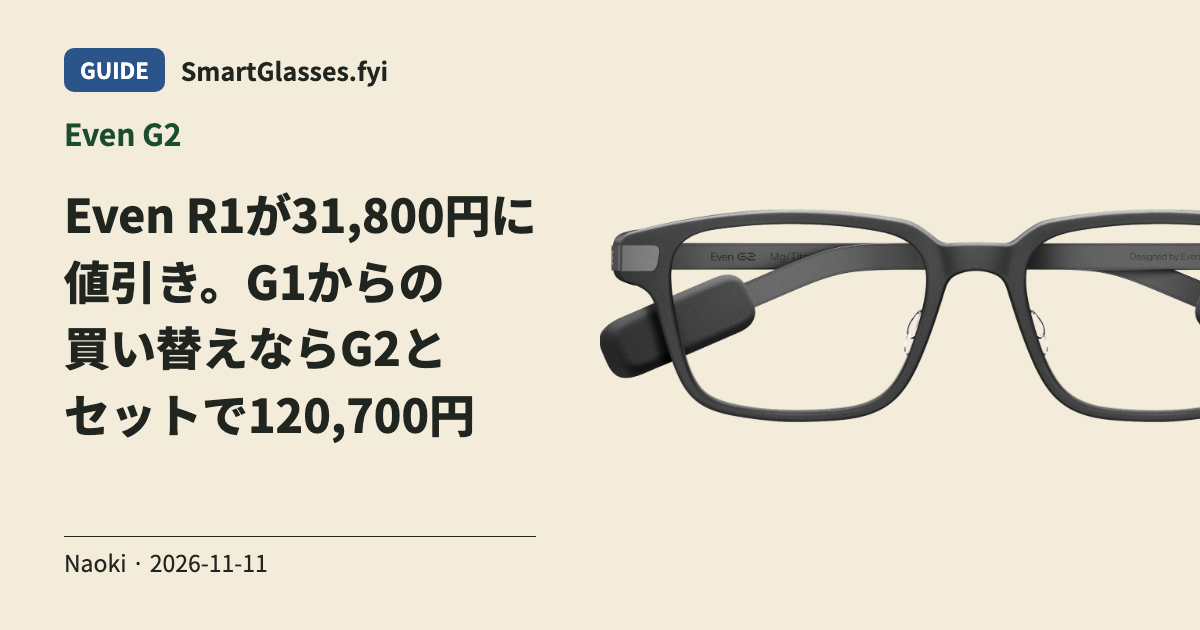
In the campaign running from November 13 to December 26, the Even R1 falls to 31,800 yen and the sunglass clip to 8,800 yen. This piece covers the trade-up offer for G1 owners, the totals when bought as a set, and why the R1 is worth buying.

Reuters reported that Marchon Eyewear and Marcolin, the eyewear makers owned by California-based VSP Vision, will unveil their own smart glasses project in 2027. Nicola Zotta, managing director of both companies, said a launch plan is being prepared but did not say which brand will carry it.

MacRumors reported that Chinese manufacturing equipment maker Quick Intelligent Equipment said at its quarterly earnings briefing that it has been involved in Apple's AI glasses and new smart earphone projects, citing a Securities Times report. Apple has announced nothing, and the supplier's role and timing remain unclear.

Brazilian startup AgSafe announced AgVision, smart glasses built for agricultural compliance checks. An AI assistant guides workers through checklists by voice, the camera records photographic evidence with GPS, and reports with compliance scores are generated automatically, all working fully offline. The app launches free in January 2027, with the glasses to follow later that year.

INMO opened its first global brand flagship store on Nanjing West Road in Shanghai on November 11. Visitors can try the INMO GO series, MAGIC AI GLASSES and the INMO Future spatial smart glasses, as the company builds a physical retail presence for consumers to experience its products first-hand.

Libero Engineer developed a remote-assistance demo app for the Vuzix M400 and LX1. It shares a worker’s view so a remote helper can draw guidance, and saves call audio and video.

AROTI says its R1 text-display glasses will open for Kickstarter backing on Nov. 16. The company describes a right-eye green-text display for conversation translation, presentation prompts, walking directions and reminders. It says the glasses have no camera or built-in speakers but include microphones; pricing and delivery details are due when the campaign opens.

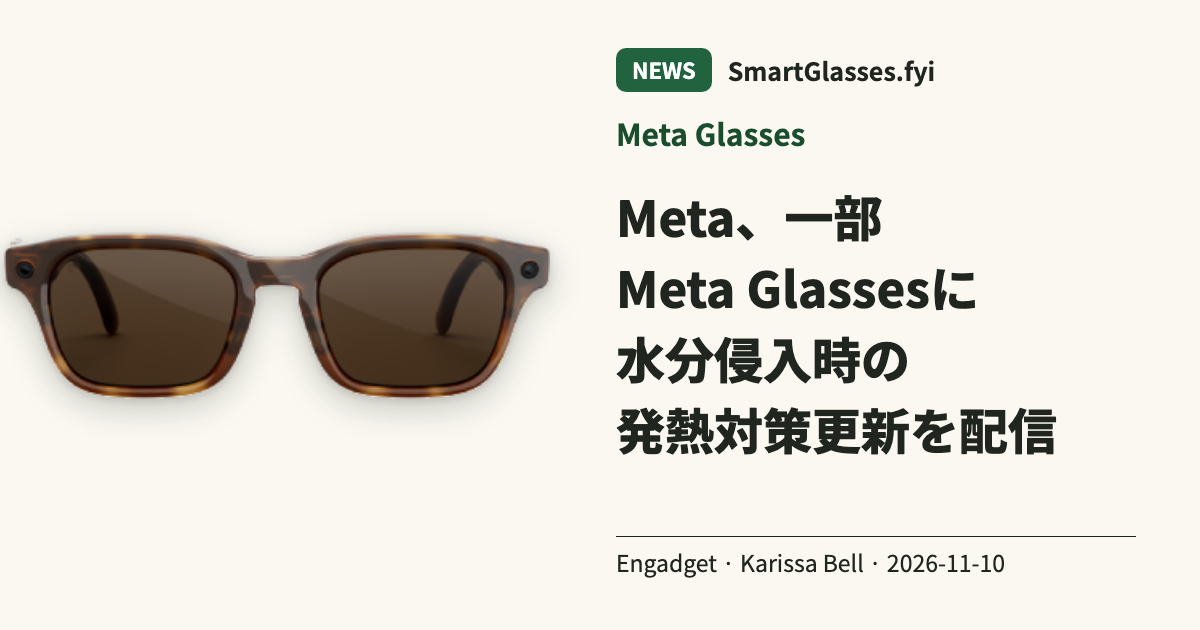
Meta says a rare moisture-related heat issue affected a small number of Meta Glasses and is rolling out software v130. Engadget and 9to5Google report that the update can shut the glasses down if they get too warm, and that affected owners can contact Meta for a replacement. Meta says Ray-Ban Meta and Oakley Meta products are not affected.

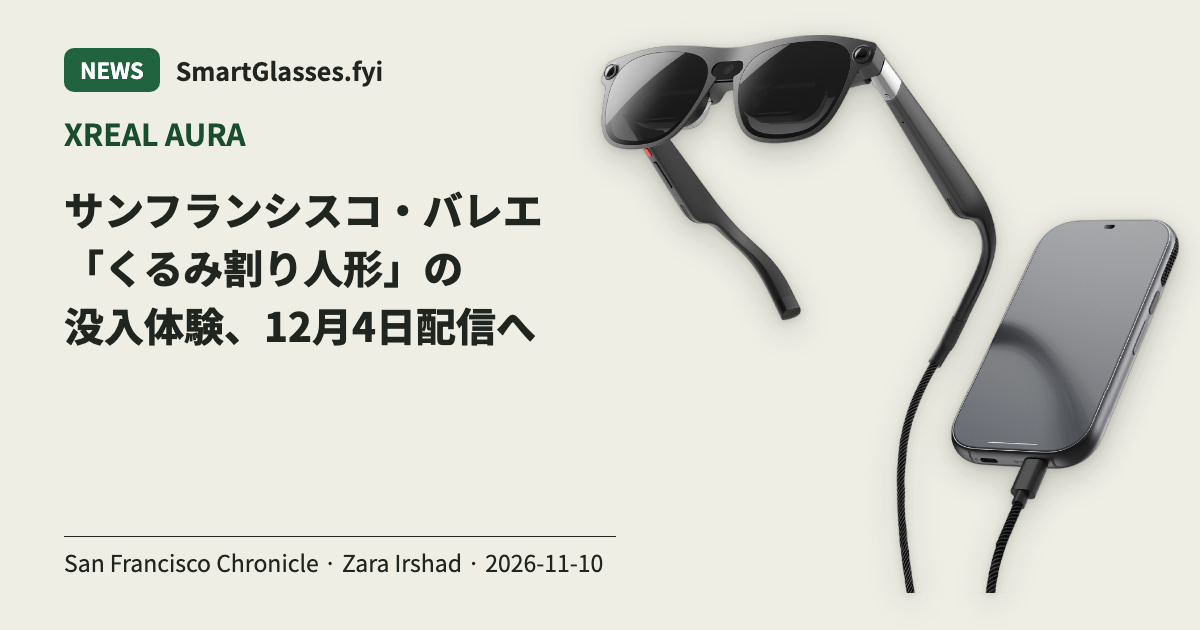
San Francisco Ballet plans to launch “Nutcracker: The Immersive Experience” on Dec. 4. The S.F. Chronicle reports that the first act will be available through YB’s CultVRe app on Google Android XR and XREAL AURA, with free downloads on Android XR-supported devices.

Regina borrowed Megane Ichiba’s camera glasses Linse and filmed three women golfers’ tee shots from the wearer’s point of view. The instructor who reviewed the footage recommends it for putts and approach shots, where the head stays still and its movement is easy to check.

Gizmodo surveyed how smart glasses are expanding into health tracking. It spotlights Alibaba's Qwen N1 Pro, which carries sensors for skin temperature, blood oxygen, and heart rate, and uses eye tracking to keep tabs on eye strain and fatigue.

Korea JoongAng Daily reported that ahead of the College Scholastic Ability Test, students and parents are replacing thick-framed regular glasses out of fear they could be mistaken for AI glasses. Identification specialists will be stationed at all 1,312 exam centers, and simply wearing smart glasses will be treated as cheating.

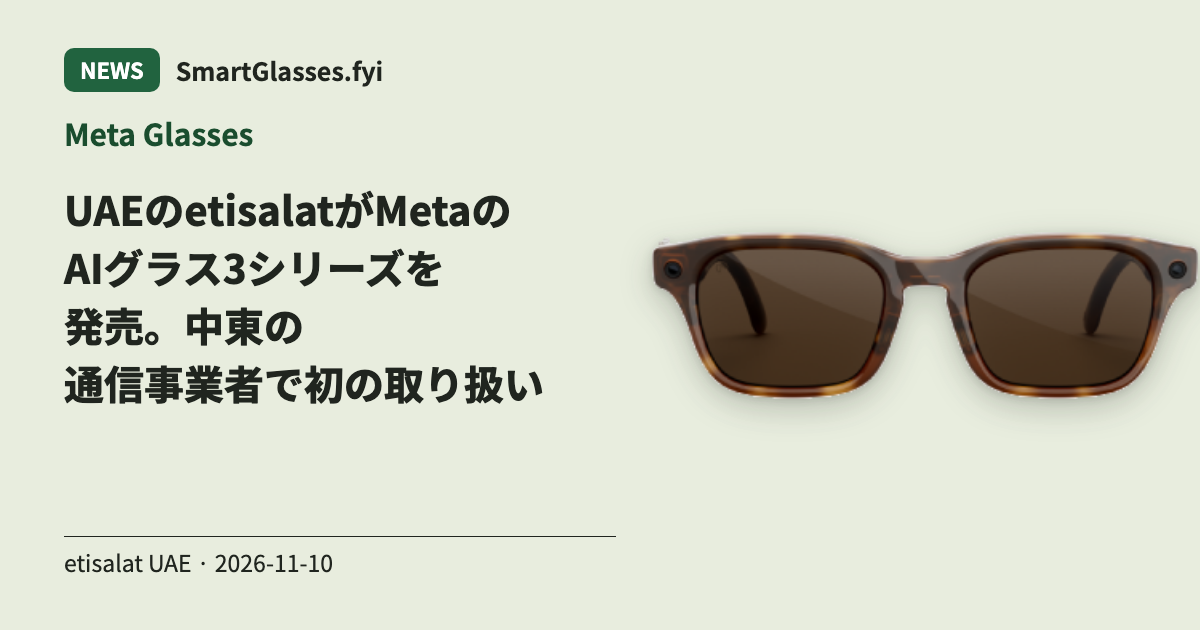
etisalat UAE announced the launch of Meta Glasses, Ray-Ban Meta (Gen 2 and Gen 3) and Oakley Meta HSTN, becoming the first telecom operator in MENA to offer the brands. Prices start at AED 1,160, with SmartPay instalments over 12, 18 or 24 months from AED 55 per month.

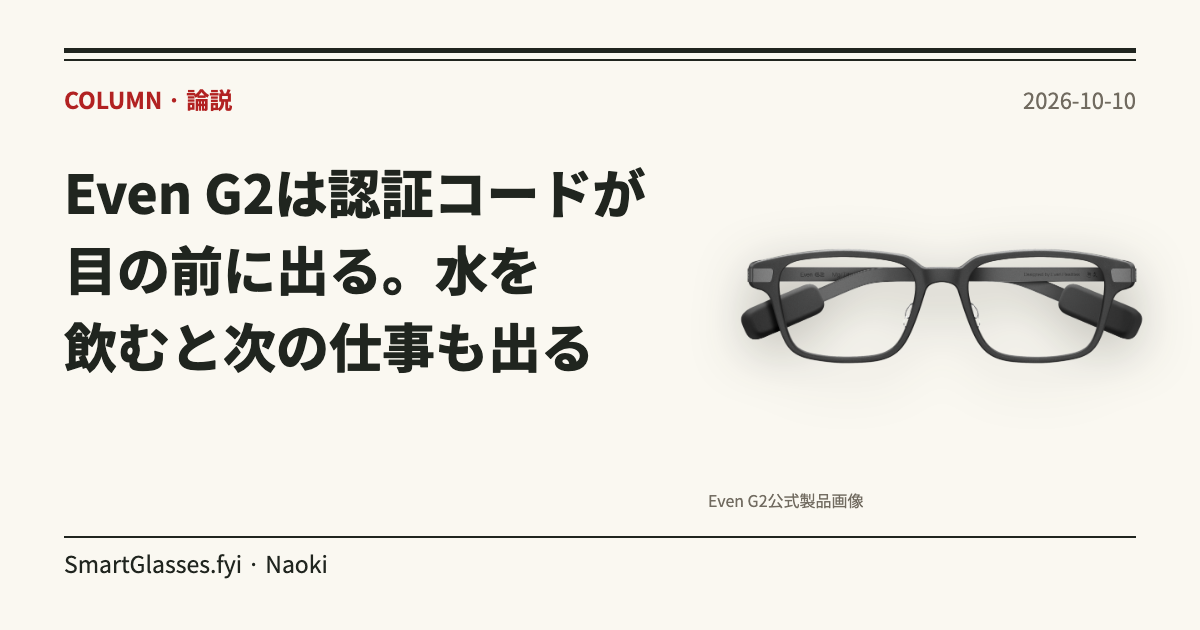
Even Realities announced the Even G2 Enterprise SDK, supporting Flutter and native iOS and Android development. Business apps connect to the glasses directly over Bluetooth, with no consumer app or personal account required; device licenses are verified on the glasses and firmware updates can ship through the app. Access is currently an application-based alpha, with source code planned under Apache 2.0.

China's market regulator announced that INMO is recalling 4,701 INMO AIR3 smart glasses made between May 2025 and June 2026. Unverified third-party apps can trigger abnormal power draw that may overheat the left temple, posing a burn risk; the fix is a free OTA firmware update to V3.18.109, with users advised to limit use until updated.

South Korea's VIRNECT announced that its VisionX Marine AI smart glasses for confined-space work were named a CES 2027 Innovation Awards honoree in three categories: AI, XR and spatial computing, and human security. The device retrofits onto SCBA masks and supports instrument analysis and evacuation guidance, processed on-device.

The prohibitions are written into the rules of the major exams. Cases keep surfacing in country after country, yet detection still depends on a proctor's unease. This article sorts the problem into three parts and publishes the identification cues and appraisal criteria.

Innovative Eyewear said Lucyd Armor displays began going into more than 150 stores of an unnamed U.S. big-box retailer on Nov. 1. The company reported about 2,300 units in initial retailer orders during the third quarter.

A joint investigation by The Observer and BBC Radio 4 found that the airport-style security scanners at the UK Parliament failed to detect two brands of AI glasses, one of which could film covertly with its LED disabled. Parliament says it is reviewing its policy on camera-equipped glasses, while some MPs argue the devices should be left at the entrance.

Full Fact found that an MP's claim that more than seven million pairs of one brand of smart glasses were sold in the UK last year was wrong: the seven million figure was EssilorLuxottica's global sales for 2025. A Deloitte survey put UK ownership or ready access at about 2% of 16- to 75-year-olds.

As of November 2026, the main models you can buy from official stores and authorized retailers in Japan, organized by use. Prices were checked on each maker's official store or official crowdfunding page.

Warby Parker plans to start Intelligent Eyewear demos in 65 stores the week of Nov. 9, then expand to more than 360 stores the following week. A pop-up at Broadway and Bond Street in New York’s SoHo will also host demonstrations.

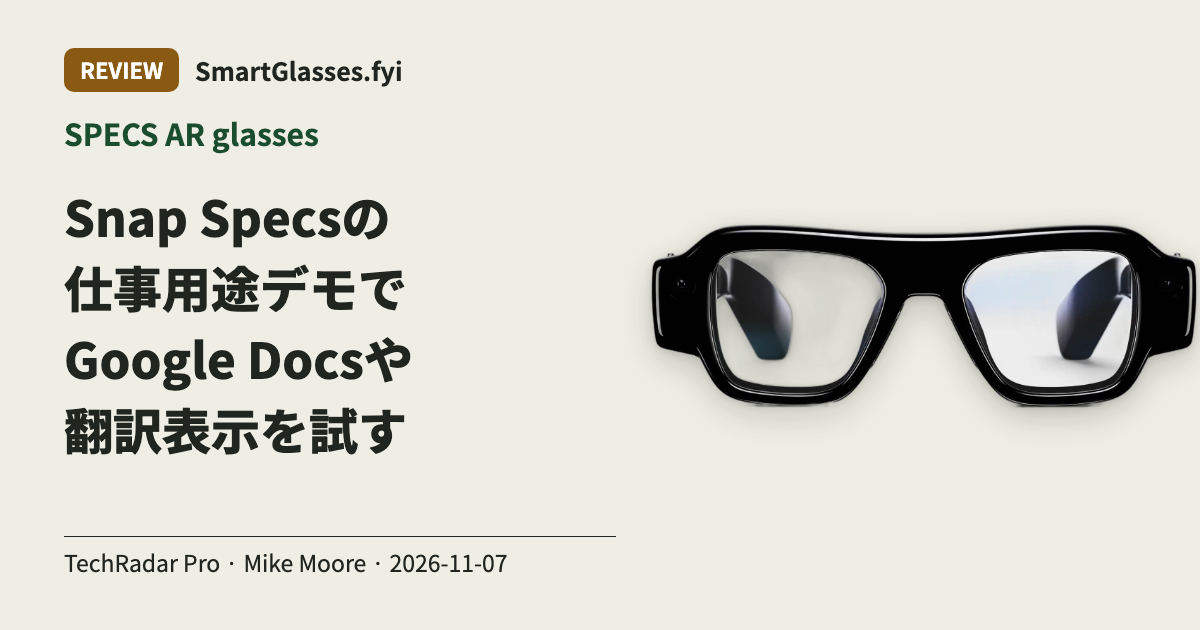
TechRadar’s Mike Moore tried Snap Specs in a demo ahead of its UK launch, using Google Docs with an AR or Bluetooth keyboard. He also tested short video and photo capture, Maps directions, and live speech translation displayed as text.

A man was caught cheating on a Chengdu motorcycle theory test using AI glasses and a smart ring. The gear answered worse than his own practice runs, missing every multiple-choice question, and he was fined 1,900 yuan with a one-year ban.

Gentle Monster has announced a December launch for its Android XR 'Intelligent Eyewear' glasses, with pre-orders opening on November 12. The announcement arrived with a teaser for a short film directed by Jonathan Glazer and starring Joaquin Phoenix.

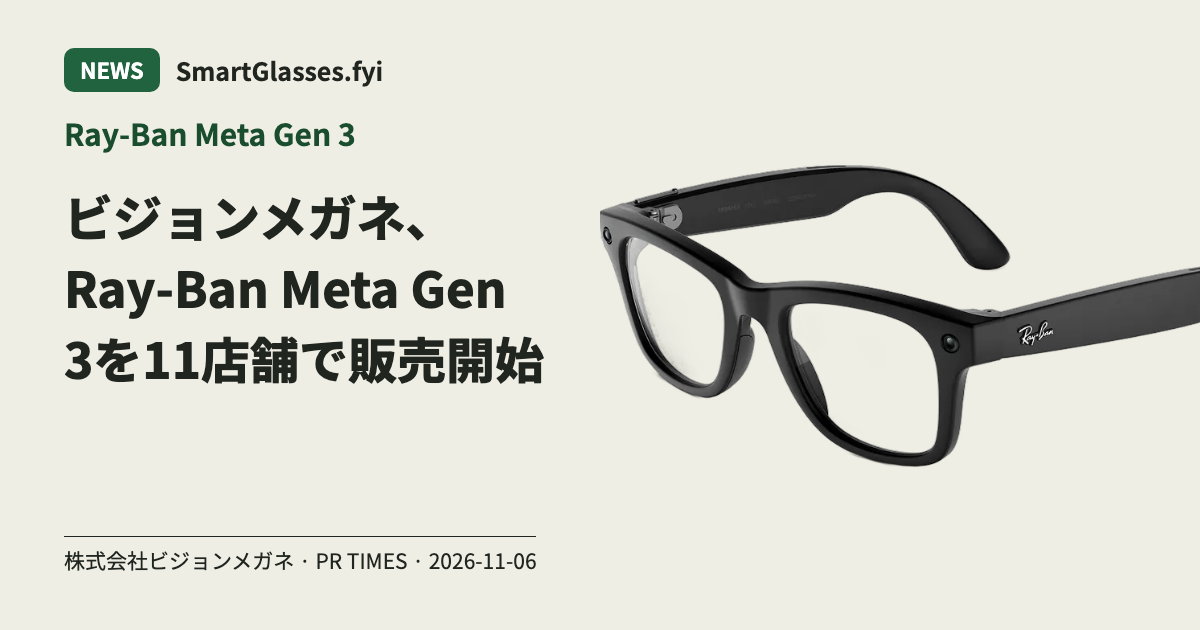
Vision Megane began carrying Ray-Ban Meta Gen 3 at 11 Japanese stores on Nov. 7. Nine list demo units, two accept order-only requests, and the retailer offers genuine Ray-Ban prescription lenses.

A security researcher reported achieving arbitrary code execution on Ray-Ban Meta by exploiting missing signature verification for the developer Device Access Toolkit, and later a one-byte change to the phone-supplied MobileConfig that disabled the check added in firmware 127. The issues were reported through Meta's bug bounty and are believed fixed.

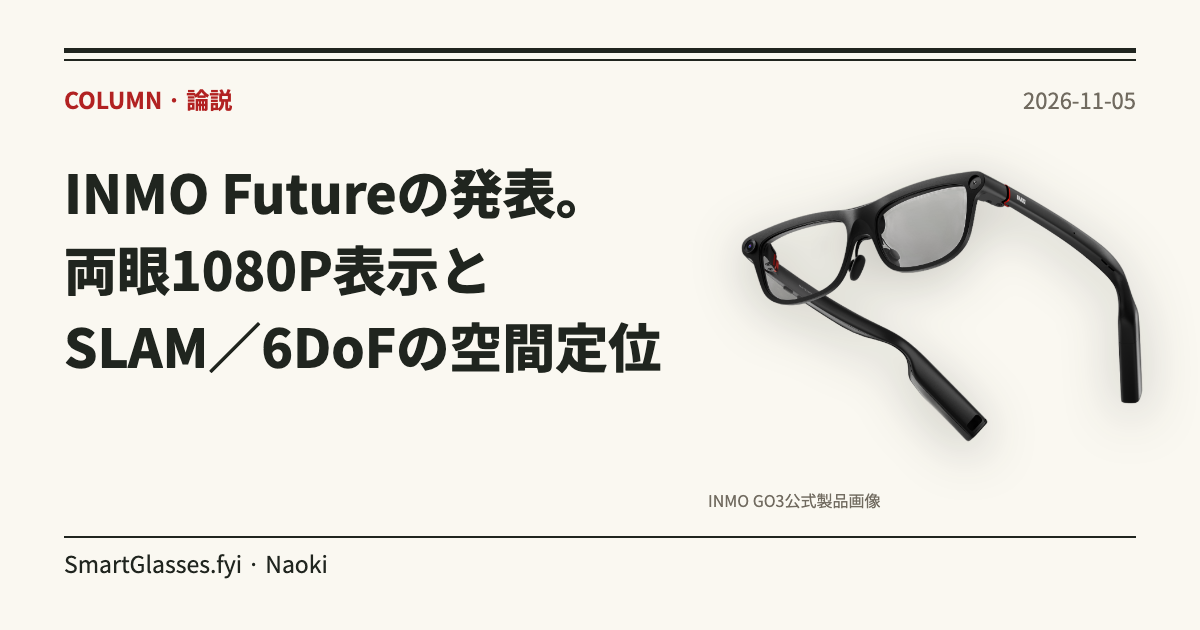
On November 4, 2026, Yingmu announced its fourth-generation standalone INMO Future in Chengdu. Binocular 1080P, a 36° FOV, and SLAM/6DoF are maker-stated. It also covers reported China prices and how to read the reservations.

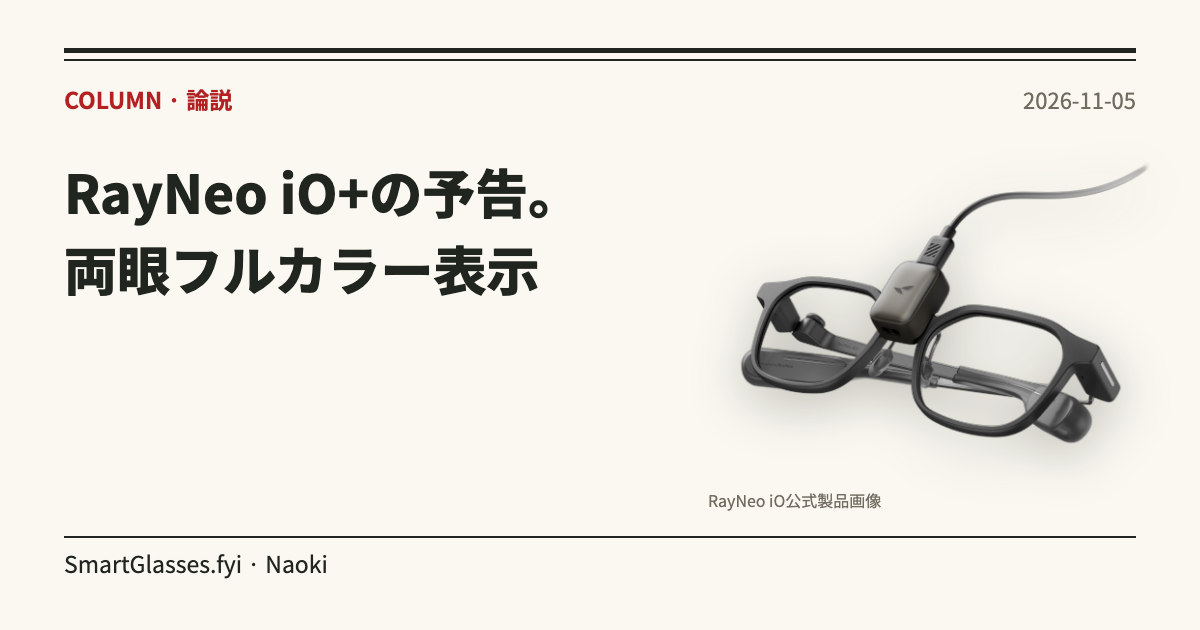
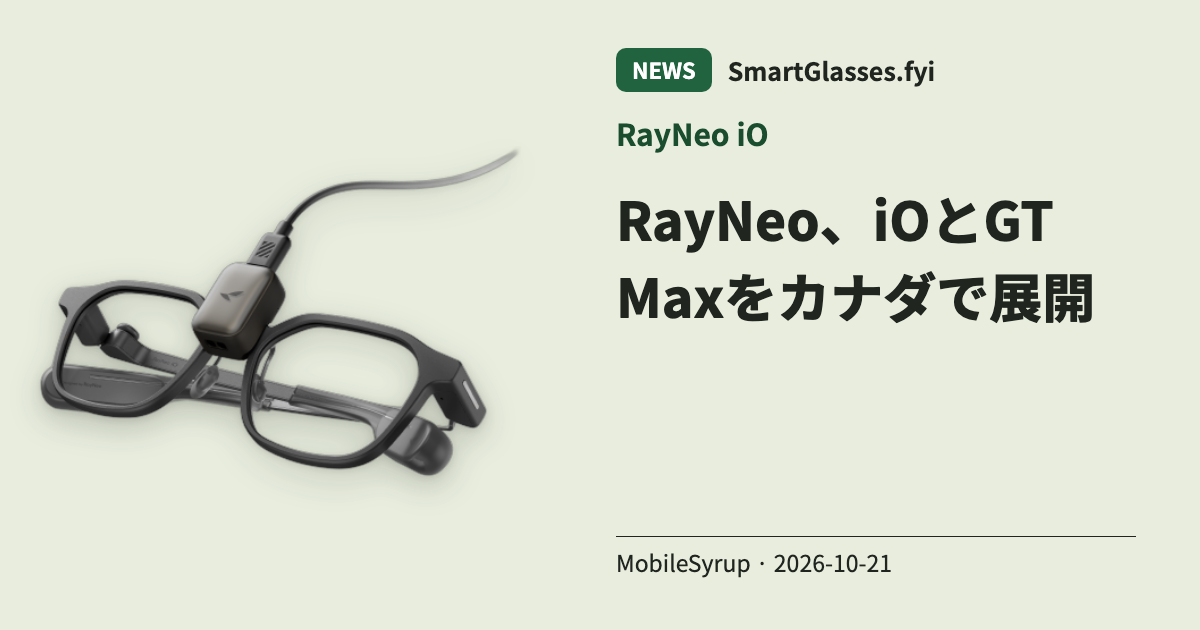
On 27 October 2026, the official Weibo account announced iO+ as a fourth-generation binocular full-color pair. This post has no price and no release date. The iO on sale in Japan is ¥89,999.

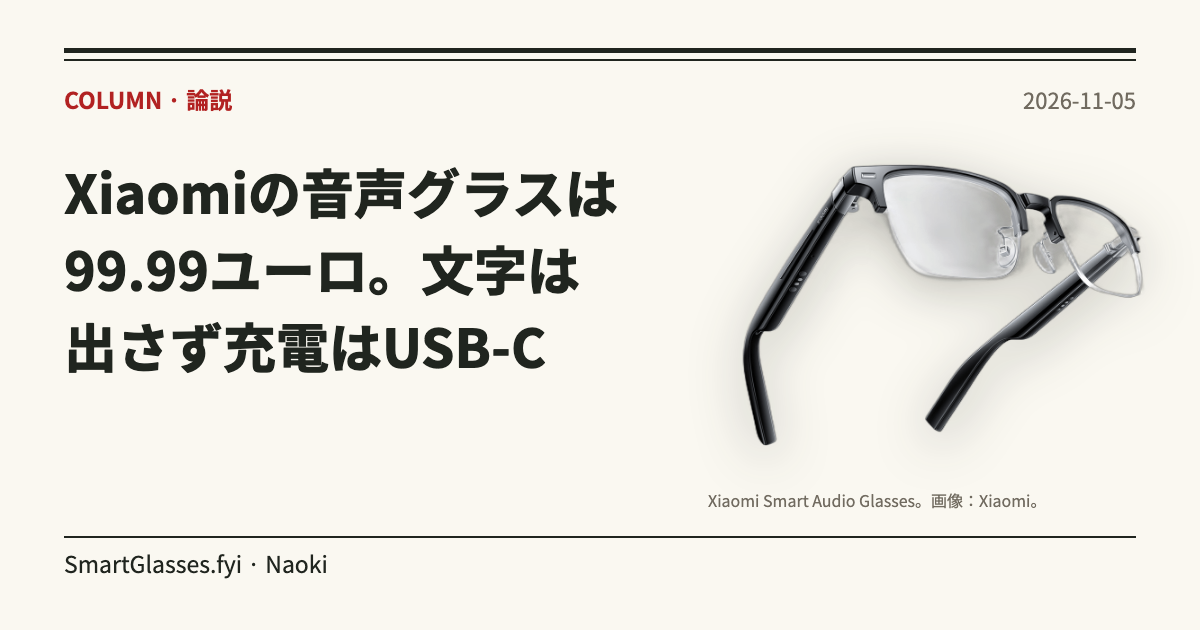
The official French buy page is €99.99. Model MJSSO20FC. The full unit is 40 g, and the comparison table without lenses is 33.4 g. There is no app, and the recording row is blank. The page does not list a spec for putting text on the lens.

Warby Parker's third-quarter release says preorders for its first Intelligent Eyewear collection begin November 12, with customer deliveries planned during the holiday season.

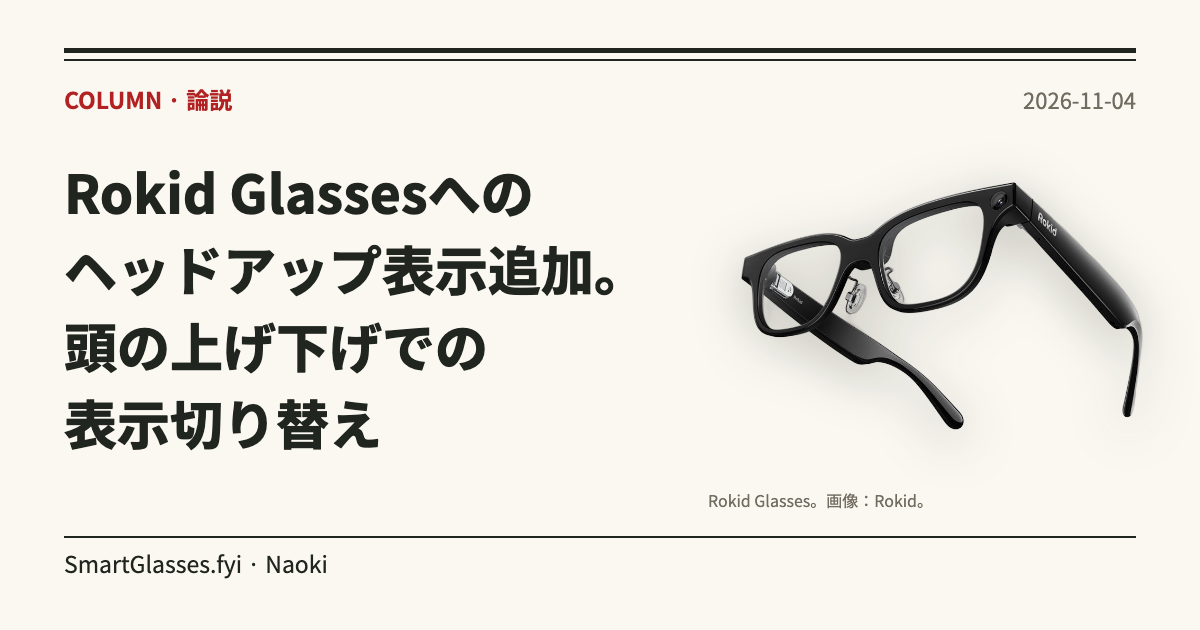
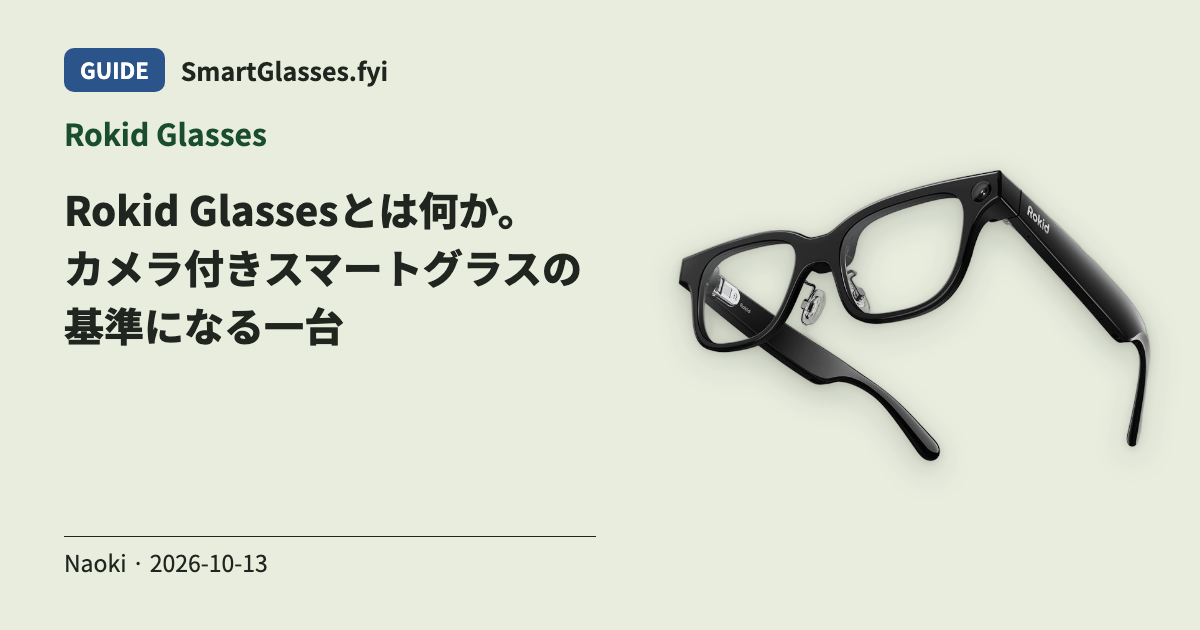
Hi Rokid 1.16.0 on October 30, 2026. It targets the current Rokid Glasses. The app is 1.2 GB and needs glasses system 1.28.016.

XREAL’s November 2 announcement. A successor to the One Pro. Preorders run through 23:59 on November 9. Peak brightness is 1,200 nits, and 375 nits when the image is locked in space.

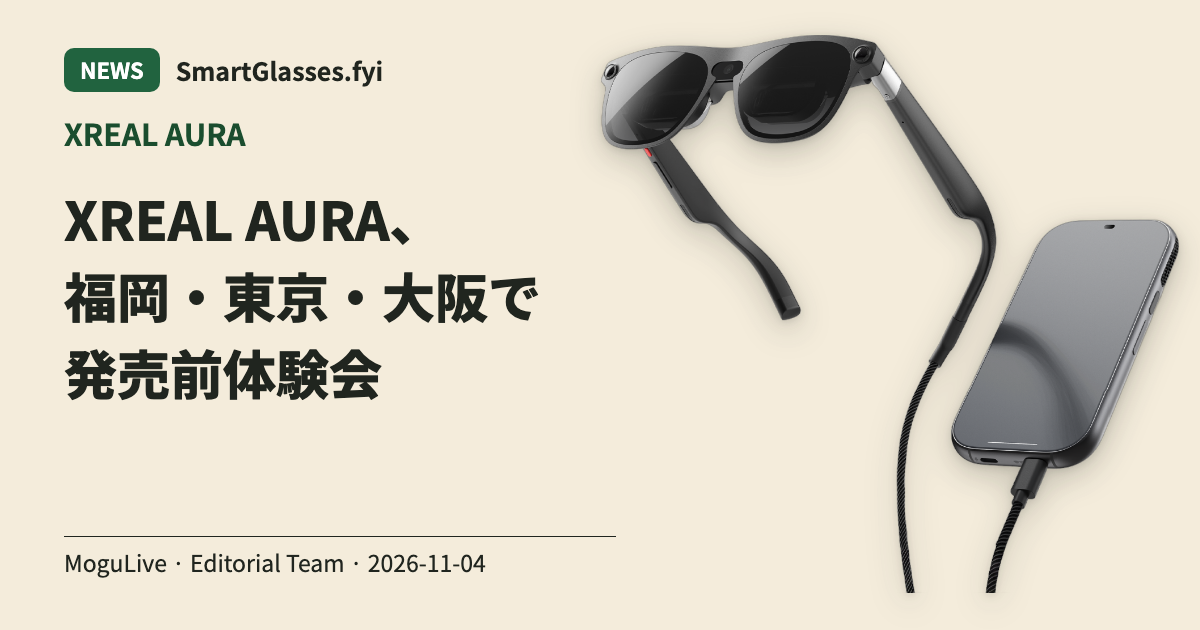
MoguLive lists dates, venues and entry details for XREAL AURA events in three Japanese cities, including the free lottery-based demos and walk-in exhibition areas.

The UK government said in a November 4 Commons debate that it is looking at options to restrict smart-glasses use in certain settings and limit sales to certain users. The minister said courts and tribunals already restrict recording, while healthcare and education have relevant safeguarding or professional policies.

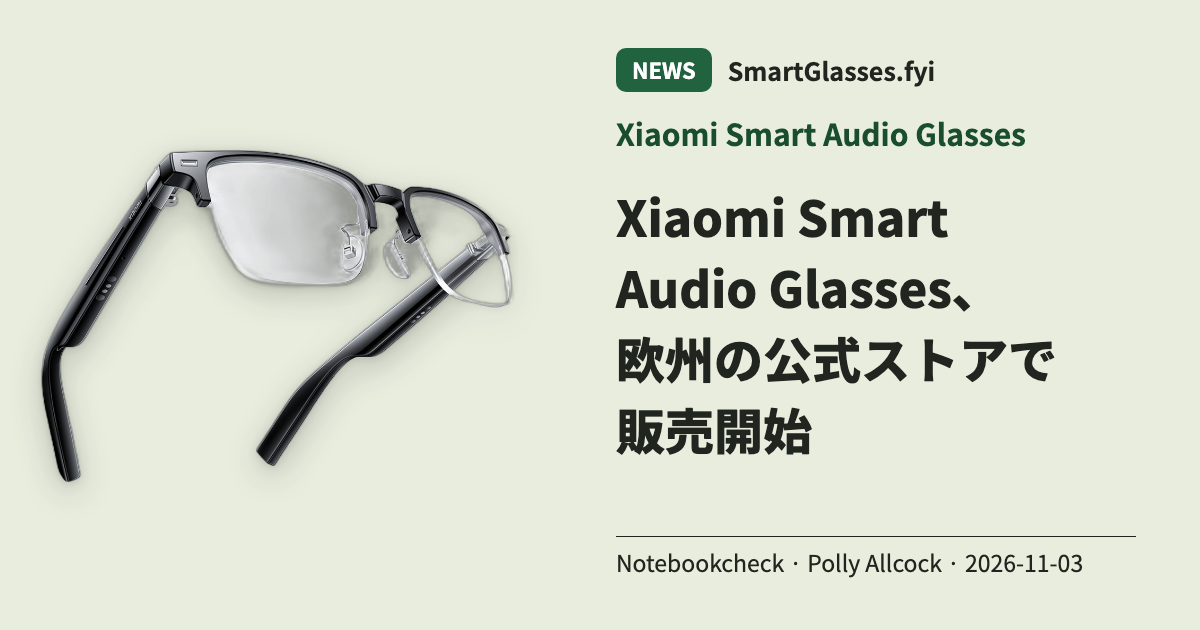
Notebookcheck reports that Xiaomi Smart Audio Glasses have appeared in Xiaomi’s official online stores in France, Spain and Germany. The article tracks the change from earlier AliExpress availability to manufacturer-direct sales in these markets.

A Beijing government portal report outlines the city’s policy guide for smart-glasses purchases and businesses. Eligible purchases qualify for 15% of the final sale price after discounts, capped at RMB 500 per item; the guide also covers business support. The notice is specific to Beijing and subject to eligibility rules.

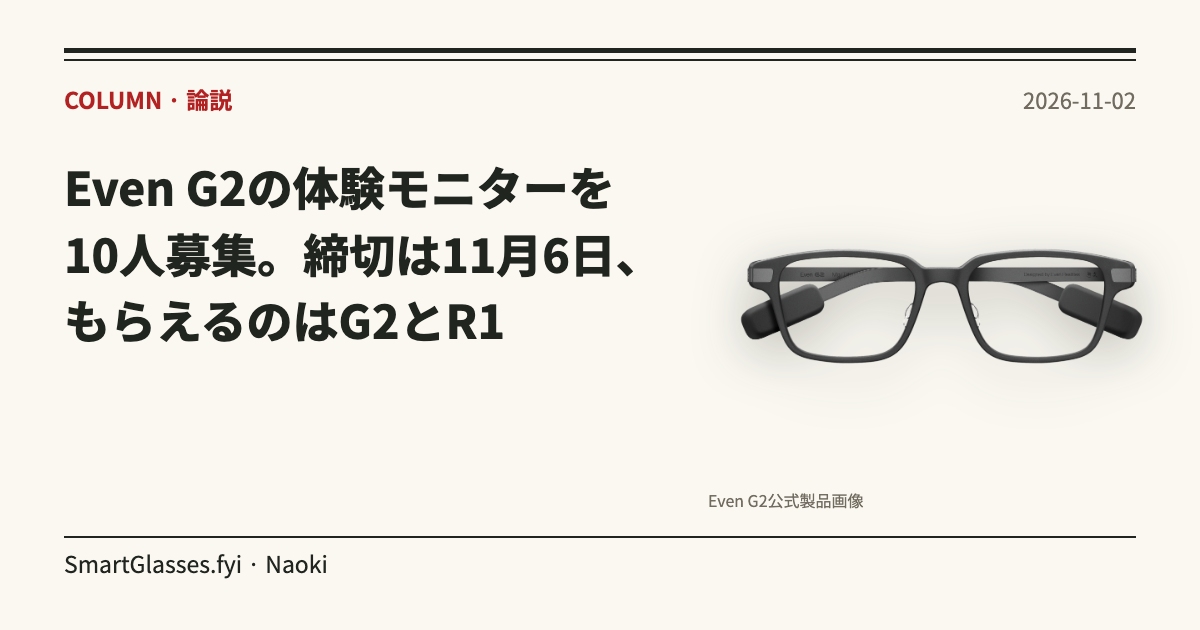
Even Realities Japan opened the call on October 30 and set the number at 10 in a November 2 post. The deadline is 23:59 on November 6. Participants receive an Even G2 and an R1.

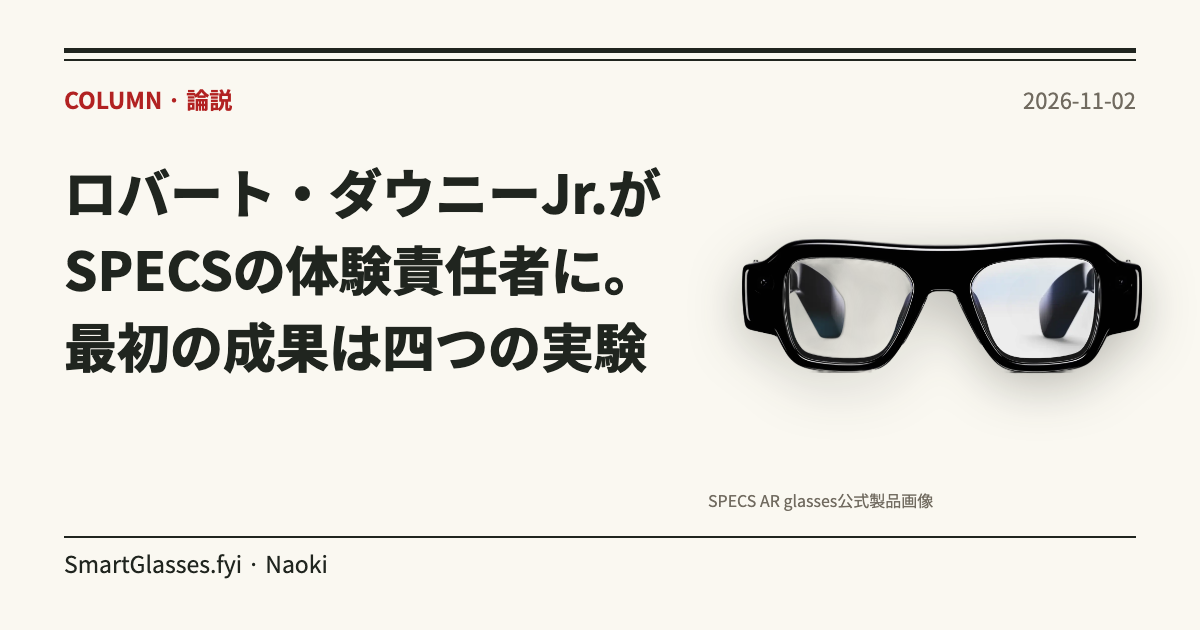
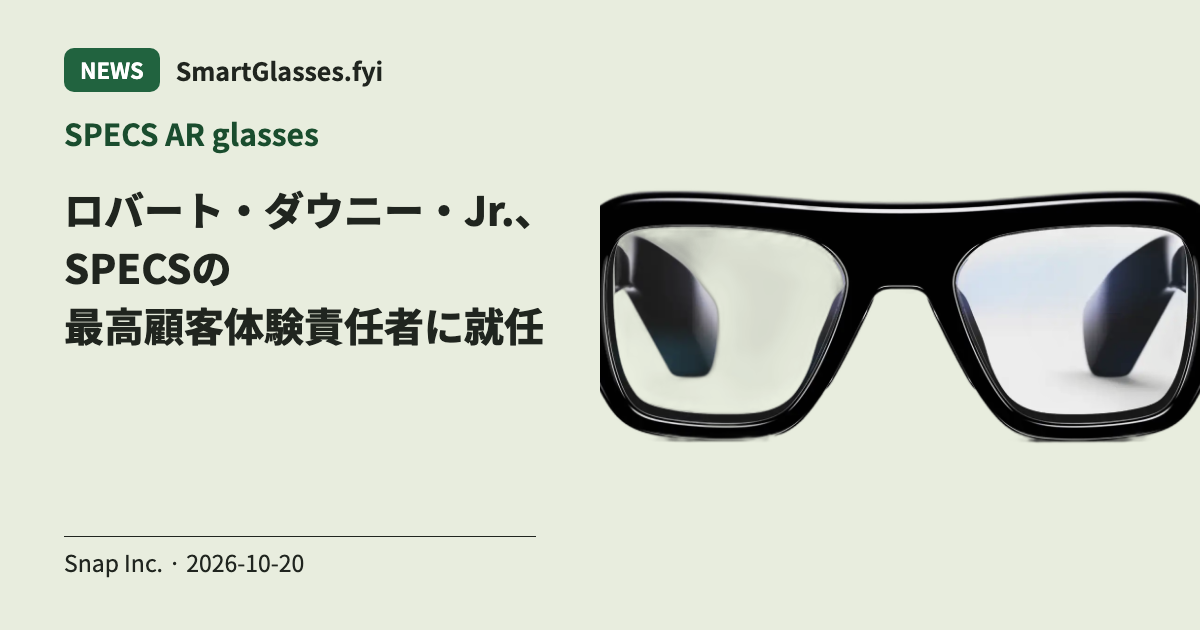
On October 20, 2026, Snap named Robert Downey Jr. honorary Chief Customer Experience Officer of SPECS. The first project is a series on golf, shows, workspaces, and skills.

A reported Qwen AI Glasses update adds real-time translation for calls, online meetings and media playback, alongside improved speech recognition in noisy settings.

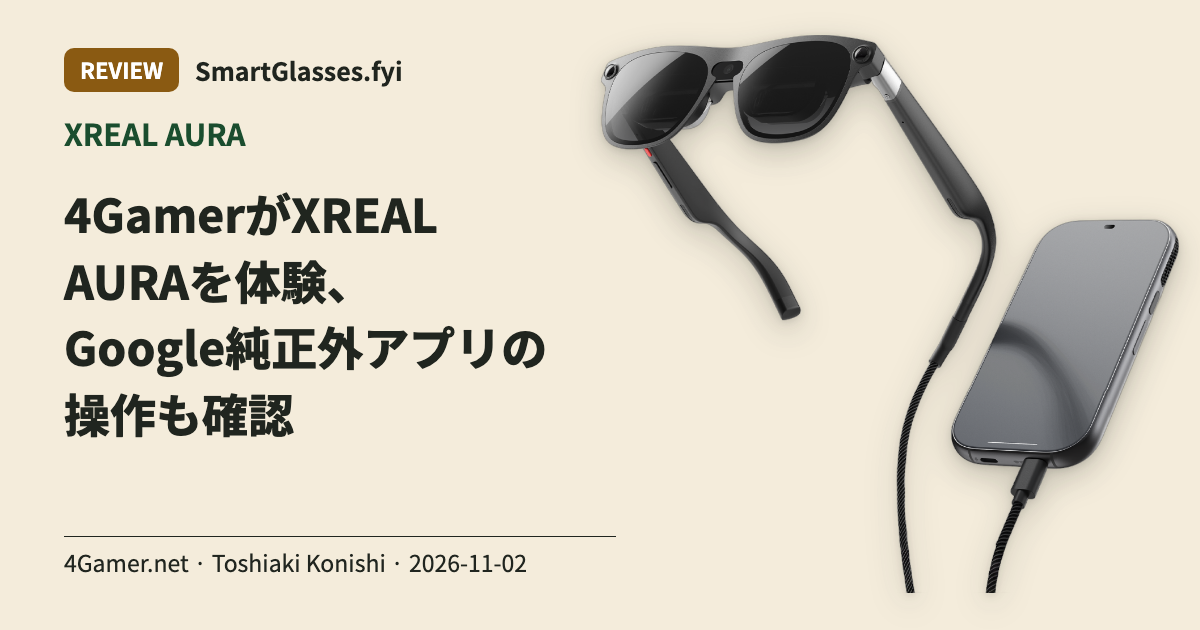
Toshiaki Konishi of 4Gamer tried a demo unit at the Japanese launch event, looking at hand controls in Google and third-party apps. The report also records what the brief demo did not cover.

Ryota Musha tried a demo unit at the Japanese launch event, examining hand-operated windows and a Gemini demo that searches text in view.

MoguLive reports the Japanese preorder window, release date and pricing for XREAL 1 Pro+, including the limited-time bundle with XREAL Eye.

MoguLive covers Japanese preorder availability, the price through year-end and expected shipping. Google’s same-day announcement confirms the order window and timing.

ChosunBiz reports, via SamMobile, that Samsung's first AI glasses, Intelligent Eyewear, will launch in mid-December 2026 in South Korea and the US, with Japan following in 2027. Pricing is still undecided; battery life is rated up to nine hours, with extra charges from the case.

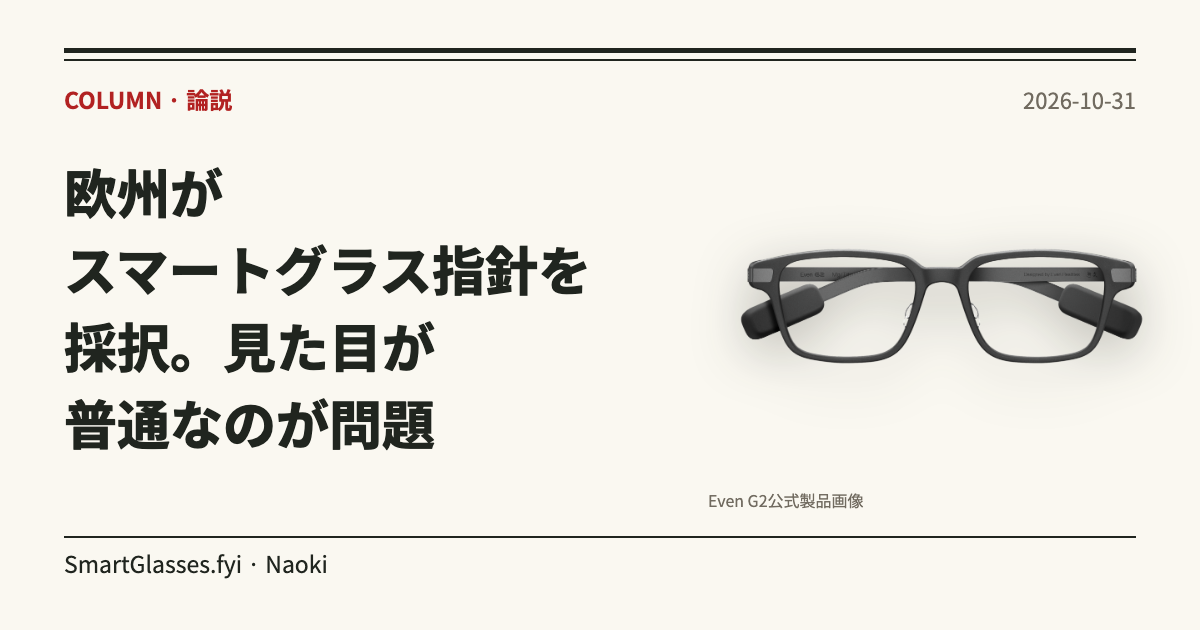
The EU data-protection body EDPB adopted Statement 1/2026 on 13 October. The worry is camera glasses that look like ordinary glasses. It touches schools, hospitals, and how recording is signaled.

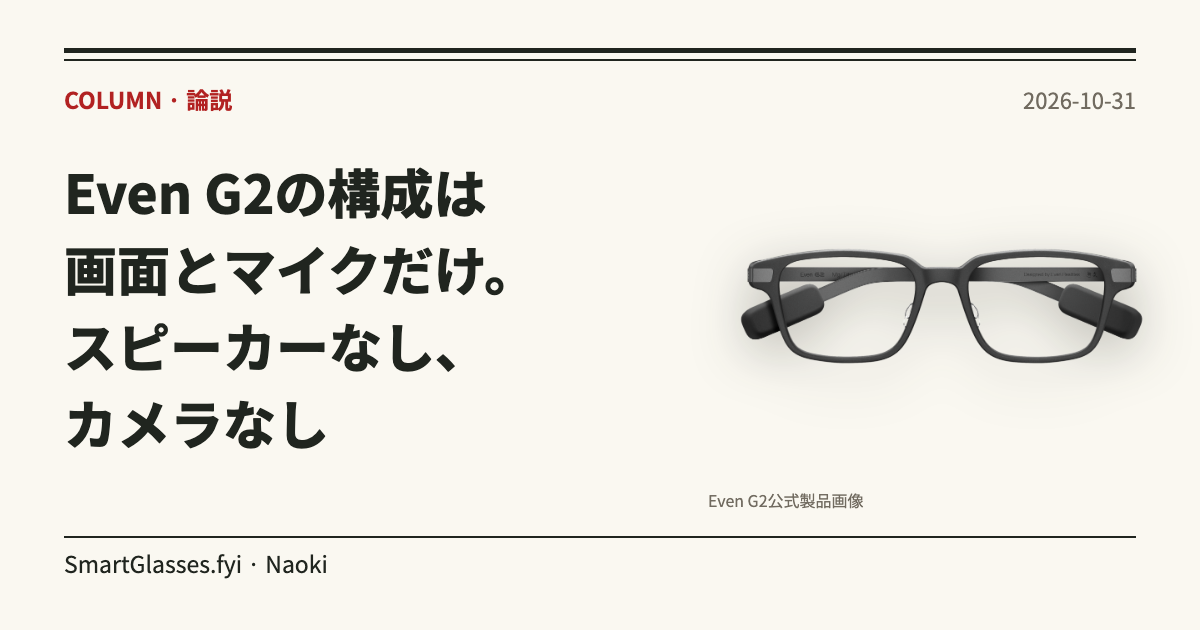
The official product page, the spec sheet, and the support Q&A. What goes out is green text in both eyes, and there is no speaker. What comes in is the microphone, and there is no camera. The ring is the part you use so you do not have to touch the glasses.

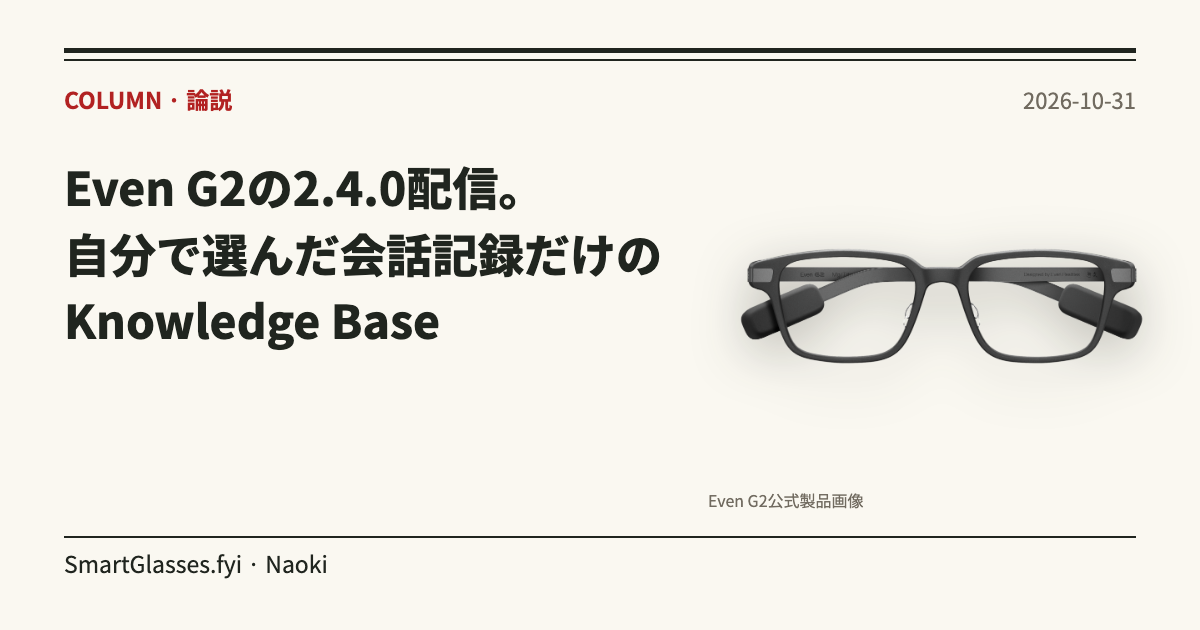
App Store 2.4.0 and the privacy notice effective 30 Oct 2026. Knowledge Base only takes conversation records and files you add. Same direction as RayNeo iO Life Log: record, then use later.

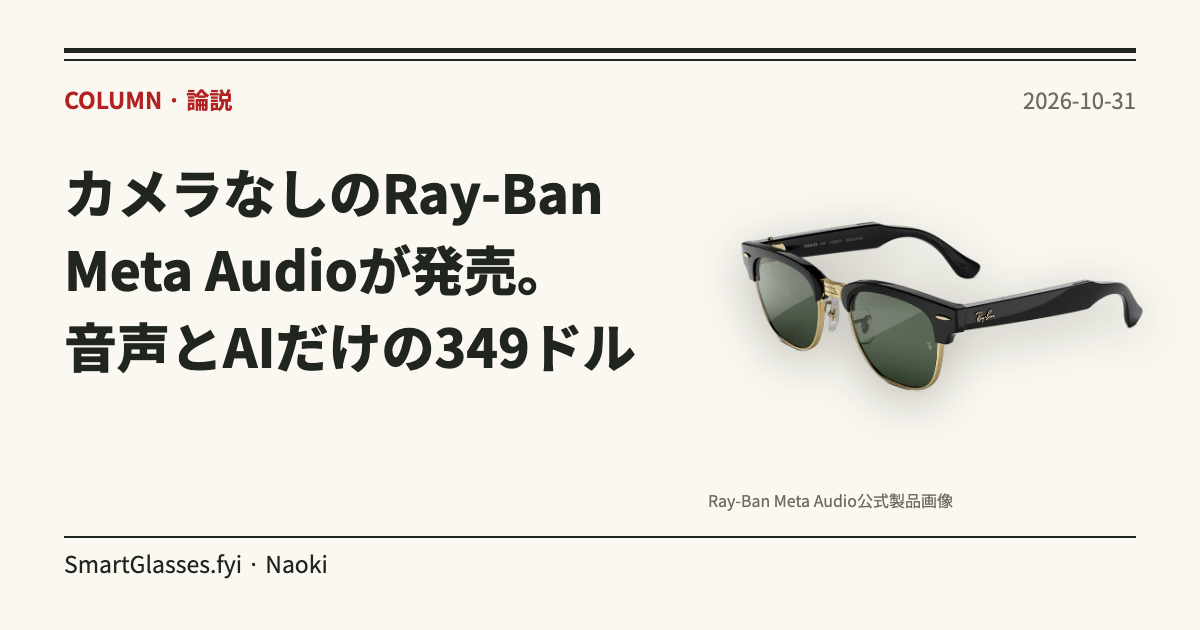
On sale 13 October. Weight 43 g. Up to 12 hours on a charge. Up to 6 hours of continuous playback. Clubmaster and Burbank. For people who want audio only, without taking photos.

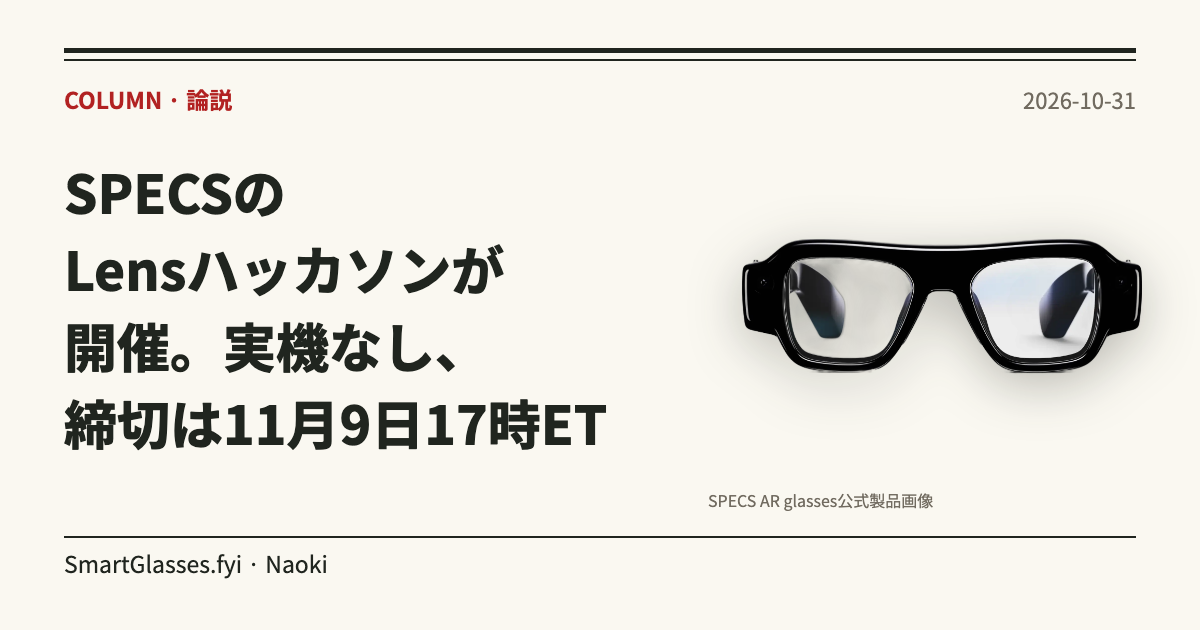
Snap sponsors it and Devpost runs it. Submissions run from 15 October, 10:00 a.m. ET, to 9 November, 5:00 p.m. ET. Judging is 10–17 November. Prizes total $2,500. You submit a Lens that runs in the Lens Studio preview.

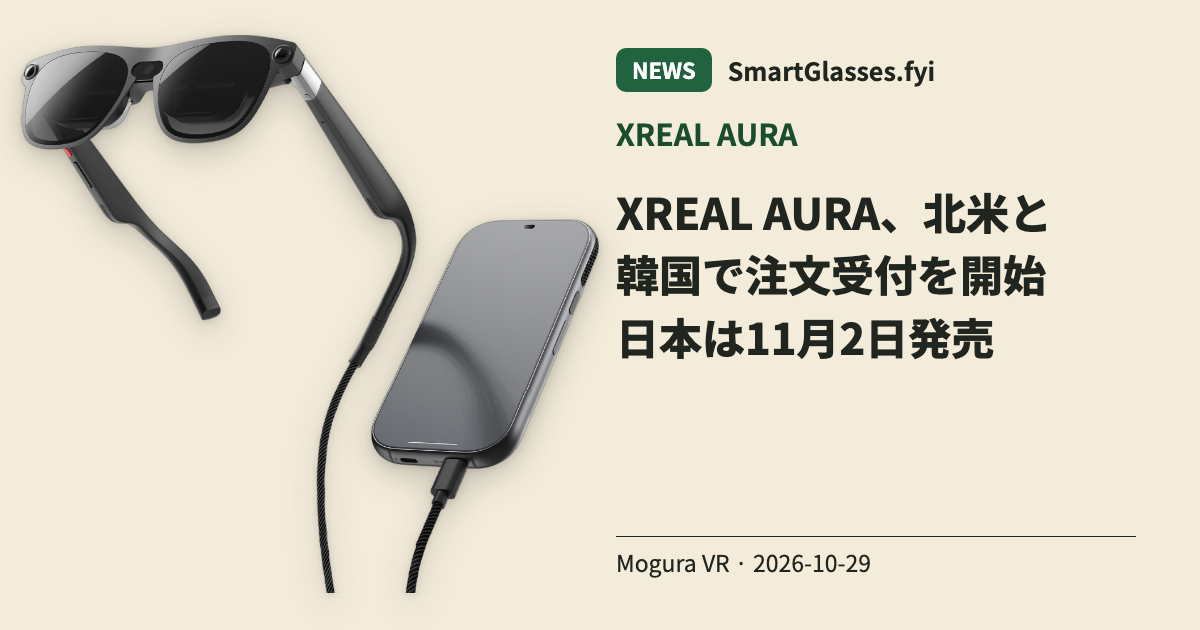
Google announced that orders had opened on 28 October. A set of glasses and a small box at the end of a cable. Japan opens on 2 November. Through the end of the year, pricing starts at $1,099.

Announced on 30 October 2026. The film shows a pre-meeting check, live translation, and a presentation script. No camera. It also mentions the tax-included 114,800 yen G2 and Brown 2.

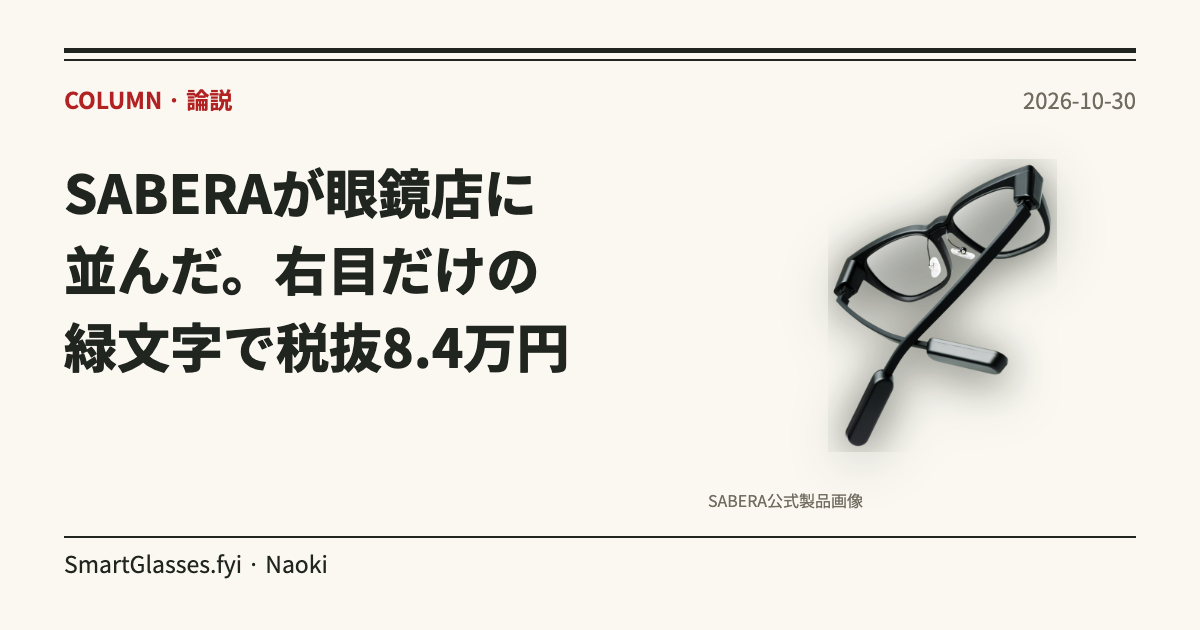
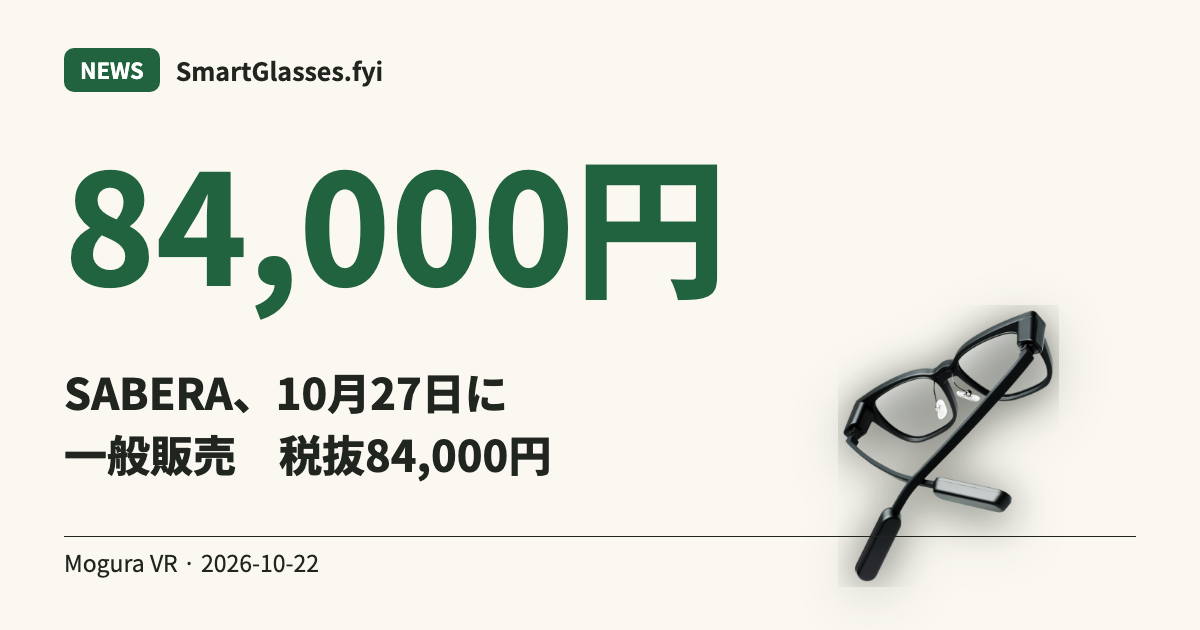
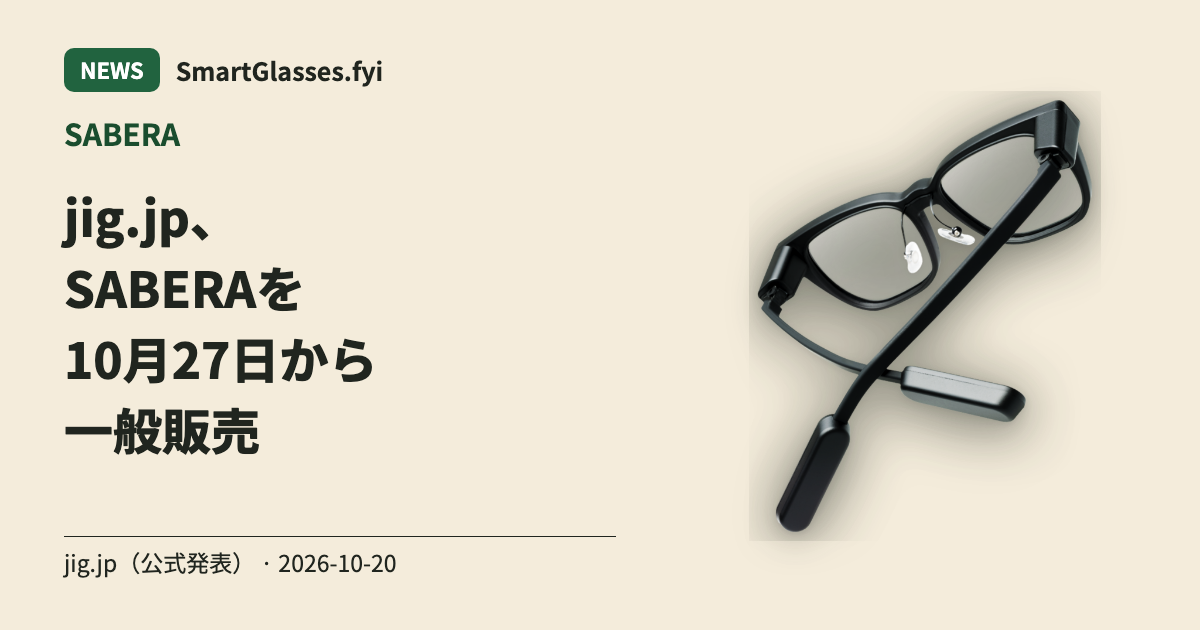
jig.jp’s 20 October announcement and the official manual. General sales started on 27 October at 84,000 yen before tax. The display is green text for the right eye, and there is no camera. Whether it can replace a daily pair that reads notifications in both eyes is something to check in a store.

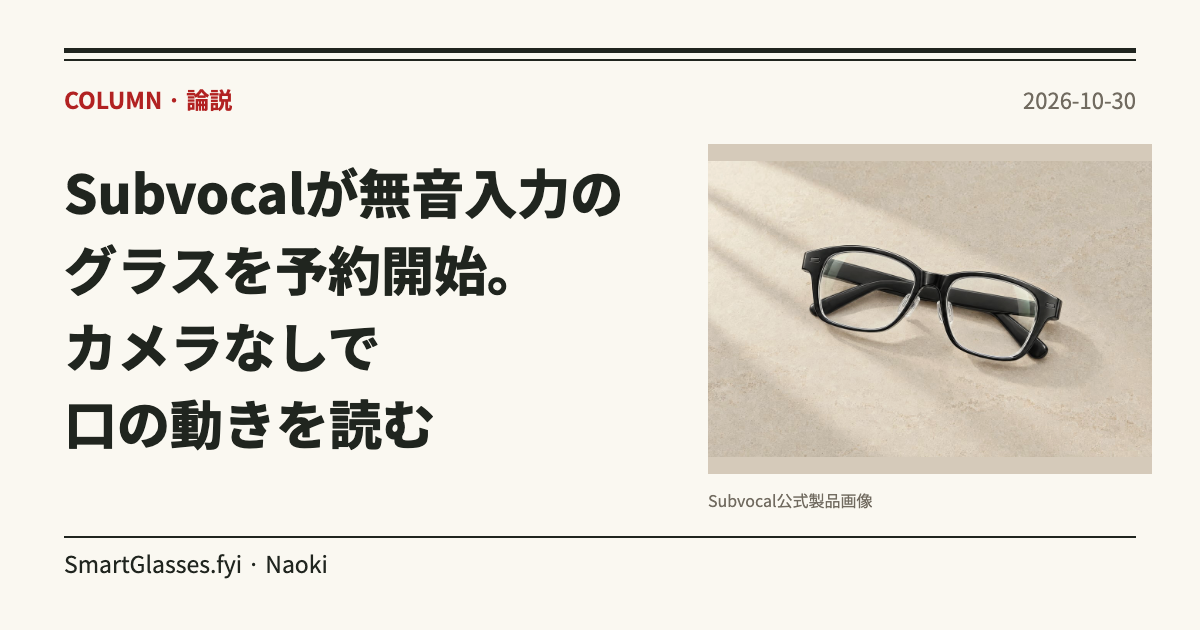
The Subvocal Company, YC F26. Glasses that turn silent mouth movement into text. US preorders, a $199 deposit, $499 early, with shipping expected in Q1 2027.

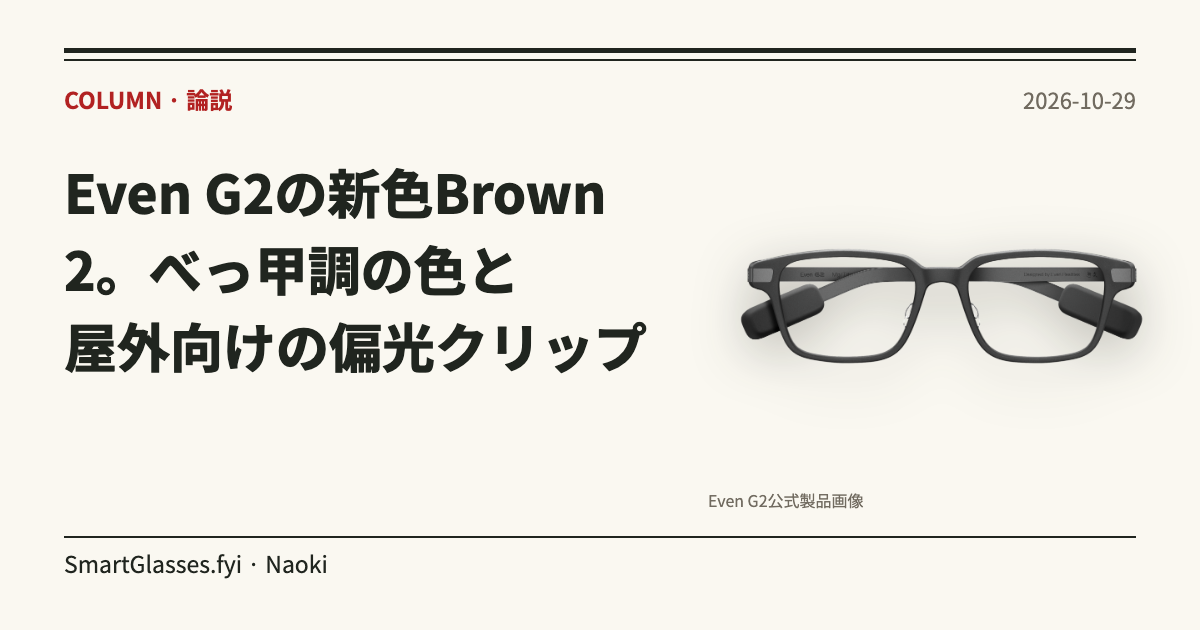
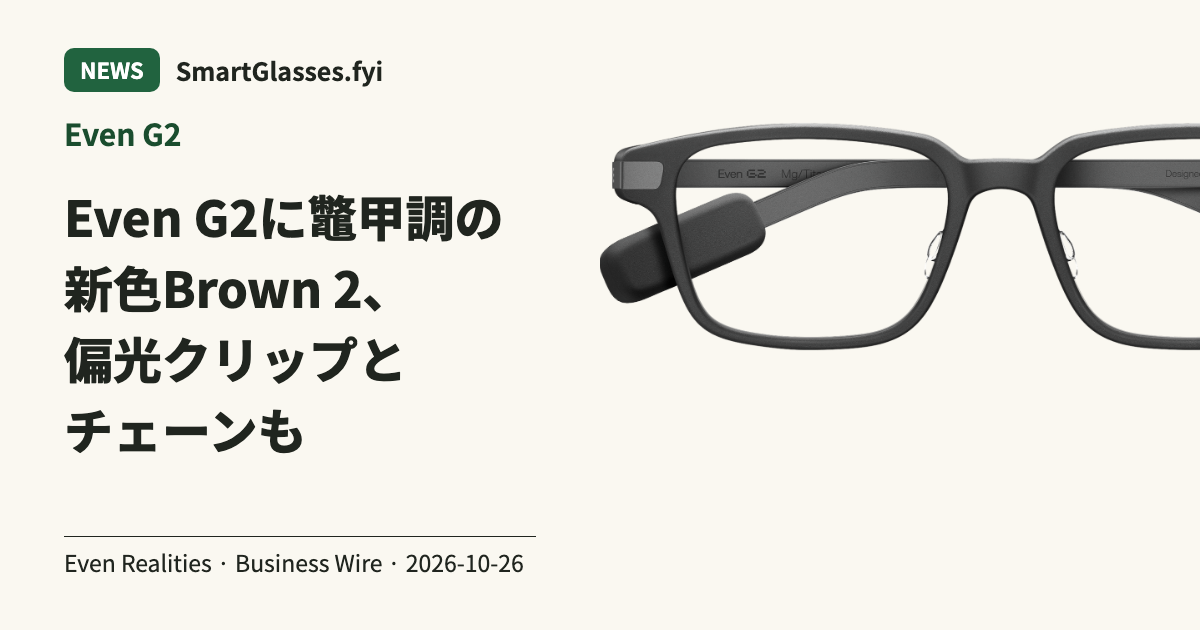
Official blog dated 26 Oct 2026. Tortoise-shell Brown 2, polarizing clip, and chain. Display role unchanged. US prices: $649, $149, $79.

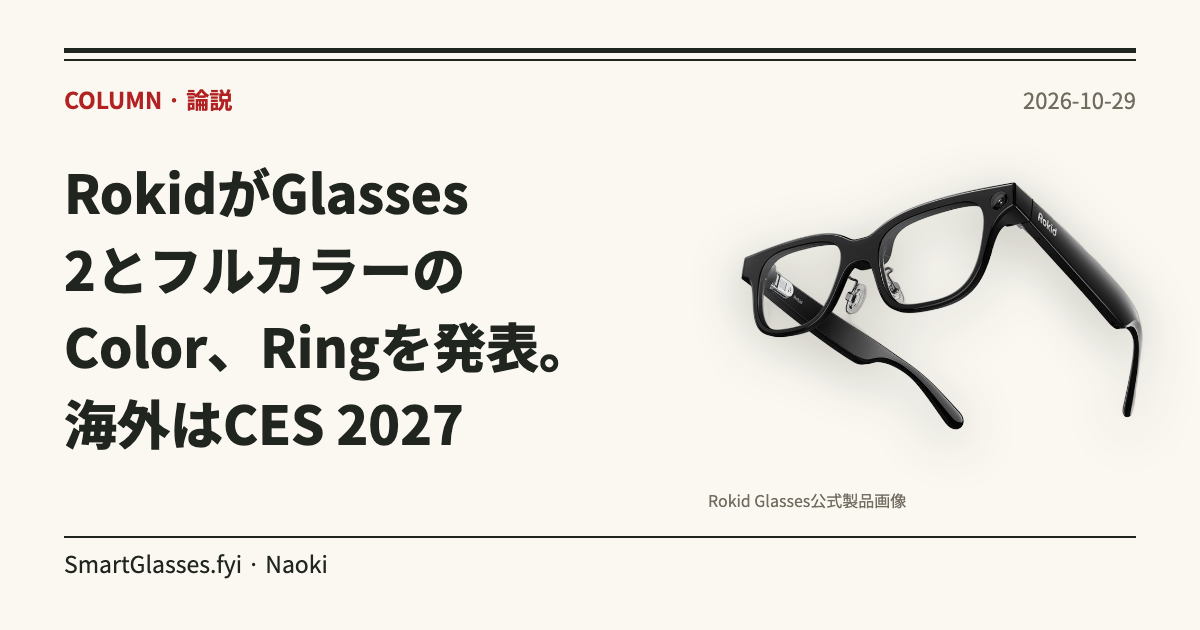
China announcement on 27 October 2026. Monochrome Glasses 2, full-color Color, and a Ring you operate with a finger. Released for China; the global edition is CES 2027. No Japan release date yet.

The state education department announced the policy on 20 October 2026. It takes effect in government schools on 27 January 2027. The definition is glasses that can send or receive digital information. A camera is not a condition.

South Korea’s education ministry plans to refer AI-glasses cheating at the Nov. 19 CSAT for criminal charges and lengthen the exam ban from one year to three. Each test site will get a designated inspector, backed by a rapid-response network.

Schools in the Australian state of Victoria have restricted the use of smart glasses. Gizmodo Japan carries a translation of the Gizmodo US story.

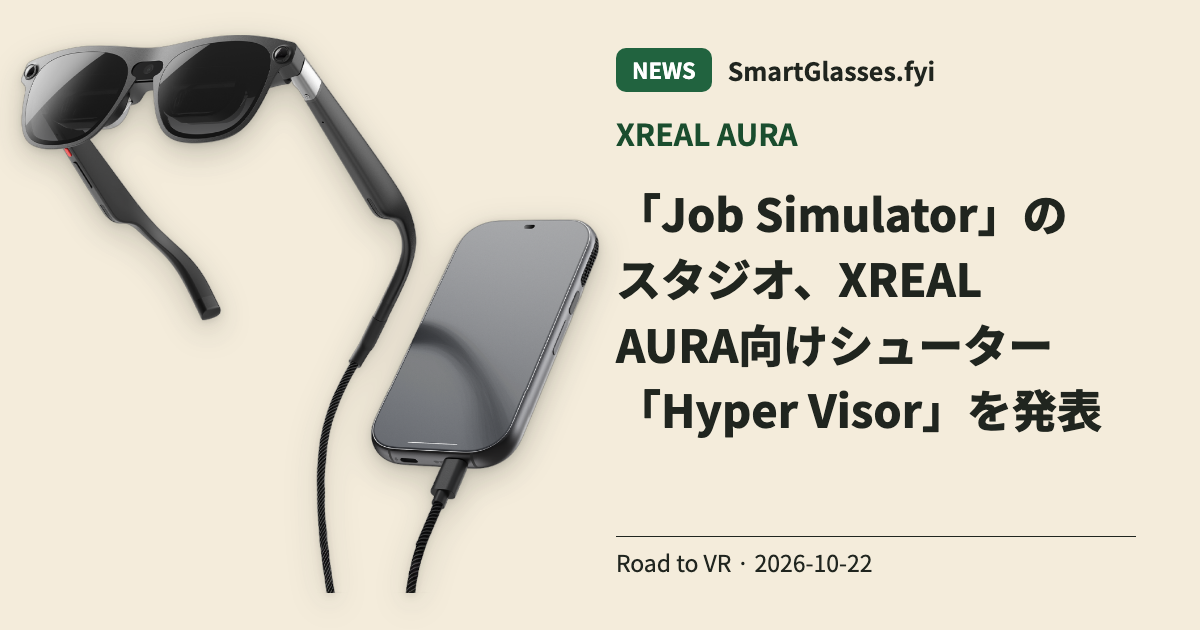
XREAL AURA, the XR glasses built with Google, has moved from reservations to general orders, with a U.S. price starting at USD 1,099 through year-end. Japan sales begin Nov. 2.

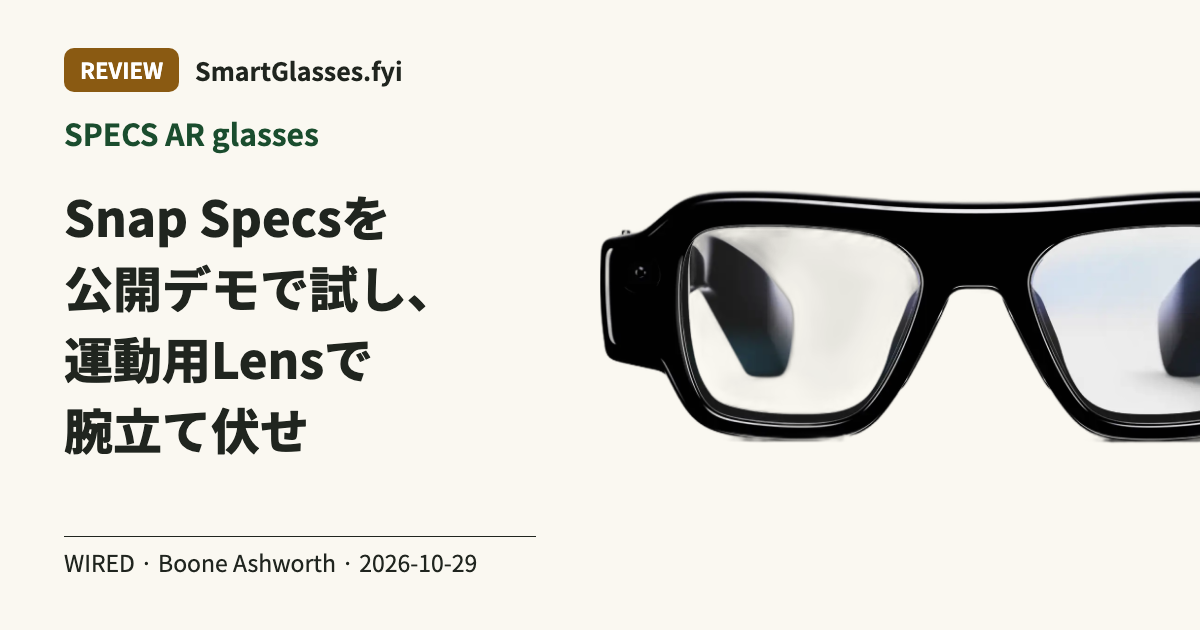
WIRED’s Boone Ashworth spent a short session with Snap Specs at a public event in Los Angeles and writes about a workout Lens and the controls. The article contains affiliate links.

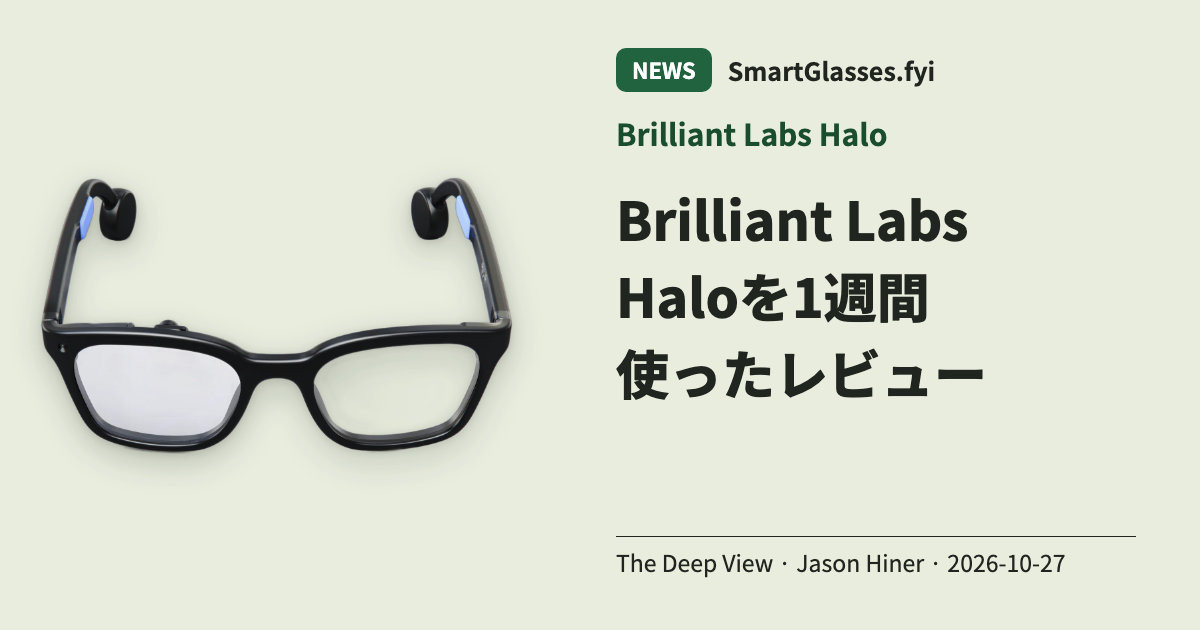
Jason Hiner of The Deep View used Halo for more than a week. He also asked Brilliant Labs CEO Bobak Tavangar how the glasses were designed around openness and privacy.

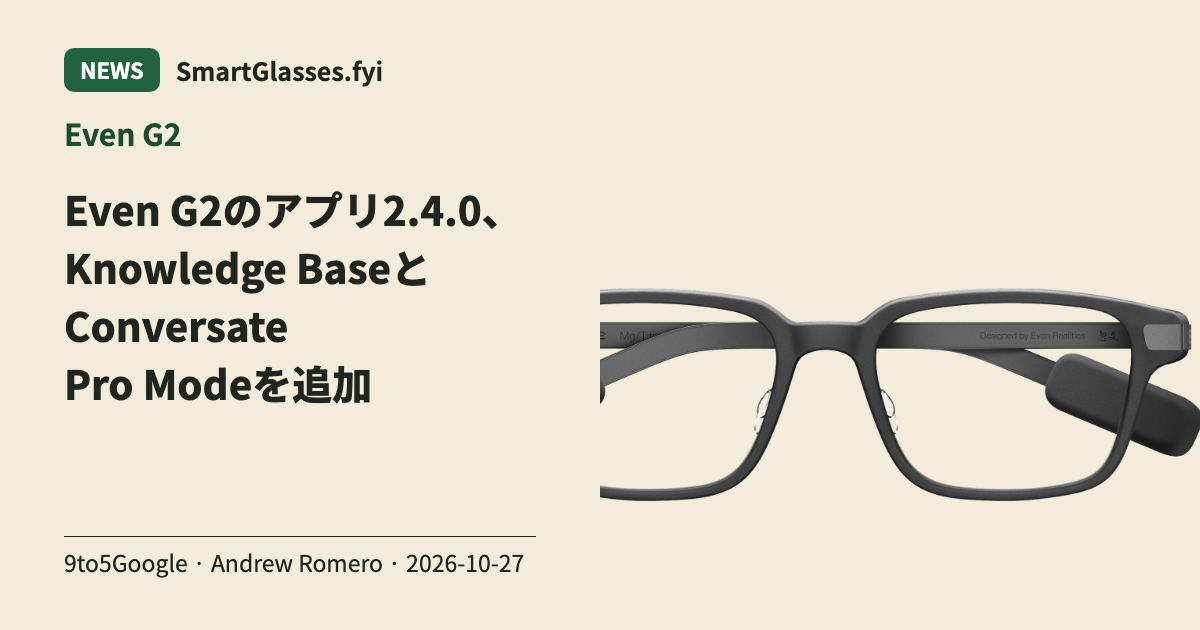
Version 2.4.0 for Even G2 adds Knowledge Base, which carries selected conversation records into later sessions, plus Conversate Pro Mode and changes to voice interaction. The article contains affiliate links.

Rokid announced three devices at Rokid Jungle 2026. Alongside an update to the display-equipped Glasses 2, the full-color Color glasses pair with Ring for input.

A survey of 2,716 South Korean middle and high school teachers by the Korean Teachers and Education Workers Union found 82.3% saying current invigilation procedures make it hard to tell whether a candidate is wearing smart glasses. The biggest worry was complaints arising from mistaking ordinary glasses, and teachers called for a dedicated specialist system to identify suspect devices.

Even Realities added a tortoiseshell Brown 2 colorway to Even G2. The polarized clips and chain released alongside it fit both Frame A and Frame B.

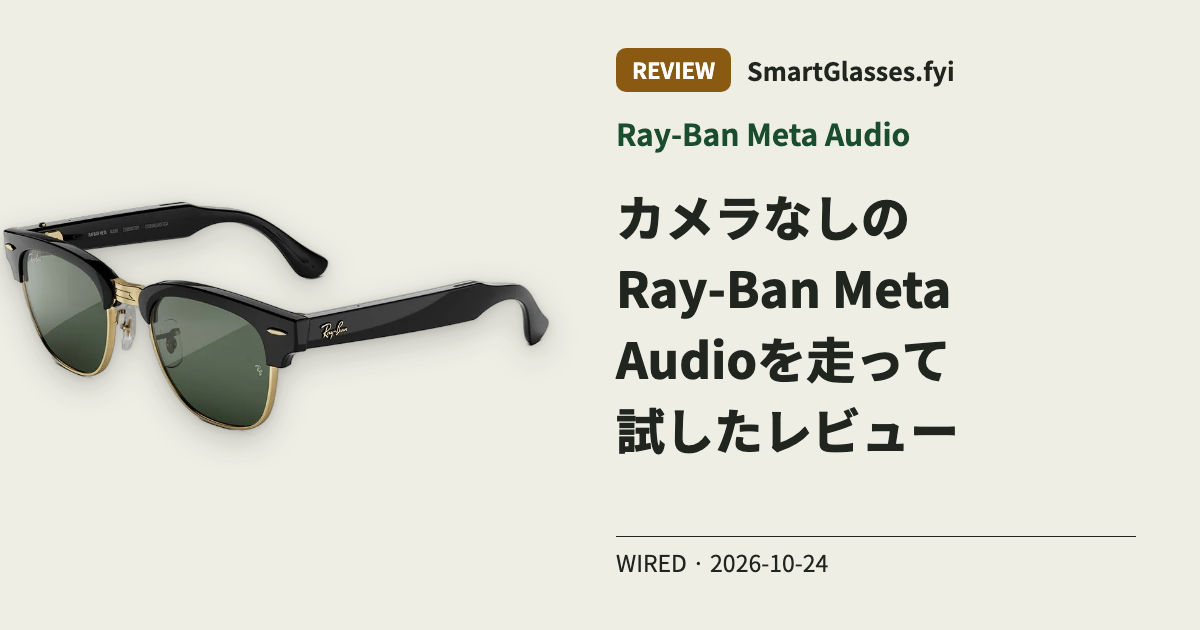
Boone Ashworth took the camera-free Ray-Ban Meta Audio running and out and about, testing voice navigation, calls, and how much its open-ear speakers leak. The article contains affiliate links.


Punjab's provincial government has ordered a 30-day ban on the use and sale of camera-enabled glasses that can be used for covert recording, Dawn reports.

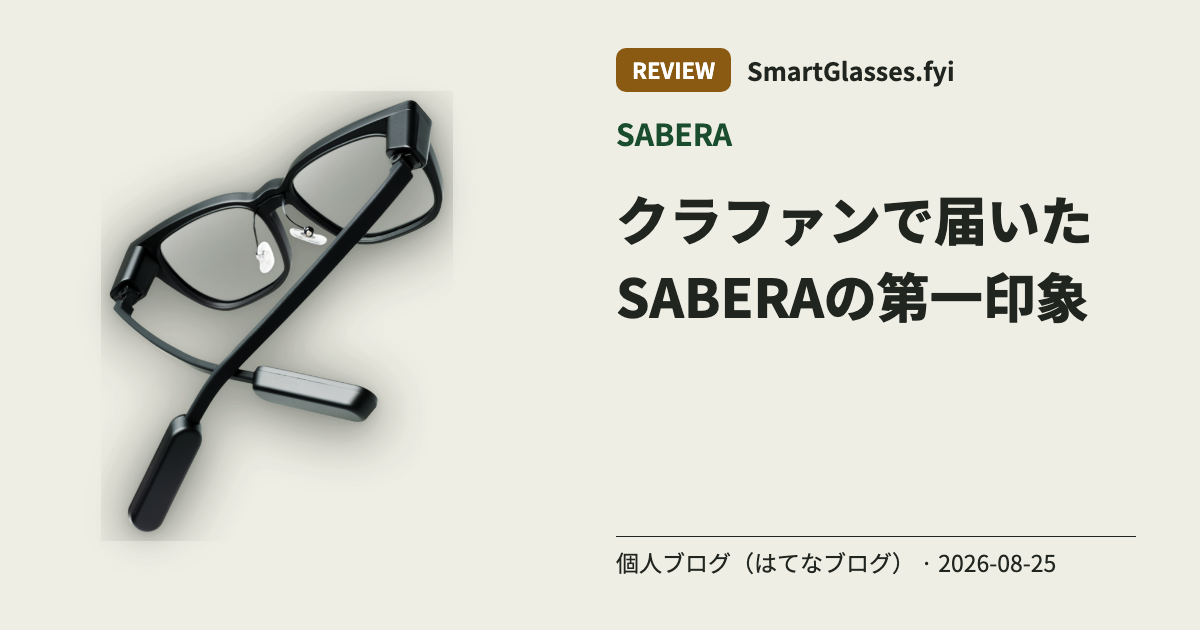
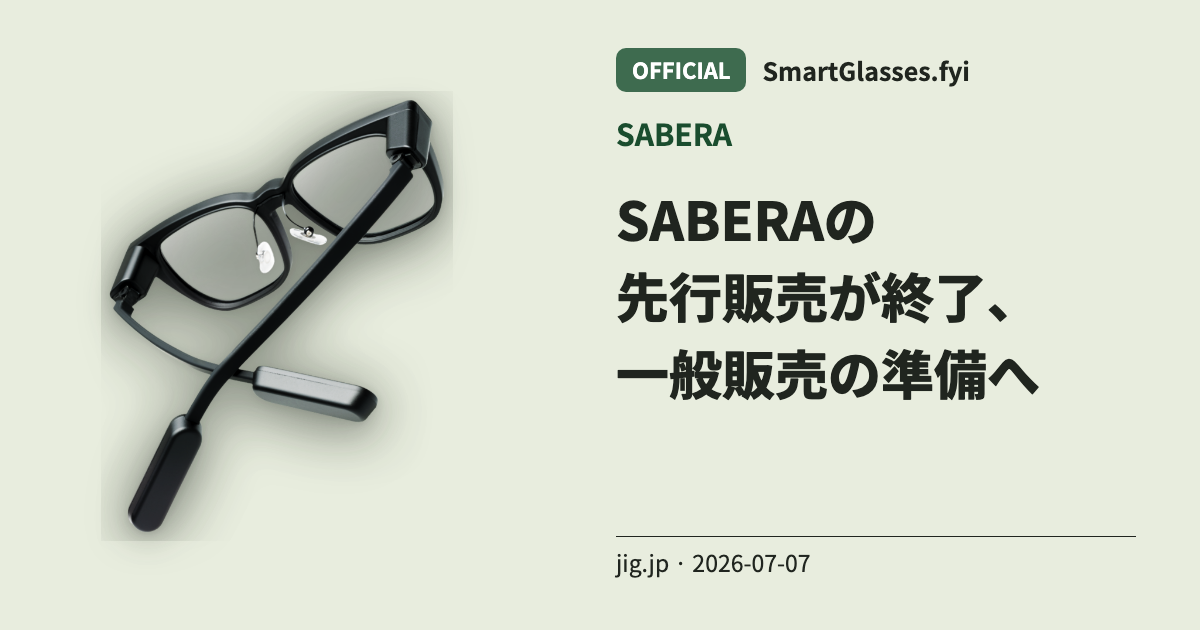
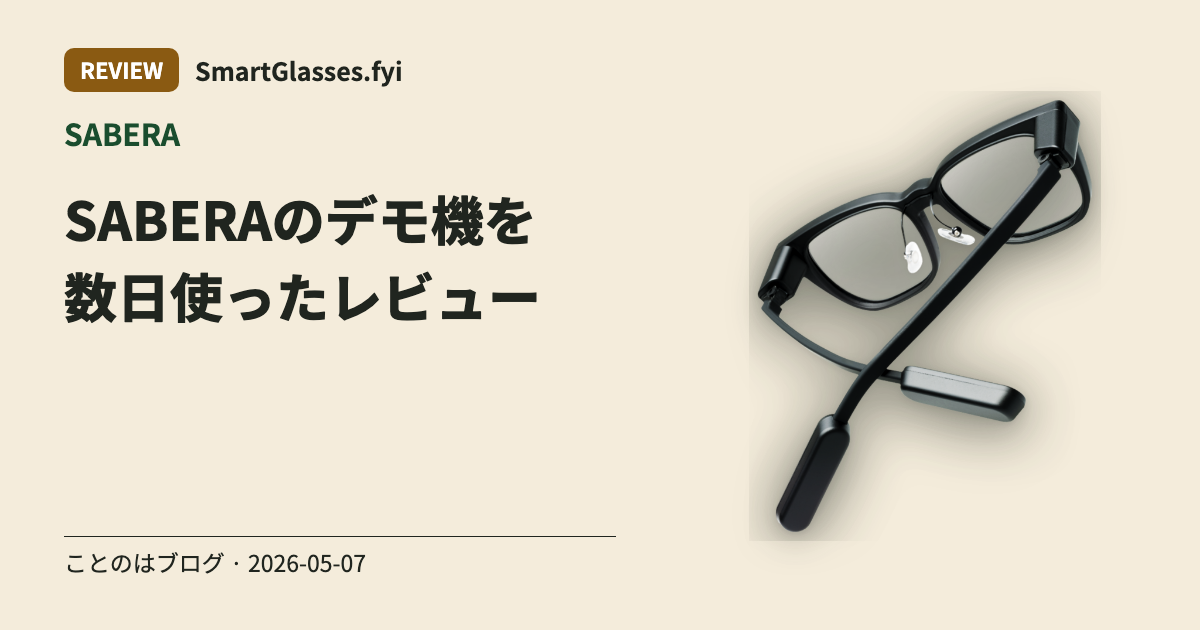
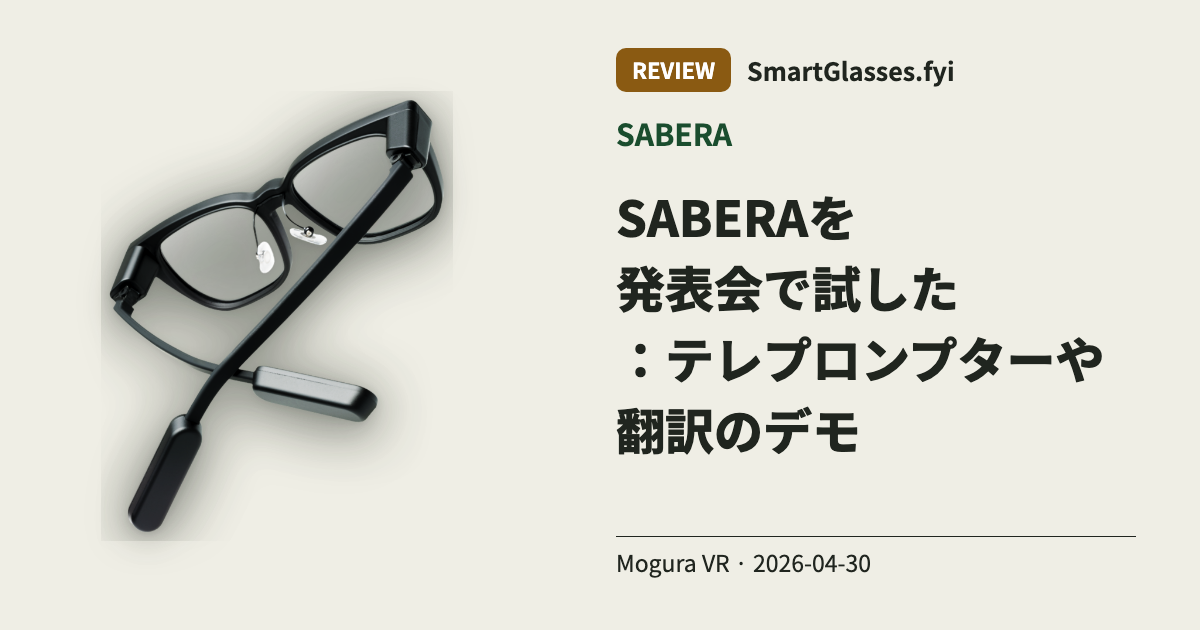
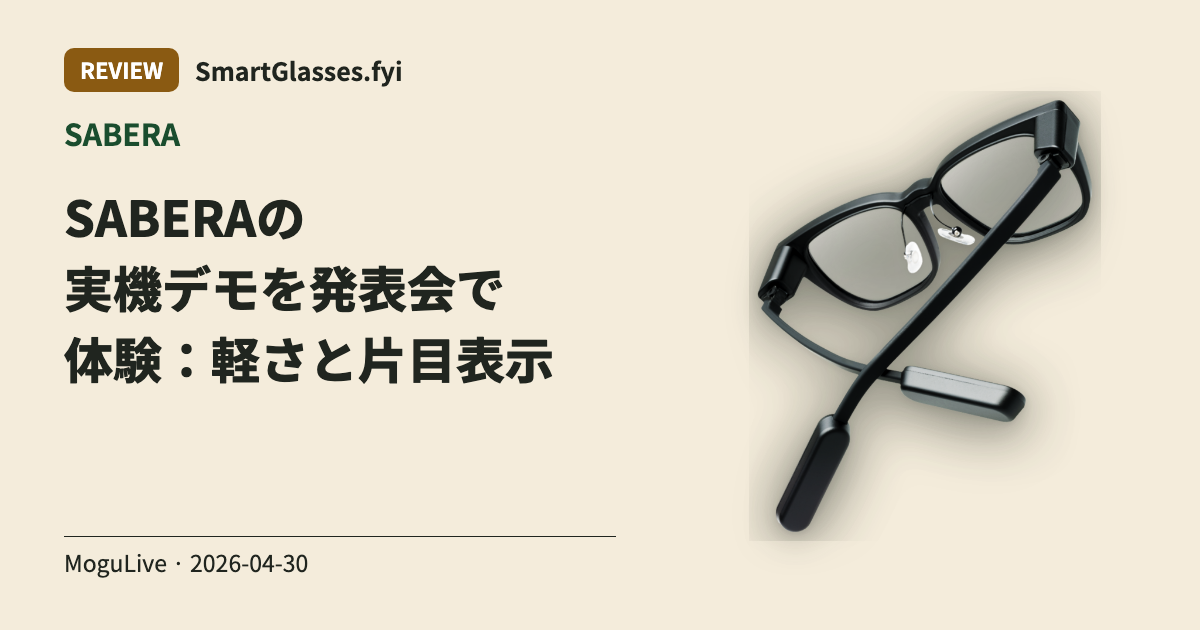
SABERA, the smart glasses from Sabae, goes on general sale October 27. Preorders open at noon on October 21, and optical stores and other retailers plan to stock it from October 28.

EssilorLuxottica's growing smart glasses business is drawing closer attention from regulators. Reuters also reports on European regulatory debate and concerns over use in schools.

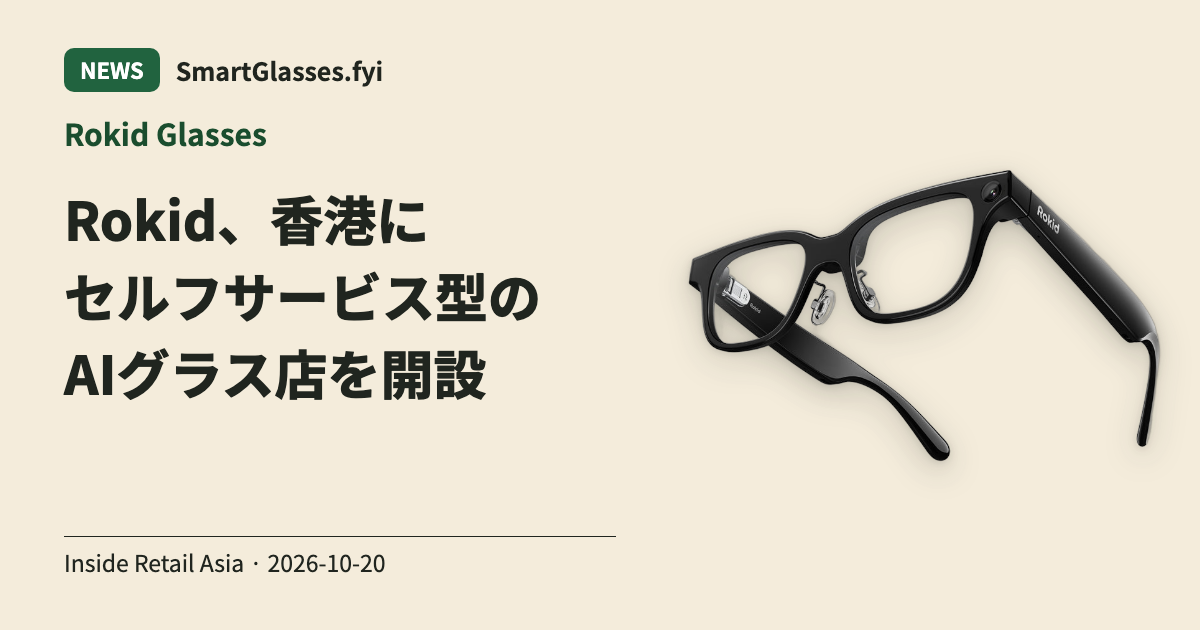
Rokid has opened a self-service AI glasses store at Harbour City in Hong Kong, with eight try-on zones.

Snap announced that Robert Downey Jr. has taken the honorary role of Chief Customer Experience Officer for SPECS. It is not a new hardware launch; a content series featuring him also begins.

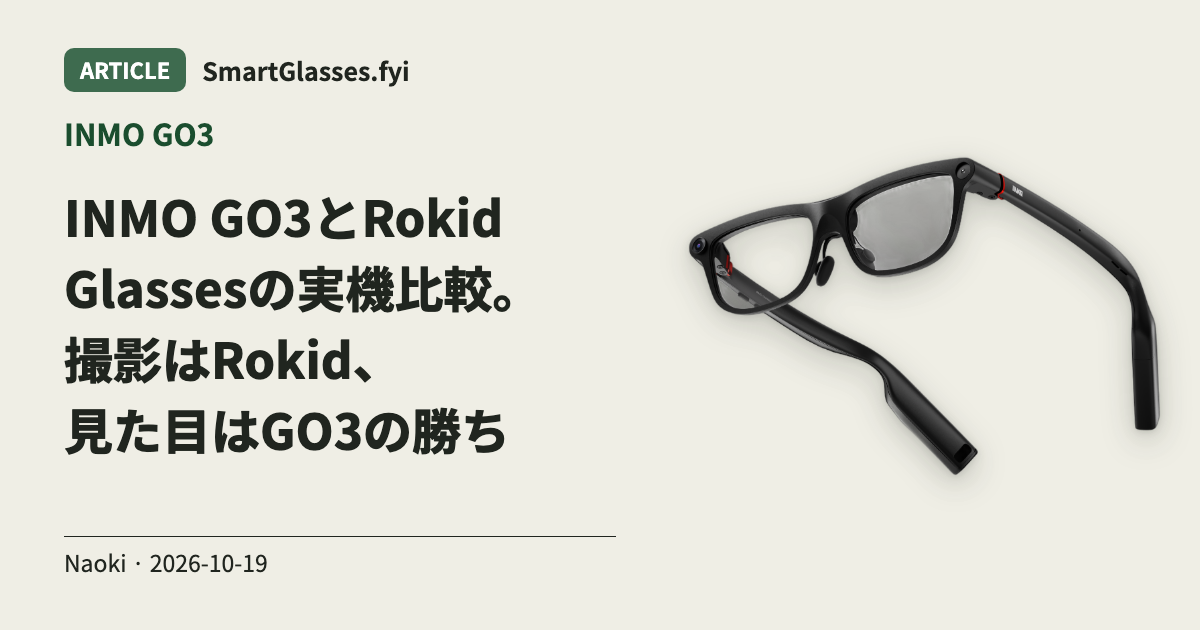
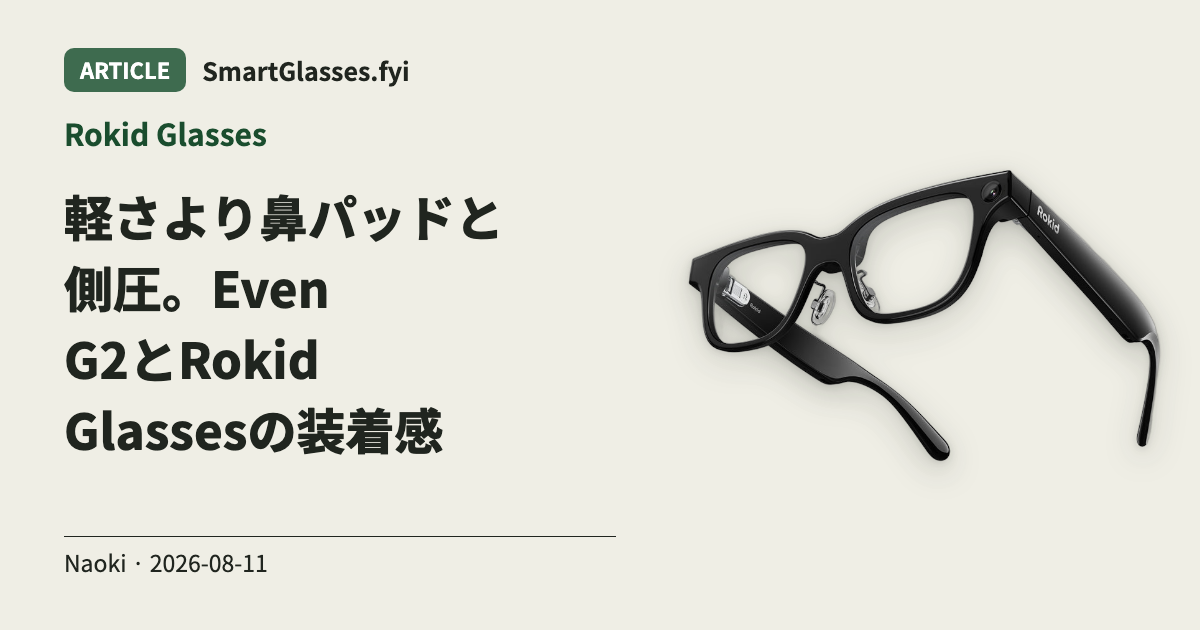
A hands-on comparison of INMO GO3 and Rokid Glasses: capture speed, image quality, comfort, touch controls and translation battery life.

A MobileSyrup writer uses Even G2 with the R1 ring every day, trying ring controls and connectivity, dashboard customisation, and conversation captions and translation.

Rokid has partnered with Chinese optical chain Doctor Glasses so customers can try AI glasses in store and get professional fitting in one visit. The article is an announcement provided by Rokid.

Zhejiang Online reports from the Taizhou international eyewear expo on smart-glasses exhibits and a compact computer that uses glasses as its screen, along with materials and manufacturing companies.

Engadget tests the camera-free Even Realities G2, focusing on its temple touch controls and input through the optional R1 ring.

Anuj Bhatia uses the Even Realities G2 day to day, trying its monochrome display, controls and the Conversate conversation-summary feature. The article says the company sent a sample made to his prescription.

Tom’s Guide’s Amanda Caswell wore the camera-free Ray-Ban Meta Audio for a week on family outings, drives and errands, trying calls, translation and spoken navigation in each setting. The article contains affiliate purchase links.

Tom’s Guide compared the older One Pro with VITURE Beast earlier in the year and now repeats the matchup with the updated Xreal One Pro Plus, lining up display, controls and companion-app needs. The article has affiliate links.

EssilorLuxottica executives in Colombia describe plans for new smart-glasses models, optical retail and events such as festivals ahead of Ray-Ban’s 90th anniversary in 2027.

Swappable batteries and fast translation are appealing. What about sore ears, slow shooting and Ring4 controls? A week with INMO GO3, illustrated with photos and comparisons to help you decide.

MoguLive reports the XREAL 1 Pro+ announcement and the product’s status on XREAL’s Japanese official store. At announcement, Japanese shipping timing and radio certification status had not been disclosed.

TrendForce projects AR-glasses shipments will roughly double to 1.31 million units in 2026. The release also gives its estimates on Meta, Chinese brands and display-engine trends.

About three months into owning Even G2, the writer returns the glasses to their case every night and charges the R1 ring during a bath every other day, describing it as a personal routine.

Meta, EssilorLuxottica and the Pinacoteca di Brera launched an eight-artwork route where visitors hear audio descriptions from the Grande Brera app through AI glasses, with artwork recognition and Be My Eyes support.

Northwestern University researchers built GlassTENG, a prototype that uses triboelectric sensors in the frame to track pulse and facial movement. The paper tests facial-motion classification and pulse estimation on 20 people.

XREAL announced the 1 Pro+, display glasses built on the One Pro, and put them on sale at $599. They offer 1200 nits, 120Hz and a 57° field of view.

Scott Younker of Tom’s Guide wears the XREAL 1 Pro+, trying its display modes, 2D-to-3D conversion and nose pads. The article contains affiliate links.

XREAL announced on its official Reddit that REAL 3D runs at 60fps on the 1 Pro+, and a November firmware update will bring it to One, One Pro and 1S.

A weekly roundup of announcements, policy, research and new products from October 4–10, 2026, with links to the original reports and related reviews.

A Reform UK member appeared to use smart glasses as a teleprompter during a Senedd debate, and members later called for guidance on their use. There is no suggestion the glasses were recording.

Tether AI Research announced QVAC TranscribePsy, a multilingual speech-recognition model that runs on device, and described setups linking it to smart glasses over Bluetooth and Wi-Fi. No shipping product integration was announced.

Some Ray-Ban Meta owners say voice activity appeared in their history without a wake word. Meta says it has fixed the issue; the reports come from a limited number of user posts.

Engadget’s Karissa Bell uses the camera-free Ray-Ban Meta Audio day to day, testing fit, calls, music, AI controls and battery life.

Victoria Song of The Verge uses the camera-free Ray-Ban Meta Audio while out, exercising and on calls, describing the voice assistant, open-ear speakers and the privacy side of the experience.

In Honi Soit, Freya Hill argues about consent from people recorded by smart glasses and the wider social impact, with a mention of Kmart.

Himax announced its 5mW HX6538 is used in the Qwen Glasses N1 series. It handles always-on sensing separately from the capture camera and wakes the host only when needed.

The article compares reports and public documents on Norway’s proposed ban on AI glasses in public, noting it is still a proposal with covered devices undecided, and suggests steps Japanese facilities and businesses could take.

Ray-Ban Meta Gen 3, Optics Gen 2, Oakley Meta HSTN and Vanguard go on sale in Thailand on October 20, starting at 16,290 baht. Local representatives explain retailers and other details.

Ray-Ban Meta Gen 3, Optics Gen 2, Oakley Meta HSTN and Vanguard go on sale in Malaysia on October 20 from RM2,069. The report lists retailers and which features work locally.

TDK exhibited a retinal-projection smart-glasses prototype using a meta-optics mirror at CEATEC 2026, saying images look sharp regardless of eyesight, and outlined its development plans.

Translation and photography with Rokid and INMO; movies and games with XREAL and VITURE. Sale prices and the differences that matter in use.

Capture a view close to your own while keeping both hands free. Here is what I like about Rokid Glasses, which combines a camera, display, and audio, and what still gets in the way of daily use.

Cellid has joined Qualcomm’s Snapdragon START developer program. It plans to demo Crux, a binocular full-color AR-glasses reference design using Snapdragon AR1+ Gen 1, at AES 2026.

On October 13, 2026, the EDPB adopted an initial statement on personal-data processing by smart glasses, raising how responsibility is shared among users, manufacturers and service providers and how bystanders are informed.

Yuki Kai describes his Ray-Ban Meta breaking and the support and repair process that followed, arguing how much warranty coverage matters for devices worn every day.

T3’s Chris Hall relays a SammyGuru leak showing several models, colours and weights of Samsung’s upcoming smart glasses. It is not an official announcement, and the article contains affiliate links.

Raise your head to see information. Control it without raising your arm. The details of the app and eyewear explain why I keep wearing Even G2 every day.

In Mauritius markets and while travelling, the author pairs the Even G2 microphone with a phone translation app he built himself, rather than the built-in translation feature.
Kotauchi Lab’s video responds to the XREAL AURA price announcement by explaining the roles of the glasses and external compute pack and the different Android XR device forms, and compares it with VITURE Beast plus Pro Neckband.

Hayapon used the Rokid Smart AI Glasses in Japan, trying the in-view display, capture, translation and navigation, and also covers charging, battery and the cost of some features. The article includes ads and shopping links.

This weekly roundup for September 27–October 3 covers places to try glasses in person and how new products such as Even G2 and WiGain Flow are meant to be used.
VR ManCave tests a RayNeo-provided GT Max, covering the display, fit, spatial modes and connections, and shows it paired with Pocket TV Pro.

Even G2 shows phone notifications on the lenses by default. The one that helps me is a verification code. Look up and the dashboard turns on. The angle of a water bottle brings the tasks into view too.

Even G2 leaks green light forward from the grating inside the lens. Halliday uses ordinary prescription lenses and a window at the upper right of your view. TDK’s retinal projection is still a monochrome prototype.

Gu Qingyun argues in 36Kr that AI glasses have yet to become essential everyday tools, discussing camera and audio features along with wearability, voice interaction, bystander privacy and how to read market research.

ZenaTech unveiled Stacklens, AI safety glasses that let field technicians and industrial workers view instructions and reach experts hands-free. It is still a prototype, with certification preparation and customer pilots planned.

Bianco e Bruno tried RayNeo’s demo at IFA, using notifications, translation and audio recording on the camera-free iO display glasses, and also touches on the differently positioned GT Max.

The writer tested the G2 and R1 long-press settings changed in Even app 2.3.2 during conversations, describing how presses that once failed to register began triggering unintentionally, and the screen-off setting.

A French reviewer wears the Pantos version of VIVE Eagle day to day, trying photography, voice controls and charging. The piece frames it as a privacy-focused rival to Ray-Ban Meta and includes shopping links.

FNN reports students in China photographing exam questions with AI glasses and seeing answers on the lenses, with rentals spreading on shopping sites and glasses checks introduced. It also covers cases in Japan and interviews jig.jp about its camera-free SABERA.

Rokid officially announced a launch event in Hangzhou on October 27. Talk of a next-generation full-colour AI glasses model is presented as industry speculation.

AURA runs Android without a PC. Can you leave your phone at home, and can you work on it? A look at conventional XREAL glasses, Oculus Quest and the upcoming Meta VR Glasses.

After Australian authorities announced a privacy investigation, Kmart removed its camera glasses from its online store. David Braue of Information Age also reports how other retailers responded.

Innovative Eyewear launched Lucyd Aero, audio glasses without a camera or display, on October 8, 2026. The company announcement describes its controls and phone-connected features.

XR developer Skarredghost argues smart glasses offer developers a new opportunity but remain unripe, looking at development tools and app distribution from a business angle. The site discloses ads and affiliate links.

MobileSyrup’s Dean Daley used the camera-free, in-view display MemoMind One day to day, trying translation in Spanish conversations, notifications, controls and charging.

Keiichi Suzuki fitted prescription lenses to the display-equipped Rokid Glasses and the display-free Rokid AI Style and compared them on a trip, covering lens ordering, AI features, the app and charging, with sample photos and video.

Using TDK’s announcement as a starting point, the article explains how a 150nm flat mirror can show an image and how that relates to display readability. It has free and paid sections.

ITmedia’s Marika Watanabe connected the roughly 56g, ¥40,000-range xbx a01+ AR glasses to a PC, Steam Deck and DeX, and tried adjusting the fit. The article includes affiliate links.

A Reddit user who bought several display glasses compares MemoMind One, RayNeo iO, Even G2, MIRA and Rokid Glasses by use. The poster states there is no sponsorship or affiliate link.

Qiuguo announced Wigain Flow, AI glasses with a full-colour display priced around 7,000 yuan, with crowdfunding planned for December.

Holger Becker puts the L’Atitude 52°N BERLIN to practical use, trying fit, phone pairing, and its camera and translation features. The article contains affiliate links.

Australia’s privacy regulator OAIC has opened an investigation into the Chinese developer of HeyCyan, the app used with Kmart’s Anko camera glasses. CNA reports on the background.

Yuriika wore the VITURE Pro 2 for long stretches of movie watching and PC work and tried its diopter adjustment for nearsightedness, comparing it with other XR glasses at a similar price.

Norway’s government has proposed a temporary ban on smart glasses in public places. It is still a proposal; Road to VR reports on its scope and next steps.

Covers the tax-inclusive prices of XREAL AURA’s two Japanese configurations and how much each reservation pass credits toward the price, separating balance payments for pass holders from orders by new buyers.

XREAL Aura with Android XR starts at $1,279 in two memory and storage configurations. 9to5Google also explains how the deposit counts toward the price and how Aura differs from XREAL’s earlier display glasses.

XREAL Aura is weeks from release and coming to Canada. The author tried Gemini and 3D brain-scan demos at Snapdragon Summit and writes that the compute puck got quite hot during the demanding demo.

XREAL Aura is priced at $1,279, with general orders opening in the coming weeks. Tom’s Guide covers the two configurations and the early invitation sent to existing reservation holders.

XREAL announced AURA pricing for the US, Canada, Japan and South Korea and opened purchasing to reservation holders. Japanese prices are ¥229,800 and ¥269,800, with other regions to follow in phases.

The Verge compares the similarly priced Xreal Aura and Meta’s VR Glasses on how each shows the real world and how you control them. At publication, XREAL had not said which apps benefit from the higher-end model’s extra RAM.

XREAL opened limited Aura orders for reservation holders, starting at $1,279. The GamesBeat author briefly watched a Netflix show during a demo.

CGMagazine reports AURA pricing and preorders alongside impressions from tabletop-game, laptop-display and Gemini demos. The author attended at Qualcomm’s invitation and says everyday use needs more testing.

Gizmodo's James Pero reviews Ray-Ban Meta Gen 3, covering changes from the previous generation, calls and audio, the camera and how privacy is handled.

T3's Chris Hall used Ray-Ban Meta's voice walking navigation in the UK and tried the updated audio settings. The article contains affiliate links.

A WIRED writer used Meta’s glasses for 30–45 minutes and XREAL Aura in a separate demo, comparing virtual-keyboard input and see-through approaches. Some Android apps did not fit well on Aura.

Jio showed two AI glasses prototypes at IMC, an audio model and a camera model, and demonstrated UPI payments from the glasses. Authentication, transaction limits and pricing have not been announced.

Return them to a case, attach a clip, connect a cable, or swap batteries. Comparing four charging methods and what you need to carry each day.

Pplware’s Mário Sousa used the low-cost DT H03 camera and AI glasses day to day, trying capture controls, audio and the companion app. The article ends with a 25% discount code for the maker’s store.

A French reviewer spent several weeks with the BleeqUp Ranger sports camera glasses, testing controls, recorded footage and charging.

Mogura VR’s Ryota Musha tried a prototype demo of TDK’s 150nm flat mirror at the company’s October 2, 2026 announcement event. The prototype was slated for display at CEATEC.

Optical chain Hans Anders has halted Ray-Ban Meta sales over privacy concerns, covering about 400 stores in Belgium and the Netherlands as well as its online shop.

Boone Ashworth of WIRED en Español uses Meta’s own Nova frames for calls and photos, testing fit and the app, and weighs what improved against what stayed the same.

Good audio capture and useful summaries are different things. A focused look at recording from the September 2026 hands-on review.

The writer lines up sleep duration and stage breakdowns from nights the Even R1 ring scored 94 and 46, noting a night when time they recall being awake was counted as sleep.


Acalie announced Even G2 and R1 will be displayed and sold at Futako-Tamagawa Tsutaya Electrics+ from September 30 to December 29, 2026.

Eyemegane added its Shin-Koshigaya and Fukaya Kamishiba-nishi stores, bringing Even G2 to five stores across Saitama, Tochigi and Chiba, with in-store trials and prescription lenses.

After cutting my hair to accommodate touch controls, I welcomed the Smart Crown’s rotate-and-press operation. But I did not want to go back to raising my arm for every interaction.

Solos released a shield that covers the AirGo V2’s front camera and clear replacement temples, priced separately as a set and individually.


My conclusion first: after using them, the RayNeo iO felt like an Even G2 that costs ¥10,000 less. Comparing their regular prices, the gap is only about ¥10,000.


Les Numériques tried XREAL Aura’s indoor visuals, dimming, hand input and a medical-imaging demo. Display impressions were positive, but harsh lighting and long wear have not yet been tested.

A ZDNet Korea reporter tries Prism ML’s offline AI, SPECS gesture controls and XREAL’s spatial display at Snapdragon Summit. Model names are not given in the article.

A LeiKeJi journalist tried Rokid’s next-generation display AI glasses at a closed-door briefing ahead of the formal announcement. Some details were withheld from the article under a confidentiality arrangement.


INMO Air 3 has been recalled in the US and Canada after reports of the left temple overheating; following the CPSC notice, the article lists affected units, the stop-use advice and the free update remedy.

Megane Ichiba announced Linse Display, glasses that show text in view; the launch event covered translation and script display, prescription lenses, in-store fitting and a planned crowdfunding campaign.

SKYNEA presented custom-designed AR glasses at The Blonds’ New York Fashion Week show. The Sina article is republished from Guilin Life’s official Weibo.

The online developer competition hosted by Meta is inviting projects built for Meta VR Glasses and Quest. Entrants must be members of the Meta VR Start developer program; the total prize pool is $1 million and submissions close on November 18.


Alibaba unveiled the Qwen N1 and N1 Pro at the Yunqi Conference, opening reservations on September 22 with sales from October 13. Eye tracking and iris payment are exclusive to the N1 Pro.

The Poker Tournament Directors Association, which sets the global standard rules for poker tournaments, states in Rule 5 of its 2026 rules (version 1.1, September 21, 2026) that wearable devices such as smart glasses and hidden cameras, and any technology capable of covert recording, communication or external assistance including AI agents, are prohibited at the table unless specifically authorized by the tournament director. The wording is new in the 2026 edition.

DPVR’s VisionRay has started selling the Flow Echo AI sunglasses overseas. They support 4K capture and real-time translation in more than 80 languages, in Pilot and Crystal frame styles.


Cellid and SB C&S formed a partnership spanning AR glasses design through domestic sales and deployment support; the report focuses on the route to market as well as optics.

DPVR announced the G7 AI glasses with a roughly 20MP camera for the first quarter of 2027. Pricing is not set, and the company will offer custom versions for businesses.

Rokid’s official FAQ claims by use, and Even G2’s official two days of typical use. Do not plan a full day of capture or an always-on display on the glasses alone.


ViXion MoonWalker, glasses that help vision in dark places, has gone on sale; the article covers changes from the earlier model, where to buy and conditions of use.


Cas and Chary XR try RayNeo iO, $479 glasses with no camera, covering captions in meetings, how it charges and how it is controlled.


PhoneArena’s Rad Slavov tried hand input and the compute puck’s trackpad in a short session. He found it light to wear but notes it lacks eye tracking and is less precise than Vision Pro.


A technical report from CIOE comparing Goertek's near-eye optical modules by optical approach, looking at thickness and field of view.

Luxshare showed Lark Air at CIOE, AR glasses that drive both eyes from one LCoS engine. It was co-developed with ALPD and Mude, and the optical engine measures 0.25cc.


The same glasses shape can serve different goals. Clarify the experience you want before choosing your first pair.


Android Authority tried XREAL Aura at IFA, learning its gestures and exploring Google Maps in an immersive view. When the YouTube app crashed, the author watched video in Chrome instead.

Frandroid wore XREAL Aura for 45 minutes, using the browser, photos, video and Gemini. Android interaction feels familiar, but the cable, look and Wi-Fi dependence make replacing a phone hard, the author argues.

At an IFA demo, the TechRadar author played Hades on a Steam Deck with a video window alongside and tried Gemini’s gaming help, showing an external device’s screen and Android XR apps in use together.


Qoder outlined plans and an invite-only test for instructing its work agent from glasses and watching progress as it runs, with support for Qwen and Rokid-based devices reported.


Ganzin announced the Aurora IIS reference design and development kit for building eye tracking into thin frames; the article describes the module and kit configuration.

Meta has disabled the cameras on thousands of AI glasses whose recording LED was tampered with. The report explains that covering the LED is reversible once removed, while physical damage leaves the camera disabled.

Radar, a live venue in Aarhus, asks visitors wearing smart glasses to take them off and put them in a bag. The venue manager explains the reasons.


The author wore Xreal Aura in several AWE demos, using Google Docs and video. Text was readable, but the vertical field of view felt narrow and the image warped slightly with head movement.


Wareable used the Even G2 for six months, covering everyday wear, the display, built-in features and Even Hub apps, along with controls using the R1 ring.


Wearing Even G2 and Rokid showed me that weight alone cannot explain comfort. Here is what I would check at a fitting.


I stopped asking AI about what was in front of me after three days. What stayed: short-press photo and long-press video on the frame button. On Tokyo days reading Japanese signs, questions rarely came up.


In a quiet room there was leakage; music on the train did not work. Calls felt better on AirPods Pro, and AI answers were faster to read as text.


In an AWE interview, XREAL's CEO describes the shift from spatial displays to Aura. He says the trackpad stays because productive work needs input beyond gestures.

At Aura's announcement, XREAL offered two reservation programs in Japan. The article explains how a credit code applies to the purchase, how it differs from the limited edition, and the refund terms before the code is activated.

Xreal Aura ships this fall, with a Snapdragon Reality Elite chip in its tethered puck. UploadVR notes that the prism optics make the lenses thick and dim the surroundings, and covers the reservation program.


Days when notifications and display are enough: Even G2. Days cooking or on a bike when you shoot without holding a phone: Rokid Glasses. Even’s spec sheet has no camera row.

PhoneArena uses the camera-and-display Rokid Glasses for several weeks, testing photography and display settings. It reports about four hours of continuous use and notes the display can only be adjusted vertically.


Jon Law used Even G2 for a month, showing meeting notes and presentation scripts on it, and walks through the app controls and everyday use.


Ray-Ban Meta has launched in Japan. If you buy a pair, buy it as a camera!

At Google I/O the writer tried Demeo and a PC display on Project Aura. Comfort and gaming impressed, but hand tracking dropped at times and the PC connection demo was unstable.

At Google I/O, Tom's Guide ran several apps and Demeo in space on Project Aura. Anchored windows worked well, though the edges blurred and tasks took longer than on a PC.

Munechika Nishida tried Project Aura at Google I/O and interviewed XREAL's CEO. He ran video and 3D content and describes how stable the anchored screens were and how the pointer felt.


Having owned and compared two pairs of ¥100,000 smart glasses at the same time, I can say this confidently: right now, the Even G2 is the most practical and comfortable.


G2 can be controlled on its own. Here is why I still liked R1, and where I would temper expectations.


After a firmware update, the author started using Even Hub on G2 and tried its radio and timer apps, noting the versions installed.


The author combined Even G2's on-screen navigation with phone voice guidance through FreeClip 2, describing how to set destinations and how the route guidance went.


Even Realities announced Prep Notes and Even Hub for G2: Prep Notes brings material prepared before a conversation onto the display, and Even Hub lets developers offer apps.

At an event the author tried StarV Air2 and compared its script display and conversation transcription controls with the Even G2 they use daily.


The author explains how Japanese-language use, wearing it at work and different eyesight in each eye led them to choose Even G2.


When the newly arrived Even G2 kept disconnecting, the author tried fixes, then describes behaviour from initial setup through using AI and translation.

Translation tested with English videos and podcasts: separating recognition quality from how easy the text was to read.


PhoneArena tests the $300 RayNeo Air 4 Pro, covering fit, connections and the picture, and compares it with the earlier Air 3s Pro.


The tracking number in the shipping email for an Even G2 ordered direct did not work, so the author contacted support; the post shows the messages and the timeline from order to delivery.

My verdict first: the Even G2, a ¥100,000 pair of smart glasses, scores 120 out of 100.


NTT Docomo announced a group reorganisation moving NTT QONOQ's XR business into Docomo; QONOQ will be liquidated while the XR business continues, with plans for subsidiaries and a transfer schedule.


Cas and Chary XR wear the display-free Rokid AI Glasses Style as everyday glasses, trying photos, conversation recording and navigation, and compare it with display models and Ray-Ban Meta.


XREAL has raised $100 million, the report says, also touching on its Android XR collaboration with Google; it is about company funding and partnerships, not a new product.


ROG and XREAL unveiled the R1 gaming glasses at CES; the article covers display specs, connections, pairing with handheld gaming PCs and the role of the dedicated dock, as announced.

Rokid announced AI Glasses Style, a camera-and-audio model with no display; the article explains how it differs from display models, its camera and AI features, and planned release.


Owning a VITURE Pro Mobile Dock, the author compares ports and portability with XREAL NEO for showing Switch 2 on One Pro. Written at announcement; contains ad links.

Using the VITURE Pro Mobile Dock to show Switch 2 on One Pro, the author re-tested colour output with the same setup before and after an update. Contains ad links.


For every day, I wear Even G2. Officially it is 36 grams, with a green display in both eyes, and no camera or speaker. The frame is 99,800 yen, tax included.


Adding XREAL Eye to One Pro, the author tried 6DoF to pin the screen while moving and getting photos off the device, describing the steps and use cases. Contains ad links.


The author connects One Pro to Pocket TV and goes through controls, network setup and signing in to services. Contains ad links.


Hello. It has been exactly one month since my Even G1 AR glasses arrived at the end of July.


My long-awaited Even G1 arrived yesterday. Put simply, they are glasses that feel a bit like a scouter from Dragon Ball.

The author ordered myopia and astigmatism prescription inserts online and fitted them to One Pro, showing the data and parts the order needed and how they attach.


To send Switch 2 to an external screen, the author updated the VITURE Pro Mobile Dock on a PC and tested which ports to use with a mobile monitor. Contains ad links.


Why do smart glasses make me excited about the future? I explore expanded vision and my hopes for glasses that fit naturally into everyday life.


After a year with the first generation and six months with the second, the author compares HUAWEI Eyewear models, covering pressure under a helmet, how clearly charging starts, and sound leakage.


The author uses second-generation Ray-Ban Meta on walks and during sports, trying photography and the visual AI that was then in limited testing. Battery dropped to 49% after a one-hour walk.